This article's table of contents introduction:
- Key Applications
- Critical Design Features
- Types of Fans Used
- Operational Challenges
- Safety & Maintenance
- How to Select a High-Temperature Dust Fan
- Summary Table: Material vs. Temperature
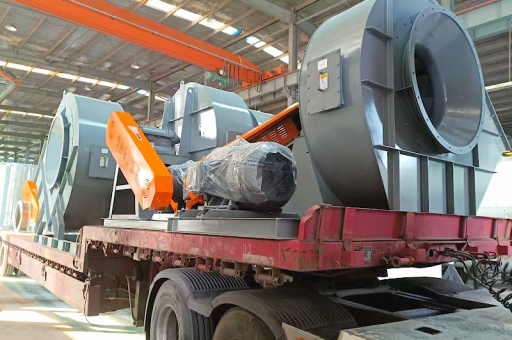
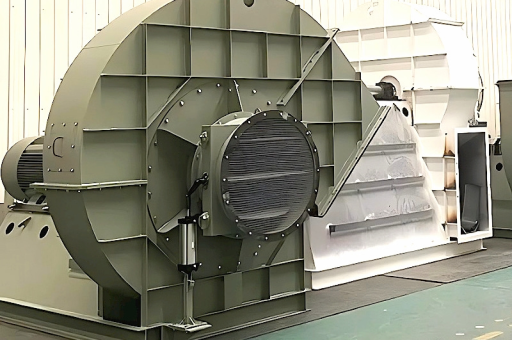
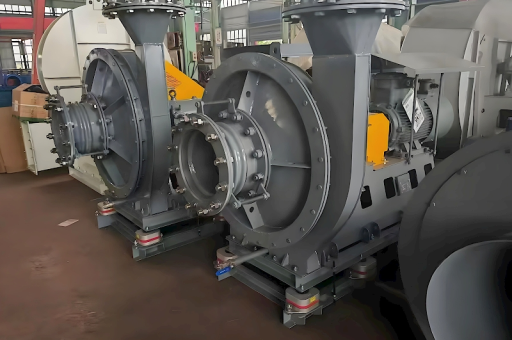
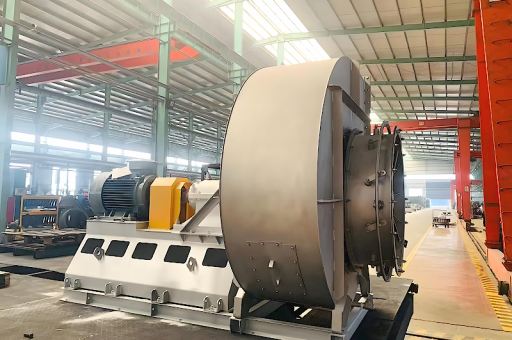
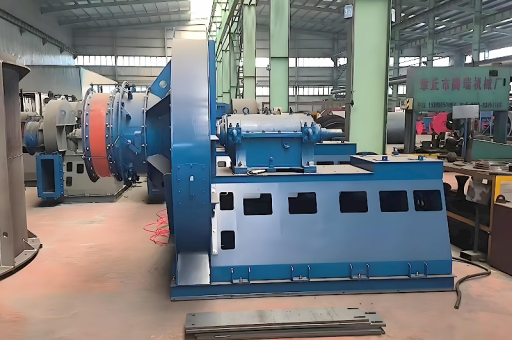
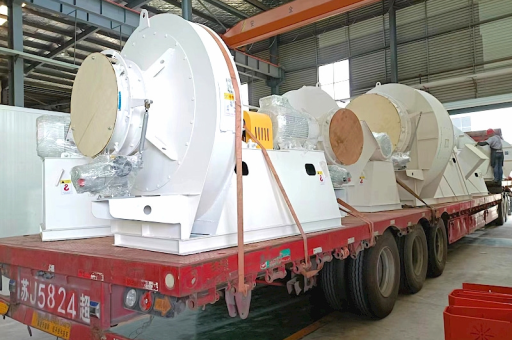
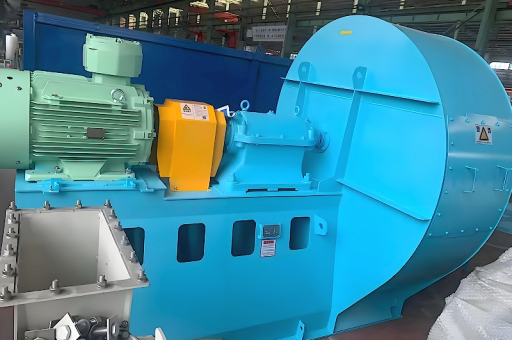
This is a comprehensive overview of High-Temperature Dust Collector Fans. These are specialized industrial fans designed to handle air or gas streams that are significantly hotter than standard ambient temperatures, often combined with corrosive fumes, moisture, or abrasive dust.
Unlike standard fans, these units must maintain structural integrity, aerodynamic efficiency, and safety at temperatures typically ranging from 150°C (300°F) to over 550°C (1000°F) .
Key Applications
Where are these fans used? Anywhere hot, dirty gas needs to be moved through filtration systems.
- Cement Industry: Kiln exhaust, clinker coolers, raw mill exhaust.
- Steel & Metal: Sinter plants, blast furnace gas, electric arc furnace (EAF) fume extraction, smelting.
- Power Generation: Biomass and coal-fired boiler flue gas (especially before or after baghouses/electrostatic precipitators).
- Chemical & Petrochemical: Drying processes, calcining, catalyst regeneration.
- Waste-to-Energy (WtE): Incinerator exhaust gas handling.
- Glass & Ceramics: Furnace exhaust.
Critical Design Features
These fans are not just standard fans with a high-temperature paint job. They are engineered from the ground up:
A. Materials of Construction
-
Housings & Impellers: Standard carbon steel becomes weak and oxidizes above ~370°C. Therefore, manufacturers use:
- Corten Steel (ASTM A242/A588): Good up to ~400°C. Forms a protective oxide layer.
- Stainless Steel (304/316): Used for corrosive hot gases, up to ~650°C (though strength drops).
- Hastelloy, Inconel, or Monel: For extreme temperatures (700°C+) combined with high corrosion (e.g., waste incineration).
- High-Nickel Alloys: For the most demanding applications.
-
Shafting: Chromium-molybdenum alloy steels (e.g., 4140, 4340) or stainless steel to retain strength and resist thermal distortion.
B. Shaft Cooling & Bearing Protection
This is the most critical subsystem. Heat travels down the shaft and destroys bearings. Solutions include:
- Shaft Cooling Discs (Heat Sinks): Discs mounted on the shaft between the housing and bearing. They radiate heat away and create a natural air current that cools the shaft.
- Insulating/Forced Draft Collars: A fan on the shaft draws cool ambient air over the shaft to a heat barrier.
- Water-Jacketed Bearing Housings: For extreme heat, a water jacket circulates cooling water around the bearing housing.
- Spaced Pedestals: Bearings are mounted on pedestals extending from the housing to reduce conductive heat transfer.
C. Impeller Design
- Backward Curved Blades (Radial Tip): Most common for heavy dust. They are less prone to dust buildup and handle high pressures.
- Radial Blade (Paddle Wheel): Extremely robust for abrasive dust but less efficient.
- Shrouded vs. Unshrouded: Unshrouded (open) wheels are preferred for high dust loads to prevent jamming.
- Wear Liners: Replaceable wear plates made of hardened steel or ceramic tiles welded/bolted to the blade face.
D. Thermal Expansion Management
- Shaft Expansions: The shaft grows significantly when hot. Bearings must allow for axial expansion (fixed/float bearing arrangements).
- Housing Expansion: Large fans may have expansion joints in the housing or use a centerline support system (feet attached to the horizontal centerline, not the bottom) to allow uniform radial expansion without misalignment.
E. Cooling Channels in Shaft
Hollow shafts with internal airflow are used in extreme cases to lower the temperature gradient to the bearings.
Types of Fans Used
| Fan Type | Pros | Cons | Best For |
|---|---|---|---|
| Centrifugal (Radial) | High pressure, robust, handles dust well | Lower efficiency (compared to airfoil) | Baghouse dust collectors, kiln exhaust. |
| Centrifugal (Industrial Exhauster) | Designed for dirty gas, easy maintenance | Larger footprint | General high-temp dust collection. |
| Axial Flow | Very high airflow, low pressure | Poorly handles heavy dust loads, lower static pressure | Cooling, dilute phase conveyance, low-pressure exhaust. |
Operational Challenges
- Dust Build-up: Can cause rotor imbalance and catastrophic vibration. Solution: Grease fittings, scrape-offs, or cleaning ports on the impeller.
- Shaft Sinking: On radial fans, the unswept gap at the inlet cone can fill with dust, binding the impeller. Solution: Proper purging or venting.
- Cold Spot Condensation: If the fan runs too cold or gas contains moisture, sulfuric or hydrochloric acid can form (dewpoint corrosion). Solution: Keeping the fan above the acid dewpoint, or using stainless steel/coatings.
- Thermal Shock: Sudden temperature changes (e.g., injection of cold quench air) can crack the impeller. Solution: Automatic control to avoid rapid temp changes.
- Erosion: High-velocity dust particles erode the impeller blades, especially at the leading edge. Solution: Wear liners, ceramic coatings, or tungsten carbide overlay.
Safety & Maintenance
- Vibration Monitoring: The #1 predictor of failure. Hot fans must have accelerometers (sensors) mounted on bearing housings.
- Bearing Temperature Monitoring: Thermocouples on the bearings.
- Drive Systems:
- V-Belt Drives: Preferred for fixed speeds because they absorb minor vibration and are cheap to change.
- Direct Drive: For variable speed (VFD).
- Variable Speed Drives (VFDs): Highly recommended for high-temp fans to avoid "cold starts" at full speed and to tune airflow.
- Lubrication: High-temp grease (synthetic, NLGI 2) with a high drop point. Never over-grease.
- Purging: For extreme dust, a continuous purge of clean, cool air through the bearing housing and shaft seal prevents dust ingress.
How to Select a High-Temperature Dust Fan
When specifying a fan, you need to provide the manufacturer with:
- Actual Temperature (°C / °F): Normal, maximum, and minimum (startup).
- Gas Composition: Oxygen content, presence of CO (risk of explosions), water vapor, acids (HCl, SOx).
- Dust Loading (gr/ft³ or g/Nm³): And particle size/P80 (to gauge erosion).
- Density of Gas (kg/m³): This changes with temperature significantly.
- Required Flow (ACFM or m³/hr): Actual cubic feet per minute at operating temperature, not standard (SCFM).
- Static Pressure (in. w.g. or kPa): Get this from the dust collector manufacturer.
- Ductwork Design: Rigid vs. flanged connections.
Summary Table: Material vs. Temperature
| Temperature Range | Typical Material | Bearing Cooling Method |
|---|---|---|
| Up to 150°C (300°F) | Carbon Steel | Standard pillow block |
| 150°C – 370°C (300°F – 700°F) | Corten / High-Temp Steel | Cooling Discs + High-temp grease |
| 370°C – 550°C (700°F – 1000°F) | Stainless Steel (304/316) | Water Jacket / Insulated Housing |
| 550°C – 800°C (1000°F – 1500°F) | Inconel / Hastelloy | Water Jacket + Shaft Air Cooling |
Bottom Line: The most common failures in high-temp dust fans are bearing failure (from heat migration) and impeller erosion (from dust). Address these two issues, and your fan will last.