This article's table of contents introduction:
- Why Standard Fans Fail in Chemical Plants
- Key Design Features of Explosion-Proof Dust Collector Fans
- Types of Explosion-Proof Dust Collector Fans
- Critical Selection Criteria (How to Choose)
- Common Applications in Chemical Plants
- Summary: A "Must-Have" or a "Want"?
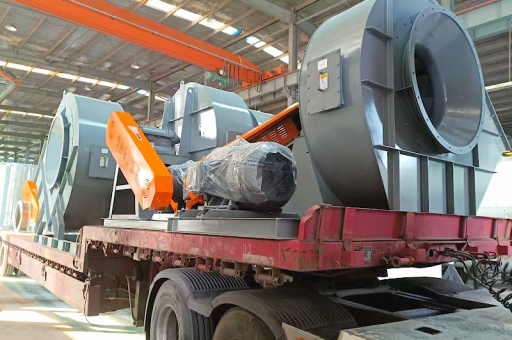
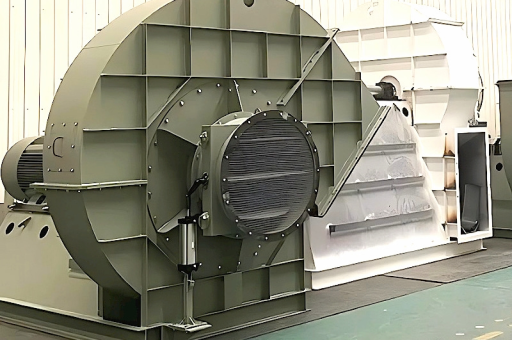
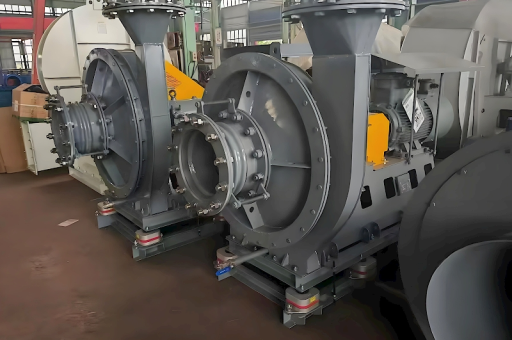
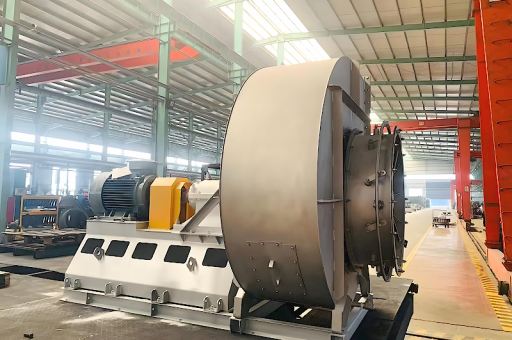
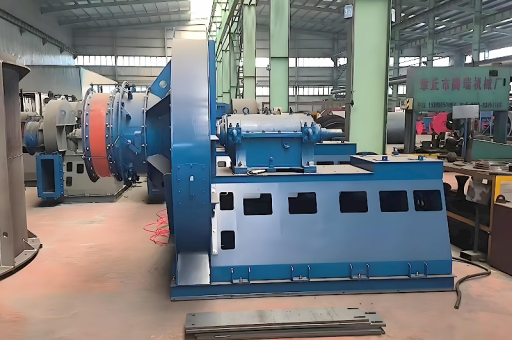
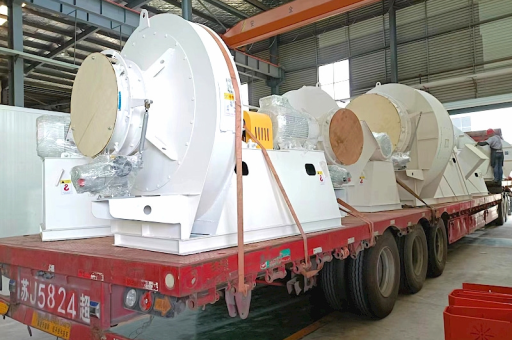
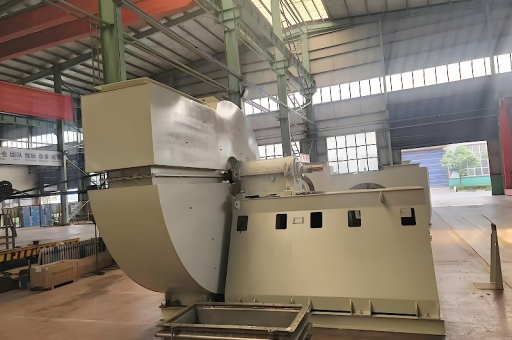
This is a critical topic in industrial safety. A Chemical Plant Explosion-proof Dust Collector Fan is not a standard fan; it is a highly engineered safety device designed to operate in hazardous (classified) locations where flammable dusts, gases, or vapors are present.
Here is a comprehensive breakdown of what these fans are, why they are essential, the key design features, types, and critical selection criteria.
Why Standard Fans Fail in Chemical Plants
A standard fan can become an ignition source in three primary ways:
- Mechanical Sparks: Metal-to-metal contact from the impeller rubbing against the housing or foreign objects.
- Electrical Sparks: From the motor, wiring, or electrical connections.
- Static Electricity: Built up on the fan housing or ductwork and then discharging.
- Overheating: Bearings failing or the motor running hot, exceeding the auto-ignition temperature of the dust or vapor.
An explosion-proof fan is designed to contain an internal explosion (if one occurs) and prevent its transmission to the surrounding hazardous atmosphere.
Key Design Features of Explosion-Proof Dust Collector Fans
-
Non-Sparking Construction (The #1 Rule)
- Impeller & Inlet Ring: Made of non-ferrous materials (e.g., aluminum, bronze, monel) or conductive polymers. This prevents a spark if the impeller hits the housing.
- Housing: Often steel or cast iron, but the internal surfaces that can contact the impeller are lined or constructed with non-sparking materials.
-
Explosion-Proof Motor (e.g., UL, ATEX, IECEx Certified)
- The motor is the most likely ignition source.
- It is enclosed in a flame-proof enclosure (e.g., NEMA 7 & 9 or Ex d). The housing is designed to withstand an internal gas/dust explosion and cool the escaping flames/ gases to below the ambient ignition temperature.
- T-Rating (Temperature Code): The motor's maximum surface temperature must be lower than the ignition temperature of the hazardous dust/gas. (e.g., T3 = 200°C, T4 = 135°C).
-
Static Dissipation (Grounding)
- The entire fan assembly (motor, impeller, housing, duct spools) must be electrically continuous and properly grounded to a dedicated earth connection. This prevents static charge buildup.
- Conductive Belts: If belt-driven, the belts must be static-conductive.
-
Shaft Sealing & Bearing Protection
- Shaft Seals: To prevent process dust or gas from leaking into the bearing housing or motor.
- Bearing Isolators: Designs prevent contamination and overheating.
- Temperature Monitoring: RTD (Resistance Temperature Detectors) or thermocouples on bearings to provide early warning of overheating.
-
Wheel Design
- Radial Blade / Paddle Wheel: These are the most common. They are robust, handle high dust loads, and are non-clogging.
- Backward Inclined: Used for higher efficiency with lighter dust loads.
- Spark Resistance: Welded vs. riveted construction is specified (rivets can create a spark).
-
Certification Markings (Critical)
- NEC (US/Canada): NEMA 7 (for gas/vapor) or NEMA 9 (for dust). Designated as Class I, Division 1 or Class II, Division 1.
- IECEx / ATEX (International): Marked with Ex symbol and a temperature class (e.g., Ex d IIB T4 Gb; Ex t IIIC T135°C Db).
Types of Explosion-Proof Dust Collector Fans
- Direct Drive: The motor is directly mounted on the fan housing, often with the impeller mounted on the motor shaft. This is the most common configuration for smaller units. It eliminates a belt-driven pulley system but requires a certified explosion-proof motor.
- Belt Drive:
- Pros: Allows for variable fan speed and higher static pressure. Motor is located outside the hazardous airflow.
- Cons: Must use static-conductive belts. Bearings are heavier duty. More maintenance points.
- V-Belt & Bearing Slinger: Prevents fine dust from entering the bearings.
- Bypass or "Pancake" Motor: The motor is mounted on top of the fan housing with a shaft seal. The process air does not pass over the motor, keeping it clean and cool, which is a major advantage for hot or sticky dusts.
Critical Selection Criteria (How to Choose)
Don't just buy a fan. You must specify the hazard classification of the location.
| Factor | Question to Answer | Why it Matters |
|---|---|---|
| Hazard Class | Is it a gas (Class I), dust (Class II), or fiber (Class III)? | Dictates the required motor enclosure (NEMA 7/9). |
| Group | What type of dust or gas? (e.g., Group D for propane; Group G for metal dust). | Impacts construction materials and clearance gaps. |
| Division / Zone | Is the hazard normally present (Div 1 / Zone 0) or only during upset (Div 2 / Zone 2)? | Div 1 requires the highest level of protection. |
| Temperature | What is the auto-ignition temperature of the dust? | The fan's T-rating must be below this temperature. |
| Air Flow (CFM) | How much air must be moved? | Determines fan size and motor HP. |
| Static Pressure (SP) | What is the resistance from the ductwork and filter bags/cartridges? | Determines the fan's pressure ability (in. w.g. or Pa). |
| Air Stream | Is the dust sticky, moist, abrasive, or hot? | Dictates material of construction (e.g., stainless steel for corrosion, abrasion-resistant lining for heavy dust). |
Common Applications in Chemical Plants
- Pharmaceutical & API (Active Pharmaceutical Ingredient) manufacturing (powder handling).
- Pigment & Dye manufacturing (fine, flammable organic dust).
- Pesticide & Herbicide production (often both toxic and flammable).
- Plastic & Polymer compounding (nylon, polyethylene dust - highly explosive).
- Metal Powders (aluminum, magnesium - require the most stringent spark-proof design).
Summary: A "Must-Have" or a "Want"?
In a chemical plant handling combustible dusts (which is virtually all of them), an explosion-proof dust collector fan is a legally required safety device, not an optional upgrade. Failure to use one creates a severe fire and explosion risk (Dust Explosion Hazard Analysis - DHA - is now a mandated requirement in many jurisdictions like NFPA 652 in the US).
Bottom Line: You must work with a manufacturer that provides full ATEX/IECEx or UL/CSA certification for the specific hazardous location and dust/gas composition. Never substitute a standard fan in this application.