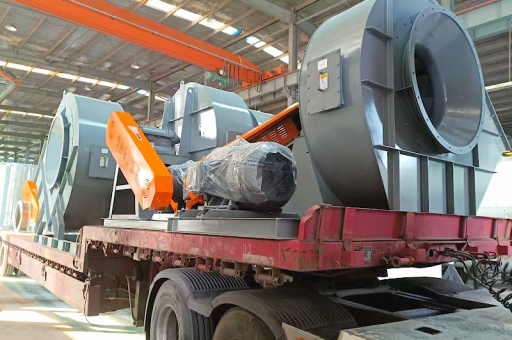
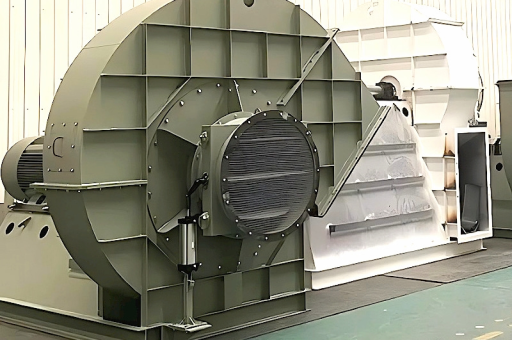
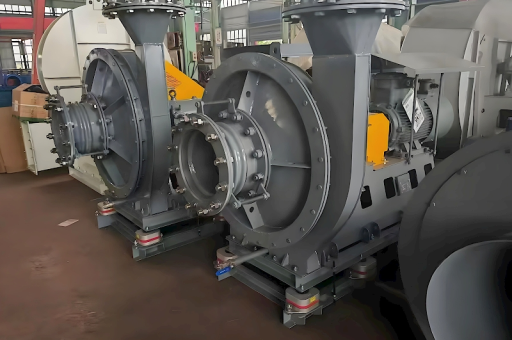
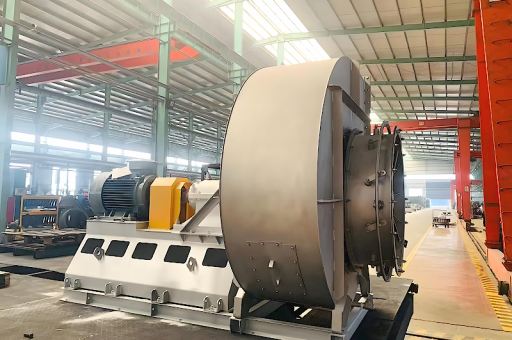
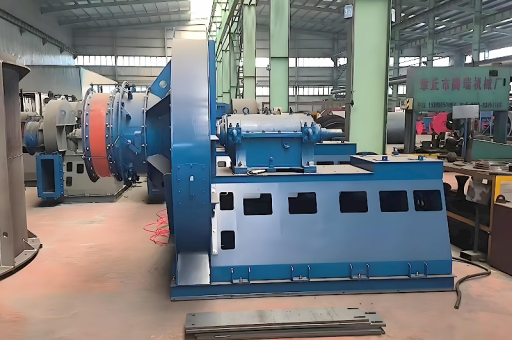
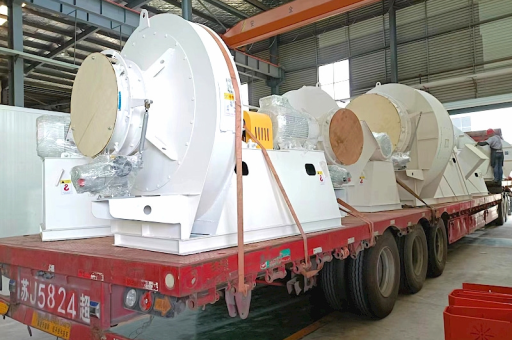
This article's table of contents introduction:
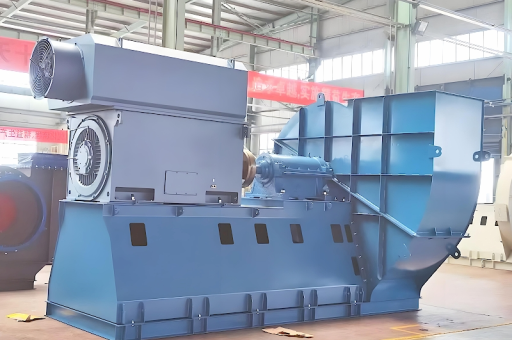
- Why Fiberglass? The Core Mechanism
- Key Construction & Material Grades
- Types of Fiberglass Fans
- Why Choose an FRP Fan? (Pros & Cons)
- Standard Ratings (SP & CFM)
- Critical Application Industries
- Buying Guide: What to Specify
- Major Manufacturers (Examples)
- Summary Recommendation
This is a highly specific and important topic in industrial ventilation and air pollution control. Fiberglass (specifically Fiber-Reinforced Plastic or FRP) fans are a go-to solution for handling corrosive air streams where traditional metal fans would fail quickly.
Below is a comprehensive breakdown of Fiberglass Corrosion-Resistant Fans, covering why they work, their construction, common applications, and key specifications.
Why Fiberglass? The Core Mechanism
Standard metals (carbon steel, galvanized steel, aluminum) react chemically with acids, alkalis, and salts. Stainless steel (e.g., 304 or 316) offers some resistance but is expensive, heavy, and can still be attacked by chlorides (like hydrochloric acid or bleach).
Fiberglass wins because of its chemical inertness:
- The Matrix: The resin (polyester, vinyl ester, or epoxy) is the primary barrier. It does not rust or oxidize.
- The Reinforcement: The glass fibers provide the mechanical strength (tensile, flexural).
- The Result: A material that is inherently resistant to a wide range of chemicals and atmospheric corrosion.
Key Construction & Material Grades
Not all fiberglass is the same. The performance of the fan depends heavily on the resin system used.
| Resin Type | Corrosion Resistance | Max Temp (Typical) | Common Use Case |
|---|---|---|---|
| Isophthalic Polyester | Good (general acids, salts, mild alkalis) | ~180°F (82°C) | General industrial, water treatment, waste gas. |
| Vinyl Ester | Excellent (strong acids, bleaches, chlorides) | ~200-220°F (93-104°C) | Chlor-alkali, pulp & paper, metal plating, fume scrubbers. |
| Bisphenol-A (BPA) Polyester | High (acids, oxidizing agents) | ~250°F (121°C) | High-temperature corrosive gas streams. |
| Furan | Superior (solvents, alkalis) | ~350°F (177°C) | Extremely harsh chemical environments (rare in standard fans). |
Fire Retardancy: Most industrial FRP fans use a resin with a flame spread index of 25 or less (per ASTM E84 or UL 723) to meet building codes and safety standards.
Types of Fiberglass Fans
The design principles are the same as metal fans, but the components are made from FRP:
-
Centrifugal Fans (Sizes: 12" to 100"+)
- Radial Blade (or Backward Inclined): High static pressure, handles particulates. Used for scrubber exhaust, process ventilation.
- Backward Curved: High efficiency, clean air. Used for laboratory exhaust, general fume extraction.
- Airfoil: Highest efficiency, clean air only. Rare in FRP due to complex construction.
-
Axial Fans (Sizes: 12" to 72"+)
- Tubeaxial: High flow, moderate pressure. Used for duct-mounted exhaust, cooling towers.
- Vaneaxial: Higher pressure, better efficiency. Used for longer duct runs.
- Panel Fans (Wall-mounted): Simple, low-cost ventilation of a room or building.
Why Choose an FRP Fan? (Pros & Cons)
Pros:
- Unmatched Corrosion Resistance: Handles wet, acidic, or salty environments.
- Lightweight: Typically 1/3 the weight of steel, 1/2 the weight of stainless. Reduces structural support costs.
- Lower Maintenance: No painting, no rust repair. The color is integral (usually green or grey).
- Non-Conductive: Safe for electrical environments (though motors must be grounded).
- Smooth Surface: Less friction loss in the airstream, slightly higher efficiency for the same pressure.
- Lower Cost: Usually 30-50% cheaper than a comparable 316L stainless steel fan.
Cons:
- Temperature Limit: Cannot handle extreme heat (typically <260°F / 125°C).
- Lower Strength (vs. Steel): Requires thicker structures for the same pressure rating.
- Brittle: Can shatter or crack under severe impact (a tool dropped inside the impeller is a problem).
- UV Degradation: The resin can become brittle and chalky in direct sunlight unless a UV-inhibiting gel coat is applied.
- Static Sparking: While FRP is non-conductive, friction can create a static charge. For explosive atmospheres (combustible dust, flammable vapors), you MUST use conductive FRP (carbon-filled) with a ground path.
Standard Ratings (SP & CFM)
- Static Pressure (SP): Typically up to 20"–30" w.g. (5000–7500 Pa). Higher pressures require very thick, heavy casings.
- Air Volume (CFM): From a few hundred (small lab fume hoods) to over 150,000 CFM (large scrubber systems).
- Wheel Speed: Slower than metal fans (max tip speed ~15,000–18,000 ft/min for standard FRP). Higher speeds risk wheel failure (bursting).
Critical Application Industries
- Chemical Processing: HCl, H2SO4, HF, Cl2, NOx, SO2.
- Metal Finishing & Plating: Chrome acid, nitric acid, cyanide fumes.
- Pulp & Paper: Chlorine dioxide, bleach plant vents.
- Wastewater Treatment: H2S, chlorine gas, bioaerosols from sludge handling.
- Semiconductor & Electronics: Wet benches, acid etch, solvent exhaust (with proper resin).
- University & Hospital Labs: Fume hood exhaust systems.
- Mining & Mineral Processing: Wet scrubber discharge.
Buying Guide: What to Specify
When ordering a fiberglass corrosion-resistant fan, you must provide:
- Air Stream Chemistry: List all chemicals, concentrations, and temperature.
- Operating Temperature: Maximum continuous and peak surge.
- CFM & Static Pressure (SP): Specify inlet or outlet SP at the fan.
- Resin Type: (e.g., "Dow Derakane 411-350 Vinyl Ester" or "General Purpose Isophthalic").
- Fire Rating: (e.g., "ASTM E84 Class I Flame Spread <25").
- Motor Mount: Rigid or with vibration isolators.
- Accessories: Inlet box, drain connection, cleanout door, rain cover (for outdoor use).
- Static Dissipation: For hazardous locations, specify Conductive FRP and a grounding kit.
Major Manufacturers (Examples)
- New York Blower (NYB)
- Greenheck
- Cincinnati Fan
- Dual (a Met-Pro brand)
- Hartzell Fan
- AirPro Fan & Blower
- Anco Engineers (custom high-performance)
Summary Recommendation
Choose a fiberglass fan when:
- The airstream is wet, acidic, or contains chlorides.
- The temperature is below 200°F (93°C) continuously.
- You need a cost-effective alternative to stainless steel.
Do NOT choose a fiberglass fan when:
- The temperature exceeds 250°F (121°C) consistently.
- The airstream contains strong solvents (e.g., MEK, acetone) that attack polyester/vinyl ester (use Furan or stainless steel).
- The application involves high-speed particulate erosion (abrasive dust will destroy resin veneer quickly).
- You need very high static pressure (>25" w.g.) on a small diameter wheel.
Let me know if you need details on sizing, shaft seals, or duct connection specifics.