This article's table of contents introduction:
- Why Choose Stainless Steel Fans?
- Key Stainless Steel Grades Used in Fans
- Construction & Key Features
- Common Applications & Industries
- Advantages & Disadvantages
- Selection Checklist (What to Ask the Manufacturer)
- Key Takeaway
This is a comprehensive overview of stainless steel corrosion-resistant fans. These are critical components in industrial, commercial, and marine environments where standard steel or aluminum fans would fail rapidly.
Here is a breakdown of why they are used, the key grades of stainless steel, construction features, common applications, and selection considerations.
Why Choose Stainless Steel Fans?
The primary advantage is corrosion resistance. Unlike carbon steel, which rusts, or aluminum, which can pit in harsh chemicals, stainless steel forms a passive layer of chromium oxide that protects the underlying metal.
- Hygiene: Non-porous and easy to clean, making them ideal for food, pharmaceutical, and cleanroom applications.
- Strength: Maintains structural integrity at high temperatures and in corrosive atmospheres.
- Longevity: Significantly longer service life in harsh environments compared to painted or coated steel fans.
Key Stainless Steel Grades Used in Fans
The specific grade of stainless steel is crucial. Not all "stainless steel" is equal.
| Grade | Key Properties | Typical Fan Applications |
|---|---|---|
| 304 (1.4301) | "Workhorse" grade. Good general corrosion resistance (atmospheric, water, some acids). Excellent formability and weldability. | Kitchen exhaust, general industrial ventilation, moderate chemical fume handling, food processing. |
| 316 (1.4401) | "Marine grade." Contains Molybdenum (2-3%) for superior resistance to chlorides (saltwater, bleach, brine) and many strong acids. | Coastal facilities, wastewater treatment, chemical plants (chlorine, caustic soda), swimming pools, labs. |
| 316L (1.4404) | Lower carbon version of 316. Best for welding. Prevents "weld decay" (intergranular corrosion) in the heat-affected zone. | Most professional fan fabrications where welding is required in corrosive environments. |
| Duplex (e.g., 2205) | High strength and exceptional resistance to stress corrosion cracking (SCC). Twice the yield strength of 316. | Extremely harsh chemical processing (e.g., high-chloride, high-temperature), offshore oil & gas, desalination. |
| Super Duplex / 254 SMO | Maximum corrosion resistance for the most aggressive environments (high chlorides, low pH, high temps). Very expensive. | Bleach plants, pulp & paper digesters, pharmaceutical API manufacturing. |
Construction & Key Features
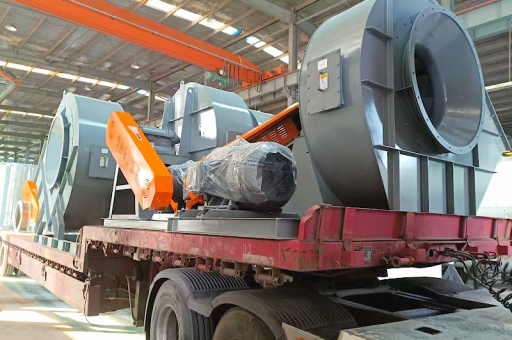
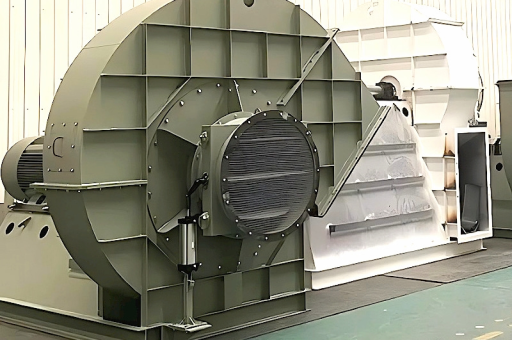
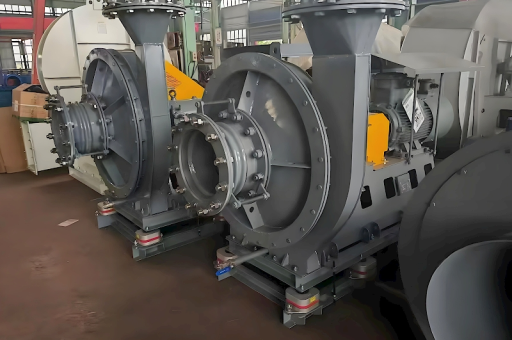
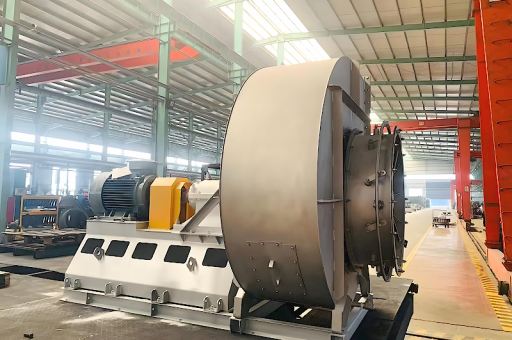
A "stainless steel fan" is more than just the blades. All components in the airstream must be corrosion-resistant.
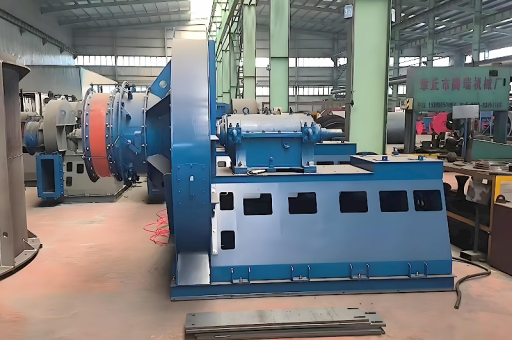
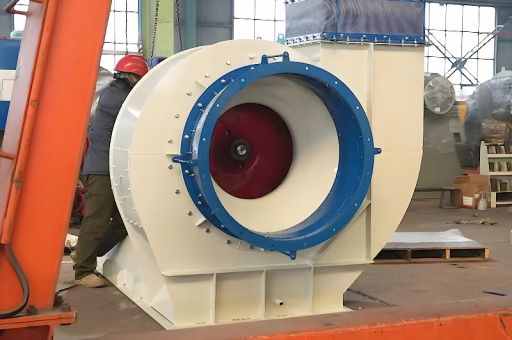
- Impeller (Wheel): Fully welded from 304, 316L, or Duplex. Can be backward-curved (for high efficiency), forward-curved (for high volume), or radial (for material handling).
- Housing (Scroll): Fabricated from matching stainless steel. Must be properly welded and passivated (acid-washed to restore the passive layer).
- Shaft: Often 304L or 316L. For extreme environments, the shaft may be coated (e.g., PTFE, Halar) or made from a higher-grade alloy.
- Bearings: The bearings themselves are not stainless. They are sealed (labyrinth seals or Teflon slingers) to prevent corrosive fumes from reaching the bearing raceways.
- Drive System:
- Direct Drive: Motor shaft is coupled directly to the fan shaft. The motor must be appropriately shielded (e.g., TEFC, washdown, or inverter-duty).
- Belt Drive: Motor is outside the airstream. The belts and pulleys can be stainless, but this is rare. A shaft seal (gas seal or stuffing box) prevents fumes from leaking along the shaft.
- Fasteners: All bolts, nuts, and hardware must be stainless steel (e.g., 18-8, 316) to avoid galvanic corrosion with the fan housing.
- Surface Finish: A smooth (e.g., 180-grit) or electropolished finish is critical for hygiene (food/pharma) and to reduce the nucleation sites for pitting corrosion.
Common Applications & Industries
- Chemical Processing: Exhausting HCl, H₂SO₄, caustic soda, chlorine gas (requires 316L or Duplex).
- Wastewater Treatment: Ventilating wet wells, sludge pits, chlorine rooms. (Saltwater/hypochlorite requires 316L).
- Seawater & Coastal: Boat engine rooms, shipboard ventilation, coastal power plants. (316L is minimum).
- Food & Beverage: Exhausting steam, cooking oils, washdown environments (hygienic 304).
- Marine & Offshore: Ocean-going vessels, oil platforms, FPSOs (Duplex or 316L).
- Pharmaceuticals: Cleanroom and biosafety fume hoods (304 or 316L with smooth finishes).
- Swimming Pools & Spas: Exhausting chloramine-laden air (316L, as 304 will pit rapidly).
Advantages & Disadvantages
| Advantages | Disadvantages |
|---|---|
| Excellent corrosion resistance | High initial cost (2-5x more than carbon steel) |
| Long service life (20+ years) | Heavier than aluminum |
| Hygienic & easy to clean | Can be difficult to weld correctly (requires specialized skills for 316L/Duplex) |
| High-temperature capability (up to ~800°C for high-alloy grades) | Not all stainless is the same (using 304 in a chlorine environment fails quickly) |
| Can handle hazardous fumes | Galvanic corrosion risk if mated with carbon steel, carbon, or copper components |
Selection Checklist (What to Ask the Manufacturer)
- What is the exact chemical composition of the fumes? (Include temperature, concentration, pH, and whether wet/dry).
- What grade of stainless steel is used for the wheel, housing, and shaft? (Specify 316L, not just "304/316").
- Is the fan designed for the specific "passivation" treatment? (To restore corrosion resistance after welding).
- Are all fasteners and hardware 316 stainless or better? (Avoid 304 hardware on a 316 fan).
- What is the bearing seal design? (How are the bearings protected from the corrosive airstream?).
- Is it belt-drive or direct-drive? (For corrosive fumes, belt-drive is often safer so the motor is not in the airstream).
- Is the motor appropriate for the environment? (Washdown, IP56, explosion-proof?).
Key Takeaway
Using a stainless steel corrosion-resistant fan is an investment. The initial cost is high, but the total cost of ownership (TCO) is often lower than replacing a carbon steel fan every 1-3 years. Always overspecify the grade if there is any chance of salt, chlorine, or strong acids. When in doubt, 316L is the safest choice for "severe service." For mild environments, 304 is cost-effective.
Need a specific recommendation? I can help you define the exact parameters (CFM/air volume, static pressure, gas composition, temperature, altitude) to find the right fan.