This article's table of contents introduction:
- What Makes a Fan "Corrosion Resistant"?
- How They Work (Centrifugal Action)
- Common Applications
- Advantages & Disadvantages of FRP (the most common type)
- How to Select the Right Fan
- Key Manufacturers to Look For
- Maintenance Considerations
Here is a comprehensive guide to Centrifugal Corrosion-Resistant Fans.
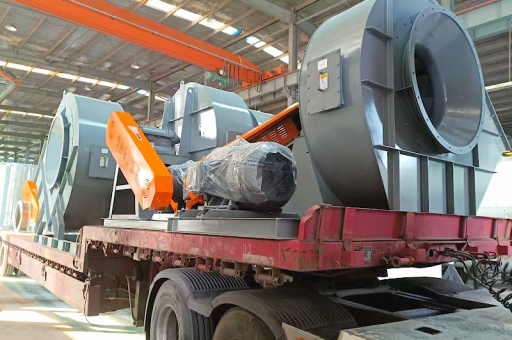
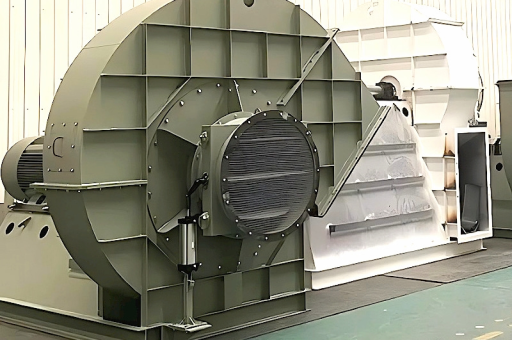
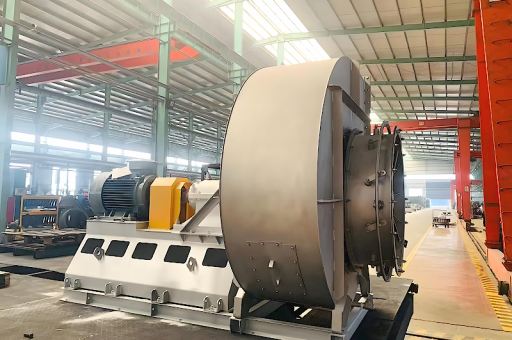
These fans are specialized industrial equipment designed to move air or gases that contain corrosive chemicals, moisture, salt, or other aggressive agents. Unlike standard fans, which would rapidly degrade, these are constructed from materials and coatings that resist chemical attack.
What Makes a Fan "Corrosion Resistant"?
The key is in the materials of construction and surface treatments. The three primary methods are:
- Fiber Reinforced Plastic (FRP): The most common material for highly corrosive environments. The entire fan housing and impeller are molded from thermoset resins (like Vinyl Ester or Polyester) reinforced with fiberglass.
- Best for: Handling strong acids, chlorinated gases, bleach, and highly humid air.
- Stainless Steel Alloys: Certain grades offer excellent corrosion resistance.
- Typical grades: 304 Stainless (general), 316 Stainless (better for chlorides), 317L, and high-performance alloys like Hastelloy or Titanium for extreme environments (e.g., hydrochloric acid, wet chlorine).
- Best for: High-temperature applications where FRP would fail, or when compatibility with the gas stream prohibits plastics.
- Specialized Coatings & Linings:
- Metal fans coated with: Polyester, Epoxy, Nylon (e.g., Rilsan), PTFE (Teflon), or PVC.
- Rubber linings: Some fans are lined with thick rubber (hard rubber or soft rubber) to protect a steel housing.
- Best for: Retrofitting or specific chemical exposures where a full FRP fan isn't practical or cost-effective.
How They Work (Centrifugal Action)
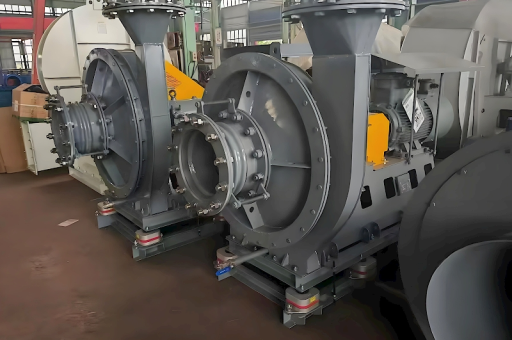
Centrifugal fans use an impeller (wheel) to accelerate air radially outward into a scroll housing, creating high pressure.
Key Features for Corrosion Resistance:
- Impeller: The rotating part. In FRP fans, blades are typically backward-curved or radial-tip, designed for smooth airflow and reduced particle buildup.
- Housing (Volute): Collects the discharged air. Must be fully lined or made of solid FRP.
- Shaft: Usually in contact with the gas stream. Often protected by a shaft seal and covered with a corrosion-resistant sleeve (FRP or rubber) or made from stainless steel.
- Bearings: Located outside the gas stream in a separate bearing bracket to prevent corrosive fumes from reaching them.
Common Applications
Centrifugal corrosion-resistant fans are critical in industries that process or emit aggressive chemicals:
| Industry | Application | Corrosive Agent |
|---|---|---|
| Chemical Processing | Fume exhaust, scrubber systems, VOC emission control | Acids (H2SO4, HCl), bases (NaOH), solvents |
| Wastewater Treatment | Aeration, digester gas handling, ventilation of wet wells | Hydrogen sulfide (H2S), ozone, chlorine gas |
| Metal Finishing & Plating | Exhaust from plating tanks, etching baths, pickling lines | Cyanides, chromic acid, muriatic acid |
| Semiconductor / Electronics | Cleanroom exhaust, acid waste vent systems | Hydrofluoric acid (HF), hydrochloric acid, solvents |
| Mining & Mineral Processing | Ventilation of leach pads, smelter exhaust | Sulfur dioxide (SO2), sulfuric acid mist |
| Laboratories | Fume hood exhaust | Mixed chemical vapors |
| Marine / Offshore | Bilge ventilation, engine room ventilation | Salt-laden air (sodium chloride) |
Advantages & Disadvantages of FRP (the most common type)
Advantages:
- Excellent chemical resistance (especially to acids and halogenated gases).
- Lightweight (easier to install and support).
- Low maintenance (no rusting or painting required).
- Seamless construction (no welded joints that can corrode).
- High strength-to-weight ratio.
Disadvantages:
- Limited temperature range: Typically max 200°F (93°C) for standard resins; special resins can handle up to ~250°F (121°C).
- Brittleness: Can crack or shatter if impacted.
- Electrical conductivity: Must be designed to be spark-resistant for flammable environments (carbon-impregnated layers used).
- UV degradation: Can degrade in direct sunlight without UV-inhibiting resins/gel coats.
How to Select the Right Fan
You must know the following:
- Gas Composition: What specific chemicals? What is their concentration? (A 5% acid is very different from 98% acid).
- Temperature: Operating temperature is critical (affects material choice).
- Moisture Content: Saturated air or condensing humidity accelerates corrosion.
- Presence of Solids: Abrasive particles can quickly erode FRP.
- Performance Requirements: Airflow (CFM) and Static Pressure (in. w.g.).
- Spark Resistance: Is the environment explosive? (Look for an AMCA Type A or B spark-resistant construction).
- Mounting Location: Indoor vs. outdoor, seismic requirements.
Key Manufacturers to Look For
- New York Blower (NYB) – Wide range of FRP and specialty metal fans.
- Greenheck – Good general industrial corrosion-resistant fans.
- Cincinnati Fan – FRP and epoxy-coated fans.
- Twin City Fan & Blower – Comprehensive custom industrial fans.
- Air-Maze / Soler & Palau – Specialized corrosion-resistant units.
- Dual (a division of Met-Pro) – Leading manufacturer of FRP fans.
Maintenance Considerations
- Inspect for cracks in FRP housing (especially around bolt holes and discharge transitions).
- Check the impeller balance: Corrosion can create uneven deposits that cause vibration.
- Monitor bearing temperature: Overheating bearings can lead to shaft seal failure.
- Look for "blistering" on painted or lined steel fans (indicates coating failure).
- Clean the shaft seal to prevent corrosive fumes from reaching the bearings.
Summary: If you are moving aggressive chemical fumes, FRP centrifugal fans are the industry standard. For moderate corrosive environments or high temperatures, stainless steel (316/317) is preferred. Always specify the exact chemical concentration and temperature to your fan supplier to ensure compatibility.