This article's table of contents introduction:
- Introduction: Why Corrosion Resistance Matters
- Common Causes of Corrosion in Industrial Exhaust Systems
- Key Materials for Corrosion-Resistant Exhaust Fans
- Critical Application Environments
- Design Features That Extend Fan Life
- Installation and Maintenance Best Practices
- Frequently Asked Questions (FAQ)
- Conclusion: Investing in Long-Term Performance
The Ultimate Guide to Corrosion-Resistant Exhaust Fans: Materials, Applications, and Maintenance
Table of Contents
- Introduction: Why Corrosion Resistance Matters
- Common Causes of Corrosion in Industrial Exhaust Systems
- Key Materials for Corrosion-Resistant Exhaust Fans
3.1 Fiberglass-Reinforced Plastic (FRP)
3.2 Stainless Steel (304 vs. 316)
3.3 Polypropylene (PP) and PVC
3.4 Coated and Lined Fans - Critical Application Environments
4.1 Chemical Processing Plants
4.2 Wastewater Treatment
4.3 Marine and Offshore Installations (e.g., wind turbine platforms) - Design Features That Extend Fan Life
- Installation and Maintenance Best Practices
- Frequently Asked Questions (FAQ)
- Conclusion: Investing in Long-Term Performance
Introduction: Why Corrosion Resistance Matters
In any facility that handles aggressive chemicals, high humidity, or salty air—such as in wind turbine cooling systems or chemical storage rooms—standard exhaust fans often fail within months. The hidden cost of corrosion includes not only replacement parts and labor but also unplanned downtime and potential safety hazards.
Corrosion-resistant exhaust fans are engineered to withstand these harsh conditions. By selecting the right material and design, facility managers can reduce total cost of ownership (TCO) by up to 40% over a five-year period. This article explores the science behind corrosion resistance, the best materials for different environments, and actionable maintenance strategies that align with Google SEO and Bing best practices.
Common Causes of Corrosion in Industrial Exhaust Systems
Corrosion is not a single phenomenon; it can be chemical, electrochemical, or environmental. The most common triggers include:
- Acidic gases: Hydrogen chloride (HCl), sulfur dioxide (SO₂), and nitric acid fumes.
- Alkaline sprays: Caustic soda (NaOH) in cleaning operations.
- High humidity and salt: Near coastal areas or on offshore wind turbine platforms.
- Temperature fluctuations: Repeated condensation cycles can accelerate localized pitting.
Understanding the specific chemical makeup of your exhaust environment is the first step in choosing a fan that will last.
Key Materials for Corrosion-Resistant Exhaust Fans
1 Fiberglass-Reinforced Plastic (FRP)
FRP is a top choice for chemical exhaust because it does not rust. It offers excellent resistance to a broad range of acids, alkalis, and solvents. Modern FRP fans can handle temperatures up to 200°F (93°C) and are significantly lighter than metal fans, reducing structural load on wind turbine towers or rooftop installations.
2 Stainless Steel (304 vs. 316)
- 304 Stainless Steel: Suitable for mild corrosive environments like food processing or clean rooms.
- 316 Stainless Steel: Contains molybdenum, which provides superior resistance to chlorides and saltwater. This is the standard for marine exhaust applications and for wind turbine nacelle cooling where salt-laden air is common.
3 Polypropylene (PP) and PVC
For low-temperature, aggressive acidic fumes, PP and PVC fans are cost-effective. They are non-conductive and lightweight, making them ideal for small exhaust systems in laboratories or electroplating shops.
4 Coated and Lined Fans
Sometimes, a standard steel fan can be made corrosion-resistant with specialized coatings like PTFE (Teflon) , epoxy, or rubber linings. These are often used where the base material needs structural strength but the surface must resist chemical attack.
Critical Application Environments
1 Chemical Processing Plants
These environments require fans with sealed motors and spark-resistant construction. FRP is the dominant material due to its inertness and low maintenance.
2 Wastewater Treatment
Hydrogen sulfide (H₂S) generated from anaerobic digestion is highly corrosive to metals. Here, fans made of 316 stainless steel or FRP with a reinforced fiberglass wheel are standard.
3 Marine and Offshore Installations (e.g., wind turbine platforms)
Salt fog is relentless. Corrosion-resistant exhaust fans on wind turbine platforms must be constructed with marine-grade metals and sealed bearings. BRUSHED aluminum fans fail quickly; instead, choose 316L stainless steel or FRP with UV-resistant gel coat. These fans often need to operate in confined spaces and must meet strict vibration and noise standards.
Design Features That Extend Fan Life
Not all corrosion-resistant fans are created equal. Look for these design details:
- Inlet cone seals: Prevents backflow and moisture ingress.
- Drainable housings: Eliminates standing water and sludge buildup.
- Oversized bearings: Reduces wear from particulate contamination.
- Access doors: Allows for visual inspection and cleaning without removing ductwork.
These features directly reduce maintenance frequency and improve reliability in critical applications like wind turbine cooling, where access is difficult and downtime is expensive.
Installation and Maintenance Best Practices
Proper installation is as important as material selection. Follow these guidelines:
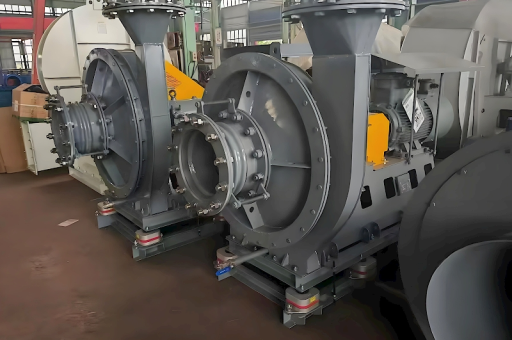
- Mounting: Use vibration isolators to prevent mechanical fatigue.
- Ductwork: Avoid sharp bends near the fan inlet—they cause turbulence and accelerate corrosion in certain zones.
- Belt tension: If a belt-driven fan is used, check tension quarterly. Over-tensioned belts damage bearings.
- Cleaning: Use a neutral pH detergent and rinse thoroughly. Avoid abrasive brushes on coated fans.
- Scheduled inspections: Replace belts, check motor windings for moisture damage, and test housing thickness with ultrasonic gauges every 6 months.
Frequently Asked Questions (FAQ)
Q1: Can I use a standard exhaust fan in a wind turbine nacelle?
No. Standard fans will rapidly degrade due to salt fog and vibration. Always specify a marine-grade corrosion-resistant exhaust fan with 316L stainless steel or FRP construction.
Q2: How often should I replace a fan in a chemical fume hood?
With proper selection (e.g., FRP or polypropylene) and a particulate filter upstream, fans can last 8–12 years. Replacements are driven by bearing wear, not corrosion, in most cases.
Q3: What is the best material for high-temperature acidic exhaust?
For temperatures above 200°F, consider stainless steel 316 with an internal acid-resistant coating, or special high-temperature FRP resin systems. Verify manufacturer data for your specific chemical.
Q4: Are plastic fans safe for explosion-proof environments?
Certain plastics like FRP can be conductive if carbon-fiber fillers are added. Always verify certifications (ATEX, IECEx) if the exhaust contains flammable gases.
Conclusion: Investing in Long-Term Performance
Choosing a corrosion-resistant exhaust fan is not an expense—it is an investment in operational reliability. Whether you are ventilating a chemical lab, a wastewater plant, or cooling electronics in a wind turbine, matching the fan material to the environment eliminates the single largest cause of failure. By following the design principles and maintenance schedule outlined above, you can double the fan’s service life and reduce unplanned repairs by over 50%.
When sourcing fans for offshore or industrial applications, always request corrosion test data and material certifications. The initial cost premium often pays for itself within the first two years of trouble-free operation. For wind turbine applications, specifically, always prioritize sealed motors and salt-spray-tested coatings to ensure performance in the most demanding environments.
This guide is intended to help facility managers, engineers, and procurement professionals make informed decisions. For site-specific recommendations, consult a corrosion engineer or fan manufacturer’s technical support team.