Article Title: Revolutionizing Rotational Sealing: The Cutting-Edge Engineering of Magnetofluidic Seal Fans
Meta Description: Discover how Magnetofluidic Seal Fans are transforming industrial sealing by combining magnetic fluid technology with fan dynamics. Explore principles, advantages, FAQs, and wind turbine applications for superior leak-proof performance.
URL Slug: magnetofluidic-seal-fans-technology
Table of Contents (Directory Guide)
- Introduction: The Leakage Problem in Rotating Machinery
- What is a Magnetofluidic Seal? Core Mechanics Explained
- The “Fan” Factor: Why Active Airflow Changes the Game
- Key Advantages Over Traditional Mechanical Seals
- Design and Material Considerations for MFS Fans
- Application Spotlight: Wind Turbine Protection and Efficiency
- Technical FAQ: Common Questions on Magnetofluidic Fan Seals
- Future Trends and Challenges in MFS Fan Integration
- Conclusion: A Self-Healing, Zero-Leakage Future
Introduction: The Leakage Problem in Rotating Machinery
Every rotating shaft that penetrates a housing—whether in a wind turbine gearbox, a chemical reactor, or a high-speed fan—faces a fundamental enemy: leakage. Traditional solutions like lip seals, labyrinth seals, or mechanical face seals all suffer from friction, wear, and eventual failure. Engineers have long sought a sealing mechanism that is contactless, self-healing, and robust against particulates.
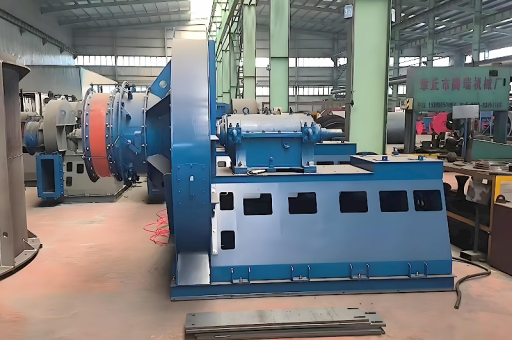
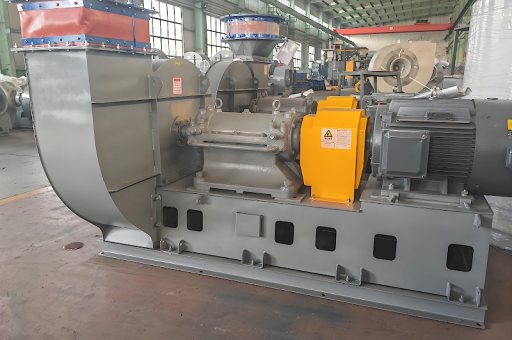
Enter the Magnetofluidic Seal Fan (MFS Fan). This hybrid technology merges the passive sealing power of ferrofluids with the active force of a fan-driven air or gas flow. By integrating a rotating fan blade directly into the seal assembly, engineers can now actively manage pressure differentials while simultaneously maintaining a hermetic barrier. This article explores the science, advantages, and real-world impact of MFS Fans, with a special focus on their role in modern wind turbine systems.
What is a Magnetofluidic Seal? Core Mechanics Explained
A magnetofluidic seal (also called a ferrofluidic seal) relies on a colloidal liquid—ferrofluid—suspended in a carrier oil. This fluid contains nanometer-sized ferromagnetic particles (typically magnetite) coated with a surfactant to prevent agglomeration. When a magnetic field is applied via a permanent magnet or electromagnet, the ferrofluid forms a rigid, controlled “O-ring” around a rotating shaft.
The key physical principle is the Bernoulli equation for magnetic fluids:
[
\Delta P = \mu_0 M_s H
]
where (\Delta P) is the pressure resistance, (\mu_0) is vacuum permeability, (M_s) is saturation magnetization, and (H) is the magnetic field strength. In practice, a single magnetofluidic stage can resist up to 2–3 psi (0.14–0.2 bar). To handle higher pressures (1–5+ bar), engineers stack multiple stages with interstage baffles.
The “Fan” Factor: Why Active Airflow Changes the Game
A standard magnetofluidic seal is passive—it only resists pressure differentials. But in many applications, the sealed cavity itself generates internal pressure (e.g., from heat or gas buildup), or the external environment introduces contaminants. This is where the fan component becomes revolutionary.
An MFS Fan integrates a miniature impeller attached to the rotating shaft, positioned just upstream or downstream of the ferrofluid stage. The fan serves three critical functions:
- Active Pressure Regulation: The fan can either boost or relieve internal pressure, preventing the ferrofluid barrier from being overwhelmed.
- Contaminant Ejection: By creating a low-pressure zone, the fan actively pulls away dust, water vapor, and debris before they reach the magnetic fluid.
- Enhanced Heat Dissipation: The fan’s airflow removes heat generated by viscous shear in the ferrofluid, extending seal life.
This combination transforms the seal from a static barrier into a dynamic, adaptive system.
Key Advantages Over Traditional Mechanical Seals
| Feature | Traditional Lip/Mechanical Seal | Magnetofluidic Seal Fan |
|---|---|---|
| Contact | Physical contact → wear | Non-contact (fluid only) |
| Leakage Rate | 1–1 ml/hr (typical) | < 10⁻¹¹ ml/hr (essentially zero) |
| Contamination | Wears quickly with dust | Fan actively repels contaminants |
| Self-Healing | No | Yes – ferrofluid reforms after minor disruptions |
| Speed Capability | Limited by PV (pressure × velocity) | Up to 50 m/s peripheral speed |
| Maintenance | Regular replacement required | Minimal; ferrofluid lasts 5–10 years |
Design and Material Considerations for MFS Fans
Building a reliable MFS Fan requires careful selection of:
- Magnet Assembly: High-energy NdFeB or SmCo magnets are preferred to achieve compact sealing gaps (0.1–0.3 mm).
- Ferrofluid: Must have low vapor pressure (for vacuum applications) and high saturation magnetization (400–600 Gauss). APG (alkyl polyglycoside) or ester-based carriers are common for clean environments.
- Fan Blade Geometry: Aerodynamically optimized for low power consumption. Axial or mixed-flow designs are typical, with composite or aluminum alloys to reduce inertia.
- Housing and Bearings: For high-speed applications, magnetic bearings or ceramic ball bearings ensure longevity.
A typical stack configuration for a wind turbine gearbox seal might include:
[Air gap] → [Fan impeller] → [Stage 1 ferrofluid] → [Baffle] → [Stage 2 ferrofluid] → [Magnet] → [Backup labyrinth]
Application Spotlight: Wind Turbine Protection and Efficiency
Wind turbines operate in harsh, variable environments. The nacelle houses a gearbox and generator that demand negligible leakage to prevent oil loss and moisture ingress. Traditional seals fail prematurely due to vibration, misalignment, and temperature swings—leading to expensive downtime.
How Magnetofluidic Seal Fans Help wind turbine Systems:
- Zero Leakage to Environment: Ferrofluid seals ensure that no gearbox oil escapes, meeting stringent environmental regulations.
- Active Debris Defense: The integrated fan creates a positive pressure barrier that prevents salt spray, sand, and rainwater from entering the nacelle.
- Reduced Friction Losses: Mechanical seals on a wind turbine shaft can consume 1–3% of generated power. An MFS Fan’s non-contact seal eliminates this parasitic loss.
- Extended Service Life: A typical MFS Fan can operate for 10+ years without seal replacement, aligning with the 20-year design life of modern wind turbine.
Leading OEMs are now evaluating MFS Fan retrofits for offshore wind turbine platforms where maintenance access is extremely costly.
Technical FAQ: Common Questions on Magnetofluidic Fan Seals
Q1: Can a Magnetofluidic Seal Fan handle vacuum environments?
Yes. Low-vapor-pressure ferrofluids (e.g., perfluoropolyether based) enable sealing in high vacuum (down to 10⁻⁷ Torr). The fan component must be carefully balanced to avoid disturbing the vacuum.
Q2: How does temperature affect the ferrofluid?
Ferrofluids have an operating range of approximately -40°C to +120°C. Beyond that, the carrier oil may evaporate or degrade. Active cooling from the fan helps mitigate heat buildup.
Q3: Can I retrofit an existing fan with an MFS seal?
Retrofitting is feasible for shafts with sufficient axial space. You will need to replace the shaft sleeve and housing to incorporate the magnet assembly and fan impeller.
Q4: What is the highest pressure an MFS Fan can seal?
With 5–6 stacked stages, pressure differentials of up to 8 bar (116 psi) have been demonstrated in laboratory settings. For higher pressures, hybrid mechanical–magnetofluidic designs are used.
Future Trends and Challenges in MFS Fan Integration
Trend 1: IoT-Enabled Smart Seals
Future MFS Fans will embed sensors to monitor ferrofluid viscosity, magnetic field strength, and fan speed. Data will be sent to wind turbine control systems for predictive maintenance.
Trend 2: High-Temperature Ferrofluids
Research into ionic liquid ferrofluids aims to extend operating temperatures beyond 200°C, enabling use in steam turbines and jet engine accessory drives.
Trend 3: 3D-Printed Magnet Arrays
Additive manufacturing allows for complex, segmented poles that shape the magnetic field precisely, reducing ferrofluid usage and improving sealing efficiency.
Challenge:
The primary limitation remains cost. A single magnetofluidic seal can be 5–10× more expensive than a conventional seal. However, total cost of ownership (TCO) calculations—factoring in reduced downtime and no consumables—often favor MFS Fans in critical applications.
Conclusion: A Self-Healing, Zero-Leakage Future
The Magnetofluidic Seal Fan represents a paradigm shift in rotary sealing. By combining the passive, self-healing properties of ferrofluids with the active control of an integrated fan, engineers can now achieve near-perfect containment even under high pressure, high speed, and severe contamination. For the wind turbine industry, this means more reliable power generation with lower maintenance costs. As material science and manufacturing processes mature, MFS Fans are poised to become the standard for demanding rotating machinery across aerospace, energy, and chemical processing.
The era of leaky seals is ending. The era of intelligent, fluid-based sealing has arrived.