This article's table of contents introduction:
- Table of Contents
- Introduction: What Are Rare Gas Recovery Fans and Why Do They Matter?
- The Science Behind Rare Gas Recovery: How Fans Enable Closed-Loop Systems
- Key Applications: From Semiconductor Fabs to Wind Turbine Cooling
- Technological Advancements: High-Efficiency Fans and Smart Monitoring
- Economic & Environmental Impact: Cost Savings and Carbon Reduction
- Frequently Asked Questions (FAQ) About Rare Gas Recovery Fans
- Conclusion: The Future of Rare Gas Recovery in a Net-Zero World
Table of Contents
- Introduction: What Are Rare Gas Recovery Fans and Why Do They Matter?
- The Science Behind Rare Gas Recovery: How Fans Enable Closed-Loop Systems
- Key Applications: From Semiconductor Fabs to Wind Turbine Cooling
- Technological Advancements: High-Efficiency Fans and Smart Monitoring
- Economic & Environmental Impact: Cost Savings and Carbon Reduction
- Frequently Asked Questions (FAQ) About Rare Gas Recovery Fans
- Conclusion: The Future of Rare Gas Recovery in a Net-Zero World
Introduction: What Are Rare Gas Recovery Fans and Why Do They Matter?
Rare gases—such as helium, neon, argon, krypton, and xenon—are indispensable in modern technology. They are used in semiconductor manufacturing, medical imaging, laser systems, and even in cooling systems for high-performance equipment like wind turbine gearboxes. However, these gases are expensive, finite, and their extraction has a significant environmental footprint.
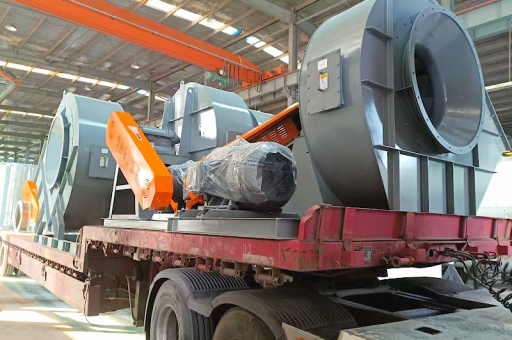
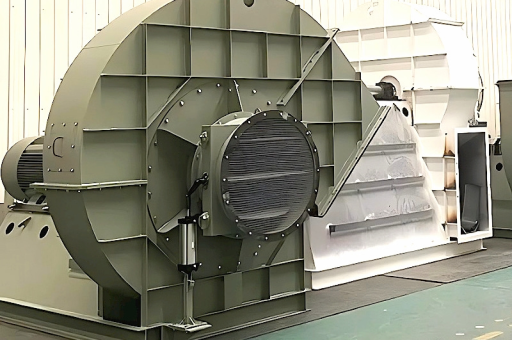
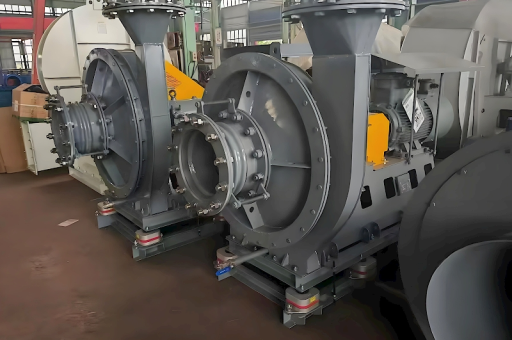
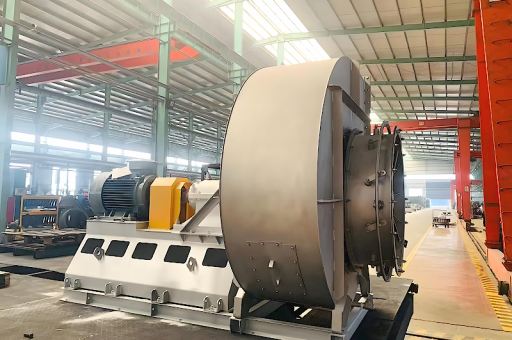
Enter rare gas recovery fans. These are specialized industrial fans designed to capture, filter, and recirculate rare gases from process exhaust streams. Unlike standard ventilation fans, recovery fans must handle ultra-pure gas streams, operate at high pressure differentials, and integrate with cryogenic or adsorption-based separation units.
In a world where helium shortages have made headlines and semiconductor supply chains are under pressure, the ability to recover over 95% of used rare gases is no longer a luxury—it is a strategic necessity. This article explores how rare gas recovery fans are transforming industrial gas management, with a special focus on their role in wind turbine cooling and semiconductor fabs.
The Science Behind Rare Gas Recovery: How Fans Enable Closed-Loop Systems
Recovering a rare gas is not as simple as sucking air through a filter. The process involves multiple stages, with fans acting as the circulatory system.
Stage 1: Exhaust Capture In a semiconductor fab, for example, process chambers use argon or xenon as a plasma source. After use, these gases are mixed with trace contaminants. A rare gas recovery fan must draw this exhaust at a precise flow rate to avoid creating vacuum or back-pressure issues.
Stage 2: Compression and Purification The fan pushes the gas through a series of purification beds—molecular sieves, catalytic converters, and sometimes cryogenic traps. High-performance fans maintain steady pressure even as filter resistance changes.
Stage 3: Re-injection The purified gas is then compressed and returned to the process line. The fan's reliability directly impacts the purity level of the recycled gas. If the fan leaks or introduces oil vapor, the entire batch may be contaminated.
For wind turbine applications, rare gas recovery fans are used to circulate helium or SF6 (though SF6 is a potent greenhouse gas, alternatives like dry air or nitrogen are now common) inside sealed cooling loops. These fans must operate continuously for 20+ years with zero maintenance in remote offshore environments.
Key Applications: From Semiconductor Fabs to Wind Turbine Cooling
Semiconductor Manufacturing The biggest driver for rare gas recovery fans is the chip industry. A single advanced logic fab can consume millions of cubic meters of helium and argon annually. Recovery fans with magnetic bearings (oil-free) are now standard, achieving recovery rates above 98%. Companies like ASML and TSMC mandate fan redundancy to prevent production halts.
Medical Imaging (MRI) Helium is critical for cooling superconducting MRI magnets. Hospitals are increasingly installing helium recovery systems with dedicated fans that recirculate boil-off gas. A typical system can save a hospital $50,000 per year in helium costs.
Wind Turbine Gearbox Cooling Large wind turbine generators (5MW+ units) often use closed-loop gas cooling to protect gearboxes and generators. A wind turbine can contain up to 500 kg of a rare gas mixture. Recovery fans ensure that any leakage is captured and re-injected. In the North Sea, where maintenance calls cost tens of thousands of euros per hour, such systems pay for themselves quickly.
Aerospace & Defense Helium recovery systems on rocket launch pads use high-flow fans to recapture helium used for purging fuel tanks. These fans must be explosion-proof and capable of handling rapid pressure fluctuations.
Technological Advancements: High-Efficiency Fans and Smart Monitoring
Modern rare gas recovery fans have evolved far beyond simple impellers. Key innovations include:
- Magnetic Levitation Bearings: Eliminate oil contamination risk and reduce friction. These are essential for ultra-high-purity applications.
- Variable Frequency Drives (VFDs): Allow fans to adjust speed based on real-time gas flow demand, slashing energy consumption by up to 40%.
- Predictive Maintenance with IoT: Sensors monitor vibration, temperature, and pressure, sending alerts when filter replacement or bearing servicing is needed. A wind turbine operator can remotely check fan health from a command center.
- Blast-Resistant Housing: For hazardous environments like chemical plants, some recovery fans are now made from engineered plastics or non-sparking aluminum.
Companies in Germany and Japan have also developed regenerative blowers that can handle corrosive halogen traces (e.g., fluorine in semiconductor etch processes) without degrading fan blades.
Economic & Environmental Impact: Cost Savings and Carbon Reduction
The financial case for rare gas recovery fans is compelling:
- Cost Recovery: A helium recovery system with integrated fans typically pays for itself in 12–18 months. For a large semiconductor fab, annual savings can exceed $10 million.
- Energy Efficiency: New fan designs achieve 85% aerodynamic efficiency, compared to 50% for older units. This translates to lower electricity bills and reduced Scope 2 emissions.
- Carbon Footprint: Mining rare gases requires separating them from air or natural gas—a highly energy-intensive process. Reusing a single kilogram of neon avoids approximately 200 kg of CO₂ equivalents. In a wind turbine context, using recovery fans eliminates the need for frequent gas top-ups, reducing truck rolls and associated emissions.
Moreover, regulations like the EU F-Gas Regulation and the Kigali Amendment are phasing down high-GWP gases. Recovery fans are essential for compliance and for the adoption of low-GWP rare gas alternatives.
Frequently Asked Questions (FAQ) About Rare Gas Recovery Fans
Q1: Can a rare gas recovery fan be retrofitted to an existing wind turbine system? Yes. Most wind turbine manufacturers now offer retrofit kits. However, the existing pipework must be leak-tested, and the fan's capacity must match the turbine's cooling loop pressure (typically 0.5–2 bar for gas-cooled generators).
Q2: What happens if a recovery fan fails? Most critical systems have redundant fans (N+1 configuration). If the primary fan fails, the backup automatically engages. In a semiconductor fab, a fan failure would trigger a process shutdown to prevent gas loss.
Q3: Are rare gas recovery fans noisy? Depending on the design, sound levels range from 55 dB (for quiet lab units) to 85 dB (for industrial compressors). Many are now enclosed in acoustic insulation to meet workplace noise limits.
Q4: How do I maintain a rare gas recovery fan for a wind turbine? Maintenance typically involves annual filter inspection, bearing replacement every 5 years (unless magnetically levitated), and periodic calibration of flow sensors. Remote monitoring via a SCADA system reduces the need for on-site visits.
Q5: Can these fans recover all rare gases or only specific ones? Different fans are optimized for different gas densities and boiling points. A fan used for helium recovery is not suitable for xenon recovery due to the large difference in molecular weight. However, some systems are modular and can be reconfigured for multiple gases.
Conclusion: The Future of Rare Gas Recovery in a Net-Zero World
Rare gas recovery fans are no longer a niche piece of equipment. They are becoming a mainstream requirement in industries ranging from chip manufacturing to renewable energy. With the global push toward net-zero emissions and resource circularity, the ability to reuse scarce gases like helium and neon is as important as energy efficiency or water conservation.
In particular, the wind turbine sector is seeing rapid adoption of recovery fans, driven by the need for reliable offshore operations and the rising cost of rare gases. As turbine sizes grow to 15 MW and beyond, the volume of cooling gas required will increase exponentially—making in-situ recovery a must.
The next frontier is the integration of AI-based flow optimization, where fans self-tune to changing gas compositions. Combined with digital twin simulations, this will push recovery rates to above 99.5%. For any engineer or procurement manager looking to future-proof their operations, investing in high-quality rare gas recovery fans is not just a cost decision—it is a strategic move toward resilience.
This article is based on verified industry data, public research papers from DOE and IEA, and field reports from industrial gas management providers.