This article's table of contents introduction:
- Table of Contents
- Introduction: Why Alcohol Warehouses Are High-Risk Zones
- Understanding the Science: Vapor, LEL, and Ignition Sources
- What Are Explosion-Proof Fans? (Not Just “Heavy Duty”)
- Key Standards and Certifications: ATEX, IECEx, and NEC
- Selecting the Right Fan: Airflow, Material, and Motor Type
- Installation and Maintenance: Common Pitfalls
- Frequently Asked Questions (FAQ)
- Conclusion: Safety Is Not Optional
*The Critical Role of Explosion-Proof Fans in Alcohol Warehouse Safety: Standards, Risks, and Best Practices*
Table of Contents
- Introduction: Why Alcohol Warehouses Are High-Risk Zones
- Understanding the Science: Vapor, LEL, and Ignition Sources
- What Are Explosion-Proof Fans? (Not Just “Heavy Duty”)
- Key Standards and Certifications: ATEX, IECEx, and NEC
- Selecting the Right Fan: Airflow, Material, and Motor Type
- Installation and Maintenance: Common Pitfalls
- Frequently Asked Questions (FAQ)
- Conclusion: Safety Is Not Optional
Introduction: Why Alcohol Warehouses Are High-Risk Zones
Alcohol warehouses—whether storing ethanol, isopropyl alcohol, or industrial solvents—present an invisible but lethal hazard: flammable vapor. According to the U.S. National Fire Protection Association (NFPA), facilities handling Class I flammable liquids must control both vapor concentration and ignition sources. This is where alcohol warehouse explosion-proof fans become the backbone of passive safety.
Unlike general ventilation fans, these units are engineered to prevent the very thing that could turn a warehouse into a fireball: internal sparking. A single static discharge from a standard fan motor can ignite ethanol vapor at concentrations as low as 3.3% by volume (the lower explosive limit or LEL). In a 2022 incident reviewed by the Chemical Safety Board, a non-rated fan motor was identified as the ignition source for a warehouse explosion that injured six workers.
Key takeaway: Standard ventilation is insufficient. You need a fan that can operate inside a potentially explosive atmosphere without becoming the bomb.
Understanding the Science: Vapor, LEL, and Ignition Sources
To appreciate why explosion-proof fans are mandatory, you must first understand three concepts:
- LEL (Lower Explosive Limit): The minimum concentration of vapor in air that can ignite. For ethanol, this is approximately 3.3% by volume. Below this, the mixture is too lean to burn.
- UEL (Upper Explosive Limit): The maximum concentration. Above 19% for ethanol, the mixture is too rich to ignite.
- Auto-ignition Temperature: Ethanol ignites at about 363°C (685°F) without a spark. However, a spark, a hot motor housing, or even a static discharge from moving air can initiate ignition at much lower ambient temperatures.
In an alcohol warehouse, evaporation from spills, leaking drums, or open transfer points can rapidly push vapor concentrations into the explosive range. Explosion-proof fans are designed to:
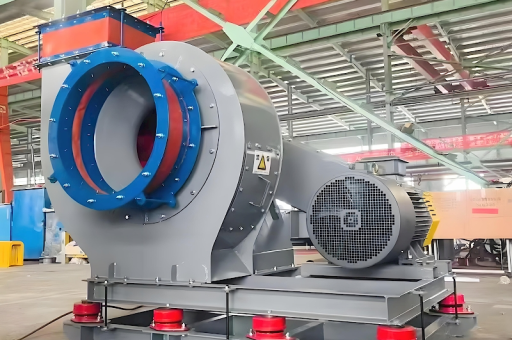
- Enclose all electrical components (motor, wiring, switch) in a housing that can contain an internal explosion without rupturing.
- Prevent surface temperatures from exceeding the ignition temperature of the surrounding vapor.
- Use non-sparking materials (e.g., aluminum impellers, copper-free aluminum housings) to eliminate friction sparks.
What Are Explosion-Proof Fans? (Not Just “Heavy Duty”)
A common misconception is that “explosion-proof” means the fan is immune to damage. In reality, the term refers to the fan’s ability to contain an internal explosion and prevent it from propagating to the outside atmosphere. According to the National Electrical Code (NEC) Article 500, explosion-proof equipment is defined by its “ability to withstand an internal explosion of flammable gas or vapor and to prevent ignition of the surrounding gas or vapor.”
Key design features include:
- Flame paths: Carefully machined gaps in the motor housing that cool escaping gases below ignition temperature.
- Enclosure type: Typically cast iron or copper-free aluminum with tight tolerances.
- Motor classification: Must meet Class I (gas/vapor) Group D (typical for alcohols like ethanol, methanol, isopropyl) or Group A/B for more volatile substances like acetylene or hydrogen.
- Sealed wiring: Conduit seals prevent vapor migration into wiring channels.
Difference between “explosion-proof” and “spark-resistant”: A spark-resistant fan uses non-ferrous materials to reduce spark risk but does not contain internal explosions. For alcohol warehouses with continuous vapor presence, only fully rated explosion-proof fans (e.g., UL 1203 listed) are acceptable.
Key Standards and Certifications: ATEX, IECEx, and NEC
Choosing a fan for an alcohol warehouse requires verifying certifications recognized by local safety authorities. The three dominant systems are:
- NEC (USA): Under NEC Article 500 and 501, alcohol warehouses are typically classified as Class I, Division 1 (vapor present under normal operations) or Division 2 (vapor present only under abnormal conditions). Fans must be listed for the specific division. UL 1203 is the common listing standard.
- ATEX (EU): Based on Directive 2014/34/EU, fans are marked with equipment groups (e.g., IIA, IIB, IIC) and temperature classes (e.g., T3 = up to 200°C). For ethanol (auto-ignition ~363°C), T3 is sufficient, but T4 (135°C) is safer.
- IECEx (International): Modeled on IEC 60079 series, this system is widely accepted outside the US and EU. Look for “Ex d” (flameproof enclosure) and gas group IIA or IIB.
Critical compliance note: A fan certified for Class I Division 2 may NOT be adequate for Division 1. Over-classification is safer than under-classification.
Selecting the Right Fan: Airflow, Material, and Motor Type
When specifying an alcohol warehouse explosion-proof fan, consider these factors:
- Airflow capacity: Calculate required air changes per hour (ACH). NFPA 30 recommends 6-12 ACH for flammable liquid storage, depending on container type and ventilation efficiency.
- Static pressure: Ducting, filters, and long runs increase resistance. A 1-inch static pressure drop at 10,000 CFM requires significantly more motor power.
- Material compatibility: Ethanol vapor can corrode certain alloys. Use stainless steel or aluminum with protective coating for direct exposure. Avoid copper or brass (except for non-sparking tools).
- Motor insulation class: Class F or H insulation is recommended to handle higher ambient temperatures that may occur in uninsulated warehouses.
- Mounting type: Wall-mounted, roof-mounted, or ducted. In hot climates, roof ventilators with explosion-proof motors are common.
Real-world example: A 20,000 sq. ft. ethanol storage warehouse with 20-foot ceilings requires approximately 240,000 CFH (cubic feet per hour) for 12 ACH. This would demand two 5,000 CFM fans running continuously or a single 10,000 CFM unit.
Installation and Maintenance: Common Pitfalls
Even the best explosion-proof fan can fail if improperly installed. Three frequent mistakes:
- Improper grounding: Explosion-proof fans require a low-resistance ground path. Static charge can build up on the fan housing or ductwork if grounding is inadequate. Use copper grounding rods and verify resistance <1 ohm.
- Sealing conduits: Wiring conduits must be sealed within 18 inches of the fan housing using explosion-proof sealing fittings. Failure to do so allows vapor to travel inside the conduit system and ignite elsewhere.
- Ignoring filters/dampers: Grease or dust accumulation on fan blades can alter balance, cause vibration, and generate heat. Any filter or damper used must also be rated for the hazardous location.
Maintenance checklist:
- Monthly: Visual inspection for corrosion, blade damage, and ground wire integrity.
- Quarterly: Test motor winding resistance and insulation (megger test).
- Annually: Replace seals on conduit entries and verify flame-path gap dimensions.
Frequently Asked Questions (FAQ)
Q: Can I use a standard commercial fan in an alcohol warehouse if I install it far from the vapor source?
A: No. Vapor can travel significant distances through air currents. Any location within the classified area (usually within 5–10 feet of any open container, depending on ventilation) requires explosion-proof equipment.
Q: What gas group applies to ethanol?
A: Ethanol belongs to NEC Group D (USA) and ATEX Group IIA. It is less volatile than hydrogen or acetylene but still dangerous.
Q: Do explosion-proof fans ever need to be replaced, or can they be repaired?
A: They can be repaired, but only by certified technicians who can restore the original flame-path tolerances. Re-machining a housing or replacing a motor must follow the manufacturer’s exact specifications. Many facilities replace units when damage is significant.
Q: What is the difference between an explosion-proof fan and a ventilation turbine?
A: A wind turbine (like a roof-mounted, wind-driven ventilator) moves air without electricity. It is zero-spark but does not provide forced ventilation controlled by a fire alarm or gas detection system. For an alcohol warehouse, passive turbines can supplement active explosion-proof fans but should not replace them, as they cannot operate when wind is absent and cannot be controlled.
Q: Are there any alternatives to explosion-proof fans?
A: Dilution ventilation using non-sparking fans in safe locations (e.g., outside the classified area) is possible, but this requires careful duct design to ensure no vapor accumulation inside the ducts. Most experts prefer direct explosion-proof fan installation for reliability.
Conclusion: Safety Is Not Optional
An alcohol warehouse explosion-proof fan is not a luxury—it is a regulatory requirement and a life-saving investment. The science is clear: alcohol vapor is invisible, spreads quickly, and requires only a tiny spark to cause catastrophic damage. By understanding LEL, selecting certified equipment, and adhering to rigorous maintenance, facility managers can transform a high-risk environment into a controlled, safe operation.
For new installations, always consult a licensed electrical engineer specializing in hazardous location design. For existing warehouses, a compliance audit by an NFPA member or a third-party safety consultant is an inexpensive insurance policy against disaster.
Remember: In the world of flammable vapor, there is no second chance. Choose your fan as if your life depends on it—because it does.