This article's table of contents introduction:
- Table of Contents
- Introduction: Why Dust Environments Demand Explosion-Proof Fans
- Section 1: What Are Dust Environment Explosion-Proof Fans?
- Section 2: Key Safety Standards and Certifications
- Section 3: How Do They Work? The Engineering Behind the Safety
- Section 4: Critical Selection Criteria for Industrial Applications
- Section 5: Maintenance Best Practices for Longevity and Compliance
- Section 6: Common Q&A – Your Top Questions Answered
- Conclusion: Prioritizing Safety in Dust-Laden Industrial Settings
** The Ultimate Guide to Dust Environment Explosion-Proof Fans: Safety, Standards, and Selection for Hazardous Industrial Settings
Table of Contents
- Introduction: Why Dust Environments Demand Explosion-Proof Fans
- Section 1: What Are Dust Environment Explosion-Proof Fans?
- Section 2: Key Safety Standards and Certifications (ATEX, IECEx, NEC)
- Section 3: How Do They Work? The Engineering Behind the Safety
- Section 4: Critical Selection Criteria for Industrial Applications
- Section 5: Maintenance Best Practices for Longevity and Compliance
- Section 6: Common Q&A – Your Top Questions Answered
- Conclusion: Prioritizing Safety in Dust-Laden Industrial Settings
Introduction: Why Dust Environments Demand Explosion-Proof Fans
In industries such as grain processing, chemical manufacturing, pharmaceutical production, coal handling, and wind turbine maintenance, combustible dust is a hidden but deadly hazard. When airborne dust particles accumulate to a critical concentration—and encounter an ignition source like a spark from a standard fan motor—the result can be a catastrophic dust explosion. This is where dust environment explosion-proof fans become indispensable.
These specialized fans are designed to operate safely in atmospheres where combustible dusts (Group II/III per ATEX or Class II/III per NEC) are present. They prevent internal sparks, limit surface temperature, and contain any potential explosion within the housing. According to the U.S. Chemical Safety Board (CSB), combustible dust explosions caused 100+ fatalities between 2006 and 2017. Investing in certified explosion-proof fans is not just a regulatory requirement—it is a life-saving decision.
Section 1: What Are Dust Environment Explosion-Proof Fans?
Definition
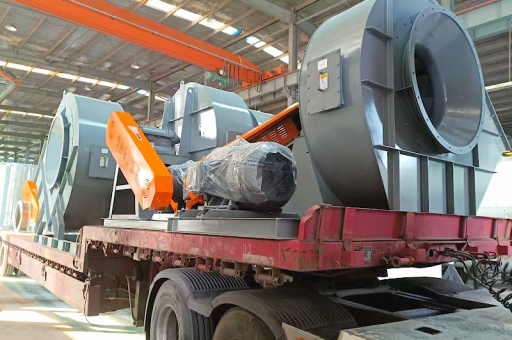
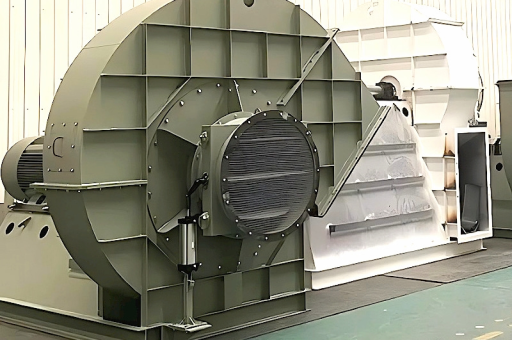
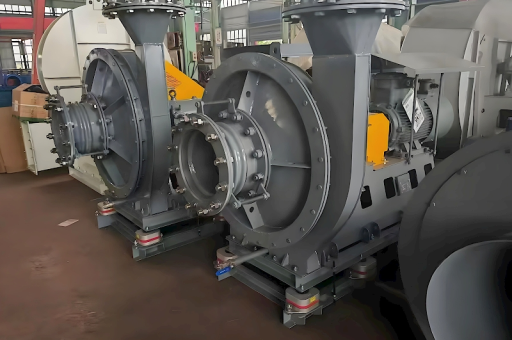
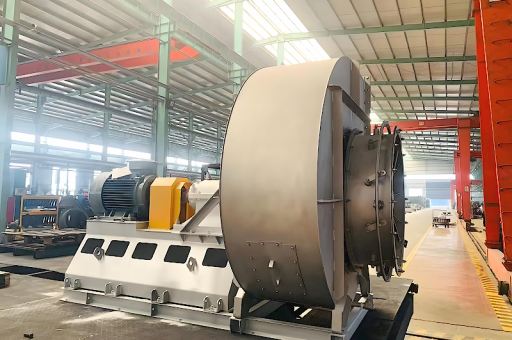
A dust environment explosion-proof fan is a ventilation device engineered to prevent ignition of airborne combustible dust particles. Unlike standard industrial fans, these units are constructed with non-sparking materials (such as aluminum impellers or stainless steel housings), sealed motor enclosures, and thermal protection. They are certified to operate in classified hazardous locations, most commonly:
- NEC Class II, Division 1 or 2 (Groups E, F, G)
- ATEX Zone 21 or 22 (for dust clouds)
Common Applications
- Grain elevators and silos
- Woodworking and paper plants
- Pharmaceutical and chemical blending
- Coal mining and processing
- Wind turbine nacelles and control cabinets (where carbon dust or salt particles accumulate)
Key Features
- Spark-proof impellers (often brass or aluminum-bronze)
- IP55 or higher motor protection against dust ingress
- Grounding connections to dissipate static charge
- Temperature class T3 or T4 (max surface temp ≤200°C for dust)
Section 2: Key Safety Standards and Certifications
To be legally and safely deployed in a dusty environment, explosion-proof fans must comply with stringent international standards:
ATEX (Europe)
The ATEX 2014/34/EU directive classifies equipment for use in explosive atmospheres. For dust, the key marking is II 2 D Ex tb IIIC T120°C Db. This means:
- Group II (surface industry)
- Category 2 (high protection)
- Dust environment (D)
- Protection by enclosure (tb)
- Maximum surface temperature limit
IECEx (International)
The IECEx System is a global certification for explosive atmospheres. It uses the same classification logic as ATEX but is recognized across more than 30 countries. Look for Ex tb IIIC T120°C Db on the fan label.
NEC / UL (North America)
Under the National Electrical Code (NEC), dust combustible environments fall under Class II.
- Division 1: Ignitable dust is present normally or frequently.
- Division 2: Dust is present only under abnormal conditions.
Groups are: E (metal dusts), F (carbon black, coal dust), G (flour, grain, wood, plastic).
Important Note on Wind Turbine Sites
In wind turbine nacelles, salt mist, carbon brush dust, and lubricant aerosols can create a combustible environment. Fans installed inside nacelles should carry at minimum an IP65 rating and a Class II Division 2 certification, even though these are not traditional “dust” zones. Always consult an electrical engineer certified in hazardous locations.
Section 3: How Do They Work? The Engineering Behind the Safety
Motor Enclosure Design
The motor is completely enclosed in a finned, heavy-duty cast iron or aluminum housing that prevents dust entry. Heat is dissipated through the housing fins without igniting ambient dust.
Spark Suppression
All rotating elements—impeller, shaft, and housing—are made from non-ferrous metals. This prevents the frictional or impact sparks that a steel-on-steel contact would generate.
Thermal Management
Temperature sensors embedded in the motor windings cut off power if the surface temperature exceeds the rated T-class. For dust environments, T3 (200°C) is common; for more sensitive dust (e.g., sulphur or powdered magnesium), T4 (135°C) is required.
Static Dissipation
A grounding wire or brush ensures that any static charge built up on the fan housing or ducting is safely discharged, eliminating another potential ignition source.
Section 4: Critical Selection Criteria for Industrial Applications
When choosing an explosion-proof fan for a dust environment, consider these factors:
-
Dust Type and Combustibility
Is the dust organic (grain, wood, sugar) or metallic (aluminum, magnesium)?- Organic dusts usually require T-class ≤200°C.
- Metal dusts require special non-sparking materials (e.g., stainless steel housing with Inconel shaft).
-
Airflow and Static Pressure
Calculate required CFM (cubic feet per minute) based on room volume and dust removal needs. Over-sizing can cause unnecessary power consumption; under-sizing risks dust accumulation. -
Certification Scope
Match the fan’s certification to the zone classification of your facility. Using an ATEX Zone 22 fan in a Zone 21 area is non-compliant. -
Material Compatibility
- For corrosive dust (e.g., chemical powders), choose coated or stainless steel housing.
- For high-temperature areas (e.g., dryer exhausts), use high-temperature seals and thermal cutoffs.
-
Wind Turbine-Specific Considerations
In wind turbine platforms, space is tight, and vibration is constant. Select compact, vibration-resistant models (e.g., EC motors with integrated controls) with ingress protection up to IP66 to handle both salt spray and carbon dust.
Section 5: Maintenance Best Practices for Longevity and Compliance
Even the best explosion-proof fan can fail if maintenance is neglected. Follow these guidelines:
-
Daily/Weekly:
- Inspect housing for dust buildup—clean using non-sparking tools (brass brush, compressed air).
- Listen for unusual noise (indicative of impeller damage or imbalance).
-
Monthly:
- Check grounding continuity. Resistance should be <1 ohm.
- Test thermal cut-off and overcurrent protection devices.
-
Annually:
- Have a certified technician open the motor and inspect windings and bearings. Replace if worn.
- Re-certify the fan if it has been disassembled or the environment classification changes.
-
Documentation:
Keep a log of all inspections and repairs. This is critical during insurance audits and regulatory inspections.
Example Incident: A grain facility experienced a secondary dust explosion after a standard fan motor ignited fugitive dust in a storage bin. Post-investigation, the facility replaced all fans with ATEX-certified models and added weekly cleaning protocols. No further incidents were reported.
Section 6: Common Q&A – Your Top Questions Answered
Q1: Can I use an explosion-proof fan in a wind turbine nacelle?
Yes, but you must select a fan rated for the specific dust/contaminant present. In wind turbines, carbon brush dust and salt particles are common. Choose an ATEX II 2 D or NEC Class II Division 2 fan with IP65+ rating.
Q2: What is the difference between an explosion-proof fan and an ordinary industrial fan?
Ordinary fans can generate sparks from motor brushes, fan blade impact, or overheating. Explosion-proof fans are engineered with non-sparking materials, sealed motors, and thermal protection to eliminate ignition risks in hazardous dust atmospheres.
Q3: How often should I replace the filter on an explosion-proof fan?
For dust environments, pre-filters should be checked weekly and replaced when pressure drop exceeds manufacturer specs—typically every 1–3 months depending on dust loading.
Q4: Is it safe to run an explosion-proof fan in a zone with both gas and dust hazards?
This requires a dual-certified fan (e.g., ATEX II 2G/2D). Always confirm both gas and dust ratings are present on the nameplate. A pure dust-rated fan may not be safe in a gas environment.
Q5: What happens if the thermal cut-off fails?
Immediately stop the fan. A failed cut-off can allow the motor to overheat and become an ignition source. Replace the thermal device with an OEM-approved part only.
Conclusion: Prioritizing Safety in Dust-Laden Industrial Settings
Dust environment explosion-proof fans are not optional equipment—they are a critical barrier against one of industry’s most violent hazards: the dust explosion. From grain silos to wind turbine nacelles, these fans ensure that ventilation does not become an ignition source. When selecting, always match the fan’s certification to your specific dust classification, invest in non-sparking materials, and maintain rigorous inspection schedules.
By understanding the standards (ATEX, IECEx, NEC), the engineering behind spark suppression, and the specific demands of your application—whether traditional dusty plants or modern wind turbine platforms—you can make an informed decision that protects workers, equipment, and your bottom line.
Remember: In the battle against combustible dust, your fan should be your ally, not your enemy. Choose certified, maintain diligently, and operate safely.