This article's table of contents introduction:
- What is an ATEX Certified Explosion-Proof Fan?
- Key Certification and Standards
- Key Design Features of an ATEX Explosion-Proof Fan
- How to Read the ATEX Label
- Applications
- How to Select the Right ATEX Fan
- Major Manufacturers
- Maintenance & Safety
- Important Note on Compliance
Here is a comprehensive guide to ATEX certified explosion-proof fans, covering what they are, how they work, the certification process, and key considerations for selection.
What is an ATEX Certified Explosion-Proof Fan?
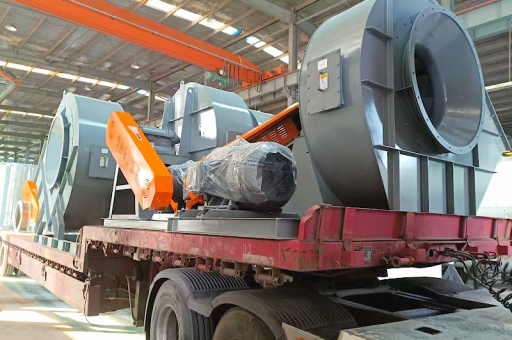
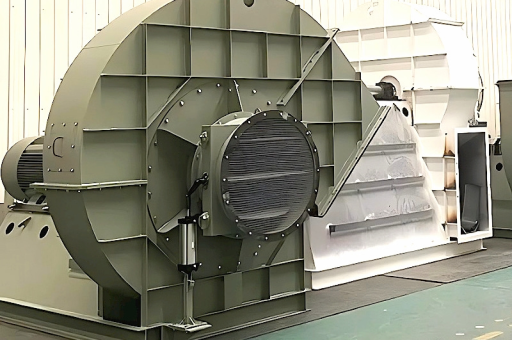
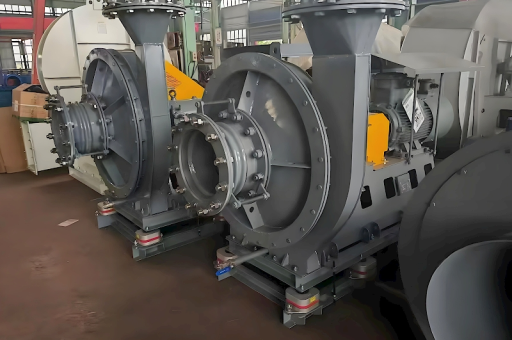
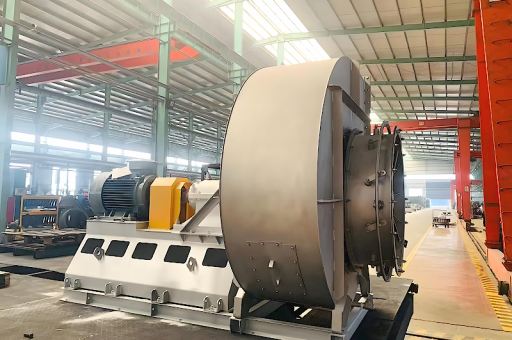
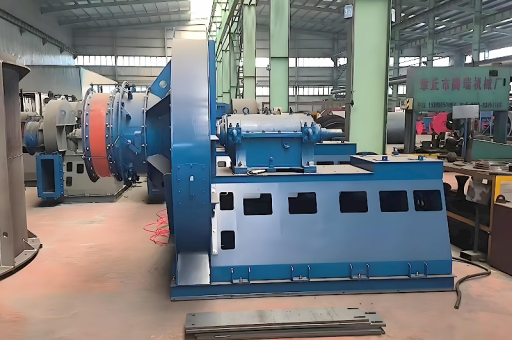
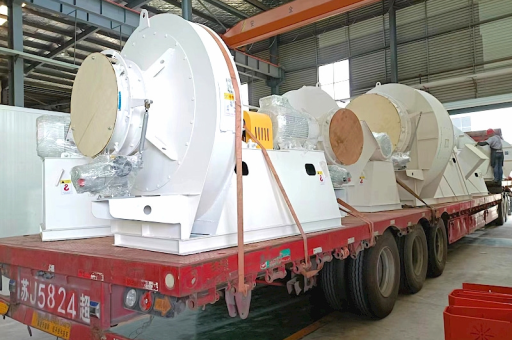
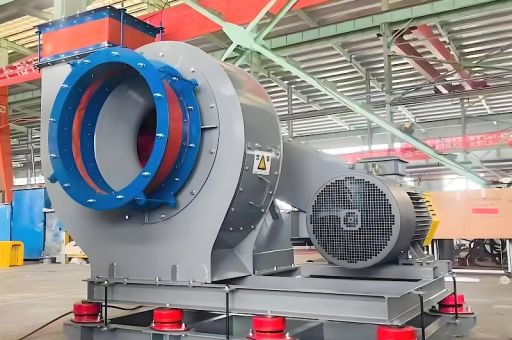
An ATEX certified explosion-proof fan is a fan specifically designed, constructed, and tested to operate safely in environments where there is a risk of an explosion due to the presence of flammable gases, vapors, mists, or combustible dusts.
ATEX is a mandatory European Union directive (specifically Directive 2014/34/EU) that governs equipment intended for use in potentially explosive atmospheres. The term "explosion-proof" is a North American term (from NEC/NEC 500 standards), but in the European and international context, ATEX is the governing standard. These fans are designed to:
- Contain an Internal Explosion: If flammable gases or dusts ignite inside the fan housing, the housing must be strong enough to contain the explosion without rupturing.
- Prevent Ignition: The fan is designed to prevent any sparks, hot surfaces, or arcs from escaping the enclosure and igniting the surrounding atmosphere.
- Limit Surface Temperature: All external surfaces (and internal surfaces in contact with the explosive mixture) must remain below the ignition temperature of the specific hazardous substance.
Key Certification and Standards
- ATEX 2014/34/EU: The core European directive. It covers both mining (Category M1, M2) and surface industries (Category 1, 2, 3).
- IECEx (International Electrotechnical Commission System for Certification to Standards Relating to Equipment for Use in Explosive Atmospheres): An international system that is globally recognized and often accepted alongside ATEX. Many manufacturers are certified to both.
- EN Standards: Key technical standards include:
- EN 14986: Design of fans working in potentially explosive atmospheres.
- EN 60079-0: General requirements for explosive atmospheres.
- EN 60079-1: Equipment protection by flameproof enclosures "d".
- EN 60079-7: Equipment protection by increased safety "e".
- EN 60079-31: Equipment dust ignition protection by enclosure "t".
Key Design Features of an ATEX Explosion-Proof Fan
| Feature | Purpose | Example/Detail |
|---|---|---|
| Flameproof Enclosure (Ex d) | Contains an internal explosion, preventing flame propagation to the outside. | Thick, robust housing, flanged joints with precise gaps. |
| Increased Safety (Ex e) | Prevents sparks, arcs, or excessive temperatures in normal operation. | Special terminal boxes, high-quality insulation, non-sparking materials. |
| Non-Sparking Materials | Eliminates the risk of ignition from friction or impact. | Aluminum bronze, stainless steel, or special plastic impellers. |
| Motor Specification | Must be ATEX certified and integrated. | Motors can be Ex d (flameproof) or Ex e (increased safety). |
| Earthing (Grounding) | Prevents static electricity buildup that could cause a spark. | Dedicated earthing points on the fan casing and motor. |
| Thermal Protection | Prevents overheating from blocked airflow or mechanical failure. | Built-in thermistors or thermal switches in motor windings. |
| Sealed Bearings | Prevents lubricant leakage and ingress of hazardous materials. | Long-life, sealed-for-life bearings or special grease nipples. |
| Shaft Seal | Prevents leakage of hazardous gases along the shaft. | Labyrinth seals, mechanical seals, or air purging. |
How to Read the ATEX Label
The ATEX label on a fan provides critical information. Example: II 2G Ex d IIC T4 Gb
| Part | Meaning | Interpretation for a Fan |
|---|---|---|
| II | Equipment Group | (Usually) Surface industry (not mining). |
| 2 | Category | Suitable for Zone 1 (Gases) or Zone 21 (Dusts) - high likelihood of explosive atmosphere occurring occasionally. |
| G | Atmosphere Type | G = Gas/Vapor/Mist; D = Dust. |
| Ex d | Protection Type | Flameproof Enclosure (contains internal explosion). |
| IIC | Gas Group | Suitable for IIC gases (Hydrogen, Acetylene - the most easily ignited) or IIB (Ethylene) or IIA (Propane). |
| T4 | Temperature Class | Maximum surface temperature = 135°C. Suitable for gases with ignition temperature >135°C. |
| Gb | Equipment Protection Level (EPL) | Gb = High level of protection for explosive atmospheres. |
Common ATEX Fan Types:
- II 2G Ex d IIC T4 Gb: The most common for gas applications (e.g., chemical plants, refineries).
- II 2D Ex tb IIIC T120°C Db: For dust applications (e.g., flour mills, wood processing). "tb" indicates protection by enclosure, "T120°C" is the max surface temperature.
Applications
ATEX explosion-proof fans are mandated in various industries:
- Oil & Gas: Offshore platforms, refineries, petrochemical plants.
- Chemical Processing: Storage areas, reactor rooms, distillation units.
- Pharmaceuticals: Solvent handling, production areas.
- Mining (Surface & Underground): Ventilation of explosive atmospheres.
- Food Processing: Flour mills, sugar handling (dust explosions).
- Wastewater Treatment: Sewage treatment plants (methane/H2S gas).
- Painting & Coating: Spray booths, paint mixing rooms.
- Battery Manufacturing / Recycling: Lithium-ion battery handling.
How to Select the Right ATEX Fan
- Define the Hazardous Area Classification (Zone):
- Zone 0/20: Continuous hazard (highest risk). Requires Category 1 fan (very rare).
- Zone 1/21: Occasional hazard. Requires Category 2 fan (most common).
- Zone 2/22: Rare hazard. Requires Category 3 fan.
- Identify the Substance:
- Is it a gas/vapor (G) or dust (D) ?
- What is the gas group (IIA, IIB, IIC)? IIC is the most restrictive.
- What is the ignition temperature? This dictates the required Temperature Class (T1-T6) . T6 (85°C) is the safest, T1 (450°C) is the least restrictive.
- Choose Protection Concept:
- Ex d (Flameproof): Very robust, contains internal explosions. Heavier, more expensive.
- Ex e (Increased Safety): Prevents ignition, lighter, more efficient. Requires careful monitoring and reliable supply.
- Ex nA (Non-Sparking): For Zone 2 only, simpler design, lower cost.
- Define Air Performance:
- Required airflow (CFM or m³/h)
- Required static pressure (in.wg or Pa)
- Operating temperature range.
- Material Compatibility:
- Ensure the fan materials (housing, impeller, coatings) are corrosion-resistant to the chemicals present.
- For dust, ensure the design prevents dust accumulation and is easy to clean.
Major Manufacturers
- Greenheck (USA) - Offers ATEX certified models for global projects.
- Systemair (Sweden) - Wide range of ATEX fans for ventilation.
- Ziehl-Abegg (Germany) - High-efficiency ATEX fans for industrial use.
- ebm-papst (Germany) - Specializes in compact, EC motor ATEX fans.
- Howden (UK/Global) - Large, custom-engineered explosion-proof fans for heavy industries.
- Woods Air Movement (UK) - Long-established manufacturer of ATEX fans.
- Airpack (Italy) - Industrial ATEX fans.
- Sodeca (Spain) - Extensive range of ATEX certified fans.
Maintenance & Safety
- Visual Inspection: Regularly check for physical damage, corrosion, or dirt buildup.
- Earthing Check: Verify the earthing system is intact and has low resistance.
- Bearing Check: Listen for unusual noise or vibration; check lubrication (if applicable).
- Gap & Flange Check: For Ex d fans, the precise flame path gaps must be maintained. Never paint or block them.
- Motor Check: Monitor motor temperature, current draw, and insulation resistance.
- Only use ATEX certified spare parts from the original manufacturer.
Important Note on Compliance
- ATEX is Mandatory: In the EU/EEA, you cannot legally install a non-ATEX fan in a hazardous area.
- User Responsibility: The fan must be installed in the correct zone and for the correct gas/dust as per its ATEX label. Installation and maintenance must be carried out by a competent person.
- Interconnection: Ensure all electrical connections (cables, isolators, starters) are also ATEX-rated and compatible with the fan zone.
If you have a specific application (e.g., "hydrogen gas in a Zone 1 area, 5000 CFM at 2 in.wg"), I can help you narrow down suitable ATEX fan types or configurations.