This article's table of contents introduction:
- What Are They?
- Key Materials (Stainless Steel Grades)
- Construction Features
- Applications
- Sizing, NPSH & Pressure Considerations (Critical Technicals)
- Selection Checklist
- Common Problems & Solutions
- Typical Manufacturers (for reference)
- Bottom Line
Here is a comprehensive overview of High-Temperature Resistant Stainless Steel Fans, covering their applications, construction, and key specifications.
What Are They?
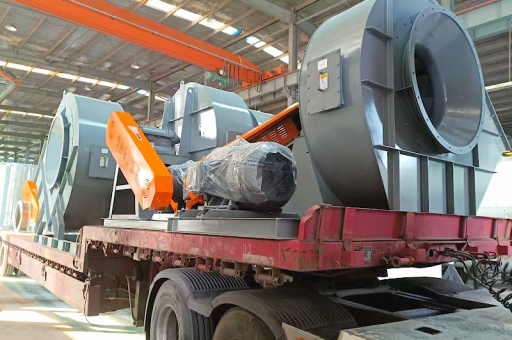
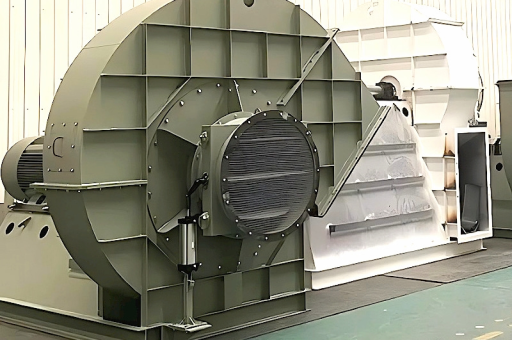
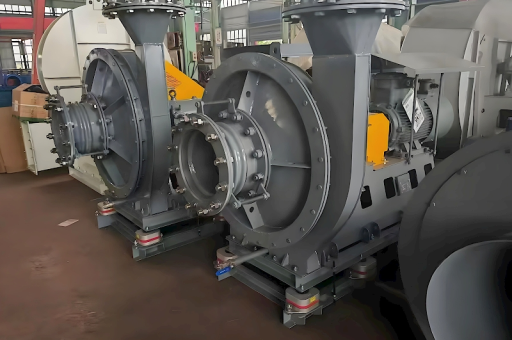
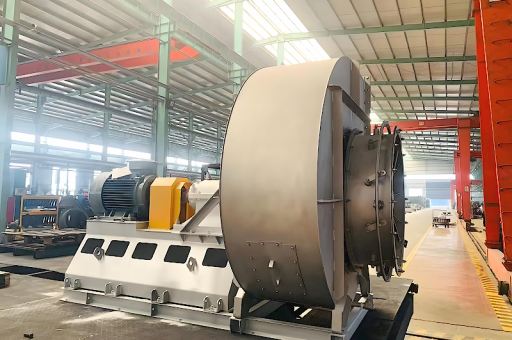
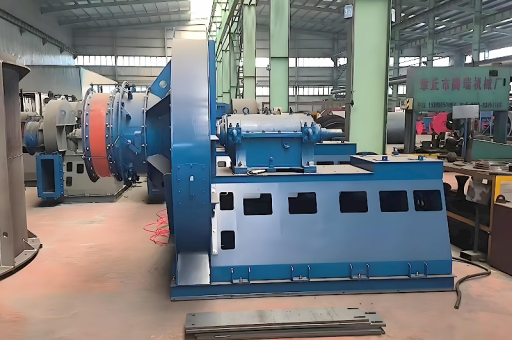
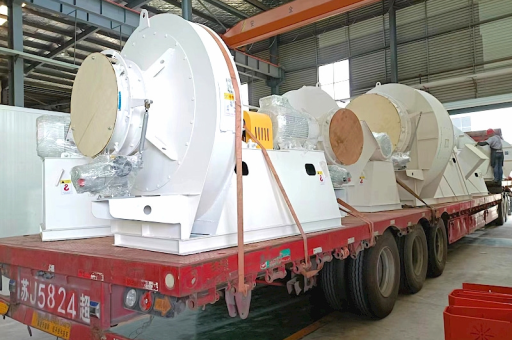
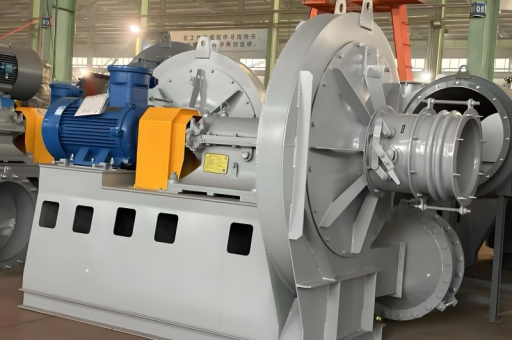
High-temperature resistant stainless steel fans are industrial centrifugal or axial fans designed to move air or gas at elevated temperatures (typically 200°C to 1000°C+). Unlike standard fans, they are constructed entirely or mostly from stainless steel alloys to withstand thermal expansion, oxidation, and corrosive byproducts of high-heat processes.
Key Materials (Stainless Steel Grades)
The "stainless steel" used is critical. Common grades include:
- SS304 (1.4301): Good for general high-temp applications up to ~700°C. Offers decent corrosion resistance.
- SS316 / SS316L (1.4401/1.4404): Better corrosion resistance (especially against chlorides, acids). Used up to ~800°C.
- SS310 / SS310S (1.4845): The industry standard for extreme heat. Withstands continuous operation up to 1050°C (1922°F) and intermittent up to 1150°C. Excellent oxidation and scaling resistance.
- Hastelloy / Inconel: For highly corrosive, high-temp exhaust (e.g., chemical processing, incineration). Handles up to 1200°C+ but is significantly more expensive.
Construction Features
- Wheel/Impeller: Made entirely of stainless steel. Often welded, with reinforced blades to prevent creep at high temperatures. Can be backward-curved (high efficiency, non-clogging), radial (for heavy dust), or paddle-wheel (for extreme temp).
- Housing: Stainless steel casing designed with expansion joints to accommodate thermal growth.
- Shaft: High-strength stainless steel or alloy steel, heat-treated to maintain rigidity. Extended shaft length to isolate bearings from heat.
- Bearings and Shaft Cooling:
- Heat Shield: Insulation plate between fan housing and bearing bracket.
- Cooling Fan: A secondary fan mounted on the shaft to blow cool air over the bearings.
- Quill Flange: Hollow shaft or flange design allowing air/gas circulation to cool the shaft.
- External Cooling: Water-cooled or forced-air-cooled bearing housings for temperatures >500°C.
- Motor: Usually TEFC (Totally Enclosed Fan Cooled) with high-temp insulation (Class H or C). Often mounted on a "shaft extension" or "pedestal" to keep it away from the heat source.
Applications
These fans are essential in processes where exhaust gases are hot, dry, and may contain particulate or corrosive elements:
- Heat Treatment Furnaces: Exhausting hot air from ovens, kilns, and induction heaters.
- Chemical & Petrochemical: Flue gas recirculation, drying of hot powders, reactor venting.
- Cement & Lime Kilns: Induced draft (ID) fans and kiln exhaust fans.
- Incineration & Waste-to-Energy: Moving hot combustion gases from municipal or hazardous waste incinerators.
- Glass & Ceramics: Hot air from glass forming, annealing lehrs, and ceramic kilns.
- Food Processing: Ovens, fryers, dryers (e.g., snack food, meat rendering).
- Pharmaceutical & Paper: High-temp drying of coated materials or granulations.
Sizing, NPSH & Pressure Considerations (Critical Technicals)
| Parameter | Typical Range for High-Temp Fans | Why it Matters |
|---|---|---|
| Temperature | 200°C to 1050°C+ | Affects material grade, shaft cooling, and motor sizing. |
| Pressure | Up to 40 in. w.g. (10 kPa) | Higher pressure requires stronger shaft and thicker housing to prevent buckling. |
| Air Volume (CFM) | 500 to 500,000+ | Determines impeller diameter and motor HP. |
| Speed (RPM) | 500 to 3,500 | High-speed must balance vibration from thermal expansion. |
| Density Correction | Critical. Hot air is less dense. | CFM increases but mass flow (lbs/hr) decreases. A 1,000 CFM fan at 20°C moves ~75 lbs/min of air; at 800°C it moves only ~12 lbs/min of air (same volumetric flow, much less mass). |
Selection Checklist
- Define Maximum Continuous Temperature (e.g., 750°C peak, 650°C steady-state).
- Identify Gas Composition: Is it dry, wet, acidic, or laden with dust? (For wet/acidic, use SS316 or higher; for dry, SS304 may suffice).
- Determine Required Flow & Pressure (corrected for actual gas density at operating temperature).
- Select Cooling Method: Standard bearing cooling (up to 300°C), quill flange (300-500°C), water-cooled bearings (>500°C).
- Choose Drive Type: Direct drive (motor shaft to fan shaft via flexible coupling) or belt drive (allows speed adjustment but belt wear is high). For extreme heat (>600°C), direct drive with air-cooled motor is preferred.
- Check for ASME / ISO / ATEX Certification: For hazardous locations (e.g., combustible dust or flammable gases).
Common Problems & Solutions
| Problem | Cause | Solution |
|---|---|---|
| Impeller Fatigue Fracture | Thermal cycling (expansion/contraction) | Use SS310 or Inconel; implement slow ramp-up/cooldown cycles. |
| Bearing Failure | Heat conducted through shaft | Add water-cooled bearing housing or increase extended shaft length. |
| Vibration | Imbalance from thermal growth | Ensure wheel is dynamically balanced at operating temp; use vibration monitoring. |
| Corrosion | Acidic condensates in exhaust | Upgrade material to SS316 or hastelloy; drain condensate properly. |
| Motor Overheating | Heat soak from fan | Move motor away; add a separate cooling fan for motor. |
Typical Manufacturers (for reference)
- Chicage Blower (USA)
- New York Blower (USA)
- Cincinnati Fan (USA)
- Sodeca (Spain)
- Systemair (Sweden)
- Hauck (Germany)
- Ventilatorenfabrik Oelde (Venti Oelde) (Germany)
Bottom Line
High-temperature resistant stainless steel fans are not just "fans" – they are engineered thermal management systems. The cost is often 2-5x that of a standard fan, but they are mandatory for process reliability, safety, and energy efficiency in high-heat industrial environments.
If you need a specific fan selection or have a custom application (e.g., exact temperature, gas composition, mounting constraints), you can provide those details, and I can help you narrow down the material grade, cooling method, and drive configuration.