This article's table of contents introduction:
- What Makes Them Different?
- Key Performance Characteristics
- Common Types & Configurations
- Industrial Applications
- Critical Selection Criteria
- Example Product Specifications (Typical from major manufacturers)
- Best Practices for Installation & Maintenance
- Key Takeaway
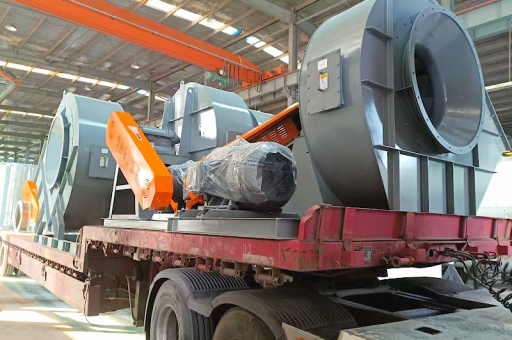
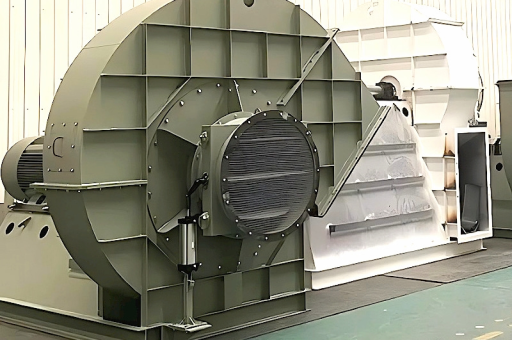
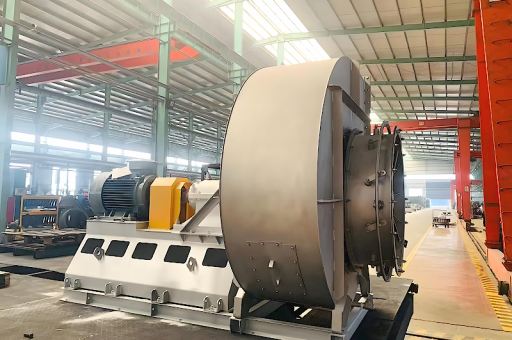
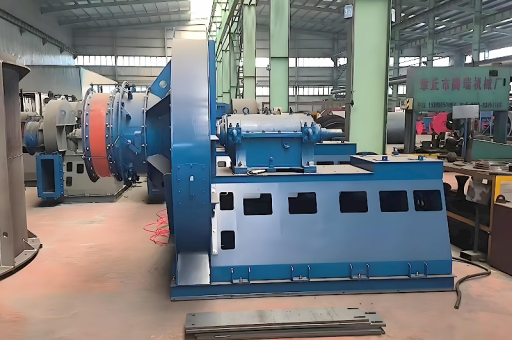
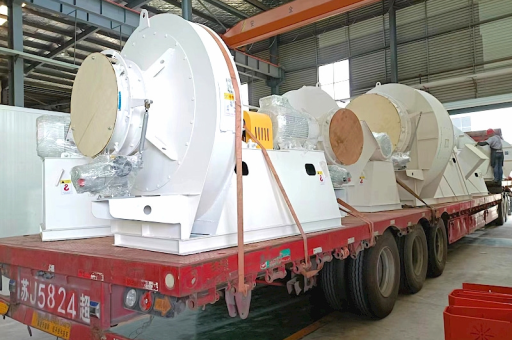
It seems you're looking for information on High-Temperature Resistant High-Pressure Fans. These are specialized industrial fans designed to move air or gases at high pressures while enduring extreme heat (typically above 200°C / 392°F, and up to 600°C / 1112°F or more).
Here is a comprehensive breakdown of what they are, where they are used, their key features, and how to select one.
What Makes Them Different?
Standard fans fail under high heat due to:
- Material Expansion: Metal parts warp.
- Motor Failure: Heat travels down the shaft and burns the motor windings or grease.
- Impeller Weakness: Standard blades can deform or crack under thermal stress.
High-Temp High-Pressure fans address this with:
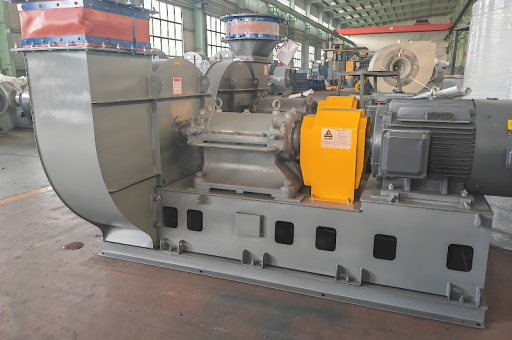
- Heat-Dissipated Motors: Special "TEAO" (Totally Enclosed Air Over) motors with a long driveshaft and a heat shield (cooling disc) between the fan casing and the motor.
- Special Materials: Impellers and casings made from High-Grade Steel (Q235, Q345) or Stainless Steel (SUS304, SUS316, SUS310S) for corrosion resistance and strength at high temperatures.
- High-Strength Design: Backward-curved or radial-blade impellers designed for higher static pressure (resistance) and structural integrity.
- Shaft Cooling: A hollow shaft with a cooling fan or pure air cooling to prevent heat transfer to the motor bearings.
Key Performance Characteristics
For these fans, you need to specify:
- Airflow (CFM or m³/h): Volume of air moved.
- Static Pressure (Pa, inH₂O, or mmHg): The resistance the fan must overcome. "High Pressure" usually means > 2000 Pa (8 inH₂O), often up to 15,000+ Pa.
- Temperature: The maximum continuous operating temperature (e.g., 150°C, 280°C, 350°C, 550°C).
- Media: What gas is being moved? (Clean air, corrosive fumes, explosive gas, particulate matter).
Common Types & Configurations
- Forced Draft / Induced Draft Fans: Used in boilers or furnaces to push or pull hot gases.
- Centrifugal Fans (Sirocco / Forward Curved): High volume, moderate pressure. Best for clean, hot air (e.g., drying ovens).
- Radial / Paddle Wheel Fans: Highest pressure capability. Can handle particulate-laden gases (e.g., exhaust from a cement kiln or incinerator). The impeller has straight, radial blades.
- Backward Inclined / Airfoil Fans: Best efficiency for clean, hot gases. Lower noise.
Industrial Applications
| Industry | Application | Typical Temp |
|---|---|---|
| Glass & Ceramics | Furnace draft, glass cooling | 250°C - 550°C |
| Cement & Steel | Kiln exhaust, sinter cooling | 200°C - 400°C |
| Power Generation | Boiler flue gas, boiler combustion air | 150°C - 350°C |
| Chemical Processing | Drying, reactor exhaust, thermal oxidizers | 250°C - 600°C |
| HVAC / Dryers | Industrial oven and dryer air circulation | 100°C - 300°C |
| Waste Incineration | Exhaust gas handling (corrosive) | 200°C - 450°C |
| Food Processing | High-temp baking, fryer exhaust | 150°C - 250°C |
Critical Selection Criteria
- FAN LAWS: When you increase RPM, Pressure increases by the square and Power increases by the cube. High-temp fans often run at lower RPMs to manage bearing load.
- BEARINGS: Must be high-temperature grease (e.g., Mobilith SHC 100) or high-temp oil-circulation systems for extreme cases. The housing must have a cooling jacket or be remote-mounted from the heat.
- SHAFT SEAL: A high-temp shaft seal prevents hot gas from leaking out and cold air from leaking in.
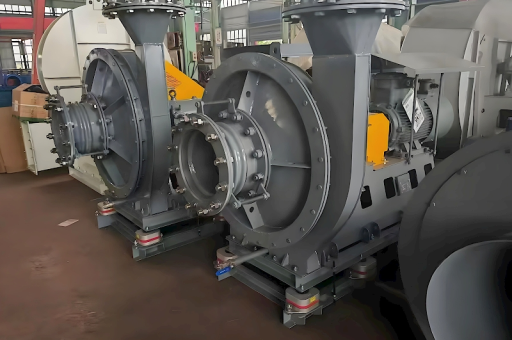
- VIBRATION ISOLATION: Heat can cause resonance. The fan base must be sufficiently rigid.
- COLD START vs. HOT START: The fan must be able to start when the system is cold and run continuously at high temperature, or start directly into a hot environment (e.g., a regenerative thermal oxidizer (RTO) fan).
Example Product Specifications (Typical from major manufacturers)
A generic model might be labeled as: W9-26 series (High Pressure) / W5-48 series
- Pressure Range: 3,000 Pa to 15,000 Pa (12 - 60 inH₂O)
- Temperature: Up to 350°C (standard steel), 650°C (with high-alloy steel and shaft cooling)
- Impeller: Backward-curved or radial plate
- Max Flow: 200,000 m³/h (117,000 CFM)
- Motor: Custom Y-type motor with heat shield; can be AC or VFD-rated.
Best Practices for Installation & Maintenance
- VFD (Variable Frequency Drive): Essential for controlling speed and managing thermal expansion. Do NOT overspeed the fan.
- Cooling Air: Inject a small amount of ambient air around the shaft bearing to keep it cool.
- Expansion Joints: Install flexible connectors (bellows) between the fan and ductwork to absorb thermal expansion.
- Drain Holes: Include a weep hole at the lowest point to drain any condensation that forms during heat-up/cool-down.
Key Takeaway
You cannot use a standard HVAC fan in a high-temperature process. You need a fan specifically engineered with:
- High-temperature shaft/cooling disc
- Correct metallurgy (Stainless or High-Strength Steel)
- High-temperature bearings and grease
- A motor robust enough to handle the heat load
If you have a specific application (e.g., "Need a 10,000 CFM fan for a 250°C glass oven with 4 inH₂O static pressure"), I can help refine the recommendation further.