This article's table of contents introduction:
- The Core Standards (Global vs. North America)
- Common Explosion-Proof Ratings for High-Pressure Fans
- The "High Pressure" Specific Challenge
- Typical Rating Examples (Pick based on your zone)
- Summary: How to specify one correctly
To determine the explosion-proof (Ex) rating required for a high-pressure fan, you must first know the hazardous area classification of the location where the fan is installed.
Here is the breakdown of standards, ratings, and specific considerations for high-pressure fans.
The Core Standards (Global vs. North America)
- IECEx / ATEX (Rest of World): Uses the Ex marking followed by specific codes (e.g., Ex d IIB T4).
- NEC / CEC (North America): Uses Class, Division, Group (e.g., Class I, Division 1, Group D) or Zone classification.
Common Explosion-Proof Ratings for High-Pressure Fans
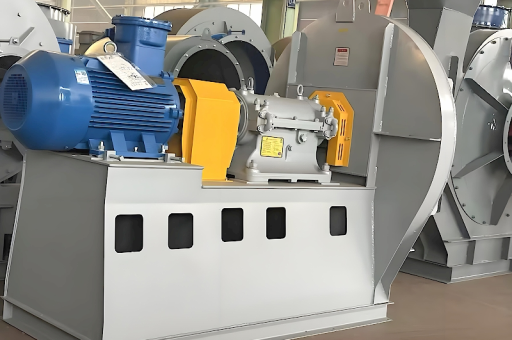
High-pressure fans generate significant heat (from compression) and mechanical stress (from high RPM). Therefore, the motor and the fan housing must both be rated.
For Motor Protection (Most Common)
- Ex d (Flameproof Enclosure):
- What it does: The motor is contained in a heavy-duty enclosure that can contain an internal explosion and prevent sparks from escaping into the atmosphere.
- Best for: High-pressure fans where the gas or dust is constantly present (Zone 1 / Division 1).
- Rating Example:
Ex d IIB T4(Suitable for most industrial gases like ethylene, propane, natural gas).
- Ex e (Increased Safety):
- What it does: Extra precautions (e.g., higher IP rating, lower operating temperatures, special terminal boxes) prevent sparks or hot surfaces. Less common for high-pressure fans because the motor often runs hot.
- Ex nA (Non-Sparking):
- What it do es: Designed so that in normal operation, there are no arcs, sparks, or hot surfaces.
- Best for: Zone 2 / Division 2 areas where gas is only present during an accident.
- Note: High-pressure fans can be Ex nA, but only if the temperature rise is strictly controlled.
For the Fan Housing & Impeller (Critical for High Pressure)
- ATEX Category 1G/2G or 1D/2D: This applies to the fan itself (impeller).
- Spark-proof construction: The impeller must be made of non-ferrous material (aluminum bronze, Monel, stainless steel) or have a special coating to prevent friction sparks.
- Clearance: Minimum gap between the impeller and the housing to prevent mechanical striking.
- Grounding: The fan must have a visible grounding strap to dissipate static electricity.
- For High Pressure: You must ensure the fan casing can withstand the explosion pressure without rupturing.
The "High Pressure" Specific Challenge
High-pressure fans (e.g., Ring Blowers, Regenerative Blowers, or Centrifugal Fans running > 1000 Pa static pressure) face unique risks:
- Heat Build-up: The motor runs hotter. You must verify the Temperature Class (T-Rating) .
- Example: If the fan motor runs at 130°C, it cannot be rated T3 (max 200°C), but it might be OK for T4 (max 135°C). You likely need T4 or higher.
- Vibration: High pressure often means high RPM. Vibration can loosen spark-proof impeller rings. Vibration sensors are often required.
- Seal Failure: If the fan moves gas, a shaft seal failure could release the gas into the motor. For critical applications, a Ex d motor is mandatory.
Typical Rating Examples (Pick based on your zone)
| Hazard Zone | Recommended Motor Rating | Recommended Fan Housing | Temperature Class | Common Code (IEC) | Common Code (NEC) |
|---|---|---|---|---|---|
| Zone 1 / Div 1 (Gas present) | Ex d (Flameproof) | [h2]Cat 2G[/h2] (Non-sparking impeller) | T4 (max 135°C) | Ex d IIB T4 Gb | Class I, Div 1, Groups C,D |
| Zone 2 / Div 2 (Gas rarely) | Ex nA (Non-sparking) | [h2]Cat 3G[/h2] (Non-sparking) | T3 (max 200°C) | Ex nA IIC T3 Gc | Class I, Div 2, Groups A,B,C,D |
| Zone 21 / Div 2 (Dust) | Ex tb (Dust ignition proof) | Dust-tight housing | T85°C (for dust) | Ex tb IIIC T85°C Db | Class II, Div 2, Groups F,G |
| Zone 22 / Div 2 (Dust rarely) | Ex tc | Dust protected | T85°C | Ex tc IIIC T85°C Dc | Class II, Div 2, Groups F,G |
Summary: How to specify one correctly
When ordering a High-Pressure Explosion-Proof Fan, you must provide:
- Application: What gas/dust is involved? (e.g., Methane, Hydrogen, Coal dust).
- Gas Group: (IIA, IIB, IIC). IIC (Hydrogen/Acetylene) is the most restrictive.
- Temperature Class: (T1 to T6). Is the fan moving hot gas?
- Zone/Division: (Zone 1 vs Zone 2).
- Pressure: How much static pressure (kPa / PSI)? This determines if a standard Ex d motor can handle the axial load.
Final Recommendation:
For a standard industrial high-pressure fan in a Zone 1 gas area, the most common and safest rating is:
Ex d IIB T4 Gb coupled with a non-sparking aluminium bronze impeller and a thermistor (PTC) overheat sensor embedded in the motor windings.