This article's table of contents introduction:
- Table of Contents / Article Guide
- Introduction: Why High-Pressure Fan Housings Matter
- Core Engineering Principles: How Housings Achieve High Static Pressure
- Material Selection: Balancing Durability, Weight, and Cost
- Common Design Challenges: Noise, Vibration, and Energy Efficiency
- Industrial Applications: From Mines to Wind Turbine Systems
- Maintenance & Troubleshooting: Extending Housing Lifespan
- Frequently Asked Questions (FAQ)
- Conclusion: The Future of High-Pressure Fan Housing Design
** The Critical Role of High-Pressure Fan Housings in Modern Industrial Ventilation and Wind Turbine Cooling Systems
Table of Contents / Article Guide
- Introduction: Why High-Pressure Fan Housings Matter
- Core Engineering Principles: How Housings Achieve High Static Pressure
- Material Selection: Balancing Durability, Weight, and Cost
- Common Design Challenges: Noise, Vibration, and Energy Efficiency
- Industrial Applications: From Mines to Wind Turbine Systems
- Maintenance & Troubleshooting: Extending Housing Lifespan
- Frequently Asked Questions (FAQ)
- Conclusion: The Future of High-Pressure Fan Housing Design
Introduction: Why High-Pressure Fan Housings Matter
In the world of industrial ventilation, pneumatic conveying, and thermal management, a fan is only as good as its housing. High-pressure fan housings are not simply metal boxes that enclose a rotating impeller; they are precision-engineered components that shape airflow, sustain structural integrity under extreme loads, and dictate overall system efficiency. Without a properly designed housing, a fan cannot build the static pressure required to push air through long duct runs, dense filter media, or high-resistance pathways.
This article delves into the technical nuances of high-pressure fan housings, explaining their role in critical applications—including wind turbine cooling systems, where reliability and performance are non-negotiable. Whether you are an engineer, a maintenance professional, or a procurement specialist, understanding these housings will help you make better decisions for your facility or project.
Core Engineering Principles: How Housings Achieve High Static Pressure
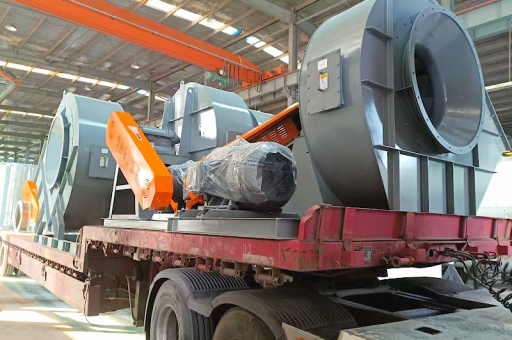
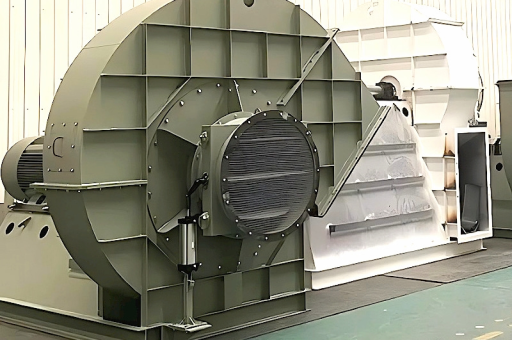
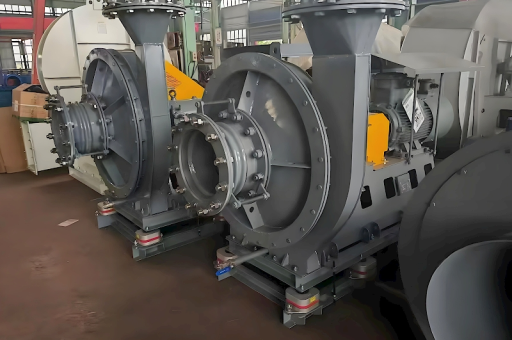
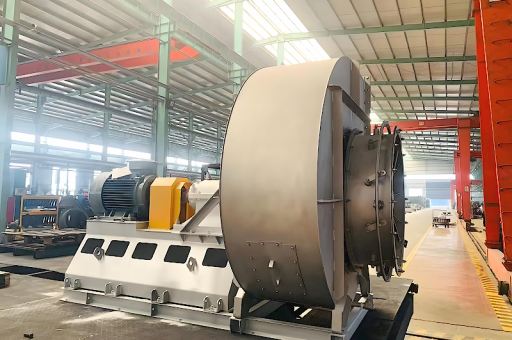
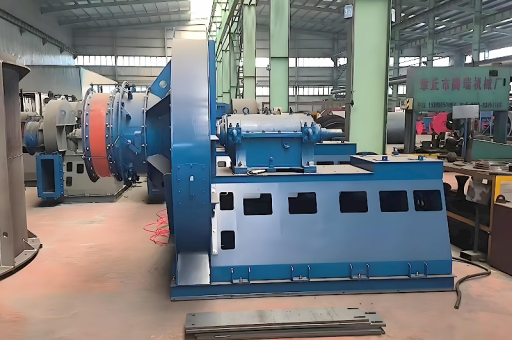
A high-pressure fan housing is fundamentally a volute—a spiral-shaped casing that converts the kinetic energy of the rotating impeller into static pressure. The key principle is the volute cut-off: the point where the housing spirals inward most tightly. At this location, the velocity of the air is reduced, and its pressure increases. The geometry of the housing—specifically the volute width, angle, and clearance to the impeller—directly influences the fan’s pressure curve.
Modern computational fluid dynamics (CFD) analysis allows engineers to optimize these geometries. For example, a housing with too wide a volute will allow recirculation and pressure loss, while one that is too tight can cause choking and excessive noise. Additionally, high-pressure housings often feature reinforced flanges and thicker walls to withstand static pressures exceeding 20 kPa (80 inches of water gauge). These housings must also maintain concentricity with the impeller to within 0.1 mm to prevent aerodynamic imbalance.
Question: Why does the shape of a high-pressure fan housing matter so much?
Answer: The housing shape directly determines how efficiently the fan converts rotational energy into usable static pressure. A poorly shaped volute can waste 15–30% of the motor’s power, leading to higher energy costs and lower system performance. Proper volute design ensures that air exits the housing smoothly and at the required pressure.
Material Selection: Balancing Durability, Weight, and Cost
The choice of material for high-pressure fan housings is a complex trade-off. Common materials include:
- Carbon Steel (ASTM A36 / SS400): The most cost-effective option for moderate pressure applications. It offers good weldability and strength but is susceptible to corrosion, requiring a paint or powder coating.
- Stainless Steel (304L / 316L): Mandatory for corrosive environments like chemical plants or offshore wind turbine installations. 316L offers superior resistance to chlorides and is often used in marine-grade cooling systems.
- Aluminum Alloys (5083 / 6061-T6): Lightweight and corrosion-resistant, aluminum is increasingly used in portable ventilation units and some wind turbine nacelle fans. However, its lower tensile strength means thicker walls are needed for high-pressure service.
- Fiber-Reinforced Polymers (FRP): Used in highly corrosive or weight-sensitive applications. While FRP housings are non-conductive and chemically inert, they cannot handle high temperatures (above 80°C) or impact loading.
Question: Which material is best for a high-pressure fan housing used in a wind turbine cooling system?
Answer: For wind turbine applications, a combination of heavy-gauge carbon steel with a marine-grade epoxy coating is common for onshore turbines, as it balances cost and durability. For offshore installations, 316L stainless steel is preferred due to salt spray corrosion.
Common Design Challenges: Noise, Vibration, and Energy Efficiency
High-pressure fans generate intense noise and vibration. The housing design plays a critical role in mitigating these issues.
- Noise: The primary source is the interaction between the impeller blades and the housing cut-off. To reduce tonal noise, designers use a cut-off offset or add acoustic lagging (damping layers) inside the housing. Even the housing’s natural frequency must be analyzed to avoid resonance.
- Vibration: High-pressure housings require stiff mounting feet and robust baseplates. Flexible connectors at inlet and outlet are essential to prevent ductwork vibrations from exciting the housing.
- Energy Efficiency: The housing discharge area must match the system duct size. An abrupt expansion or contraction downstream creates pressure losses. A well-designed housing includes a smooth transition to a rectangular or circular duct, with a diffuser section if space permits.
Question: How can noise from a high-pressure fan housing be reduced without affecting performance?
Answer: Several methods exist: (1) Increasing the radial gap between the impeller and the cut-off by 5–10% of the impeller diameter typically reduces tonal noise by 3–5 dB. (2) Internal acoustic absorption material can be applied without disrupting airflow. (3) Variable frequency drives can reduce fan speed to lower noise at partial loads.
Industrial Applications: From Mines to Wind Turbine Systems
High-pressure fan housings are found in nearly every industrial sector:
- Mining & Tunneling: Used for primary ventilation, these housings must be explosion-proof (often cast iron or steel with bolted flanges) and resistant to abrasive dust.
- Pneumatic Conveying: In grain handling or cement plants, housings must withstand abrasive wear; sacrificial liners or hardened steel are common.
- Wind Turbine Cooling: This is a rapidly growing application. Modern wind turbines use high-pressure fan housings within the nacelle to cool generators, gearboxes, and power converters. The housing must be compact, lightweight, and sealed against moisture and debris. In some designs, the housing is integrated directly into the nacelle structure to save space.
- Clean Rooms & Hospitals: HEPA filters require high static pressure to push air through dense media. Housings in these settings are often made of stainless steel with smooth interior surfaces for easy cleaning.
Question: Why do wind turbine cooling fans need high-pressure housings?
Answer: The nacelle of a wind turbine is a confined, densely packed space. Cooling air must be forced through narrow channels and across heat exchangers. Standard low-pressure fans cannot overcome this resistance. A high-pressure fan housing ensures adequate airflow even when filters become partially clogged, preventing overheating and extending component life.
Maintenance & Troubleshooting: Extending Housing Lifespan
Even the best-designed housing will degrade without proper maintenance. Key inspection points include:
- Wear on the Volute Cut-off: The region closest to the impeller experiences the highest velocity and erosion. Inspect for pitting or thinning annually.
- Corrosion: Check the internal surfaces, especially in tidal or chemical environments. A 0.5 mm reduction in wall thickness may reduce the housing’s pressure rating by 10%.
- Gasket and Seal Integrity: High-pressure housings rely on gaskets between the housing halves and flanges. A small air leak here can reduce pressure by 5–15%.
- Bearing and Shaft Alignment: Misalignment can cause the impeller to rub against the housing, leading to catastrophic failure.
Troubleshooting Tip: If a fan is not reaching its rated pressure, check the housing cut-off gap. Over time, machining wear or thermal expansion can alter this critical dimension.
Frequently Asked Questions (FAQ)
Q1: Can I repair a cracked high-pressure fan housing by welding?
A: Yes, but only if the housing is made of a weldable material (e.g., carbon steel or stainless steel). The crack must be stop-drilled to prevent propagation, and the weld should be stress-relieved. Aluminum housings are more difficult to weld without distortion.
Q2: What is the typical wall thickness for a high-pressure fan housing?
A: It depends on pressure and diameter. For a 500 mm impeller operating at 25 kPa, a 6 mm carbon steel housing is common. For larger units or higher pressures, 8–10 mm is used.
Q3: Are cast iron high-pressure fan housings still used?
A: Yes, cast iron remains popular for small to medium-sized fans in harsh industrial environments because it naturally dampens vibration and resists wear. However, it is heavy and brittle compared to steel.
Q4: How do I select a high-pressure fan housing for a wind turbine?
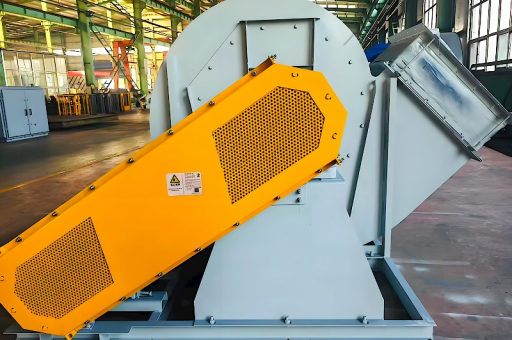
A: Focus on three factors: (1) Material corrosion resistance, (2) Compact footprint to fit inside the nacelle, and (3) Availability of accessories like integrated silencers and protective screens against birds and debris.
Conclusion: The Future of High-Pressure Fan Housing Design
As industries push toward higher efficiency and lower carbon footprints, the humble fan housing is undergoing a quiet revolution. Additive manufacturing (3D printing) now allows for complex internal geometries that reduce turbulence. Smart housings with embedded sensors can monitor pressure, temperature, and vibration in real time.
In the wind turbine sector, innovations focus on lighter composites that still withstand the forces of high-pressure airflow, enabling smaller nacelles and more efficient power generation. The housing is no longer just a shell—it is an active component of system optimization.
By understanding the design, material science, and maintenance of high-pressure fan housings, professionals can reduce energy consumption, extend equipment life, and keep critical operations running smoothly—whether that is a mine shaft, a pharmaceutical plant, or the sleek nacelle of a modern wind turbine.