This article's table of contents introduction:
- The Role of High-Pressure Fans in Food Drying
- Key Fan Types for Food Drying
- Critical Specifications
- Drive Configurations
- Fan Placement in the Drying System
- Recent Technologies & Considerations
- Common Food Drying Applications & Fan Challenges
- Summary: A Good Food Drying Fan System
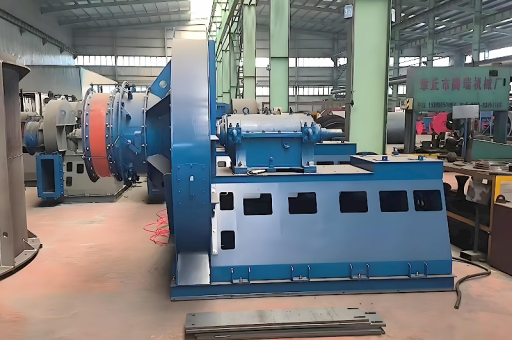
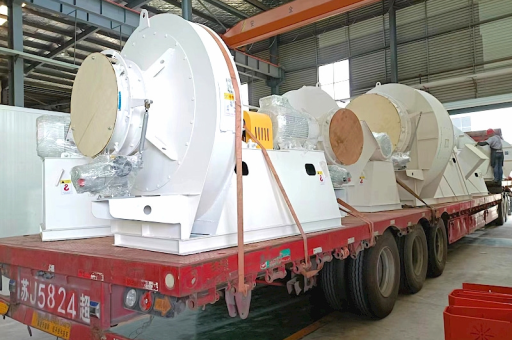
This is a highly specific and technical topic. Food drying (dehydration) requires the removal of moisture from food products to inhibit microbial growth. High-pressure fans (often called centrifugal fans or blowers) are critical to this process, as they create the necessary airflow to carry away moisture and, in some cases, supply heated air.
Here is a comprehensive breakdown of how high-pressure fans are used in food drying, their types, key specifications, and selection criteria.
The Role of High-Pressure Fans in Food Drying
Unlike low-pressure axial fans (like box fans), high-pressure fans are designed to overcome system resistance (static pressure). In a food dryer, this resistance comes from:
- Dense product beds (e.g., stacked trays of apples, herbs, or jerky).
- Long ductwork and air distribution plenums.
- Filters (for air intake or recirculation).
- Heat exchangers (if using indirect heating).
Primary Functions:
- Forced Convection: Moving hot air over the food surface to break the boundary layer of moist air.
- Penetration: Pushing air through a bed of sliced food (e.g., in a tunnel dryer) rather than just over it.
- Recirculation: Mixing fresh intake air with exhaust air to maintain humidity and temperature gradients.
- Momentum: Creating a uniform velocity profile across all trays or belts to ensure even drying.
Key Fan Types for Food Drying
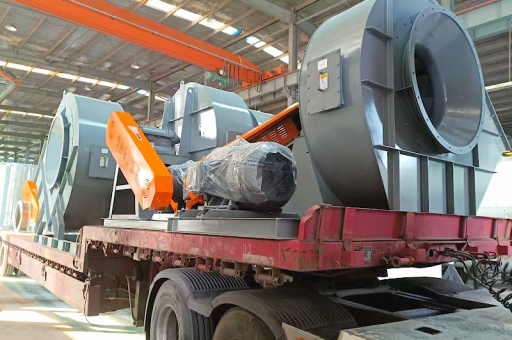
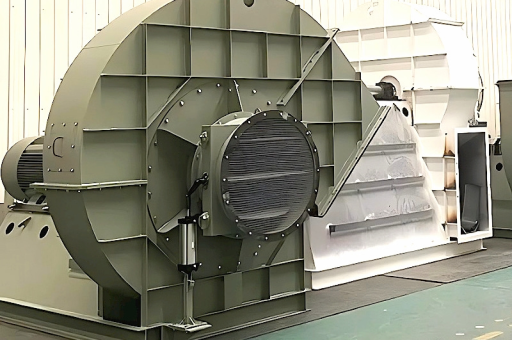
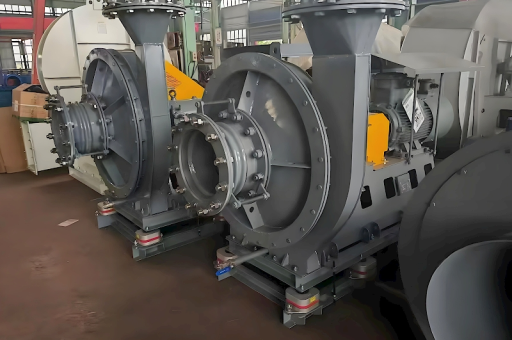
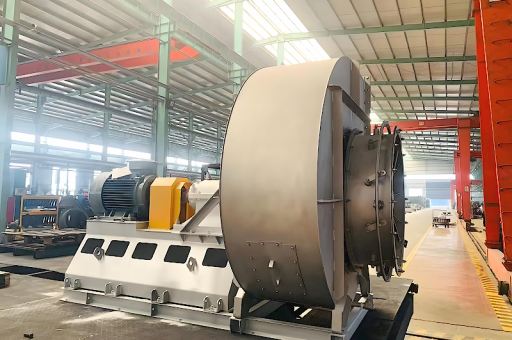
The most common type is the Centrifugal Fan (also called a squirrel cage blower). Within this category, there are specific designs:
| Fan Type | Blade Design | Best For | Pros | Cons |
|---|---|---|---|---|
| Backward Inclined (BI) | Flat blades angled away from rotation | High static pressure, clean air, high efficiency (e.g., tunnel dryers) | Non-overloading horsepower, energy efficient | Cannot handle sticky particles well |
| Backward Curved (BC) | Curved blades away from rotation | Highest efficiency applications (e.g., large industrial dryers) | Very quiet, stable performance | More expensive |
| Forward Curved (FC) | Curved blades into the direction of rotation | Lower static pressure, high volume, small spaces (e.g., cabinet dryers) | Small footprint, lower cost | Overloading (can burn out motor if backpressure drops) |
| Radial Blade | Straight blades | Harsh environments (e.g., dusty air from peel waste) | Durable, handles particulates | Lower efficiency, noisy |
| Inline Centrifugal | Mixed flow | Ducted systems, confined spaces | Space-saving, quieter than axial | Lower pressure than traditional centrifugal |
For food drying, Backward Inclined (BI) is the industry standard for most medium-to-large systems due to its stable operation and efficiency.
Critical Specifications
When specifying a fan for a food dryer, these parameters are non-negotiable:
- Static Pressure (SP): Measured in inches of water gauge (in. w.g.) or Pascals (Pa). This is the resistance the fan must overcome.
- Cabinet dryer: 0.5 - 1.5 in. w.g.
- Tunnel dryer with deep bed: 2 - 6 in. w.g.
- Fluidized bed dryer (grains/pellets): 6 - 12+ in. w.g.
- Air Volume (CFM or m³/h): The total flow required. Rule of thumb: 10-20 FPM (feet per minute) face velocity over drying trays for most fruits/vegetables.
- Temperature Rating: The fan must be rated for the operating temperature.
- Low temp (90-120°F / 32-49°C): Standard motors.
- Mid temp (120-200°F / 49-93°C): Shaft cooling disc, heat-shedding pulley, high-temp grease.
- High temp (200-400°F / 93-204°C): Airtight bulkhead between fan and motor (motor outside the airstream), or a special high-temp motor.
- Material of Construction (Food Safety):
- Housing: 304 or 316 Stainless Steel (SS304/SS316) is mandatory for direct food contact. Aluminum or painted steel is used only for external ducting.
- Wheel: Aluminum (light, non-sparking) or SS304.
- Seals: Teflon or silicone seals to prevent contaminants from entering the airstream.
- Hygienic Design:
- Washdown duty (IP55, IP66 motor enclosure).
- Easy access for cleaning.
- No crevices where food debris or bacteria can accumulate.
Drive Configurations
- Direct Drive (Fan wheel on motor shaft): Higher efficiency, fewer moving parts, but the motor might be in the hot airstream. Best for clean, non-corrosive air or when the motor is isolated.
- Belt Drive (V-belts and pulleys): Most common for food drying. Allows the motor to be placed outside the hot air stream, protecting it from heat. Allows speed adjustment (CFM change) via pulley diameter changes.
Fan Placement in the Drying System
- Blow-Through (Fan before heater): The fan pushes air through the heater. Advantage: Motor stays cool (ambient air). Disadvantage: Heat is added after the fan wheel.
- Draw-Through (Fan after heater): The fan pulls air through the heater and across the food. Advantage: The fan wheel is in hot, humid air (requires high-temp fan). Disadvantage: The fan operates at peak temperature.
- Pusher-Puller: Two fans. One pushes cold air into a heat exchanger, another pulls the hot air across the food. This splits the static pressure load and allows for better temperature control.
Recent Technologies & Considerations
- VFDs (Variable Frequency Drives): Essential for modern food drying. Allows precise control of air velocity and static pressure, reducing energy consumption by 20-40% and preventing over-drying.
- EC (Electronically Commutated) Motors: AC motors with built-in inverters. They are highly energy efficient, provide perfect speed control, and are often easier to clean than a VFD + AC motor setup. Common in smaller to medium dryers.
- Explosion-Proof Fans: Required if drying combustible dust (e.g., flour, sugar, spices, coffee). The fan motor and housing must prevent sparks.
- Energy Recovery: Higher-pressure fans often pair with heat recovery wheels to capture exhaust heat and pre-heat incoming air.
Common Food Drying Applications & Fan Challenges
| Application | Typical Fan Requirement | Common Challenge |
|---|---|---|
| Jerky / Meat Drying | Medium pressure (2-3 in.wg), moderate (0.5-1.0 HP) | Grease buildup on fan wheel; need for high-temp washdown capable fans. |
| Herbs / Leafy Greens | Low pressure, high volume | Very low static pressure; risk of blowing leaves off trays. Use VFDs for low speed. |
| Fruit Slices (Apple, Mango) | Medium-high pressure (3-5 in.wg) | Sticky sugar residue; need SS housing and easy-clean wheels. |
| Grains / Beans | High static pressure (8-12 in.wg) for fluidized bed | Abrasion from grit. Need hardened steel wheel or heavy-gauge aluminum. |
| Prepared Foods (Pasta, Pet Treats) | Variable; depends on "clip strips" or trays | Uneven airflow due to product loading pattern; need adjustable dampers. |
Summary: A Good Food Drying Fan System
- Type: Backward Inclined Centrifugal Fan (BI).
- Material: Stainless steel housing (304 or 316) with aluminum wheel.
- Drive: Belt drive with motor outside the airstream.
- Control: VFD or EC motor.
- Special Features: Washdown-duty, high-temp shaft seals, and a cleanout door for inspection.
If you have a specific dryer design (tunnel, cabinet, belt, fluidized bed), temperature range, or product type, providing those details will allow for a more targeted fan selection.