This article's table of contents introduction:
- Core Principle: How They Work
- Specific Fan Types for Dust Removal
- Key System Design Considerations
- Common Applications
- Performance Curve & Selection (Critical)
- Quick Selection Checklist
- Final Verdict
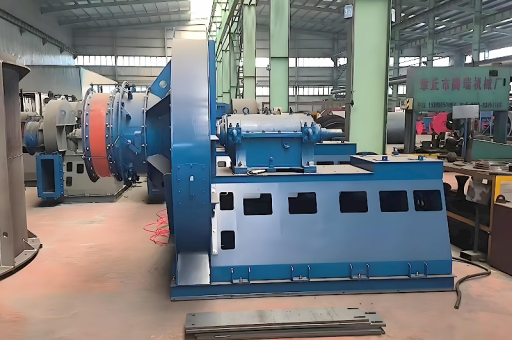
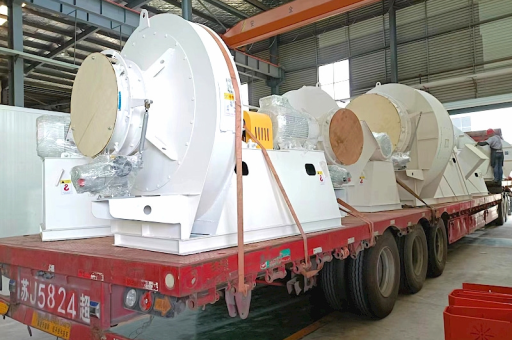
This is a highly specific and practical industrial application. Here is a comprehensive breakdown of how High-Pressure Fans are used for environmental dust removal, including the fan types, system design principles, key selection criteria, and common applications.
Core Principle: How They Work
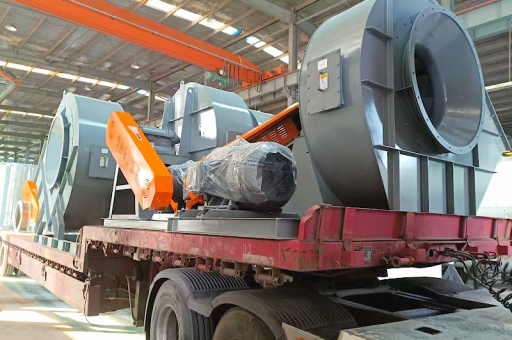
Unlike standard ventilation fans that move large volumes of air at low pressure, High-Pressure Fans (often called Blowers or Centrifugal Fans) generate a high static pressure differential.
This pressure is critical for dust removal because it must overcome:
- Friction losses from long ductwork.
- Flow resistance from filters (bags, cartridges, or cyclones).
- Pressure drop across nozzles or capture hoods.
- Velocity requirements to entrain heavy dust particles.
The fan creates a negative pressure (vacuum) at the dust source (hood, grinder, conveyor transfer point) and a positive pressure to push the dusty air through the filtration system.
Specific Fan Types for Dust Removal
Not all high-pressure fans are equal. The three dominant types for this application are:
| Fan Type | Key Characteristic | Best For | Typical Pressure (In H₂O) |
|---|---|---|---|
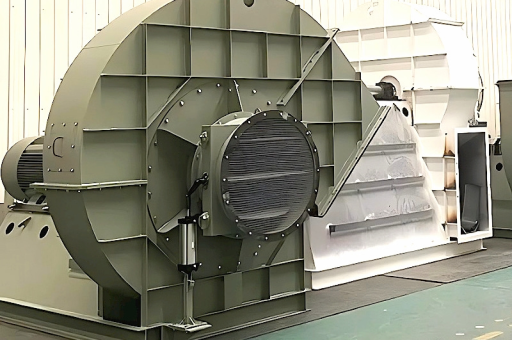
| High-Pressure Centrifugal (Radial Blade) | Heavy construction, steep pressure curve, handles particulate impact well. | Large baghouses, cyclone collectors, heavy industrial dust (sand, metal). | 12" – 40" (3000 – 10000 Pa) |
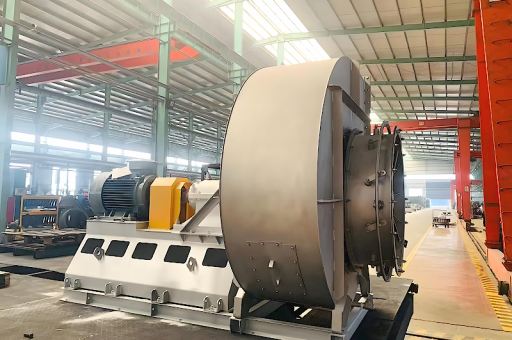
| Backward Inclined / Airfoil | High efficiency, non-overloading power curve, lower noise. | High volume, moderate pressure, cleaner dust streams. | 8" – 20" (2000 – 5000 Pa) |
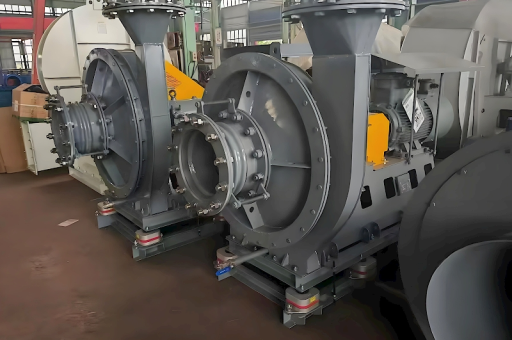
| Regenerative Blower (Ring Compressor) | Oil-free, low vibration, compact, high pressure but low volume. | Vacuum cleaning points, pneumatic conveying of fine dust, small source capture. | 20" – 100" (5000 – 25000 Pa) |
| Positive Displacement (Roots Blower) | Constant volume, extremely high pressure, high noise. | Pneumatic conveying of heavy/dense dust; less common for standard filtration. | > 50" (12500+ Pa) |
The most common choice for industrial dust removal is the High-Pressure Centrifugal Fan (Radial or Backward Inclined).
Key System Design Considerations
To avoid common failures, you must design the system, not just the fan:
-
Duct Velocity (Transport Velocity) :
- This is the most critical parameter.
- Horizontal ducts must maintain a minimum velocity to keep particles suspended. If speed drops, dust settles in the duct, leading to blockages.
- Standard rule: 3,500 – 4,000 FPM (feet per minute) for light dust (wood, grain).
- Heavy dust (lead, sand, metal): 4,500 – 5,500 FPM.
- High-pressure fans are needed to produce this velocity through small-diameter ductwork.
-
Pressure Drop Calculation (The Fan's Job) : The fan must overcome:
- Duct Friction Losses (longest/ most restrictive run).
- Hood Entry Loss (acceleration of air).
- Filter Pressure Drop (clean + dirty filter allowance, usually 2x the clean drop).
- Pneumatic Conveying Losses (if entraining heavy material).
-
Abrasion Resistance :
- Heavy dust: Use a Radial Blade fan with a thick steel plate wheel (not airfoil). A lining (ceramic, hard-faced, or rubber) on the wheel and housing is often required.
- Light dust: Backward Inclined or Airfoil wheels are fine.
-
Spark & Combustion Safety :
- If the dust is combustible (wood, coal, metal, sugar, food), the fan wheel must be non-sparking.
- Construction: Aluminum bronze or 316 stainless steel wheel, with a brass rubbing ring. The fan housing must be grounded.
- The fan is often placed after the filter (on the clean side) to avoid pulling sparks through the fan.
Common Applications
- Baghouse Dust Collectors: The fan is the "prime mover" on the clean air side of the bags.
- Cartridge Dust Collectors: Used in welding, pharmaceutical, and food processing.
- Pneumatic Conveying: Moving dust from hoppers to silos.
- High-Vacuum Systems: Central vacuum cleaning systems with hose drops (often use Regenerative Blowers).
- Shot Blast / Sand Blast Rooms: The fan must be powerful enough to sweep heavy abrasive grit.
Performance Curve & Selection (Critical)
When selecting a fan, never select by horsepower alone. You must match the fan's Pressure vs. Volume (P-Q) curve to the System Resistance Curve.
- System Curve: Pressure $\propto$ (Flow Rate)²
- Fan Curve: Fan's ability to produce pressure at different flow rates.
The "Danger Zone" for heavy dust:
- Radial & Backward Inclined fans have a non-overloading power curve. This means as the filter gets clogged (reducing airflow, increasing pressure), the motor will not burn up.
- Propeller or Axial fans are unsuitable for dust removal because they have a stalling curve.
- If the fan operates to the left of its peak pressure (stall zone): The flow becomes unstable, vibration occurs, and the motor can overheat.
Quick Selection Checklist
- U.S. Standards (preferred): AMCA (Air Movement and Control Association) for certified performance.
- Class of Construction: Class II (medium) or Class III (heavy) for most dust systems.
- Temperature: Ensure seals and bearings can handle the air temp (e.g., after a thermal oxidizer).
- Drive Type: Direct drive (less maintenance) or Belt drive (allows easy speed/RPM changes to adjust airflow).
- Sound: High-pressure fans are noisy. A fan silencer (inlet or discharge) is often required for indoor installations.
Final Verdict
For environmental dust removal, a Heavy-Duty High-Pressure Centrifugal Fan (Radial or Backward Inclined) is the industry standard. It is chosen for its ability to handle particulate impact, maintain transport velocity, and provide a stable pressure vs. flow characteristic that matches the varying resistance of a dust filter.
If you are sizing one, the single biggest mistake is underestimating the duct friction and transport velocity, which leads to dust settling and blocked lines. Always oversize the pressure capability by 10-15% for safety.
Need more specific help? Provide the dust type (grain, metal, wood, etc.), approximate airflow (CFM), and target pressure, and I can help narrow down the fan type.