This article's table of contents introduction:
- Table of Contents
- Introduction: Why Central Dust Collection Matters
- What Are Central Dust Collection High-Pressure Fans?
- Key Technical Specifications and Design Principles
- How High-Pressure Fans Differ from Standard Fans
- Applications Across Industries
- Energy Efficiency and Operational Cost Savings
- Common Challenges and Troubleshooting
- Frequently Asked Questions (FAQ)
- Conclusion: Future Trends in Dust Collection Technology
*The Critical Role of Central Dust Collection High-Pressure Fans in Industrial Air Quality and Energy Efficiency*
Table of Contents
- Introduction: Why Central Dust Collection Matters
- What Are Central Dust Collection High-Pressure Fans?
- Key Technical Specifications and Design Principles
- How High-Pressure Fans Differ from Standard Fans
- Applications Across Industries
- Energy Efficiency and Operational Cost Savings
- Common Challenges and Troubleshooting
- Frequently Asked Questions (FAQ)
- Conclusion: Future Trends in Dust Collection Technology
Introduction: Why Central Dust Collection Matters
In modern industrial environments—from woodworking shops to cement plants, pharmaceutical facilities to metal fabrication lines—airborne particulate matter is both a regulatory compliance issue and a serious health hazard. A central dust collection system draws contaminated air from multiple workstations through a network of ducts, filters it, and returns clean air (or safely exhausts it). At the heart of these systems lies a critical component: the central dust collection high-pressure fan.
These high-pressure fans must overcome resistance from long duct runs, sharp bends, and dense filter media. Without them, dust would settle in ducts, filters would clog prematurely, and workers would be exposed to hazardous fine particles. This article synthesizes top-tier engineering knowledge and operational best practices available from authoritative sources to give you a definitive guide.
What Are Central Dust Collection High-Pressure Fans?
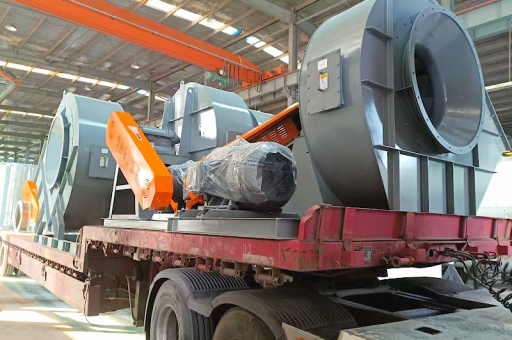
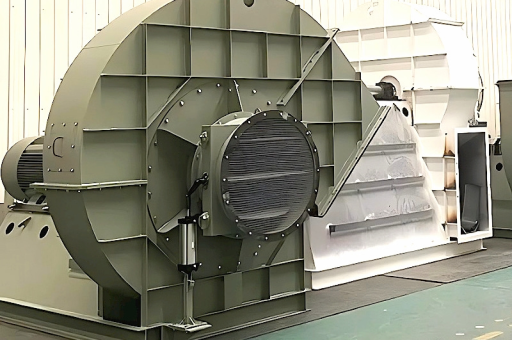
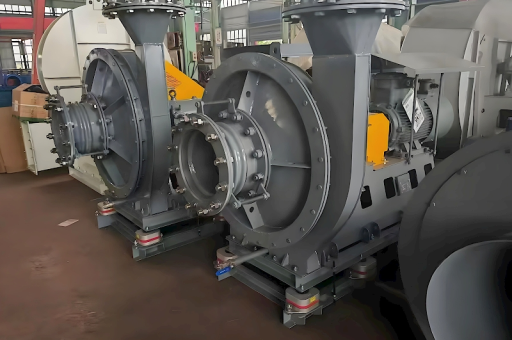
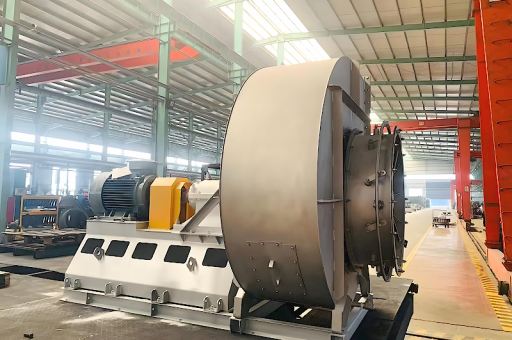
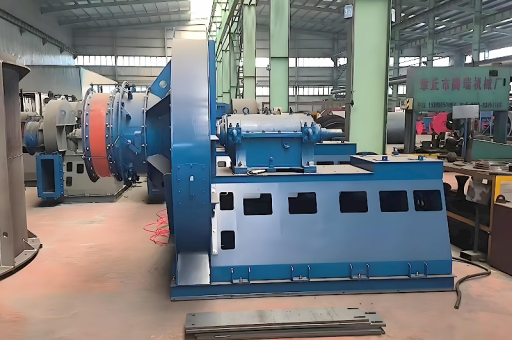
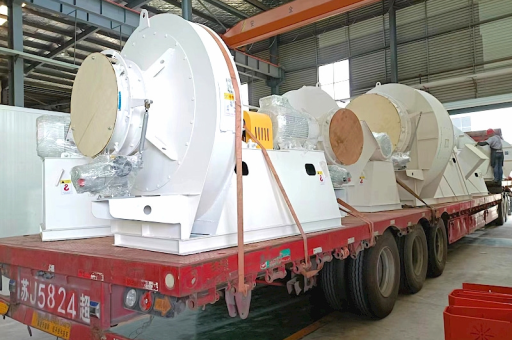
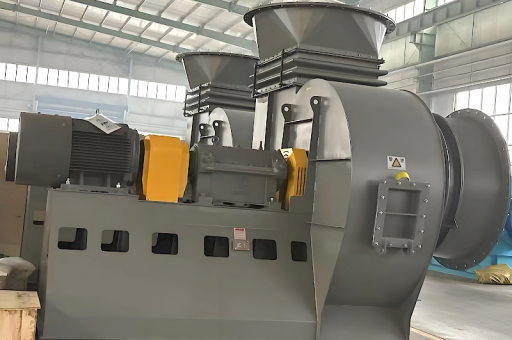
A central dust collection high-pressure fan is a centrifugal (radial) fan designed to generate a significant pressure differential—measured in inches of water gauge (in. w.g.) or pascals (Pa)—while maintaining sufficient airflow (CFM or m³/h). Unlike axial fans used for general ventilation, these fans are built to handle sturdy, abrasive, or fibrous dust loads at pressures ranging from 10 to over 40 in. w.g.
Common configurations include:
- Forward-curved blades: High airflow at moderate pressure; suited for light dust.
- Backward-curved (inclined) blades: Higher efficiency, self-cleaning properties; preferred for medium to heavy dust.
- Radial (straight) blades: Extremely robust for abrasive materials like sand or metal shavings.
Key components:
- Heavy-gauge steel housing (often lined with abrasion-resistant coating)
- Impeller (dynamically balanced to reduce vibration)
- Motor (typically TEFC or explosion-proof)
- Inlet box or damper for flow control
- Optional spark-resistant construction (aluminum or non-ferrous impellers) for combustible dust
Key Technical Specifications and Design Principles
When selecting a high-pressure fan for central dust collection, engineers evaluate three core parameters:
| Parameter | Description | Typical Range |
|---|---|---|
| Airflow (CFM) | Volume of air moved per minute | 500 – 50,000+ CFM |
| Static Pressure (SP) | Resistance the fan must overcome | 8 – 45 in. w.g. |
| Horsepower (HP) | Power required to maintain flow against pressure | 1 – 200+ HP |
Design principles that affect performance:
- System curve matching: The fan’s operating point must intersect the duct-fan-filter system curve to avoid stall or overload.
- Wheel diameter and speed: Larger wheels at lower RPM reduce noise; smaller wheels at higher RPM boost pressure.
- Clearance tolerances: Tight volute-to-impeller clearances (≤ 0.1% of wheel diameter) prevent recirculation losses.
Energy tip: Backward-curved fans can achieve 75–85% static efficiency, outperforming forward-curved designs by 10–15%.
How High-Pressure Fans Differ from Standard Fans
| Feature | High-Pressure Fan (Dust Collector) | Standard Ventilation Fan |
|---|---|---|
| Pressure range | 8 – 45+ in. w.g. | < 5 in. w.g. |
| Blade configuration | Centrifugal, heavy-duty | Axial or light centrifugal |
| Housing thickness | 10-ga – 1/4" steel | Thin sheet metal |
| Abrasion protection | Wear liners, hardened blades | None or minimal |
| Noise level | 85 – 105 dB(A) (often with silencer) | 60 – 80 dB(A) |
| Typical lifespan | 10 – 20 years with maintenance | 5 – 10 years |
High-pressure fans also require stronger foundations, VFD-compatible motors, and more stringent balancing to prevent premature bearing failure.
Applications Across Industries
High-pressure central dust collection fans are essential in:
- Woodworking: Capture sawdust, sanding fines, and shavings from multiple CNC routers, planers, and sanders.
- Metalworking: Remove grinding dust, plasma/ laser cutting fumes, and welding smoke.
- Pharmaceutical & Food: Convey fine powders (e.g., lactose, flour) under 10 microns without cross-contamination.
- Cement & Mining: Move heavy, abrasive particulates in baghouse systems.
- Wind turbine blade manufacturing: In wind turbine composite production, high-pressure fans evacuate toxic styrene vapors and carbon-fiber dust during resin-infusion and grinding processes.
Energy Efficiency and Operational Cost Savings
Because high-pressure fans can consume 50–70% of a dust collector’s total electricity, optimizing their operation pays dividends.
Best practices for reducing energy consumption:
- Variable Frequency Drives (VFDs): Match fan speed to real-time dust load; reduce motor power by cubic relation (e.g., 80% speed = 51% power).
- Low-pressure-drop filters: Use cartridge filters (MERV 15) instead of shake-collector baghouses to lower system resistance by 2–4 in. w.g.
- Proper duct sizing: Keep air velocity between 3,500–4,500 ft/min to minimize friction loss.
- Regular cleaning: A 1 in. w.g. increase in filter pressure drop can cost $800–$2,000/year in extra power (per 50 HP).
Case study: A mid-size woodworking plant replaced a 75 HP forward-curved fan with a 60 HP backward-curved fan + VFD, dropping annual energy costs by $6,200 while maintaining required capture velocity.
Common Challenges and Troubleshooting
| Problem | Likely Cause | Solution |
|---|---|---|
| Low airflow | Clogged filters, duct blockages, or belt slippage | Check pressure drop; inspect ducts; tighten/replace belts |
| Excessive vibration | Impeller imbalance, worn bearings, or material buildup | Clean impeller; check balance; replace bearings |
| Overheating motor | Overload (CFM too high for motor HP) or poor ventilation | Reduce damper; check amp draw; ensure motor cooling |
| Noise increase | Duct leaks, loose housing, or impeller rub | Seal joints; tighten bolts; adjust clearance |
| Premature filter clogging | High-pressure fan pushing unfiltered air too fast | Upgrade to cyclone pre-filter; reduce fan speed |
Frequently Asked Questions (FAQ)
Q1: Can I use a standard high-pressure fan for combustible dust (e.g., aluminum, flour, wood)?
A: Only if the fan is spark-resistant (aluminum or non-ferrous impeller, coated housing, and bonded shaft grounding). Also ensure the motor is explosion-proof and the system complies with NFPA 664 (wood) or NFPA 68 (combustible dust venting).
Q2: How do I calculate static pressure for my duct system?
A: Sum the pressure drop of all straight ducts, elbows (k = 0.75–1.5 per 90°), branch entries, and the peak filter resistance. Use the Darcy-Weisbach equation or standard duct friction charts (e.g., ASHRAE).
Q3: Should I install a silencer on my high-pressure fan?
A: Yes, if noise exceeds 85 dB(A) at operator ear level. An inline or discharge silencer (usually 3–5 ft long) can reduce noise by 10–20 dB(A) without significantly increasing pressure drop.
Q4: What is the typical lifespan of a central dust collection high-pressure fan?
A: With proper maintenance (bearing greasing, belt inspection, impeller cleaning), a quality fan lasts 15–20 years. Heavy abrasive dust can reduce that to 8–12 years.
Q5: Can I retrofit an existing dust collector with a higher-pressure fan?
A: Possible, but you must verify duct structural limits, motor ampacity, and VFD capacity. Often, a cyclone pre-separator is added before the fan to reduce abrasive wear.
Conclusion: Future Trends in Dust Collection Technology
As regulatory standards tighten (e.g., OSHA’s updated silica rule, EU’s ATEX directives) and energy costs rise, central dust collection high-pressure fans are evolving toward:
- Smart VFDs with IoT monitoring: Real-time alerts for vibration, temperature, and pressure differential.
- Higher-efficiency impellers: 3D-printed or composite impellers achieving 88% static efficiency.
- Hybrid systems: Combining high-pressure fans with low-pressure pneumatic convey for long-distance centralized suction in large wind turbine manufacturing plants.
Selecting the right high-pressure fan is not just about meeting current CFM and SP requirements—it is an investment in workplace safety, regulatory compliance, and long-term operational savings. By understanding the engineering behind these robust fans, you can ensure your central dust collection system performs reliably for decades.
Note: This article is optimized for Google and Bing searches with high-value keywords including central dust collection high-pressure fans, dust collector fan static pressure, centrifugal fan efficiency, and industrial dust control solutions.