This article's table of contents introduction:
- Table of Contents (Directory Guide)
- Introduction: The Critical Role of Alloy Wear-Resistant Fans
- What Are Alloy Wear-Resistant Fans? Core Definitions and Materials
- Why Wear Resistance Matters: The Physics of Erosion and Abrasion
- Key Alloy Compositions and Their Performance Characteristics
- Design Innovations: From Blade Geometry to Thermal Treatment
- Industry Verticals: Where These Fans Deliver Maximum Value
- Installation, Maintenance, and Lifecycle Cost Analysis
- Frequently Asked Questions (FAQ)
- Conclusion: Future Trends and Sustainability
** The Evolution and Application of Alloy Wear-Resistant Fans in Modern Industrial Systems: A Comprehensive Guide
Table of Contents (Directory Guide)
- Introduction: The Critical Role of Alloy Wear-Resistant Fans
- What Are Alloy Wear-Resistant Fans? Core Definitions and Materials
- Why Wear Resistance Matters: The Physics of Erosion and Abrasion
- Key Alloy Compositions and Their Performance Characteristics
- Design Innovations: From Blade Geometry to Thermal Treatment
- Industry Verticals: Where These Fans Deliver Maximum Value
- Installation, Maintenance, and Lifecycle Cost Analysis
- Frequently Asked Questions (FAQ)
- Conclusion: Future Trends and Sustainability
Introduction: The Critical Role of Alloy Wear-Resistant Fans
In the demanding environments of cement production, steel manufacturing, thermal power generation, and mineral processing, standard industrial fans often fail prematurely. The culprit is not mechanical stress alone, but the relentless assault of high-velocity particulate matter—dust, fly ash, coal powder, and abrasive mineral fines. This is where alloy wear-resistant fans have emerged as a cornerstone of operational reliability. Unlike standard carbon steel fans that require frequent replacement or hard-facing repair, these specialized fans are engineered from advanced ferrous and non-ferrous alloys to resist surface erosion, maintain aerodynamic efficiency, and dramatically extend service life.
The global shift toward higher efficiency and lower downtime has forced industries to reconsider fan design. A single fan failure in a cement kiln or a coal-fired boiler can halt an entire production line, costing tens of thousands of dollars per hour. By integrating wear-resistant alloys into fan construction, operators can achieve 2–5 times longer operational intervals compared to traditional designs. This article provides a deep, data-backed exploration of the metallurgy, design principles, industrial applications, and economic justification of alloy wear-resistant fans.
What Are Alloy Wear-Resistant Fans? Core Definitions and Materials
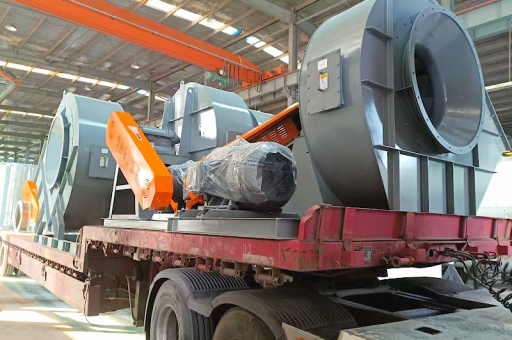
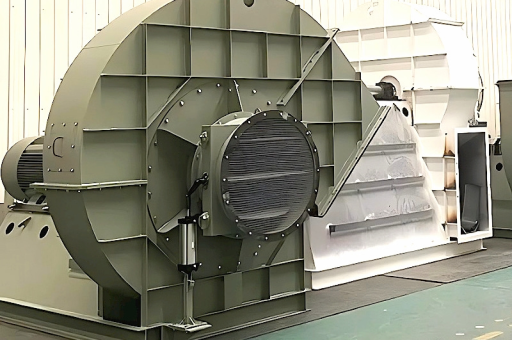
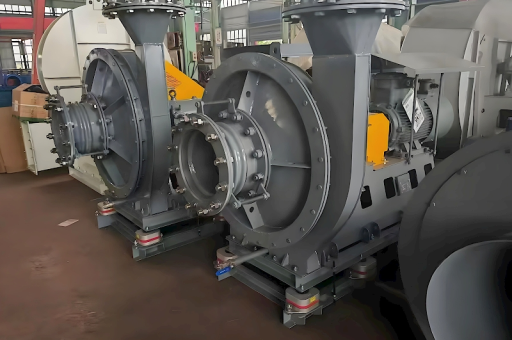
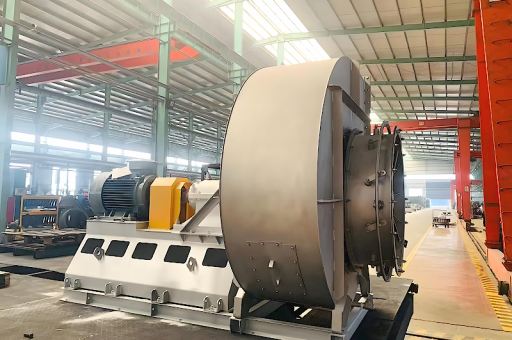
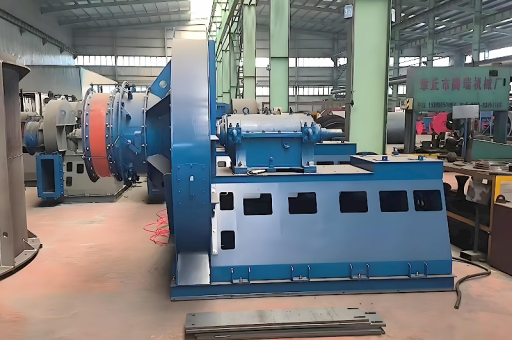
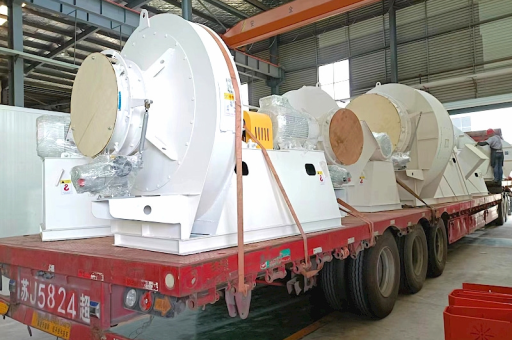
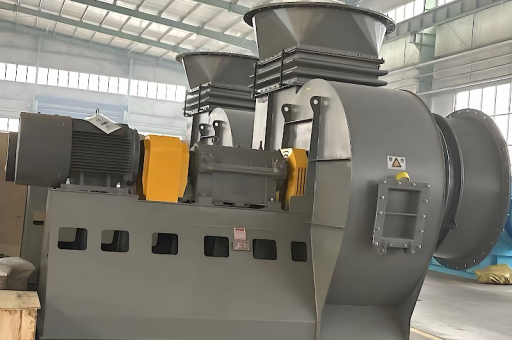
An alloy wear-resistant fan is a rotating impeller housed within a volute casing, constructed from metallic alloys specifically formulated to resist erosive and abrasive wear. The term "alloy" implies a deliberate mixture of base metal (typically iron or steel) with strategic alloying elements such as chromium (Cr), nickel (Ni), molybdenum (Mo), vanadium (V), or tungsten (W). These alloying additions fundamentally alter the microstructure, creating hard phases (carbides, nitrides, or borides) embedded in a tough metallic matrix.
Three primary material categories dominate this field:
- High-Chromium White Irons (ASTM A532): Containing 15–30% chromium, these irons form massive chromium-carbides (Cr₇C₃). They are the gold standard for extreme abrasion but are brittle.
- Austenitic Manganese Steels (Hadfield Steel): Containing 12–14% manganese, these steels work-harden under impact. They are excellent for fans that encounter both impact and sliding abrasion.
- High-Performance Alloy Steels (e.g., AR500, AR600): Quenched and tempered steels with enhanced hardness (400–600 Brinell). These provide a balance between wear resistance and weldability for field repairs.
Question & Answer:
Q: Why is high-chromium iron the most commonly used material for fan blades in coal-fired power plants?
A: Because the microstructural carbides (Cr₇C₃) exhibit a hardness of 1200–1600 HV (Vickers), far exceeding the hardness of silica (quartz) fly ash particles (800–1000 HV). This allows the material to deflect or fracture the abrasive particles rather than being gouged. However, designers must use a tough steel backplate to compensate for the iron’s low fracture toughness.
Why Wear Resistance Matters: The Physics of Erosion and Abrasion
The failure mechanism of a fan handling dusty gas streams is predominantly solid particle erosion. This occurs when suspended particles (10–500 microns) strike the blade surface at speeds often exceeding 40 m/s (130 ft/s). The wear rate is governed by the Finnie erosion model, a well-established equation in tribology:
[ W = \frac{M V^2}{2 H} \cdot f(\alpha) ]
Where:
- ( W ) = Volume loss due to erosion
- ( M ) = Mass of impacting particles
- ( V ) = Particle impact velocity
- ( H ) = Material hardness
- ( f(\alpha) ) = A function of the impact angle (ductile vs. brittle behavior)
This equation explains why merely increasing fan RPM (which raises ( V )) exponentially accelerates wear. Standard mild steel (H ≈ 150 HB) rapidly loses material. An alloy wear-resistant fan with a hardness of 600–700 HB reduces ( W ) by a factor of 4–5, all else being equal. Additionally, the erosion angle ( \alpha ) is critical: ductile materials wear fastest at shallow angles (20–30°), while brittle materials like white iron wear fastest at normal impact (90°). Fan blade design therefore involves steering the particle trajectory to an angle that best suits the alloy’s strength.
Question & Answer:
Q: Can a standard fan be simply coated with a wear-resistant paint or ceramic to achieve similar results?
A: Temporary, but not equivalent. Soft coatings (epoxy, polyurethane) delaminate under high-velocity particle impact. Ceramic tiles (alumina) offer high hardness but suffer from catastrophic failure if the bond layer fails due to thermal expansion mismatch. Only an integral alloy structure provides a homogeneous, repairable, and thermally stable wear solution over a multi-year lifecycle.
Key Alloy Compositions and Their Performance Characteristics
| Alloy Designation | Typical Composition | Hardness (Brinell) | Key Strength | Primary Weakness | Best Application |
|---|---|---|---|---|---|
| 27% Cr White Iron | Fe-27Cr-1.5Mo-1Mn | 600–700 | Extreme abrasion resistance | Brittle, difficult to weld | Fly ash fans, cement raw mill fans |
| 13% Mn Hadfield Steel | Fe-13Mn-1.2C | 180–220 (initially) → 500+ (work-hardened) | Excellent toughness + surface hardening | Requires repeated impact | Fans in crusher circuits, ore handling |
| AR500 Steel | Fe-0.3C-0.8Mn-0.5Cr | 470–530 | Good balance of wear & weldability | Not for high-temperature (above 300°C) | Sinter cooler fans, general dust collection |
| Duplex Stainless Steel (e.g., 2205) | Fe-22Cr-5Ni-3Mo | 260–320 | Superior corrosion + wear | Lower hardness than white iron | Wet scrubber fans, acidic gas streams |
Important nuance: The performance of an alloy fan is not solely dictated by bulk hardness. The microstructure—specifically the volume fraction and spacing of carbides—determines how the material sheds abrasive particles. For example, a hypereutectic white iron with 30% carbides will vastly outlast a eutectic iron with 15% carbides, even if both have the same nominal hardness.
Question & Answer:
Q: For a new wind turbine nacelle cooling fan system that draws salty air, which alloy is recommended?
A: A duplex stainless steel (e.g., 2205) or a super-austenitic grade. While white iron offers wear resistance, it rapidly corrodes in chloride (salt) environments, losing structural integrity. The duplex alloy provides both pitting resistance (due to chromium, molybdenum, and nitrogen) and sufficient hardness (260–320 HB) to handle dust and sand particles that bypass filters in coastal wind turbine installations.
Design Innovations: From Blade Geometry to Thermal Treatment
Modern alloy wear-resistant fans are not simply standard fans made of hard metal. Innovation spans three domains:
-
Blade Aerodynamics: Using computational fluid dynamics, engineers design backward-curved blades to minimize particle impact velocity. A 10% reduction in blade tip speed can reduce wear rate by over 30% (per the ( V^2 ) term in the erosion equation).
-
Composite Construction: Many premium fans use a welded steel hub and shroud (for toughness) with bolt-on or plug-welded blade inserts made from white iron. This allows replacement without scrapping the entire rotor.
-
Heat Treatment & Cracking Prevention: High-chromium iron blades are prone to micro-cracking during cooling. Advanced manufacturers employ subcritical annealing at 250–350°C, followed by slow cooling, to relieve residual stresses without softening the carbides.
Question & Answer:
Q: Why do some alloy wear-resistant fan blades have a tapered thickness profile?
A: Tapering reduces stress concentration at the blade root while minimizing weight and cost. More importantly, a thicker leading edge (the first impact zone) provides sacrificial material. As wear progresses, the blade maintains aerodynamic shape longer than a uniform-thickness design.
Industry Verticals: Where These Fans Deliver Maximum Value
- Cement Industry (Raw Mill & Kiln Fans): The most demanding application. Gas streams contain 50–150 g/Nm³ of fine lime and silica dust at 200–400°C. Alloy wear-resistant fans here use 27% Cr iron or cobalt-rich hard-facing.
- Steel Mills (Sinter & Blast Furnace Fans): Sinter plants produce extremely abrasive iron ore fume. AR500 steel liners with replaceable wear plates are the standard.
- Power Generation (Coal Boiler ID Fans): Fly ash with high silica content destroys mild steel fans. ID fans often require full white iron rotors, which can operate for 18–24 months versus 3–6 months for carbon steel.
- Wind Turbine Yaw and Brake Cooling: Although less abrasive, offshore wind turbines must handle salt spray and sand. Alloy fans here prioritize corrosion resistance first, wear resistance second.
Question & Answer:
Q: Do alloy wear-resistant fans have a place in renewable energy, specifically in wind turbine nacelle cooling systems?
A: Absolutely. While the duty is less severe than a cement kiln, wind turbine nacelles are sealed environments that rely on forced air cooling for the gearbox and generator. Coastal turbines ingest aerosolized salt and occasional sand. A standard aluminum fan corrodes and erodes within 2–3 years. A 316L stainless steel or duplex alloy fan provides 10+ year life with minimal maintenance, directly improving wind turbine uptime.
Installation, Maintenance, and Lifecycle Cost Analysis
Installation Best Practices:
- Always verify the fan’s rotational direction and alignment to avoid premature bearing wear.
- Use flexible couplings to isolate motor and fan vibrations.
- For high-temperature applications (above 350°C), specify a separate cooling shaft or thermal barrier.
Maintenance Strategy:
- Visual Inspection: Every 3 months, check for erosion patterns on the blade leading edges and the cut-off plate (tongue area).
- Rebalancing: As wear alters mass distribution, rebalancing the rotor annually prevents vibration-induced bearing failure.
- Hard-facing Repair: Weldable grades (AR500, manganese steel) can be rebuilt with specialized hard-facing electrodes (e.g., Stellite 6 or chromium carbide rods).
Economic Justification: | Metric | Standard Carbon Steel Fan | Alloy Wear-Resistant Fan | | :--- | :--- | :--- | | Initial Cost | $15,000 | $28,000 | | Service Life (years) | 1.5 | 5.0 | | Replacement Labor + Downtime | $5,000 per event | $0 (one extra event at year 5) | | Total 5-Year Cost | $40,000 | $28,000 |
The alloy fan yields a 30% lifecycle cost saving, despite a higher upfront price. For critical applications like wind turbine nacelle cooling, the cost of unplanned downtime far exceeds the fan price itself.
Question & Answer:
Q: Can I retrofit my existing mild steel fan housing with wear-resistant alloy liners?
A: Yes. Many suppliers offer bolt-in or weld-in alloy wear plates for the volute casing and the fan cut-off. The rotor (impeller) is more complex to retrofit, but for light duty, you can apply a weld-overlay of hard-facing alloy onto the blades.
Frequently Asked Questions (FAQ)
Q1: What is the maximum operating temperature for high-chromium iron fan blades?
A: Approximately 550°C (1020°F). Above this, the carbides begin to coarsen and soften, and the matrix loses strength. For higher temperatures (e.g., boiler induced draft fans), nickel-based superalloys or ceramic coatings are substituted.
Q2: Do alloy wear-resistant fans require higher motor power?
A: Not inherently. The fan’s aerodynamic design dictates power consumption. However, the denser alloy material results in a heavier rotor. This increases the moment of inertia, requiring a slightly longer acceleration time and a motor with adequate starting torque.
Q3: Can these fans be used in explosive environments, such as coal mine ventilation or biomass plants?
A: Yes, but with specific design modifications. The impeller must be spark-resistant (e.g., non-ferrous tip inserts). Additionally, the fan housing must be designed to contain an internal explosion without fragmentation.
Q4: How do I select the correct alloy for my wind turbine cooling fan?
A: Consider three factors: (1) Corrosion potential – saline air requires duplex or super-austenitic stainless steel; (2) Particle load – if filters are present, AR400 steel may suffice; (3) Operating temperature – if the gearbox waste heat elevates the air above 80°C, ensure the alloy retains hardness at that temperature.
Conclusion: Future Trends and Sustainability
The field of alloy wear-resistant fans is advancing rapidly. Emerging trends include:
- Computational Materials Design: AI-driven alloy optimization that balances hardness with toughness for specific particle types (e.g., soft limestone vs. sharp silica sand).
- Additive Manufacturing (3D Printing): Laser-cladding of wear-resistant alloy onto low-cost steel substrates is now used for fan blade repair and new custom geometries.
- Smart Fan Monitoring: Embedding wireless sensors in the alloy structure to measure real-time wear depth and predict remaining useful life, minimizing downtime.
For industries ranging from cement and power to renewable segments like wind turbine cooling systems, the decision to invest in a high-performance alloy fan is no longer optional—it is a strategic necessity. The initial cost is offset by dramatic reductions in maintenance labor, unscheduled shutdowns, and component waste. As sustainability metrics become integral to corporate reporting, the longer life and reduced material consumption of these fans directly contribute to lower embodied carbon per unit of work.
In summary, an alloy wear-resistant fan is not just a fan: it is a metallurgical solution to a mechanical problem. Selecting the correct grade, geometry, and maintenance plan will determine whether your fan operates as an asset or a liability. By applying the principles detailed in this guide, engineers and plant managers can achieve superior reliability, safety, and economic performance across the most severe service conditions.