This article's table of contents introduction:
- What is a Wear-Resistant Impeller Fan?
- Why is Wear Resistance Critical?
- Key Design Features & Construction
- Primary Wear-Resistant Materials & Liners
- Common Applications & Industries
- How to Choose the Right Wear Protection (A Decision Guide)
- Example: Wear Patterns on an Impeller
- Summary Table: Material Selection
Here is a comprehensive overview of wear-resistant impeller fans, covering what they are, why they are needed, the materials used, design features, and common applications.
What is a Wear-Resistant Impeller Fan?
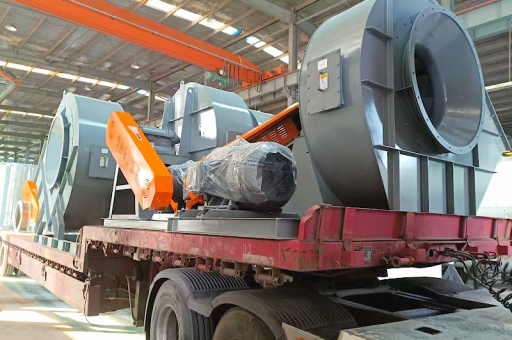
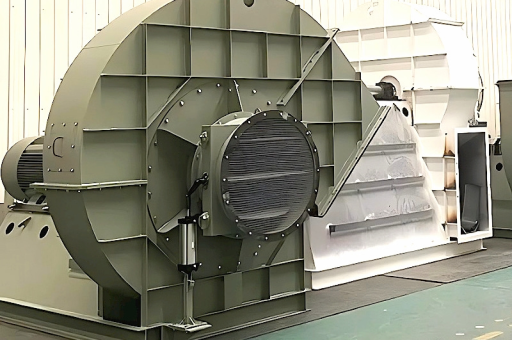
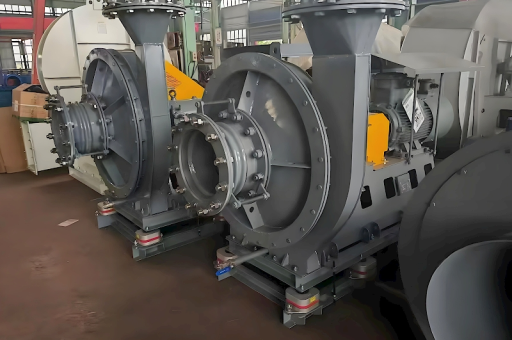
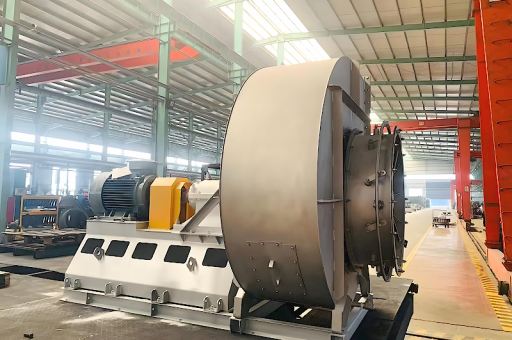
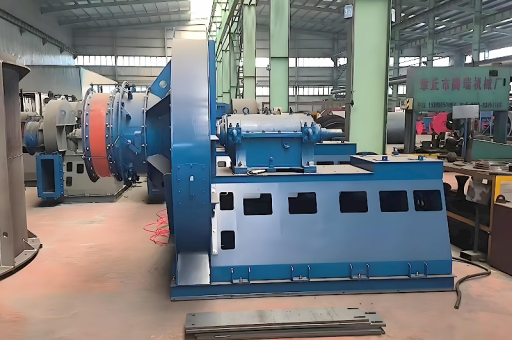
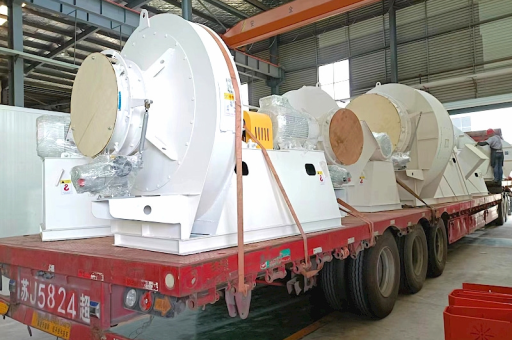
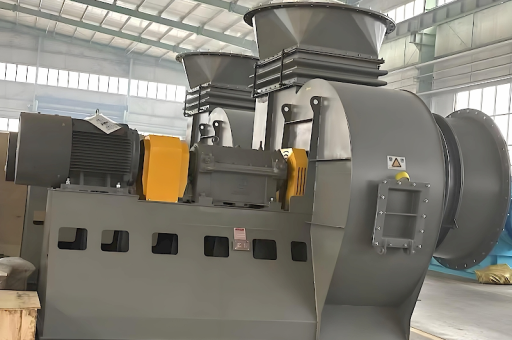
A wear-resistant impeller fan (also known as an abrasion-resistant or erosion-resistant fan) is a specialized industrial fan designed to handle gas streams that contain solid particulate matter (e.g., dust, grit, ash, pellets, powders).
Unlike standard HVAC fans, which move clean air, these fans are engineered and manufactured to withstand the constant erosive impact of particles hitting the impeller blades and the fan housing. Without this protection, a standard fan would fail rapidly (often in days or weeks) due to metal loss, unbalance, and vibration.
Why is Wear Resistance Critical?
The primary failure mode for fans in particulate-laden environments is erosive wear. This occurs when solid particles strike the fan surfaces at high velocity. The key factors influencing wear are:
- Particle Hardness: Harder particles (e.g., silica, alumina) cause more wear.
- Particle Velocity: Wear increases exponentially with velocity (often proportional to v² or v³).
- Impact Angle: Different materials behave differently at different impact angles (ductile vs. brittle materials).
- Concentration: Higher dust loading accelerates wear.
The consequences of failure include:
- Imbalance: Uneven wear on blades causes vibrations, leading to bearing and shaft failure.
- Reduced Efficiency: Worn blades change the fan's aerodynamic profile, reducing airflow and pressure.
- Catastrophic Failure: A severely worn blade can detach, destroying the fan housing and posing a safety hazard.
- Unplanned Downtime: Replacing or repairing a fan in an industrial setting can be extremely costly.
Key Design Features & Construction
Wear-resistant fans are not just standard fans with a coating. They involve specific design philosophies:
-
Robust Mechanical Design: Thicker backplates, heavier shafts, and larger bearings are used to handle the stresses of imbalance and the weight of wear liners. The critical speed of the shaft is designed to be much higher than the operating speed.
-
Aerodynamic Design for Low Wear:
- Radial Tip Blades: While less efficient than backward-curved blades, radial or radial-tip blades are often preferred for heavy dust loads because they are less prone to particle buildup and have a simpler geometry, making them easier to line with wear protection.
- Backward-Inclined (BI) / Airfoil Blades: These are still used for higher efficiency, but the leading edge and pressure side require the most robust protection.
-
Ease of Maintenance:
- Split Housings: The fan housing is often designed to split horizontally or vertically, allowing access to the impeller and internals without removing ductwork.
- Replaceable Liners: The most common approach. The internal surfaces of the housing and the impeller are lined with replaceable wear plates, not a permanent coating.
- Access Doors: Strategically placed doors allow for inspection and maintenance of wear protection.
Primary Wear-Resistant Materials & Liners
The choice of material depends on the specific application, particle type, temperature, and budget.
| Material | Type | Properties & Best Use | Pros | Cons |
|---|---|---|---|---|
| Hardox / A514 / Abrasion-Resistant (AR) Steel | Plate Steel | The most common baseline. Used for housings and impellers in moderate conditions (e.g., wood chips, grain). | Good toughness, weldable, readily available, low cost. | Not suitable for very hard/abrasive particles (silica, alumina). |
| Ceramic Tile | Brittle Ceramic | The gold standard for severe abrasion (e.g., fly ash, cement, mining). Alumina (85-99%). | Extremely high hardness (9 on Mohs scale), very long life. | Brittle (can shatter on impact), heavy, difficult to install (requires special epoxy or welding), sensitive to thermal shock. High initial cost. |
| Tungsten Carbide | Hard Metal | Used for extreme localized wear (e.g., blade leading edges, vortex finders). Often applied as a weld overlay or plate. | Exceptionally hard, excellent for high-temperature and severe impact. | Very expensive, difficult to machine/weld. Used only in specific high-wear zones. |
| Weld Overlay / Hardfacing | Welding Process | A layer of hard, abrasion-resistant weld metal applied to the base steel. Chrome carbide or tungsten carbide rods/paste. | Highly durable, conforms to complex shapes, good for repair. | Slower process, can distort the impeller if not managed carefully, requires skilled welders. |
| Polyurethane / Rubber | Elastomer | Used for fine, wet, or corrosive abrasives (e.g., slurry fans, wet scrubbers). | Excellent for low-angle erosion, high impact resistance (dampens energy), corrosion resistance, quieter than metal. | Limited to lower temperatures (<80-100°C), degrades with UV/oil, poor for sharp/hard particles at high velocity. |
| Stellite / Alloy Cobalt | Cobalt Alloy | High-temperature, high-corrosion + abrasion (e.g., chemical processing, incineration). | Maintains hardness at high temperatures (up to 800°C+), excellent corrosion resistance. | Extremely expensive, difficult to apply. |
| Bimetal / Clad Plate | Composite | A base steel plate (for strength) with a thin layer of wear-resistant alloy (e.g., chrome carbide clad) metallurgically bonded to it. | Good balance of strength and wear resistance, easier to fabricate than solid ceramic. | Higher cost than AR steel, can delaminate if not properly handled. |
Common Applications & Industries
- Cement Industry: Raw mill fans, baghouse fans, kiln induced draft (ID) fans (handling hot, abrasive dust).
- Mining & Minerals: Crusher ventilation, conveyor transfer points, ore processing fans, blast furnace gas fans.
- Power Generation: Induced draft (ID) fans for coal-fired boilers (handling fly ash), primary air fans (handling coal dust), scrubber booster fans.
- Steel Industry: Sinter plant fans, converter off-gas fans, dust collectors.
- Wood Products: Wood chip conveying, particleboard sander dust, hog fuel fans.
- Chemical & Fertilizer: Conveying abrasive catalysts, dry powder processing.
- Grain Handling: Grain dust collection (explosion risk is also a key factor here).
How to Choose the Right Wear Protection (A Decision Guide)
-
Analyze the Air Stream:
- What is the particle type? (Silica, limestone, steel, wood, soft dust?)
- What is the particle size and shape? (Sharp, angular vs. round, fine vs. coarse?)
- What is the concentration? (g/m³ or grains/ft³)
- What is the gas temperature and composition? (Corrosive? Wet? High temp?)
- What is the velocity at the blade tip? (Typically 60-120 m/s or 200-400 ft/s)
-
Consider the Impact Angle:
- Low-angle (Glancing) impacts: Ductile materials like rubber or AR steel often work well.
- High-angle (Direct) impacts: Hard, brittle materials like ceramic tile are needed to resist penetration.
-
Budget vs. Lifecycle Cost:
- A low-cost AR steel fan might fail in 6 months.
- A ceramic-lined fan might cost 3-5x more but last 5-10 years. The total cost of ownership (including lost production) usually favors the ceramic solution for harsh environments.
Example: Wear Patterns on an Impeller
- Leading Edge: Receives direct impact. Often protected with ceramic tiles or a tungsten carbide weld overlay.
- Blade Pressure Side (Concave side): High-velocity particle flow. Protected with tiles or hardfacing.
- Blade Suction Side (Convex side): Lower velocity, but can experience "rooster tail" wear patterns. Protected with lighter liners.
- Backplate: Radial wear patterns from the inlet. Requires protection, especially near the hub.
- Housing (Scroll): The spiral wall and the "cutoff" or "tongue" (the point closest to the impeller) experience severe wear. These are heavily lined.
Summary Table: Material Selection
| Operating Conditions | Recommended Protection | Key Consideration |
|---|---|---|
| Mild: Clean air, occasional fine dust | Standard steel (no liner needed) | Lowest cost |
| Moderate: Wood dust, grain dust | AR Steel plates (e.g., Hardox 400/500) | Balance of cost & life |
| Severe: Fly ash, cement dust, high-velocity | Ceramic tile liners (e.g., Alumina 92/95%) | Longest life, high initial cost |
| Extreme: Hot gas + abrasion (e.g., kiln ID fans) | Ceramic + high-temp epoxy or casting | Temperature resistance is critical |
| Wet / Sticky: Slurry, wet scrubbers | Rubber or Polyurethane liners | Corrosion resistance, dampens impact |
| Localized Extreme Wear: Leading edges | Tungsten Carbide hardfacing | Pinpoint application for longest life |
In conclusion, selecting the correct wear-resistant impeller fan is a critical engineering decision that balances the abrasive nature of the gas stream, the required airflow performance, the operating temperature, and the total lifecycle cost of the fan system. The key is to properly match the wear protection material and fan design to the specific application.