This article's table of contents introduction:
- Table of Contents
- 1. Introduction: What Is a 5.5kW High-Temperature Flue Gas Cooling Fan?
- 2. Core Design Features and Materials
- 3. Operating Principles and Performance Parameters
- 4. Key Application Scenarios
- 5. Comparison with Standard Fans
- 6. Installation and Maintenance Best Practices
- 7. Frequently Asked Questions (FAQ)
- 8. Conclusion: Why Choose a 5.5kW High-Temperature Flue Gas Cooling Fan?
The Essential Guide to the 5.5kW High-Temperature Flue Gas Cooling Fan: Design, Applications, and Performance Optimization**
Table of Contents
- Introduction: What Is a 5.5kW High-Temperature Flue Gas Cooling Fan?
- Core Design Features and Materials
- Operating Principles and Performance Parameters
- Key Application Scenarios
- Comparison with Standard Fans
- Installation and Maintenance Best Practices
- Frequently Asked Questions (FAQ)
- Conclusion: Why Choose a 5.5kW High-Temperature Flue Gas Cooling Fan?
Introduction: What Is a 5.5kW High-Temperature Flue Gas Cooling Fan?
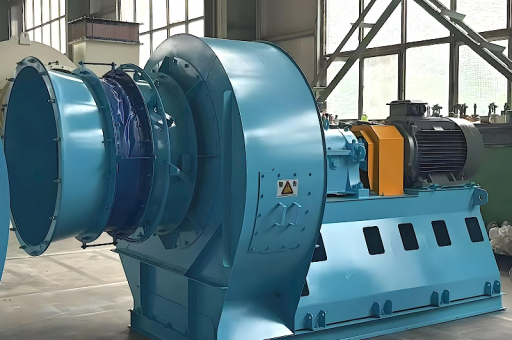
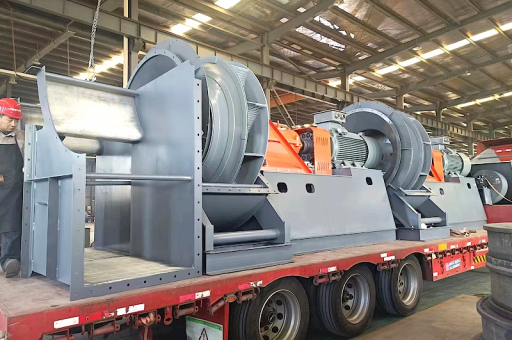
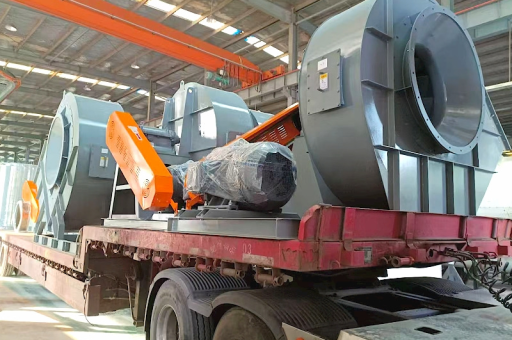
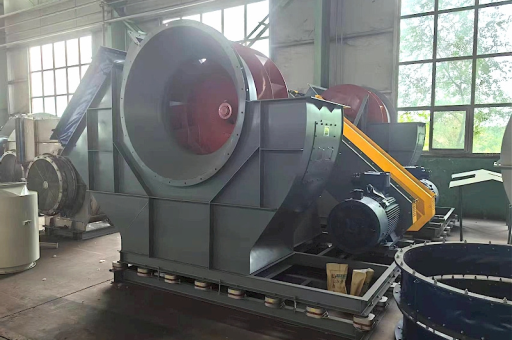
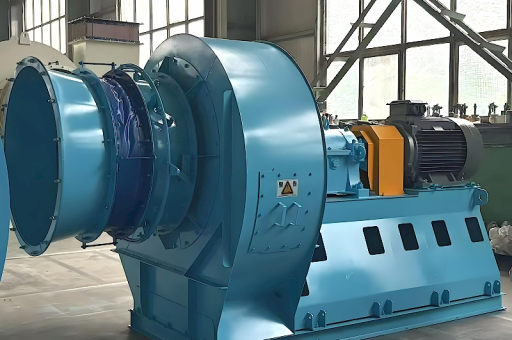
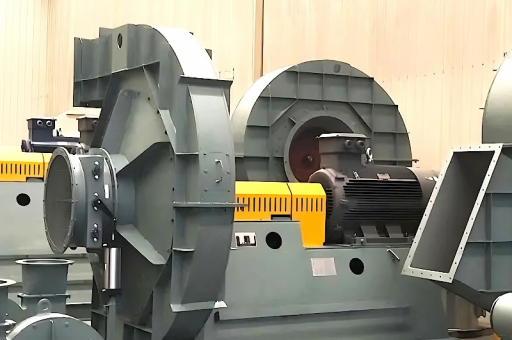
A 5kW High-Temperature Flue Gas Cooling Fan is a specialized industrial air-moving device engineered to handle exhaust gases at elevated temperatures—typically between 250°C and 450°C (482°F to 842°F). Unlike standard ventilation fans that are limited to ambient or moderately warm air, this fan is built with heat-resistant alloys, advanced bearing systems, and thermal expansion compensation mechanisms. The "5.5kW" rating indicates its motor power, which provides sufficient torque to move large volumes of hot, corrosive, and often particulate-laden flue gas through ducts, scrubbers, heat exchangers, or chimneys.
This equipment plays a critical role in industries such as power generation, chemical processing, incineration, steel manufacturing, and cement production. By maintaining consistent gas flow and reducing thermal stress on downstream equipment, it ensures system efficiency, safety, and compliance with environmental regulations.
Core Design Features and Materials
To withstand extreme thermal conditions, the 5.5kW high-temperature flue gas cooling fan incorporates several engineering innovations:
- Impeller Construction: The impeller is typically fabricated from stainless steel (SS316 or SS310) or Inconel alloys. These materials retain mechanical strength at high temperatures and resist oxidation and creep.
- Shaft and Bearing System: A cooling fin-equipped shaft dissipates heat away from the bearings. High-temperature grease or oil-lubricated bearings with external cooling jackets are standard. Some models use air-purged seals to prevent hot gas ingress.
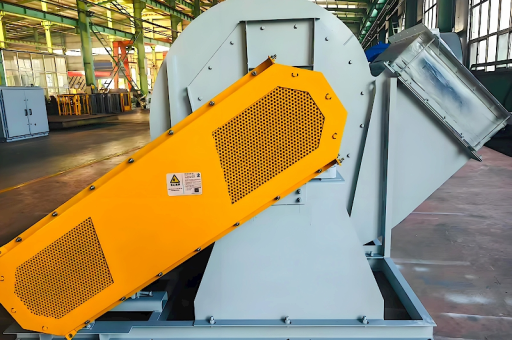
- Housing and Insulation: The fan housing is double-walled with ceramic fiber or mineral wool insulation to minimize heat radiation to the motor and surroundings. A sacrificial inner liner may be used for abrasive flue gas.
- Motor Protection: The motor is often TEFC (Totally Enclosed Fan Cooled) or separately ventilated with a dedicated cooling fan. Thermal overload protection and vibration sensors are common.
Example specification:
- Flow rate: 8,000–15,000 m³/h (depending on system resistance)
- Static pressure: 2,000–4,000 Pa
- Maximum gas temperature: 400°C (continuous), 500°C (peak)
- Noise level: ≤85 dB(A) at 1 meter
Operating Principles and Performance Parameters
The fan operates on the principle of centrifugal force. Flue gas enters axially through the intake, is accelerated radially by the rotating impeller, and exits through a scroll-shaped housing. The 5kW motor provides the necessary energy to overcome system resistance and maintain desired flow.
Key performance parameters include:
- Airflow (Q): Measured in m³/h or CFM. The fan curve shows how flow varies with pressure.
- Static Pressure (Ps): The pressure difference the fan must generate to move gas through ducts and equipment.
- Efficiency: High-temperature fans typically operate at 65–80% static efficiency. Variable frequency drives (VFDs) improve energy efficiency at partial loads.
- Temperature Rating: The fan's ability to maintain structural integrity at peak temperatures without warping or cracking.
Important: When selecting a fan, always consult the manufacturer's performance curve for the specific gas density and temperature, as these properties significantly affect fan power consumption.
Key Application Scenarios
The 5.5kW high-temperature flue gas cooling fan is indispensable in the following environments:
1. Industrial Boilers and Furnaces
- Used to draw combustion gases from boilers, kilns, or furnaces through economizers, air preheaters, and baghouse filters.
- Helps maintain negative pressure in the combustion chamber for safety.
2. Waste-to-Energy and Incineration Plants
- Handles flue gas containing acidic components (HCl, SO₂) and particulates. The fan is often placed after the scrubber or before the stack.
- Requires corrosion-resistant coatings and erosion-resistant impeller blades.
3. Chemical Processing
- Used in reactors, dryers, and thermal oxidizers where process gases must be moved at elevated temperatures.
- Often paired with heat recovery steam generators (HRSG).
4. Cement and Steel Industries
- Transports hot air from clinker coolers or preheaters. The fan must handle temperatures up to 400°C and abrasive dust.
- Special wear liners and hard-faced impellers are common.
5. Laboratory and Research Facilities
- Used in pilot plants or test rigs to study combustion, gasification, or pyrolysis.
Comparison with Standard Fans
| Feature | Standard Fan | 5kW High-Temp Flue Gas Fan |
|---|---|---|
| Max gas temperature | 60–80°C | 400–500°C |
| Impeller material | Carbon steel / aluminum | SS316 / Inconel |
| Bearing cooling | None | Fin-cooled shaft or water jacket |
| Motor type | Standard TEFC | Separately ventilated or high-temp rated |
| Cost | Low | 3–5x higher |
| Lifespan in hot service | 6–12 months | 5–10 years |
Installation and Maintenance Best Practices
Installation Guidelines:
- Install fan on a vibration-isolated base with adequate clearance for thermal expansion.
- Use flexible connectors (e.g., high-temp silicone or metal bellows) at inlet and outlet.
- Ensure ductwork is properly supported to avoid transmitting loads to the fan housing.
- Provide a drain point for condensation in startup or shutdown cycles.
Routine Maintenance:
- Weekly: Check belt tension (if belt-driven), listen for unusual noise, monitor vibration levels (recommended: <5 mm/s).
- Monthly: Inspect impeller for buildup or erosion. Clean with compressed air or soft brush.
- Quarterly: Replace bearing grease (high-temp grade), check electrical connections, test thermal overload relay.
- Annually: Perform full balancing of the impeller, replace wear liners, and measure motor insulation resistance.
Common Failure Modes:
- Bearing failure due to heat soak – mitigated by external cooling fins.
- Impeller imbalance from ash buildup – fixed by scheduled cleaning.
- Thermal fatigue of housing – solved by using stress-relieved steel.
Frequently Asked Questions (FAQ)
Q1: Can a 5.5kW high-temperature flue gas cooling fan handle corrosive gases?
Yes, if constructed with corrosion-resistant materials such as SS316L or with specialized coatings (e.g., PTFE, ceramic). However, for extremely acidic gases (e.g., HF), a lined fan is recommended.
Q2: What is the maximum continuous operating temperature for this fan?
Most models are rated for 400°C continuous and 500°C peak. Always verify with the manufacturer's data sheet.
Q3: How do I calculate the required fan power for my application?
Use the formula:
Power (kW) = (Flow × Pressure) / (3600 × Efficiency)
For flue gas, adjust density using ideal gas law. At 400°C, air density is ~0.53 kg/m³ vs 1.2 kg/m³ at 20°C, so actual motor load is lower.
Q4: Is a variable frequency drive (VFD) recommended?
Yes, a VFD allows precise flow control, reduces energy consumption, and minimizes mechanical shock during startup.
Q5: Can this fan be used in explosion-proof environments?
Not inherently. For explosive gas mixtures, you need an ATEX or IECEx certified model with spark-resistant materials and grounding.
Q6: What is the typical lifespan of bearings in this fan?
With proper lubrication and cooling, bearing life ranges from 20,000 to 40,000 hours. Water-cooled bearings last longer.
Q7: How do I reduce noise from the fan?
Use a silencer (muffler) on the inlet and outlet, install the fan in an acoustically insulated enclosure, and maintain low tip speeds (below 80 m/s).
Conclusion: Why Choose a 5.5kW High-Temperature Flue Gas Cooling Fan?
The 5kW High-Temperature Flue Gas Cooling Fan is a vital component for any process that generates hot exhaust gases. Its robust construction, thermal resistance, and efficient performance make it the preferred choice for demanding industrial environments. When properly selected, installed, and maintained, this fan significantly reduces downtime, improves energy efficiency, and ensures compliance with emission standards.
For any engineer or plant manager looking to optimize their flue gas handling system, investing in a quality fan from a reputable manufacturer—such as those available on fan—will deliver long-term reliability and cost savings. Always consult with application specialists to match the fan curve to your system's exact requirements.