This article's table of contents introduction:
- What is it?
- Typical Applications
- Critical Design Features & Material Selection
- Material Selection (Crucial for longevity)
- Operational Challenges & Solutions
- Example Specifications (Hypothetical for a 160kW Fan)
- Summary: Is a standard 160kW fan suitable? No.
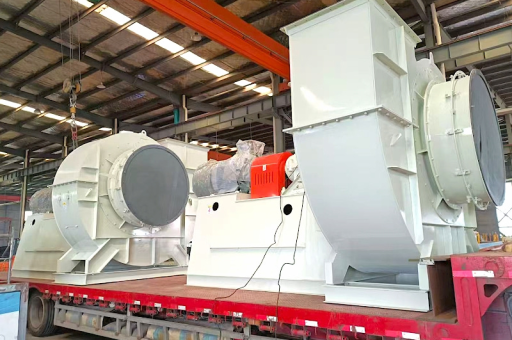
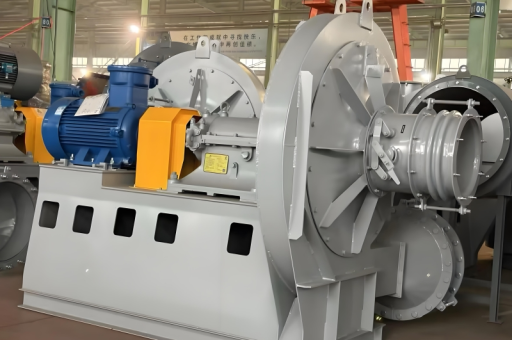
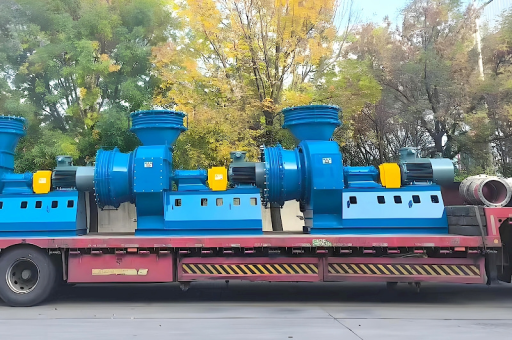
This is a specification for a specialized industrial fan. Here is a detailed breakdown of what a 160kW High-Temperature Flue Gas Cooling Fan is, its typical applications, design challenges, and key specifications.
What is it?
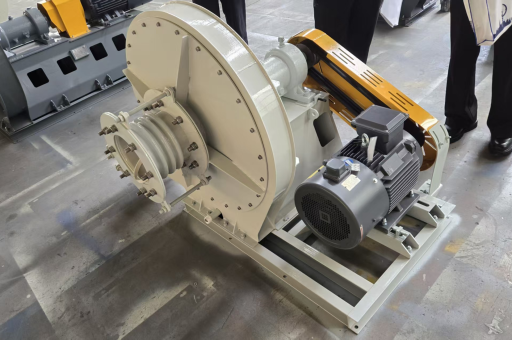
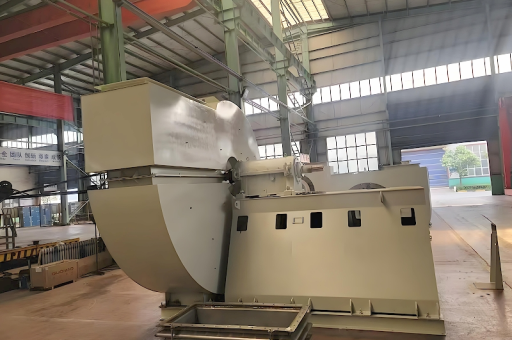
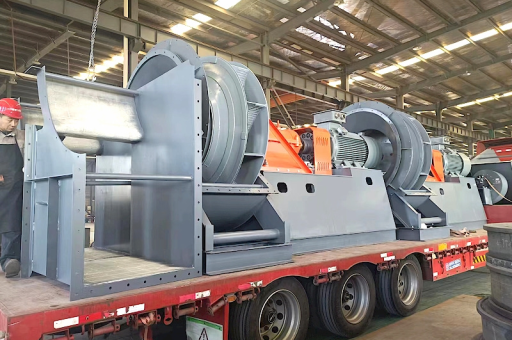
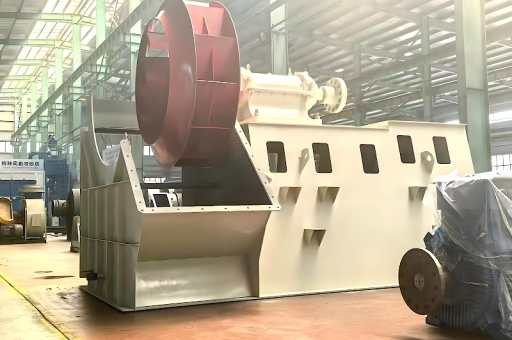
This is a heavy-duty, custom-engineered centrifugal fan designed to move hot, corrosive, and often particulate-laden flue gas from combustion processes (like boilers, furnaces, or kilns) to a cooling system (like a heat exchanger, scrubber, or stack).
The key parameters are:
- Power: 160 kW (approx. 215 HP) - Indicates a very large fan moving a high volume of gas against significant resistance.
- Function: Cooling - It pulls hot gas from a source and pushes it through downstream cooling equipment.
- Medium: Flue Gas - Hot, corrosive (containing acids like H₂SO₄, HCl), abrasive (containing fly ash), and potentially condensing.
Typical Applications
These fans are critical components in heavy industries and power generation:
- Power Plants (Coal, Biomass, Waste-to-Energy): Induced Draft (ID) fans or Booster fans for flue gas desulfurization (FGD) systems. Here, the fan must handle gas that has been cooled and saturated with water vapor.
- Cement Plants: Exhaust fans for preheaters, kilns, or clinker coolers.
- Steel Mills: Exhaust for electric arc furnaces (EAF), basic oxygen furnaces (BOF), or reheat furnaces.
- Chemical & Petrochemical: Exhaust from reformers, crackers, or thermal oxidizers.
- Incineration Plants: Forced draft or induced draft fans for municipal or hazardous waste incinerators.
Critical Design Features & Material Selection
A standard fan would fail quickly in this environment. A proper 160kW high-temperature fan requires:
| Feature | Specification & Reasoning |
|---|---|
| Impeller Type | Radial (Paddlewheel or Straight Blade): Handles dirty, abrasive gases better than backward-curved blades. Easier to clean & repair. |
| Housing | Robust, split housing (optional): Allows access for cleaning and repair. Heavy-gauge steel with stiffeners. |
| Shaft | Forced-air or water-cooled: To prevent heat transfer to bearings. Carbon steel with protective sleeve at the impeller hub. |
| Bearings | Spherical roller bearings in a heavy-duty, self-aligning plummer block. Must be mounted on a pedestal separate from the housing to reduce heat soak. |
| Shaft Seal | Packed gland or labyrinth seal: Prevents hot gas leakage along the shaft. May require purge air (clean, cool air injected into the seal). |
| Drive | Typically V-belt drive (allows speed adjustment) or direct-coupled via a fluid coupling. A 160kW motor (usually 4-pole, 1500 RPM) will be a large frame size (e.g., IEC 315 or larger). |
Material Selection (Crucial for longevity)
This is the most critical decision. Cheap carbon steel will fail rapidly.
| Component | Material | Reason |
|---|---|---|
| Impeller & Housing (Standard) | Corten Steel (ASTM A242 / A588) for up to ~350°C. | Good strength, weldability, and initial corrosion resistance. |
| Impeller & Housing (High Temp) | Stainless Steel (e.g., 310S, RA253 MA) for 350°C - 850°C. | Excellent creep strength, oxidation resistance, and resistance to acid dew point corrosion. |
| Impeller (Extreme Temp) | High-Nickel Alloys (Hastelloy, Inconel) for >850°C or highly corrosive conditions. | Very high heat and corrosion resistance, but very expensive. |
| Wear Protection | Hardfacing (e.g., Stellite) on leading edges AND/OR Ceramic Tiles / Basalt Lining on wear zones. | Extends life against fly ash erosion by 2-5x or more. |
Operational Challenges & Solutions
- Abrasion (Fly Ash): The fan blades act like sandblasters. Solution: Use wear liners, hardfacing, and design for easy replacement of sacrificial parts.
- Acid Dew Point Corrosion: When flue gas cools below the acid dew point (e.g., during startup or low load), sulfuric acid condenses, rapidly corroding steel. Solution: Keep casing insulated to maintain gas temperature ABOVE the dew point. Use corrosion-resistant alloys like 316L or duplex stainless.
- Thermal Expansion: The fan casing and shaft expand significantly at high temperatures. Solution: Expansion joints on ductwork, flexible shaft seals, and bearings designed for thermal growth.
- Vibration & Imbalance: Fly ash buildup on the impeller causes imbalance. Solution: Install compressed air or steam soot blowers inside the housing for online cleaning. Use vibration sensors with trip alarms.
Example Specifications (Hypothetical for a 160kW Fan)
- Application: Induced Draft Fan for a Coal-Fired Boiler
- Power: 160 kW @ 1500 RPM
- Flow Rate (Volume): Approx. 150,000 - 250,000 m³/h (depending on system pressure)
- Pressure Rise (Static): Approx. 3,000 - 6,000 Pa (12" - 24" w.g.)
- Gas Temperature: Normal: 160°C (320°F) | Max: 200°C (392°F)
- Gas Composition: Flue gas (N₂, CO₂, O₂, H₂O, SO₂, NOx, fly ash)
- Material: Casing: Corten Steel. Impeller: 16Mo3 or 310S Stainless with Hardfacing on Leading Edges.
- Drive: V-belt, motor mounted on slide rails.
Summary: Is a standard 160kW fan suitable? No.
For a High-Temperature Flue Gas Cooling Fan, you cannot simply buy an off-the-shelf 160kW fan. You must specify the gas temperature, chemical composition (especially sulfur content), and particulate loading.
A proper fan for this application will likely cost 2x to 4x more than a standard ambient air fan due to the specialized alloys, heavy construction, and engineering required for reliability in this harsh environment. If you are specifying this, work closely with a manufacturer like Howden, Chicago Blower, Cincinnati Fan, TLT-Turbo, or a specialized industrial fan manufacturer.