Mastering the 9-26-6.3D High-Pressure Centrifugal Fan: Design, Performance, and Industrial Applications
Table of Contents
- Introduction: What Is the 9-26-6.3D High-Pressure Centrifugal Fan?
- Technical Specifications and Design Features
- How Does It Compare to Other Centrifugal Fans?
- Performance Characteristics and Efficiency Metrics
- Key Industrial Applications
- Installation and Maintenance Best Practices
- Frequently Asked Questions (FAQ)
- Conclusion: Why Choose the 9-26-6.3D for High-Pressure Needs
Introduction: What Is the 9-26-6.3D High-Pressure Centrifugal Fan?
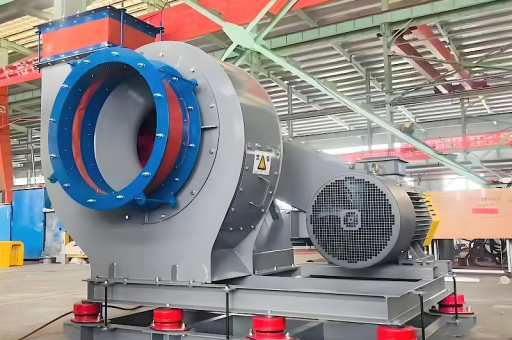
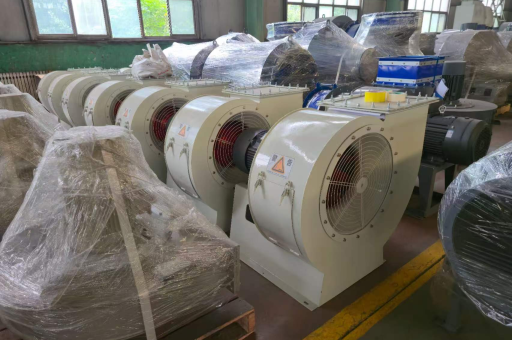
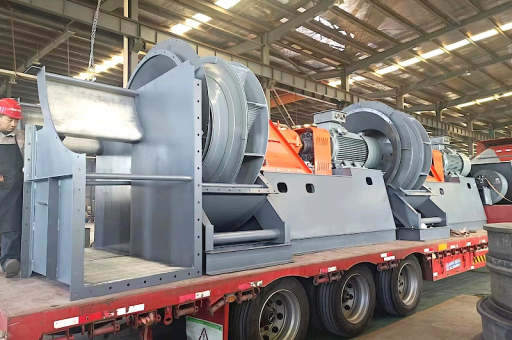
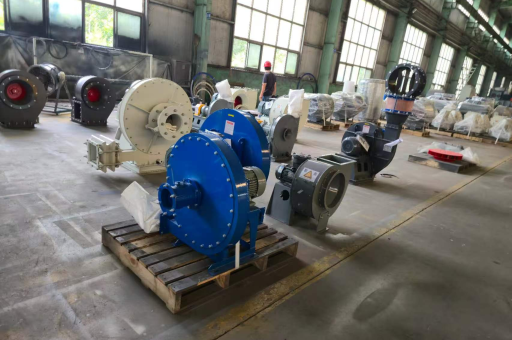
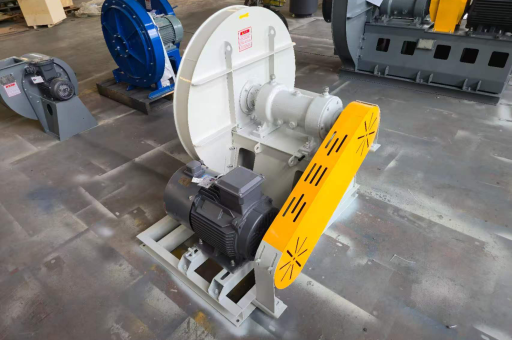
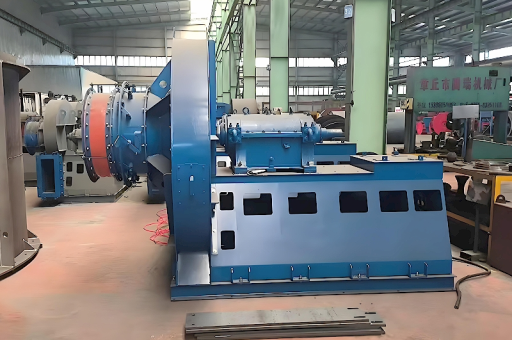
The 9-26-6.3D high-pressure centrifugal fan represents a specialized class of industrial air-moving equipment designed for applications requiring significant static pressure generation. Unlike standard centrifugal fans that prioritize airflow volume, this model is engineered to overcome high system resistance, making it indispensable in industries such as pneumatic conveying, dust collection, boiler forced draft, and chemical process ventilation.
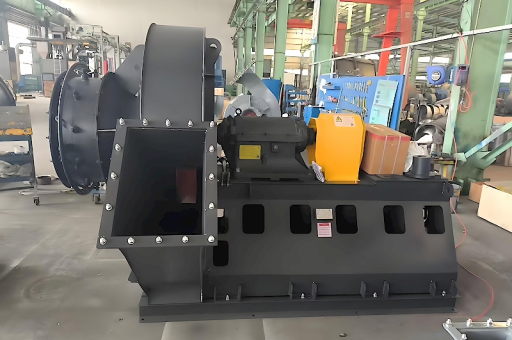
The nomenclature "9-26-6.3D" follows a conventional Chinese fan designation system:
- 9 indicates the blade type (forward-curved, high-pressure design)
- 26 refers to the specific pressure coefficient (26 represents a high-pressure series)
- 3 denotes the impeller diameter in decimeters (630 mm)
- D signifies direct drive configuration (motor and impeller on a common shaft)
This fan is widely recognized for its ability to deliver 6,000 to 12,000 Pa static pressure with moderate flow rates, typically ranging from 2,000 to 8,000 m³/h, depending on the specific operating point and motor power.
Technical Specifications and Design Features
1 Impeller and Blade Geometry
The 9-26-6.3D employs a forward-curved blade design with a high solidity ratio. The blades are typically fabricated from Q235 carbon steel or 304 stainless steel for corrosive environments. Each impeller has 12 to 16 blades, carefully profiled to maximize pressure rise while minimizing turbulence losses.
2 Housing and Inlet Design
The scroll housing is constructed with 4-6 mm thick steel plate and features a bell-mouth inlet cone to ensure smooth air entry. The outlet is typically rectangular or circular, sized for direct duct connection. A key design advantage is the adjustable inlet vanes option, which allows modulating airflow without changing motor speed.
3 Drive and Motor Configuration
As a direct-drive (D-type) fan, the impeller mounts directly onto the motor shaft, eliminating belt losses and maintenance. Standard motors are 2-pole or 4-pole induction motors with IP55 protection, rated at 5 to 15 kW. For variable volume applications, a VFD (Variable Frequency Drive) compatibility is standard.
4 Bearing and Shaft Assembly
High-pressure fans face substantial radial loads. The 9-26-6.3D uses heavy-duty double-row spherical roller bearings housed in a cast iron bearing bracket. Grease lubrication is typical, with optional oil bath lubrication for continuous high-temperature operation.
Table 1: Key Specifications (Typical Values)
| Parameter | Value |
|---|---|
| Impeller Diameter | 630 mm |
| Max Static Pressure | 9,000 - 11,000 Pa |
| Airflow Rate | 2,500 - 8,000 m³/h |
| Motor Power | 5 - 15 kW |
| Operating Temperature | -20°C to +80°C |
| Noise Level (1m) | ≤85 dB(A) |
| Weight (approx.) | 320 kg |
How Does It Compare to Other Centrifugal Fans?
1 Versus Standard Centrifugal Fans (e.g., 4-72 Series)
The 4-72 series is a medium-pressure, high-volume fan commonly used in HVAC. In contrast, the 9-26-6.3D produces 3-5 times higher static pressure but at 50-60% lower airflow volume. For example, a 4-72-6.3C might deliver 12,000 m³/h at 1,500 Pa, while the 9-26-6.3D delivers 5,000 m³/h at 9,000 Pa.
2 Versus Backward-Curved High-Pressure Fans
Backward-curved fans (e.g., 9-19 series) offer higher efficiency at peak pressure but require larger impeller diameters and higher tip speeds. The 9-26-6.3D's forward-curved design provides a flatter pressure curve, which is advantageous when system resistance varies unpredictably.
3 Versus Axial Fans
Axial fans excel in high-volume, low-pressure applications (<1,000 Pa). The 9-26-6.3D is unsuitable for such roles but outperforms axial fans in ductwork with dense filters, long pipe runs, or particle-laden air.
Q: "Can I replace a 9-19 fan with a 9-26-6.3D?"
A: Not directly. While both are high-pressure, the 9-19 series typically produces higher peak pressure (up to 15,000 Pa) but with lower maximum efficiency. The 9-26-6.3D offers better partial-load performance and is more cost-effective for medium-high pressure ranges (7,000-11,000 Pa).
Performance Characteristics and Efficiency Metrics
1 Pressure-Flow Curve Analysis
The performance curve of the 9-26-6.3D exhibits a steep positive slope at low flow rates, transitioning to a stable plateau at the design point. At 4,000 m³/h and 9,500 Pa, efficiency peaks at approximately 78-82%. The stable operating range lies between 3,000 and 6,500 m³/h.
2 Sound and Vibration Performance
High tip speeds (60-80 m/s) generate significant noise, primarily broadband aerodynamic noise. The standard fan without silencers produces 82-88 dB(A) at 1 meter. For noise-sensitive environments, add inlet and outlet silencers to reduce levels by 10-15 dB(A).
3 Thermodynamic Considerations
When handling hot gases (e.g., boiler flue gas up to 150°C), the fan's performance must be corrected for air density reduction. For example, at 120°C, the mass flow rate delivered is 15-20% lower than at 20°C for the same static pressure. The 9-26-6.3D's robust shaft and bearing design accommodates thermal expansion if expansion joints are installed on connecting ducts.
Key Industrial Applications
1 Pneumatic Conveying Systems
This fan is ideal for dilute-phase pneumatic conveying of powders (cement, flour, plastics) over distances up to 200 meters. The 9,000 Pa static pressure overcomes friction losses in pipes and bends while maintaining transport velocities of 20-30 m/s.
2 Dust Collection and Filtration
In baghouse and cartridge dust collectors, the 9-26-6.3D ensures filter media stays clean by providing sufficient reverse pulse jet pressure (minimum 6,000 Pa). It also serves as the main exhaust fan for centralized dust extraction in woodworking, welding, and pharmaceutical plants.
3 Boiler Forced Draft and Induced Draft
For small to medium boilers (1-10 ton/h) , this fan supplies combustion air at 7,000-9,000 Pa. In induced draft configurations, it extracts hot flue gas through economizers and scrubbers, where the high static pressure compensates for filter and heat exchanger resistance.
4 Chemical and Petrochemical Processes
Applications include vapor recovery systems, reactor ventilation, and catalytic cracker air compression. The fan must often be constructed from stainless steel or fiberglass-reinforced plastic (FRP) for corrosive gas streams.
5 Greenhouse and Agricultural Ventilation
In high-altitude or densely packed greenhouses, the 9-26-6.3D provides positive ventilation through long polyethylene duct tubes, maintaining CO₂ levels and temperature uniformity.
Installation and Maintenance Best Practices
1 Foundation and Alignment
A reinforced concrete foundation weighing at least 5 times the fan weight (approx. 800 kg) is recommended. Use vibration isolation pads (natural rubber or spring mounts) to prevent transmission of 50-100 Hz vibrations to the building structure.
2 Ductwork Design
- Inlet duct: Maintain a straight length of at least 2 duct diameters before the fan inlet to prevent pre-swirl that reduces performance by 5-10%.
- Outlet duct: Include a flexible connector (fabric or rubber) to absorb thermal expansion and minor misalignment.
- Drainage: If handling condensate or wet gases, install a drain valve at the lowest point of the volute.
3 Routine Maintenance Schedule
- Weekly: Check vibration levels (should not exceed 7 mm/s RMS at bearing housing).
- Monthly: Inspect impeller for dust buildup (an unbalanced wheel can cause bearing failure within hours).
- Quarterly: Replace grease in bearings (use NLGI #2 lithium-based grease).
- Annually: Perform performance testing: measure static pressure and flow rate. A 10% drop in flow indicates filter clogging or impeller wear.
4 Common Failures and Troubleshooting
Q: "The fan vibrates excessively after 6 months. What should I check?"
A: 90% of vibration issues stem from impeller imbalance (dust accumulation on blades) or bearing wear. Clean the impeller with compressed air or water, and check bearing radial clearance. If vibration exceeds 10 mm/s, replace the bearings immediately.
Q: "The motor draws higher current than nameplate. Is something wrong?"
A: Yes. This often indicates over-volume operation — the fan is moving more air than its design point, causing the motor to operate beyond its rated torque. Check if the ductwork has been modified (e.g., a filter removed or a damper left open). Install a pressure switch to cut power if static pressure drops below a set point.
Frequently Asked Questions (FAQ)
Q1: What is the maximum airflow the 9-26-6.3D can deliver?
A: The horse-power-limited maximum airflow is approximately 8,000 m³/h at 5,500 Pa (with a 15 kW motor). Operating beyond this risks motor overload.
Q2: Can this fan handle explosive gas mixtures?
A: Only if the fan is ATEX-certified (Ex d IIC T4 or similar). Standard carbon steel models can generate sparks from impeller-housing contact. Use a non-sparking aluminum impeller and grounding brushes for Zone 1 or Zone 2 areas.
Q3: How do I calculate the required motor power?
A: Use the formula:
Power (kW) = (Airflow m³/s × Static Pressure Pa) / (1000 × Fan Efficiency × Drive Efficiency)
For example, at 5,000 m³/h (1.389 m³/s), 9,000 Pa, 80% efficiency:
Power = (1.389 × 9,000) / (1000 × 0.80 × 0.95) = 12,501 / 760 ≈ 4 kW (requires a 18.5 kW motor margin).
Q4: What is the difference between "C" (belt drive) and "D" (direct drive) in centrifugal fans?
A: "D-type" (direct drive) minimizes maintenance and is more efficient, but the fan speed is fixed to the motor speed (e.g., 2,900 rpm). "C-type" (belt drive) allows changing speed via pulley ratios, offering flexibility but with 5-8% belt losses and additional maintenance.
Q5: Can I use a VFD to control the 9-26-6.3D fan speed?
A: Yes, but only if the motor is inverter-rated (insulation class F or H). The fan's impeller stress increases with speed — never exceed the design maximum rpm (typically 2,950 rpm for 2-pole motor). Speed reduction below 50% is not recommended due to reduced motor cooling.
Conclusion: Why Choose the 9-26-6.3D for High-Pressure Needs
The 9-26-6.3D high-pressure centrifugal fan occupies a critical niche in industrial ventilation: it delivers the static pressure necessary for pneumatic conveying, dust collection, and boiler systems without the oversized footprint or cost of larger high-pressure fans. Its forward-curved impeller design, direct drive simplicity, and robust construction make it a reliable workhorse for continuous operation in challenging environments.
When selecting this fan, consider your system's required static pressure, temperature, and particulate load. With proper installation (foundation, ductwork, vibration isolation) and regular maintenance (impeller cleaning, bearing lubrication), the 9-26-6.3D can operate for 10-15 years with minimal downtime. For applications demanding 7,000 to 11,000 Pa and airflow rates up to 8,000 m³/h, this model offers an excellent balance of performance, cost, and longevity.
Whether you are upgrading an existing ventilation system or designing a new industrial process, the 9-26-6.3D high-pressure centrifugal fan from reputable manufacturers remains a top-tier choice. For customized requirements — including high-temperature, corrosion-resistant, or explosion-proof versions — consult with fan engineering teams to ensure the model's specifications align precisely with your system's duty cycle.