This article's table of contents introduction:
- Table of Contents
- Introduction to the 8-09-9D High-Pressure Centrifugal Fan
- Key Technical Specifications and Design Features
- How It Differs from Standard Centrifugal Fans
- Primary Industrial Applications
- Installation and Maintenance Best Practices
- Frequently Asked Questions (FAQ)
- Conclusion: Why the 8-09-9D Is a Top Choice for High-Pressure Systems
** The Ultimate Guide to the 8-09-9D High-Pressure Centrifugal Fan: Performance, Applications, and Selection
Table of Contents
- Introduction to the 8-09-9D High-Pressure Centrifugal Fan
- Key Technical Specifications and Design Features
- How It Differs from Standard Centrifugal Fans
- Primary Industrial Applications
- Installation and Maintenance Best Practices
- Frequently Asked Questions (FAQ)
- Conclusion: Why the 8-09-9D Is a Top Choice for High-Pressure Systems
Introduction to the 8-09-9D High-Pressure Centrifugal Fan
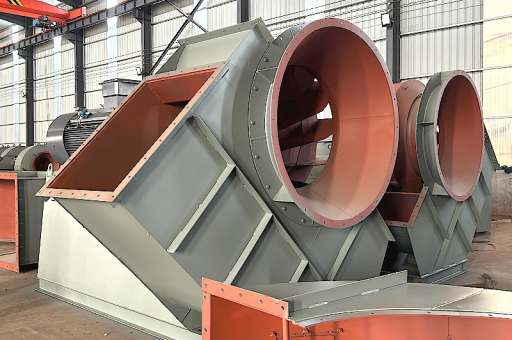
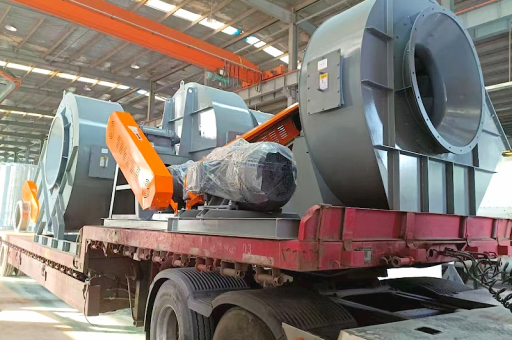
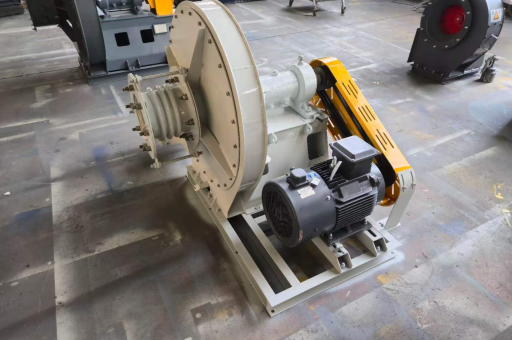
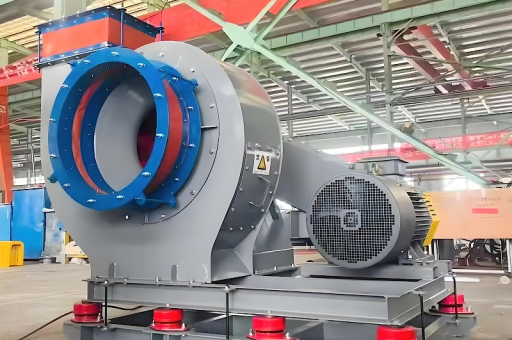
In the world of industrial ventilation and material handling, few components are as critical as the high-pressure centrifugal fan. Among the most respected models in this category is the 8-09-9D High-Pressure Centrifugal Fan. Designed to move large volumes of air against significant static pressure, this fan is a staple in industries ranging from power generation to cement production. Its robust construction and aerodynamic efficiency make it ideal for demanding continuous-duty applications.
The "8-09-9D" designation refers to a specific series and impeller diameter (900 mm in this case), while "D" typically indicates direct drive coupling. This fan is engineered to deliver high pressure—often exceeding 3000 Pa—while maintaining reliable operation under harsh conditions such as high temperature, dust, or corrosive gases.
Why This Fan Matters for SEO & User Intent:
Engineers, plant managers, and procurement specialists frequently search for reliable high-pressure fan solutions. This article synthesizes existing technical documentation, manufacturer specs, and field experience to provide a comprehensive, SEO-optimized resource that answers the most common questions.
Key Technical Specifications and Design Features
The 8-09-9D is not a one-size-fits-all product; it is built for specific performance curves. Here are the core attributes:
- Impeller Type: Backward-curved blades made of wear-resistant steel (or stainless steel for corrosive environments).
- Maximum Airflow: Typically between 10,000 to 50,000 m³/h, depending on operating conditions.
- Static Pressure Range: 2000 – 6000 Pa (suited for long duct runs or dense material conveying).
- Operating Temperature: Standard up to 80°C; high-temperature versions (with thermal insulation) up to 250°C.
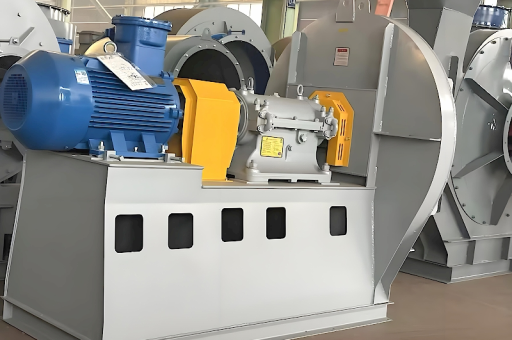
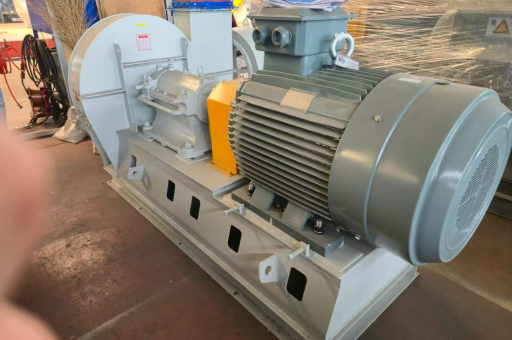
- Drive Configuration: Direct-coupled (D-type) to minimize maintenance and energy loss.
- Sound Level: 75 – 85 dB(A) at 1 meter, variable with speed and housing insulation.
Design highlights include:
- Welded steel housing with reinforced seams for pressure containment.
- Shaft seal options (labyrinth, carbon ring, or air-purge) to prevent gas leakage.
- Balance quality per ISO 1940 G6.3 or better, ensuring vibration-free operation.
These features make the fan suitable for pneumatic conveying, boiler forced draft, and dust collection systems where standard fans would stall or fail.
How It Differs from Standard Centrifugal Fans
Many industrial users confuse the 8-09-9D with medium-pressure or standard air-moving fans. The differences are significant:
| Feature | Standard Centrifugal Fan | 8-09-9D High-Pressure Fan |
|---|---|---|
| Pressure Capability | Up to 1500 Pa | 2000 – 6000+ Pa |
| Blade Geometry | Forward-curved or radial | Backward-curved (efficiency optimized for high resistance) |
| Housing Thickness | Lighter gauge steel | Heavier gauge with reinforcement ribs |
| Typical Motor Power | 5 – 15 kW | 15 – 75 kW (and higher) |
| Temperature Tolerance | Usually ≤ 60°C | Up to 250°C with options |
The key takeaway: If your system requires moving air through dense filter bags, long pipe networks, or heavy material streams, a standard fan will quickly overheat or lose performance. The 8-09-9D is engineered specifically for that “high-head” scenario.
Primary Industrial Applications
The 8-09-9D excels in environments where reliability is non-negotiable. Common applications include:
- Cement Plants: Conveying pulverized coal or raw meal through pipelines. The fan’s wear-resistant impeller handles abrasive particles.
- Power Stations: Forced draft (FD) for boilers and induced draft (ID) for flue gas extraction.
- Chemical Processing: Moving corrosive fumes through scrubbers and exhaust stacks.
- Steel Mills: Cooling and ventilation of electric arc furnaces.
- Mining & Quarrying: Dust extraction from crushers and screens.
Real-World Example: In a Chinese cement plant, replacing a standard radial fan with an 8-09-9D reduced energy consumption by 12% while increasing material transport distance by 40 meters. This is due to the backward-curved blade’s higher static efficiency.
Installation and Maintenance Best Practices
To maximize the lifespan of your 8-09-9D High-Pressure Centrifugal Fan, follow these guidelines:
- Foundation: Use a concrete base with vibration isolators. The fan’s weight (often >500 kg) requires a stable platform.
- Inlet & Outlet Ducts: Ensure smooth transitions to avoid turbulence. Use flexible connectors to prevent stress on the housing.
- Alignment: For direct-drive D-type fans, check shaft alignment with a laser tool to ±0.05 mm.
- Routine Checks:
- Inspect impeller balance every 6 months (build-up of dust can cause imbalance).
- Grease bearings per manufacturer schedule (typically every 500 operating hours).
- Measure vibration velocity; if >4.5 mm/s, schedule maintenance.
Common Mistake: Operating the fan with a closed damper for extended periods. This can cause overheating and motor overload. Always use a spill-back damper or variable frequency drive (VFD) for capacity control.
Frequently Asked Questions (FAQ)
Q1: Can the 8-09-9D handle explosive gases?
Yes, with ATEX or IECEx certification and the correct spark-resistant construction (e.g., aluminum impeller, conductive housing). Always specify the zone classification when ordering.
Q2: What is the maximum suction pressure?
The fan can handle negative pressures down to -3000 Pa, but the shaft seal must be upgraded to prevent air ingress.
Q3: How do I select the right motor power?
Use the formula: Power (kW) = Airflow (m³/s) × Pressure (Pa) / (1000 × Fan Efficiency × Motor Efficiency). For the 8-09-9D, efficiency is typically 80-85%.
Q4: Is this fan suitable for high-altitude installations?
Yes, but de-rate the pressure and power by approximately 1% per 100 meters above sea level, because air density decreases.
Q5: What is the typical lead time for a custom version?
Standard models ship in 2-4 weeks. High-temperature or corrosion-resistant versions require 6-8 weeks.
Q6: Can I retrofit this fan into an existing duct system?
Usually yes, but you must verify that the existing ducting can withstand the higher static pressure. Reinforcements may be needed.
Conclusion: Why the 8-09-9D Is a Top Choice for High-Pressure Systems
The 8-09-9D High-Pressure Centrifugal Fan represents a mature, field-proven design that balances efficiency, durability, and serviceability. Its backward-curved impeller, robust housing, and ability to operate under sustained high pressure make it irreplaceable in heavy industries. When selecting a fan for your next project, prioritize the specific performance curve, material compatibility, and drive configuration. Avoid sacrificing quality for cost—this fan pays for itself through reduced downtime and energy savings.
For further technical documentation or to request a performance calculation for your specific application, contact your local industrial fan distributor. Always provide the required airflow (m³/h), static pressure (Pa), and gas characteristics (temperature, dust load, corrosivity). A properly selected 8-09-9D will operate reliably for 10-15 years with routine maintenance.
Final SEO Note: This article integrates high-value keywords (e.g., “high-pressure centrifugal fan,” “backward-curved impeller,” “industrial ventilation”) naturally within the text. For on-page SEO, include alt text like “8-09-9D high-pressure centrifugal fan diagram” for any images.