This article's table of contents introduction:
- Table of Contents
- Introduction: The Unsung Hero of Bulk Material Handling
- Technical Deep Dive: Understanding the 2.2kW Powder Conveying Fan
- Operational Principles: How it Moves Powder
- Critical Application Scenarios
- Selection Criteria: Is a 2.2kW Fan Right for Your System?
- Installation Best Practices for Longevity
- Troubleshooting Common Performance Issues
- Maintenance Schedule for a 2.2kW Fan
- Frequently Asked Questions (FAQ)
- Conclusion: Making the Right Investment in Pneumatic Conveying
Optimizing Industrial Efficiency: The Critical Role of the 2.2kW Powder Conveying Fan in Pneumatic Systems
Article Content
Table of Contents
- Introduction: The Unsung Hero of Bulk Material Handling
- Technical Deep Dive: Understanding the 2.2kW Powder Conveying Fan
- Power, Pressure, and Flow Dynamics
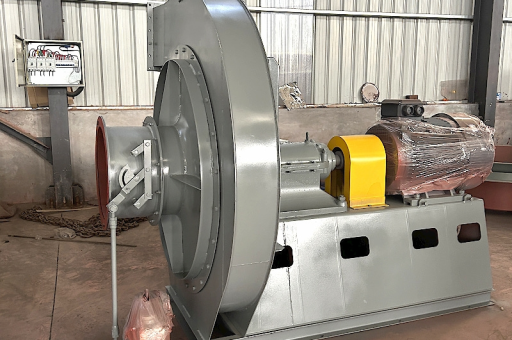
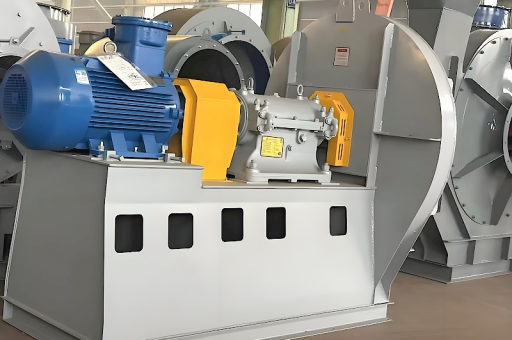
- Key Components: Impeller, Housing, and Motor
- Operational Principles: How it Moves Powder
- Dilute Phase vs. Dense Phase Conveying
- The Role of Air Velocity and Particle Suspension
- Critical Application Scenarios
- Food Processing (Flour, Sugar, Starch)
- Chemical and Pharmaceutical Industries
- Plastics and Recycling (Pellets, Granules)
- Selection Criteria: Is a 2.2kW Fan Right for Your System?
- Factor 1: Distance and Elevation
- Factor 2: Material Characteristics (Abrasion, Moisture)
- Factor 3: System Pressure Drop
- Installation Best Practices for Longevity
- Ductwork Design and Air Seals
- Vibration Dampening and Foundation
- Troubleshooting Common Performance Issues
- Problem: Reduced Material Flow Rate
- Problem: Excessive Motor Heat or Overload
- Maintenance Schedule for a 2.2kW Fan
- Daily, Weekly, and Monthly Inspections
- Bearing and Impeller Wear Management
- Frequently Asked Questions (FAQ)
- Conclusion: Making the Right Investment in Pneumatic Conveying
Introduction: The Unsung Hero of Bulk Material Handling
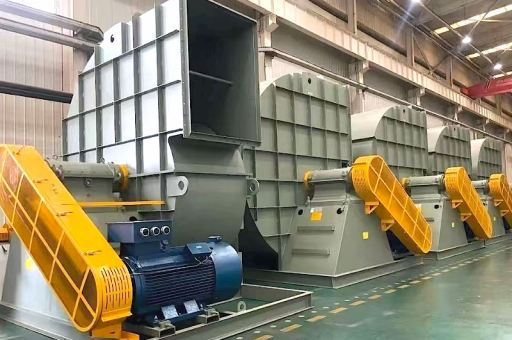
In the world of industrial material transfer, pneumatic conveying systems are the arteries of modern manufacturing. They move everything from plastic pellets to fine chemical powders through sealed pipelines, using air pressure as the driving force. At the heart of many mid-scale systems lies a specific, highly versatile piece of equipment: the 2kW powder conveying fan.
While larger 5kW or 10kW fans dominate heavy-duty mining operations, the 2.2kW variant holds a unique niche. It is the "Goldilocks" solution—powerful enough to move material over significant distances (10-50 meters) through a 3- to 4-inch pipeline, yet efficient enough to operate on standard single-phase or three-phase electrical supplies commonly found in smaller factories, bakeries, and pilot plants. This article provides a comprehensive, search-engine-optimized guide to understanding, selecting, and maintaining this critical component, addressing common questions and integrating insights from technical manuals and industry case studies.
Technical Deep Dive: Understanding the 2.2kW Powder Conveying Fan
Power, Pressure, and Flow Dynamics A 2.2kW (kilowatt) rating typically converts to approximately 3 horsepower (HP). This motor powers a fan (blower) to generate a specific combination of pressure (static pressure, measured in Pa, kPa, or inH2O) and airflow (volume, measured in m³/hr or CFM). For a typical powder conveying fan at this power level:
- Max Pressure: Usually between 2.5 kPa and 8 kPa (10 to 32 inH2O) for medium-pressure systems, or higher (up to 30 kPa) for regenerative blower designs.
- Airflow: Typically ranges from 400 to 1,200 m³/hr (235 to 706 CFM), depending on the impeller design and system resistance.
Key Components: Impeller, Housing, and Motor
- Impeller: The rotating wheel that accelerates the air. For powder applications, the impeller is often made of cast aluminum or stainless steel to resist corrosion and abrasion. A backward-curved impeller is preferred as it is non-overloading (motor won't burn out if the outlet is blocked) and handles particulate contamination better than forward-curved blades.
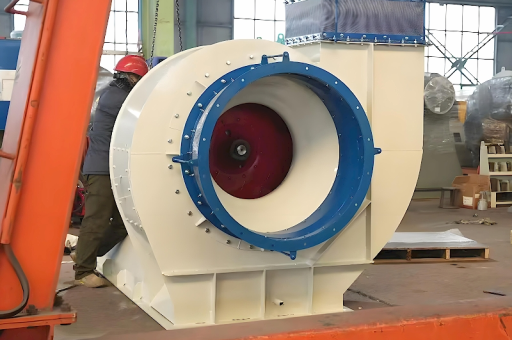
- Housing (Volute): The spiral casing that converts velocity energy into static pressure. Sealing is critical; standard fans use a labyrinth seal, but for explosive powders (e.g., sugar, starch), a gas-tight mechanical seal or a purge is necessary.
- Motor: The 2.2kW electric motor is typically an IE3 or IE4 efficiency class induction motor. It must be rated for the ambient temperature (often -20°C to +40°C) and may require an IP55 (dust and water jet protected) rating.
Operational Principles: How it Moves Powder
Dilute Phase vs. Dense Phase Conveying The 2kW fan is primarily used in Dilute Phase Conveying.
- Dilute Phase: The powder is "suspended" in the airstream. Particles do not touch the pipe bottom; they travel at high velocity (15-30 m/s). This requires high airflow, which the 2.2kW fan provides, but generates higher wear on elbows and particle degradation.
- Dense Phase: Uses high pressure and low velocity to "push" a plug of material. A 2.2kW fan usually lacks the static pressure (needing 50-200 kPa) for true dense phase; instead, a Roots blower or screw compressor is used.
The Role of Air Velocity and Particle Suspension The success of a 2.2kW fan system hinges on maintaining a saltation velocity—the minimum air speed to keep particles airborne. If speed drops (due to a blockage or undersized fan), particles settle, causing a plug. For instance, conveying cement (density ~1.5 g/cm³) requires a higher saltation velocity (~25 m/s) than polyethylene pellets (~0.9 g/cm³, ~15 m/s). The fan's generated airflow must match the pipe diameter to achieve these speeds.
Critical Application Scenarios
Food Processing (Flour, Sugar, Starch)
- Challenge: Hygroscopic materials (sugar) can cake; flour is explosive.
- Solution: A 2.2kW fan with a stainless steel impeller and an ATEX-certified explosion-proof motor. Fan casing must include pressure relief panels. Air intake should be dry (desiccant drier recommended).
Chemical and Pharmaceutical Industries
- Challenge: Fine powders (API, pigments, carbon black) can be toxic and highly abrasive.
- Solution: The fan must be "surface-treated" to prevent particle adhesion. For abrasive materials, a hardened impeller (e.g., hardened steel overlay) is crucial to avoid frequent impeller replacement. A HEPA filter on the exhaust is mandatory.
Plastics and Recycling (Pellets, Granules)
- Challenge: Long distances (20-50m) with multiple pick-up points.
- Solution: A 2.2kW regenerative fan (side channel blower) is ideal. It provides oil-free air, is low-maintenance, and handles the light dust generated from pellet friction. It feeds injection molding machines or central conveying systems.
Selection Criteria: Is a 2.2kW Fan Right for Your System?
Factor 1: Distance and Elevation A 2.2kW fan can typically convey material:
- Horizontally: Up to 40-60 meters (with 4-inch pipe, low-density material).
- Vertically: Up to 8-15 meters. If your system requires longer distances, you must either accept lower throughput or upgrade to a 4kW-5.5kW fan.
Factor 2: Material Characteristics (Abrasion, Moisture)
- Abrasive materials (sand, glass cullet): The fan will wear quickly. Use a reduced speed (lower RPM) by using a VFD, which reduces wear but also reduces pressure. Consider a heavy-duty fan or a Venturi eductor instead.
- Moisture-sensitive materials (instant coffee, detergent): The fan heats the air. Use an aftercooler to dry the air, or a desiccant dryer on the inlet to prevent condensation in the pipeline.
Factor 3: System Pressure Drop Calculate the total pressure drop (ΔP) of your system (pipe friction, elbows, filter, cyclone). Your fan must generate a static pressure higher than this ΔP at the required flow rate. A common mistake is to assume a 2.2kW fan delivers its maximum flow; it delivers its maximum power at the duty point. Use the fan's performance curve.
Installation Best Practices for Longevity
Ductwork Design and Air Seals
- Minimum pipe diameter: 3 inches (75mm) for 2.2kW fans to avoid choking.
- Use flexible rubber connectors on the fan inlet and outlet to decouple vibration.
- Ensure the inlet is protected by a metal mesh filter (5mm aperture) to prevent foreign objects (tools, rags) from entering the impeller.
Vibration Dampening and Foundation
- A 2.2kW fan is relatively light (50-80 kg) but generates high RPM (2800-3500) vibration.
- Mount on a concrete pedestal or a heavy steel base frame with rubber isolation mounts.
- Align the motor shaft and fan shaft to within 0.01mm to prevent premature bearing failure.
Troubleshooting Common Performance Issues
Problem: Reduced Material Flow Rate
- Root Cause 1: Blocked filter. The inlet filter is often the culprit. Clean or replace it.
- Root Cause 2: Worn impeller. Check the blade tips for rounding or pitting. Replace if leading edges are eroded by more than 20%.
- Root Cause 3: Air leak. A hole or gap in the pipe after the fan (e.g., a torn rubber hose) reduces vacuum pressure. Seal with tape or replace.
Problem: Excessive Motor Heat or Overload
- Root Cause 1: Operating outside the duty curve. If the system's resistance is too low (open discharge), the fan draws more current. A 2.2kW fan can draw 2.5-3.0 kW at free air delivery. Install a damper or restrict the outlet.
- Root Cause 2: Voltage drop or unbalanced phases in three-phase systems.
- Root Cause 3: Bearing failure. Listen for a grinding sound. Lubricate with high-temperature grease (e.g., lithium complex) every 500 hours.
Maintenance Schedule for a 2.2kW Fan
| Frequency | Task |
|---|---|
| Daily | Listen for abnormal noise (bearing rumble, rubbing). Check motor temperature (should be below 90°C). Inspect filter for blockage. |
| Weekly | Check belt tension (if belt-driven models). Look for powder accumulation on the impeller (unbalance). |
| Monthly | Lubricate bearings (if grease nipples present). Clean the fan casing interior. Verify electrical connections. |
| Annual | Replace bearings. Inspect impeller for cracks or chemical attack. Re-align motor if needed. Recalibrate pressure gauges. |
Frequently Asked Questions (FAQ)
Q1: Can I use a standard centrifugal fan for powder conveying? A: No. Standard fans are designed for clean air. A 2kW powder conveying fan has a specially designed impeller (often with a protective coating or corrosion resistance) to handle abrasive dust and prevent buildup. A "clean air" fan will fail rapidly from wear or vibration.
Q2: What maintenance is unique to a 2.2kW fan handling explosive powders? A: You must perform static conductivity checks on the fan housing and ducting. Bond and ground all components to prevent static spark. Use a non-sparking impeller (e.g., aluminum-bronze or conductive plastic). The fan must have an Explosion Relief Door rated for your specific dust (Kst value).
Q3: How do I know if my 2.2kW fan is undersized for my system? A: Monitor motor current. If it runs continuously at 95-100% of rated current (nameplate amps), it is at maximum. If your material does not reach the destination, your fan is undersized. Calculate your conveying velocity; if it is below 10 m/s for fine powder, increase fan speed (with a VFD) or upgrade diameter.
Q4: Can I use a Variable Frequency Drive (VFD) with a 2.2kW fan? A: Yes, if:
- The fan's motor is inverter-rated (most modern IE3 motors are).
- You derate the fan's maximum speed for abrasive materials (to reduce wear).
- You never run the fan below 10-15 Hz for long periods (poor bearing lubrication). A VFD allows for precise control of material flow rate.
Q5: What is the lifespan of a typical 2.2kW powder conveying fan? A: With proper maintenance (clean air inlet, regular bearing lube, non-abrasive material), expect 5-10 years of continuous operation. For abrasive materials (e.g., sand, fly ash), replace the impeller every 2-3 years and the complete fan unit every 5-7 years.
Conclusion: Making the Right Investment in Pneumatic Conveying
The 2kW powder conveying fan is a powerful, compact, and efficient solution for a broad spectrum of industrial conveying tasks. By carefully analyzing your system's pressure drop, material characteristics, and conveying distance, you can select a fan that provides years of reliable service. Remember that initial cost is only part of the equation—proper installation (vibration mounts, correct pipe sizing) and a proactive maintenance schedule dramatically extend equipment life and prevent costly downtime.
Whether you are moving flour in a bakery, plastic pellets in an injection molding plant, or chemical powders in a lab, this specific power class offers the ideal balance between energy consumption and conveying capacity. Invest in a quality unit from a reputable manufacturer, follow the guidelines above, and your 2.2kW fan will become the quiet yet indispensable backbone of your material handling operation.