This article's table of contents introduction:
- What is a 200kW Powder Conveying Fan?
- Key Technical Specifications (Typical for 200kW)
- Critical Design Features for Powder Handling
- Common Applications for 200kW Fans
- Comparison: Single Stage vs. Multiple Stages
- Key Considerations When Specifying a 200kW Fan
- Summary Table for a 200kW Powder Conveying Fan
- Final Advice
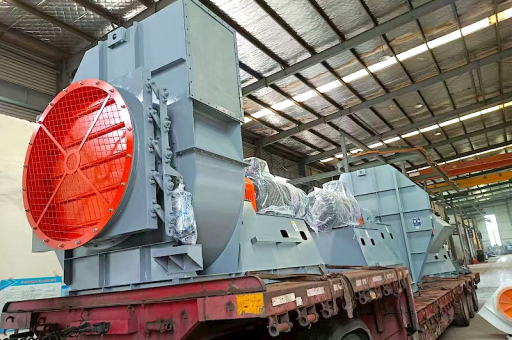
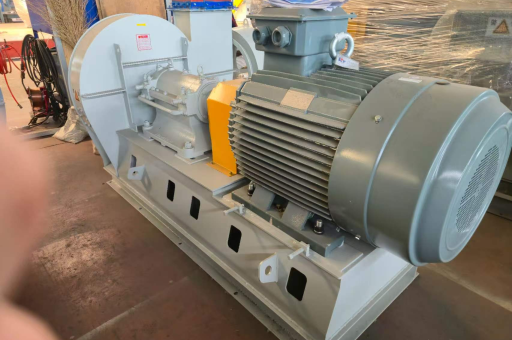
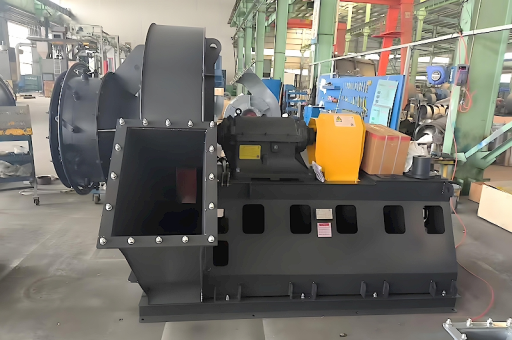
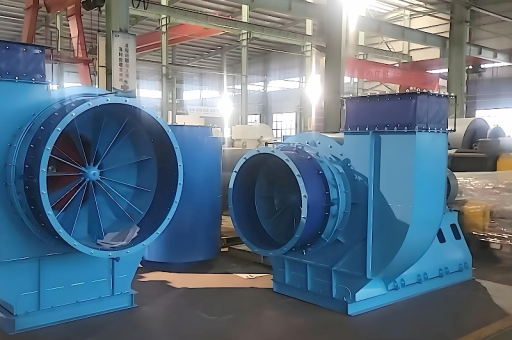
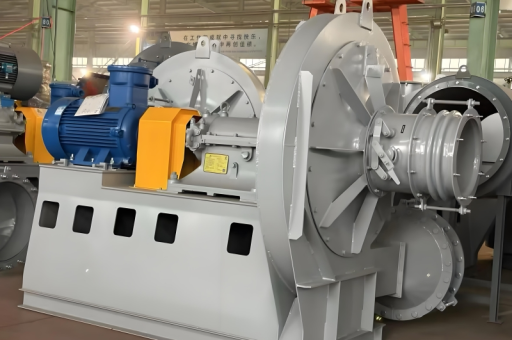
This is a specific request regarding industrial fan applications. A "200kW powder conveying fan" refers to a high-power fan system designed to pneumatically transport bulk powders (cement, fly ash, flour, plastic pellets, etc.) over long distances or high vertical lifts.
Here is a comprehensive breakdown of what this fan is, its key specifications, typical applications, and important selection criteria.
What is a 200kW Powder Conveying Fan?
- Power: 200 kW (approximately 268 HP). This is a very large industrial fan.
- Function: Creates a high-pressure, high-volume airflow to suspend and transport solid particles in a gas stream (usually air).
- Type: Typically a Centrifugal Fan (specifically a high-pressure radial or backward-curved blade fan). Axial fans are generally not used for this dense-phase or dilute-phase conveying.
- Duty: 24/7 continuous operation in demanding environments (cement plants, steel mills, chemical facilities).
Key Technical Specifications (Typical for 200kW)
A 200kW fan is not a "standard" off-the-shelf item; it is engineered for the specific system. However, typical ranges would be:
- Motor Power: 200 kW (usually a 4-pole or 6-pole induction motor, 380V, 660V, 3.3kV, or 6.6kV).
- Airflow (Volume): 50,000 to 150,000 m³/hr (depending on pressure requirements).
- Pressure: 10,000 to 25,000 Pa (1.0 to 2.5 meters water gauge). Higher pressure is needed for dense-phase conveying.
- Speed: 1480 RPM (4-pole) or 980 RPM (6-pole) direct drive, or variable speed via VFD.
- Impeller Design: Radial (Paddle) Blade or Backward Inclined (BI) . Radial blades are more robust for abrasive powders.
Critical Design Features for Powder Handling
A standard fan will fail quickly with abrasive powders. These features are non-negotiable:
- Abrasion Protection (Wear Liners): The impeller blades, casing, and cut-off (volute tongue) must have replaceable wear plates made of:
- Hardox 500 / 600 (wear-resistant steel)
- Ceramic tiles (for extreme abrasion like cement clinker dust)
- Dual-metal liners (mild steel backing with hardfacing weld overlay)
- Shaft Seal: Mechanical seals or labyrinth seals (often with air purging) to prevent powder from leaking into bearings.
- Bearings: Heavy-duty split-type roller bearings (SKF or FAG) with temperature sensors.
- Vibration Monitoring: Accelerometers for predictive maintenance.
- Impeller Backplate & Shroud: Very thick base material (e.g., 20mm steel) to withstand erosion and potential imbalance from fine particles.
- Explosion Protection (ATEX / IECEx): If conveying combustible powders (aluminum, flour, coal, plastic dust) the fan must be spark-resistant, use non-ferrous impellers, and have explosion relief panels.
Common Applications for 200kW Fans
- Cement Industry:
- Transferring raw meal or cement to silos (often a 50-100 meter vertical lift).
- Pneumatic ship unloading.
- Power Plants:
- Fly Ash Handling: Removing fine ash from baghouses or ESPs to storage silos.
- Steel Industry:
Conveying iron ore fines, coke breeze, or flue dust.
- Grain & Milling:
Conveying flour or animal feed over long distances in a port terminal.
- Plastics & Chemicals:
Conveying polymer pellets (PVC, PE, PP) - though lower pressure, could be 200kW at very high volume.
Comparison: Single Stage vs. Multiple Stages
- Single Stage Fan: A single, large-diameter centrifugal wheel. High volume, moderate pressure (up to ~15,000 Pa). Most common for 200kW.
- Multi-Stage Centrifugal Fan (MST): Two or more impellers in series within one casing. VERY HIGH pressure (up to 40,000 Pa) but lower volume. Used for dense-phase conveying of heavy powders (e.g., sand, sugar).
Key Considerations When Specifying a 200kW Fan
- System Resistance: You must know the total pressure loss (Pa) of your pipeline (linear, fittings, vertical lift, filter).
- Powder Characteristics:
- Abrasiveness: (e.g., sand is VERY abrasive; plastic pellets are less so).
- Moisture Content: Wet powders can cake on the impeller (causing massive vibration).
- Explosivity (Kst, Pmax values).
- Manufacturers (Global):
- Howden / Howden Roots: Heavy-duty industrial fans.
- Air Control Industries (ACI): Good for abrasive applications.
- Robinson Fans / Greenheck: Large custom designs.
- Dutch Fan / Nederman: European high-end.
- Leading Chinese Manufacturers: (e.g., Shanghai Electric, Yantai Longyuan, Sichuan Chonghong) - common for 200kW range due to cost, but require careful specification of wear parts.
- Control: A 200kW fan should have a Variable Frequency Drive (VFD) to adjust flow for changing production rates and to protect the motor during start-up (avoiding damaged impellers from sudden torque).
Summary Table for a 200kW Powder Conveying Fan
| Parameter | Typical Value | Notes |
|---|---|---|
| Motor Power | 200 kW | IE3 or IE4 efficiency |
| Fan Type | Centrifugal, Radial Blade | For abrasive duty |
| Airflow | 80,000 m³/hr @ 12,000 Pa | Estimate only |
| Pressure | 15,000 - 20,000 Pa | For a typical 200m long system |
| Speed | 1480 RPM | Direct drive or VFD |
| Wear Protection | Hardox 500 / Ceramic Tiles | Mandatory for powder |
| Sealing | Labyrinth + Purge Air | Keeps dust out of bearings |
| ATEX Rating | Optional (depends on dust) | Must specify if explosive |
Final Advice
If you are looking to purchase a 200kW powder conveying fan, do not buy a generic "ventilation" fan from a catalog. You must contact a specialized industrial fan manufacturer (like New York Blower, Chicago Blower, or TLT-Turbo) and provide them with:
- Material type & density (kg/m³)
- Conveying distance & vertical lift
- Required tonnage transfer rate (tons/hour)
- Ambient temperature
- Explosion classification
The cost of a properly engineered 200kW industrial powder fan (with abrasion protection, motor, VFD, and baseplate) will likely range from $80,000 to $200,000 USD depending on materials and ATEX requirements.