This article's table of contents introduction:
- What is a 160kW Powder Conveying Fan?
- Key Specifications & Components
- Why 160kW? (Typical Applications)
- Considerations for Selection & Operation
- Cost & Manufacturers
- Summary Checklist for Sourcing a 160kW Fan
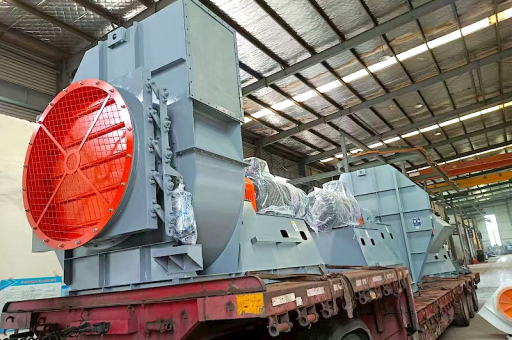
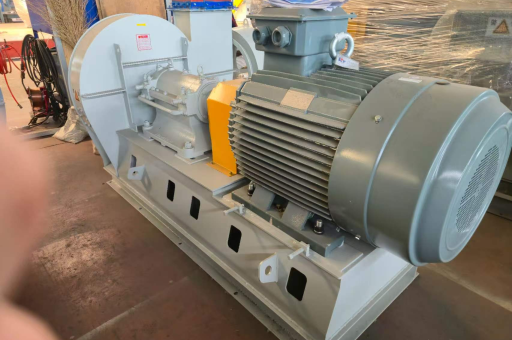
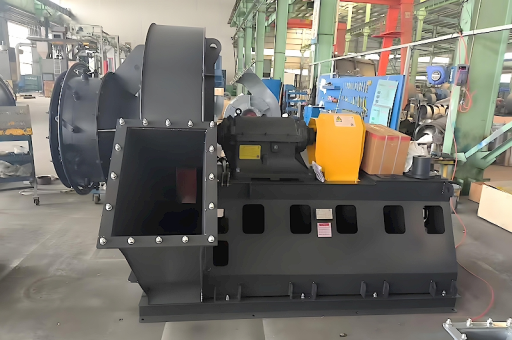
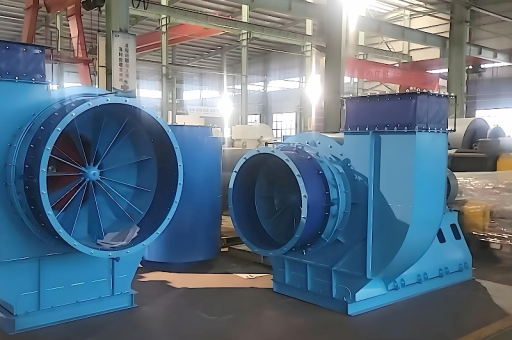
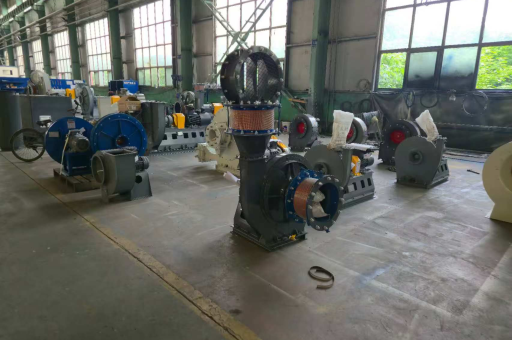
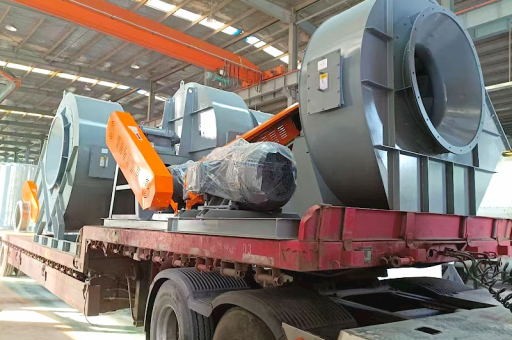
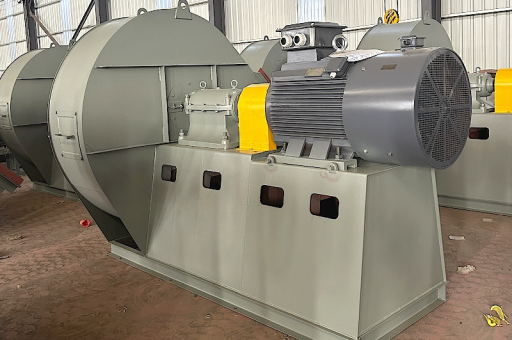
This is a specialized piece of industrial equipment. A "160kW powder conveying fan" is a high-power, heavy-duty fan system designed to move bulk powders (like cement, fly ash, flour, plastic pellets, or chemicals) through a pneumatic conveying system.
Here is a detailed breakdown of what this entails, its specifications, and key considerations.
What is a 160kW Powder Conveying Fan?
This fan is the prime mover for Dense Phase or Lean Phase pneumatic conveying systems. The 160kW (approximately 215 HP) motor provides the high pressure (typically medium to high pressure) and airflow required to suspend and transport powder through pipes over long distances (e.g., 100m to 1km) or to significant heights (e.g., 30m to 80m).
Core Function:
- Suction: Creates a vacuum to pull powder from a hopper, truck, or silo.
- Pressure: Compresses and accelerates air to push the powder-air mixture through the conveying pipeline to its destination (e.g., storage silo, mixer, or process vessel).
Key Specifications & Components
| Specification | Typical Value / Range for a 160kW Fan | Notes |
|---|---|---|
| Power | 160 kW (215 HP) | Typically a 3-phase AC induction motor (e.g., 380V, 415V, 690V). |
| Fan Type | Roots Blower (most common) or Centrifugal Fan | Roots blowers are positive displacement, ideal for high pressure/low variation. Centrifugal fans are for high flow, lower pressure. |
| Pressure | 5 to 1.5 bar(g) (7 to 22 psi) | Higher pressures allow longer distances and higher lift. |
| Flow Rate (Air) | ~ 50 to 150 m³/min (1800 to 5300 CFM) | Depends on pipe diameter and required velocity for the specific powder. |
| Speed | 1,000 – 3,000 RPM | Often driven via a V-belt or direct coupled. Variable Frequency Drives (VFD) are very common. |
Critical Components Beyond the Fan:
- Rotary Valve (Air Lock): Meters powder into the air stream while minimizing air loss.
- Silencers (Inlet & Outlet): To reduce the high noise generated by the fan (often 85-100+ dBA).
- Safety Valves (Relief / Bursting Disc): Critical to prevent over-pressurization.
- Filter (Air Intake): Protects the fan's internal components from dust.
- Vibration Monitoring & Temperature Sensors: Essential for predictive maintenance.
Why 160kW? (Typical Applications)
This power level is not for small, local conveying. It is used for heavy-duty, continuous operation in:
- Cement & Minerals: Transporting cement, fly ash, lime, gypsum from grinding mills to storage silos.
- Chemical Industry: Moving plastic pellets, pigments, or hazardous powders.
- Food Processing: Large-scale flour, sugar, or starch transport.
- Power Plants: Ash handling (fly ash) from electrostatic precipitators to disposal silos.
Key Performance Indicators:
- Capacity: Can move 20 to 100+ metric tons per hour depending on distance, height, and powder characteristics.
- Distance: Effective over 100m to 500m+ horizontally, and 20m to 80m+ vertically.
- Reliability: Designed for 24/7 operation with minimal downtime.
Considerations for Selection & Operation
- Abrasive Powders: Cement, sand, and minerals are extremely hard on fan internals. You need hardened materials (e.g., Stellite coated rotors, high-chrome alloys) and sacrificial wear plates.
- Hygroscopic Powders: Flour, sugar, and salt can clump in high humidity. The conveying air must be dry and filtered.
- Explosive Dust: Powders like flour, coal, or metal dusts are combustible. The fan system may require ATEX (Europe) or NEC (USA) certification, explosion-proof motors, and burst panels.
- Drive System:
- Fixed Speed + Throttle Valve: Older, less efficient.
- VFD (Variable Frequency Drive): Highly recommended. Allows precise control of conveying velocity, reduces energy use, and minimizes pipe wear during low-capacity operation.
- Maintenance:
- Lubrication: Roots blowers require high-quality gear/bearing oil.
- Belt Tension: V-belts need periodic adjustment.
- Internals: Regular inspection of rotor tips and casing for wear.
- Filters: Clean/replace air inlet and silencer filters.
Cost & Manufacturers
- New System Cost (Complete Package): €40,000 to €90,000+ (depends on brand, materials, controls, and ancillaries like silencers and VFD).
- Fan Unit Only: €15,000 to €35,000.
- Used/Refurbished: €8,000 to €20,000.
Common Manufacturers (high-performance, industrial grade):
- Aerzen (Germany - Premium Roots blowers)
- Kaeser (Germany/USA - Excellent for integrated systems)
- Atlas Copco (Sweden - Industrial roots and screw blowers)
- Gardner Denver (USA - Roots blower market leader)
- Howden (UK - High-pressure fans)
- Spiro (USA/Czech - Custom conveying fans)
Summary Checklist for Sourcing a 160kW Fan
- Material: What powder? (Cement, plastic, food, chemical?) -> Determines abrasion resistance & ATEX needs.
- Conveying Distance (m) & Vertical Lift (m): -> Determines required pressure.
- Capacity (tons/hour): -> Determines required airflow (m³/min).
- Particle Size & Bulk Density: -> Impacts velocity and erosion.
- Available Utilities: Voltage (e.g., 415V 3-phase 50Hz), compressed air (if needed for rotary valve).
- Control: PLC, VFD, remote monitoring?
- Warranty & Support: Local service network is critical for such a large piece of equipment.
In short: A 160kW powder conveying fan is a serious, high-capacity workhorse for industries that move large volumes of bulk powder. It requires careful specification to match the powder's properties and the plant's duty cycle to ensure long life and efficiency.