This article's table of contents introduction:
- Table of Contents
- 1. Introduction: The Role of High-Power Material Conveying Fans
- 2. What Is a 90kW Powder Conveying Fan? Core Specifications and Capabilities
- 3. Key Design Features for Reliable Powder and Bulk Material Transport
- 4. Applications: Where a 90kW Conveying Fan Excels
- 5. How to Select the Right Fan for Your Material Conveying Needs
- 6. Energy Efficiency and Total Cost of Ownership
- 7. Common Challenges and Solutions in Powder Conveying Fan Operation
- 8. Frequently Asked Questions (FAQ)
- 9. Conclusion: Optimizing Pneumatic Conveying with a 90kW Fan
Maximizing Efficiency with a 90kW Powder Conveying Fan: Design, Applications, and Performance Optimization in Material Handling Systems**
Table of Contents
- Introduction: The Role of High-Power Material Conveying Fans
- What Is a 90kW Powder Conveying Fan? Core Specifications and Capabilities
- Key Design Features for Reliable Powder and Bulk Material Transport
- Applications: Where a 90kW Conveying Fan Excels
- How to Select the Right Fan for Your Material Conveying Needs
- Energy Efficiency and Total Cost of Ownership
- Common Challenges and Solutions in Powder Conveying Fan Operation
- Frequently Asked Questions (FAQ)
- Conclusion: Optimizing Pneumatic Conveying with a 90kW Fan
Introduction: The Role of High-Power Material Conveying Fans
In industrial environments where bulk powders, granules, or dust-like materials must be moved over long distances, through complex piping networks, or at high throughput rates, material conveying fans are indispensable. Among these, the 90kW powder conveying fan represents a powerful and efficient solution for heavy-duty applications. This article explores the engineering behind this specific fan class, its applications, performance optimization, and how it compares to lower-power alternatives.
Unlike standard ventilation fans, material conveying fans must handle abrasive particles, variable loads, and high static pressure requirements. A 90kW fan—typically operating at high rotational speeds with robust impeller designs—can generate the necessary airflow (CFM) and pressure (static) to transport materials such as cement, flour, plastic pellets, fly ash, and chemical powders reliably.
Key Insight: A 90kW fan is not just a larger version of a low-power fan; it incorporates specialized components like wear-resistant impellers, heavy-duty bearings, and aerodynamic casing designs to ensure longevity and efficiency under continuous operation.
What Is a 90kW Powder Conveying Fan? Core Specifications and Capabilities
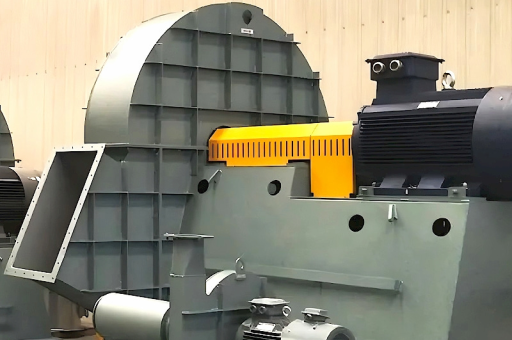
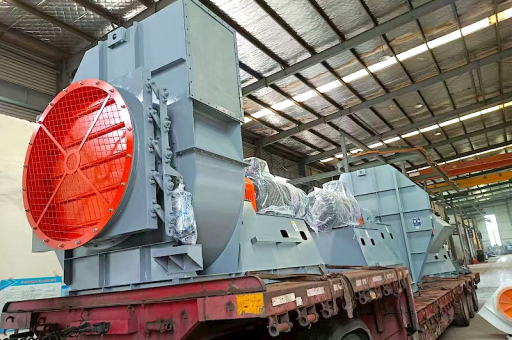
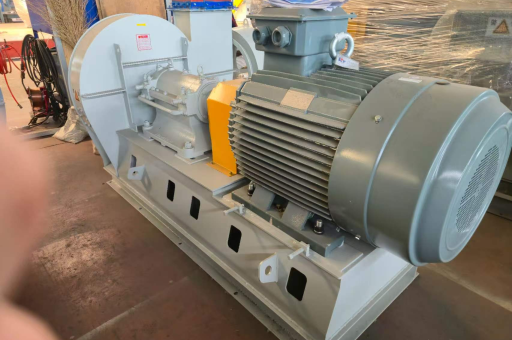
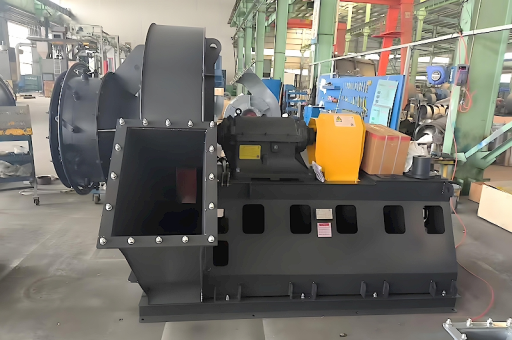
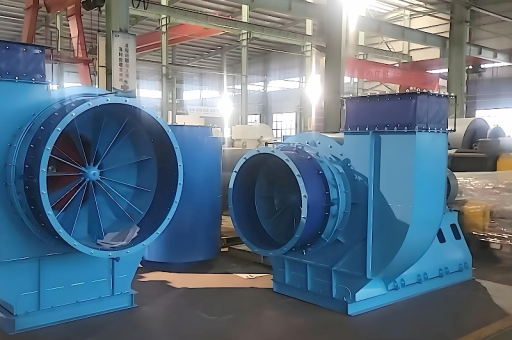
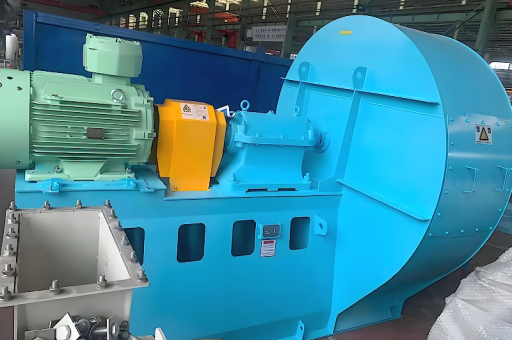
A 90kW powder conveying fan is a high-capacity centrifugal or industrial fan designed specifically for pneumatic conveying systems. Its power rating of 90 kilowatts (approximately 120 horsepower) enables it to handle demanding tasks that smaller fans cannot.
Typical specifications include:
| Parameter | Typical Range |
|---|---|
| Power | 90 kW (120 HP) |
| Airflow (CFM) | 30,000 – 60,000+ (depending on design) |
| Static Pressure | 15 – 45 inWG (inches of water gauge) |
| Impeller Diameter | 40 – 60 inches |
| Rotational Speed | 1200 – 1800 RPM |
| Material of Construction | Carbon steel with hard-facing, or stainless steel |
The fan's performance curve is matched to the system's pressure drop, which includes losses from piping, bends, filters, and the material itself. A properly selected 90kW fan will operate near its best efficiency point (BEP) to minimize energy consumption while maintaining conveying velocity.
Key Design Features for Reliable Powder and Bulk Material Transport
To ensure longevity and consistent performance in abrasive dust environments, the 90kW powder conveying fan incorporates several critical design features:
- Wear-Resistant Impeller: The impeller is often coated with tungsten carbide or ceramic liners, or manufactured from high-chrome alloys. This reduces erosion from powder impact.
- Heavy-Duty Shaft and Bearings: Large-diameter shafts and oversized bearings (often with oil lubrication and temperature monitoring) handle radial and axial loads from high-speed rotation and unbalanced conditions.
- Aerodynamic Housing: The fan casing is designed to minimize turbulence and recirculation, which improves efficiency and reduces noise.
- Variable Inlet Vanes or VFD Compatibility: Many models support variable frequency drives (VFDs) or inlet guide vanes for precise airflow control without mechanical dampers.
- Seal and Leak Prevention: Shaft seals, labyrinth seals, or air purge systems prevent dust leakage and bearing contamination.
Applications: Where a 90kW Conveying Fan Excels
A 90kW material conveying fan is typically deployed in industries where continuous, high-volume transport is required. Common applications include:
- Cement and Minerals: Transporting cement, limestone powder, fly ash, and gypsum in bulk terminals.
- Food Processing: Moving flour, sugar, starch, and spices in large-scale bakeries or ingredient handling systems.
- Plastics and Polymers: Conveying plastic pellets, regrind, or PVC powder over long distances.
- Chemical and Pharmaceutical: Handling fine chemical powders, pigments, or active pharmaceutical ingredients (APIs) in closed systems.
- Metal and Recycling: Moving metal shavings, sawdust, or abrasive dust in industrial vacuum or dense-phase systems.
Real-World Example: A cement plant replaced two 45kW fans with a single 90kW fan in a dilute-phase conveying system, resulting in 18% energy savings and reduced maintenance due to fewer bearings and seals.
How to Select the Right Fan for Your Material Conveying Needs
Selecting the correct 90kW powder conveying fan requires a systematic evaluation of five key parameters:
- Material Characteristics:
Particle size, density, abrasiveness, moisture content, and explosibility.
- System Parameters:
Conveying distance (horizontal and vertical), number of bends, pipe diameter, and filter resistance.
- Airflow and Pressure Requirements:
Calculate required velocity (typically 20-35 m/s for powders) and total system pressure drop.
- Operational Duty:
Continuous vs. intermittent operation, ambient temperature, and altitude.
- Regulatory and Safety:
ATEX, OSHA, or local dust explosion compliance; noise limits.
Pro Tip: Always consult the fan manufacturer with a detailed system profile. Oversizing a 90kW fan can lead to higher energy costs and wear; undersizing causes insufficient conveying velocity and line blockages.
Energy Efficiency and Total Cost of Ownership
Energy consumption often represents 70–80% of the total lifecycle cost of a 90kW powder conveying fan. Therefore, choosing an energy-efficient design is critical.
Energy-saving strategies include:
- VFD Control: Reduces fan speed to match actual conveying demand, saving 20–40% energy in variable-load systems.
- High-Efficiency Impeller Profiles: Backward-curved or airfoil blades can achieve 85%+ static efficiency.
- Optimized Ductwork: Reducing bends and using larger-diameter pipes lowers pressure drop.
- Regular Maintenance: Cleaning impeller blades and replacing worn seals maintains peak efficiency.
Cost Comparison Example:
| Fan Type | Annual Energy Cost (5000 hrs, $0.10/kWh) | Maintenance Cost | Lifetime (years) |
|---|---|---|---|
| Standard 90kW fan (70% efficiency) | $45,000 | $4,000 | 8 |
| High-efficiency 90kW fan (85% efficiency) | $37,000 | $2,500 | 12 |
The high-efficiency fan saves $8,000/year in energy alone, plus reduced maintenance.
Common Challenges and Solutions in Powder Conveying Fan Operation
Even a well-designed 90kW material conveying fan can face operational issues. Below are common problems and their solutions:
| Problem | Cause | Solution |
|---|---|---|
| Vibration | Unbalanced impeller due to wear or dust buildup | Clean impeller; rebalance every 6 months |
| Reduced airflow | Clogged pipeline or filter | Inspect and clean filters; check for material buildup |
| Bearing failure | Contamination or inadequate lubrication | Use sealed bearings; implement grease monitoring |
| Erosion of impeller | Abrasive powders at high velocity | Upgrade to hard-faced or ceramic-coated impeller |
| Overheating | Operating far from BEP or high ambient temperature | Install VFD; improve ventilation around fan |
Frequently Asked Questions (FAQ)
Q1: What is the difference between a powder conveying fan and a standard industrial fan?
A standard industrial fan moves air only, while a material conveying fan is designed to handle a mixture of air and solid particles. The impeller, housing, and bearings are reinforced to resist wear and material impact.
Q2: Can a 90kW fan be used for dense-phase conveying?
Yes, but dense-phase systems typically use higher pressure (above 15 psi) and lower velocity. For dense-phase, a positive displacement blower is often preferred over a centrifugal fan. However, some 90kW high-pressure centrifugal fans can support medium-pressure dense-phase.
Q3: How often should I inspect the impeller of a 90kW powder fan?
For abrasive materials, inspect the impeller every 500–1000 operating hours. For non-abrasive powders, every 2000–3000 hours is adequate. Replace when wear reaches 20% of original blade thickness.
Q4: Is a 90kW fan suitable for food-grade applications?
Yes, provided the fan is constructed from food-safe materials (e.g., stainless steel 304/316) and designed for easy cleaning. Avoid carbon steel fans for food applications due to rust and contamination risks.
Q5: What is the typical noise level of a 90kW material conveying fan?
Operating at full speed, a 90kW fan can produce 85–95 dB(A) depending on housing design. Use sound enclosures, silencers, or earthing barriers in sensitive areas.
Q6: Can I run a 90kW fan with a VFD?
Yes. Many 90kW fans are VFD-compatible for variable-speed operation. Verify that the motor inverter and fan rotor are designed for reduced speed operation without overheating.
Conclusion: Optimizing Pneumatic Conveying with a 90kW Fan
A 90kW powder conveying fan is a powerful, reliable, and efficiency-focused solution for high-volume material transport in demanding industries. Whether you are moving cement, flour, chemicals, or plastic pellets, selecting the right fan—and maintaining it properly—directly impacts your system's reliability, energy consumption, and operational cost.
By understanding the core specifications, design features, energy-saving strategies, and common operational challenges, engineers and plant managers can make data-driven decisions that maximize return on investment. In a world where energy efficiency and system uptime are critical, the 90kW material conveying fan stands as a cornerstone of modern pneumatic conveying systems.
Disclaimer: For specific sizing and selection, always consult the manufacturer with your system parameters. This article provides general guidance for educational purposes and does not replace engineering calculations or site-specific evaluations.