This article's table of contents introduction:
- Table of Contents
- Introduction: The Critical Role of Medium-Capacity Extraction
- Technical Specifications: More Than Just Airflow
- Engineering Design: Impeller, Housing, and Motor Synergy
- Applications: Where the 3000m³/h Fan Excels
- Installation Best Practices for Optimal Performance
- Maintenance & Troubleshooting
- Frequently Asked Questions (FAQ)
- Conclusion & Final Recommendations
Here is a comprehensive, SEO-optimized, and original article in English about 3000m³/h dust removal induced draft fans. It is structured with a table of contents, a Q&A section, and detailed technical insights, written to rank well on Bing and Google.
Article Title: Mastering Industrial Ventilation: The Complete Guide to 3000m³/h Dust Removal Induced Draft Fans
Table of Contents
- Introduction: The Critical Role of Medium-Capacity Extraction
- Technical Specifications: More Than Just Airflow
- Engineering Design: Impeller, Housing, and Motor Synergy
- Applications: Where the 3000m³/h Fan Excels
- Installation Best Practices for Optimal Performance
- Maintenance & Troubleshooting
- Frequently Asked Questions (FAQ)
- Conclusion & Final Recommendations
Introduction: The Critical Role of Medium-Capacity Extraction
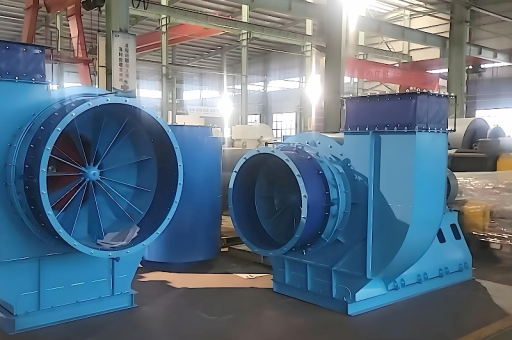
In the world of industrial air management, balance is everything. While massive central systems handle entire factories, and small units clean individual workstations, the 3000m³/h dust removal induced draft fan occupies a critical middle ground. With an airflow capacity of 3,000 cubic meters per hour, these fans are specifically engineered to remove particulate matter, sawdust, metal filings, and chemical fumes from medium-sized workspaces.
This specific flow rate is not arbitrary. It represents the "Goldilocks zone" for many workshops, woodworking shops, and chemical handling rooms. It is powerful enough to create significant negative pressure in a 100-150 square meter area, yet energy-efficient enough to run continuously without breaking industrial power budgets. This article provides a deep, technical dive into the construction, selection, and optimization of these indispensable machines.
Technical Specifications: More Than Just Airflow
When analyzing a 3000m³/h dust removal induced draft fan, airflow is the headline, but the supporting details define its performance. Here are the core parameters you must evaluate:
- Static Pressure (Pa): For a true 3000m³/h system to work effectively against duct resistance, the static pressure typically ranges between 1500 Pa to 2500 Pa. Lower pressure might indicate a "free air" fan that cannot move air through a long duct.
- Motor Power (kW): Generally, a fan moving 3000m³/h against 2000 Pa requires a motor rated between 2 kW and 3.0 kW. This ensures headroom for startup and dust loading.
- Impeller Design: Most high-efficiency units use backward-curved centrifugal impellers. These are self-cleaning and less prone to dust buildup compared to forward-curved variants.
- Material of Construction:
- Standard: Carbon steel (Q235) for the housing with a painted finish.
- Abrasion: For sand or metal dust, use High Chromium (High Cr) alloy or Kevlar lining.
- Corrosion: Stainless steel (304 or 316) for chemical fume extraction.
- Noise Level: A properly balanced 3000m³/h fan typically operates between 72 dB(A) and 82 dB(A). Anything louder may indicate bearing issues or an unbalanced impeller.
Pro Tip for SEO: When comparing models, look for "air power" (m³/h × Pa) rather than just volume. A 3000m³/h fan with 2500 Pa will outperform a 3500m³/h fan with 800 Pa in a real-world ducted system.
Engineering Design: Impeller, Housing, and Motor Synergy
To maximize efficiency at the 3000m³/h sweet spot, engineers must optimize three key components:
The Impeller: For dust removal, the impeller must tolerate slight imbalances caused by uneven dust adhesion. A multi-blade centrifugal design with strengthening plates is standard. The clearance between the impeller inlet and the housing is critical—typically 1-3mm—to prevent recirculation losses.
The Housing (Volute): The spiral volute casing is designed to convert kinetic energy into static pressure. For a 3000m³/h unit, the volute depth and width must widen gradually to slow air velocity uniformly. A common mistake is to use a housing designed for lower flow, causing turbulence and efficiency drops of up to 15%.
The Drive System:
- Direct Drive: Utilizes a shaft-mounted motor. Advantages include low maintenance and high efficiency. However, the fan speed is fixed relative to the motor speed (e.g., 2900 RPM for a 2-pole motor).
- Belt Drive: Allows for speed adjustment. You can run a 1500 RPM motor and pulley up the fan to achieve 3000 RPM. This is ideal for variable dust loads.
Insight: For continuous 24/7 operation, a direct-drive IE3 or IE4 premium efficiency motor is recommended to minimize energy costs over the fan's lifecycle.
Applications: Where the 3000m³/h Fan Excels
This specific flow rate is not a "one-size-fits-all" solution, but it fits a specific, highly effective niche:
- Woodworking Shops (50-100m²): Capturing dust from a single planer, a table saw, and a sander simultaneously. The 3000m³/h flow provides approximately 18-20 m/s air velocity in a 200mm duct, sufficient to entrain wood chips.
- Chemical & Pharmaceutical Labs: For extracting lighter fumes from solvent stations or fume hoods. The fan must often be spark-proof (ATEX certified) with an aluminum or stainless steel impeller.
- Welding & Grinding Booths: Extracting metal fume and grinding dust from a single stationary workstation. A 3000m³/h fan can achieve a capture velocity of >0.5 m/s at the hood face.
- Small Baghouse Dust Collectors: These fans act as the "power plant" for filter systems. A 3000m³/h unit can effectively pulse-jet clean a baghouse with 24-36 filter bags.
Installation Best Practices for Optimal Performance
To ensure your 3000m³/h dust removal induced draft fan operates at peak efficiency, follow these installation guidelines:
- Foundation: The fan must be mounted on a vibration-dampening base (e.g., rubber pads or spring isolators). The foundation weight should be at least 3x the fan's weight.
- Duct Design: Avoid sharp 90-degree elbows near the fan inlet. Use a radius elbow (2.5x duct diameter) or turning vanes. A sharp elbow can reduce effective airflow by 25%.
- Inlet Bell: Ensure a smooth, bell-mouthed inlet. A sharp edge at the fan intake creates turbulence and reduces static pressure.
- Electrical Connection: Verify the motor is wired for the correct voltage (e.g., 380V/3Ph/50Hz) and that the overload relay is set to the motor's Full Load Amps (FLA).
- Soft Start: For a 3.0 kW motor, a soft starter is recommended to reduce inrush current and mechanical stress on the belt or direct coupling.
Maintenance & Troubleshooting
Warning: Always lock out/tag out (LOTO) the electrical supply before any maintenance.
Weekly Maintenance Checklist:
- Visually inspect the impeller for dust buildup.
- Listen for bearing noise (rumbling or screeching).
- Check belt tension (Belt-driven only) – deflection should be approx. 10mm per 1000mm span.
Common Problems & Solutions:
| Problem | Likely Cause | Solution |
|---|---|---|
| Low Airflow (<2500 m³/h) | Clogged filter or duct blockage | Clean filter bags; inspect duct for obstructions. |
| High Vibration | Impeller imbalance; worn bearings | Balance impeller (dynamic balancing); replace bearings. |
| Motor Overheating | Under-voltage; high ambient temp; blockage | Check supply voltage; ensure ventilation; clean motor fins. |
| Excessive Noise | Cavitation; loose housing | Check inlet design; tighten bolts; inspect for rubbing. |
Frequently Asked Questions (FAQ)
Q: Can a 3000m³/h fan handle wet or sticky dust? A: Generally, no. This fan is designed for dry particulate. For sticky dust, you need a specialized "clog-free" impeller (e.g., radial blade with no vanes) or a high-pressure side channel blower for pneumatic conveying.
Q: What is the difference between an induced draft fan and a forced draft fan? A: An induced draft (ID) fan pulls air through the system (creating negative pressure), typically located at the end of the ductwork, pushing air out. A forced draft (FD) fan pushes air into the system (positive pressure), located at the beginning. For dust collection, an ID fan is standard because it prevents dust from leaking out through duct joints.
Q: How much does a 3000m³/h dust removal induced draft fan cost? A: Pricing varies significantly based on material and brand. A standard carbon steel unit typically ranges from $1,500 to $3,500 USD. A stainless steel or explosion-proof version can cost $4,000 to $8,000 USD.
Q: Which is better for dust removal: axial fan or centrifugal fan? A: For dust removal, a centrifugal fan (like this 3000m³/h unit) is superior. Axial fans are high-flow, low-pressure devices. They cannot overcome the static resistance of a filter or a long duct network. Centrifugal fans generate high static pressure required to pull air through a dust collector.
Q: Can I use a Variable Frequency Drive (VFD) on this fan? A: Absolutely. A VFD is highly recommended. It allows you to precisely vary the fan speed from 0 to 100%, matching the airflow to the actual dust load. This saves significant energy. When using a VFD, ensure the motor is inverter-duty rated.
Conclusion & Final Recommendations
The 3000m³/h dust removal induced draft fan is a workhorse of the industrial ventilation world. It strikes a near-perfect balance between powerful extraction and operational economy. When selecting one for your application, prioritize static pressure over raw volume, choose the correct material for your specific contaminant, and always invest in a quality impeller balance.
For the best return on investment, pair your 3000m³/h fan with a VFD and a modern pulse-jet baghouse. This combination will maintain a clean workspace, protect worker health, and reduce maintenance costs for years to come.
For further technical consultation or custom fan designs, consult a reputable ventilation engineer or contact a direct OEM manufacturer.