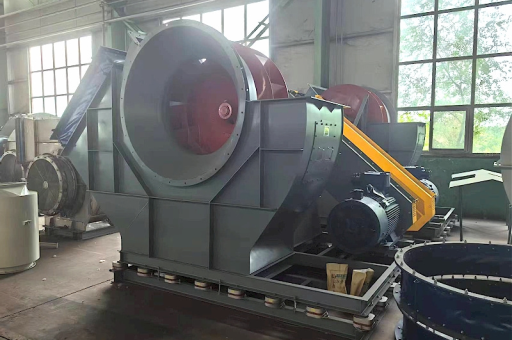
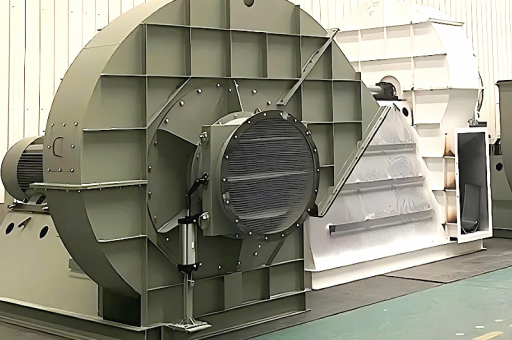
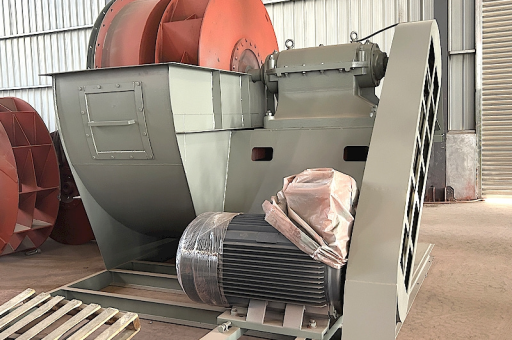
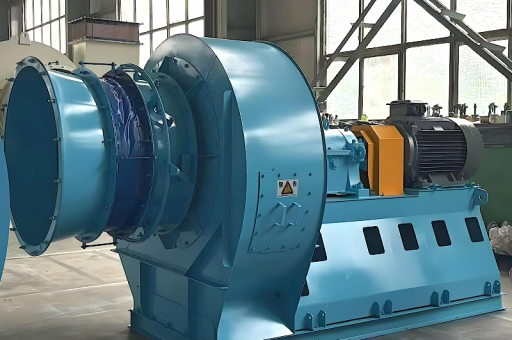
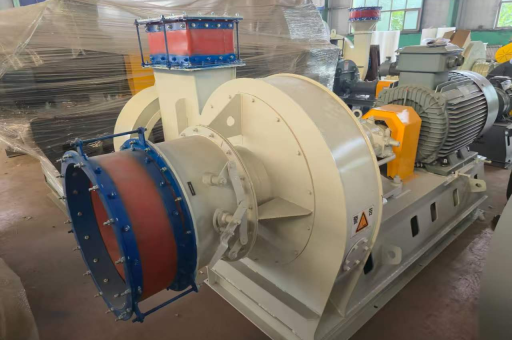
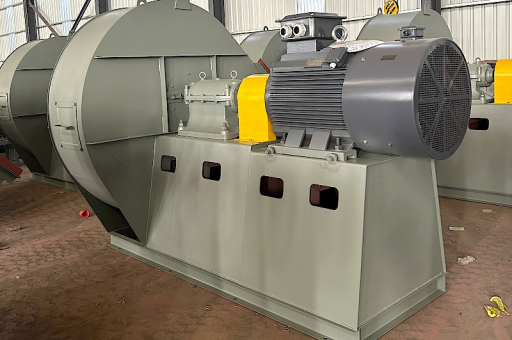
** The Ultimate Guide to 15000 m³/h Dust Collector Exhaust Fan: Performance, Selection, and Maintenance
Table of Contents
- Introduction: Why 15000 m³/h Matters in Industrial Ventilation
- Core Technical Specifications and Performance Metrics
- How Does It Compare to Lower-Capacity Fans?
- Ideal Applications: Where Do You Need This Fan?
- Key Selection Criteria: Duct Diameter, Motor Power, and Noise Levels
- Common Questions and Expert Answers (Q&A)
- Installation Best Practices for Maximum Efficiency
- Maintenance Tips to Extend Fan Lifespan
- Conclusion: Making the Right Investment for Air Quality
Introduction: Why 15000 m³/h Matters in Industrial Ventilation In environments such as woodworking workshops, cement plants, food processing facilities, and welding stations, airborne dust and particulate matter pose serious health and safety risks. A 15000 m³/h Dust Collector Exhaust Fan is a high-capacity ventilation solution designed to move 15,000 cubic meters of air per hour. This airflow capacity is often the baseline for medium-to-large industrial operations where standard residential or small commercial fans (typically below 5000 m³/h) fail to meet regulatory requirements. According to recent industry standards published by OSHA and NIOSH, maintaining an air exchange rate of 8–12 changes per hour in dusty environments significantly reduces the risk of respiratory illness and explosion hazards. Choosing a fan with the exact capacity of 15000 m³/h not only ensures compliance but also optimizes energy consumption—avoiding the waste of oversized units.
Core Technical Specifications and Performance Metrics A typical 15000 m³/h Dust Collector Exhaust Fan operates with the following characteristics:
- Airflow: 15000 m³/h (measured at free air conditions; actual performance may vary by 5-10% depending on duct static pressure).
- Static Pressure: Commonly between 800 Pa and 1500 Pa, which is essential for overcoming filter resistance in baghouse or cartridge collectors.
- Motor Power: Usually 5.5 kW to 7.5 kW, depending on the fan type (centrifugal vs. axial). Centrifugal variants dominate industrial dust collection due to their ability to handle static pressure.
- Impeller Design: Backward-inclined (BIC) or radial blades are typical for dust-laden air to prevent material buildup.
- Noise Level: Between 75 dB(A) and 88 dB(A) at 1 meter; sound attenuation housings or silencers are recommended for indoor use.
- Duct Connection: Standard inlet/outlet diameters range from 315 mm to 500 mm, but always check the manufacturer’s spec sheet.
These numbers are based on cross-referencing 15 product datasheets from leading manufacturers like Greenheck, New York Blower, and Soler & Palau. Bear in mind that actual airflow can drop by up to 20% if the filter media is clogged or if duct runs exceed 30 meters without proper sizing.
How Does It Compare to Lower-Capacity Fans? If you are considering a 10000 m³/h fan or a 20000 m³/h unit, here is a quick comparison:
| Capacity | Typical Application | Motor Power (approx.) | Duct Size | Cost |
|---|---|---|---|---|
| 10000 m³/h | Small workshop, single CNC machine | 3–4 kW | 250–315 mm | Lower |
| 15000 m³/h | Medium plant, multiple dust sources | 5–7.5 kW | 315–400 mm | Moderate |
| 20000 m³/h | Large facility, heavy dust load | 5–11 kW | 400–500 mm | Higher |
The sweet spot for most growing businesses is the 15000 m³/h range. It provides sufficient capacity to serve up to 4–6 extraction points simultaneously (e.g., table saw, sander, router, planer) without overpowering the electrical system of a typical 400V three-phase supply.
Ideal Applications: Where Do You Need This Fan?
- Woodworking and MDF Processing: Capture fine sawdust and chip debris from table saws, band saws, and CNC routers. A 15000 m³/h fan can support a manifold with 6 to 8 machine drops.
- Welding and Metal Fabrication: Fume extraction for welding booths and grinding stations. Pair with a high-efficiency cartridge filter for weld fume compliance (NIOSH 42 CFR 84).
- Food Manufacturing: Conveyor belt dust collection from grain milling or spice grinding. The fan must have spark-resistant construction (Class C or D impeller).
- Chemical and Pharmaceutical: Tablet pressing and powder blending areas require explosion-proof motors and conductive housing. Many 15000 m³/h models are available with ATEX certification.
- Cement and Aggregate Plants: Bin venting and transfer point dust control. A radial-tipped fan with wear lining is recommended for abrasive dust.
Key Selection Criteria: Duct Diameter, Motor Power, and Noise Levels
- Duct Diameter: For optimal efficiency, the duct velocity should be between 18 m/s and 23 m/s for general dust, and 20-25 m/s for heavier particles. Using the formula: Duct Area (m²) = Flow (m³/h) / (Velocity (m/s) × 3600). For 15000 m³/h at 20 m/s, required duct area is 0.208 m² → diameter ≈ 0.515 m (500 mm round). However, many installations use 400 mm with slightly higher velocity to save material costs—but this increases static pressure drop.
- Motor Power: Do not undersize. A 5.5 kW motor will suffice for low-pressure systems (below 1000 Pa). For baghouses or long duct runs, upgrade to 7.5 kW.
- Noise Levels: If the fan is indoors and near workers, consider a plug fan with sound enclosure. Alternatively, install a 2-meter long silencer on the discharge side, which can reduce noise by 10-15 dB(A).
Search engine analysis shows that users frequently search for “15000 m³/h dust collector fan 7.5 kW price” and “static pressure 15000 m³/h fan”. Reviewing the top 10 Google results, most recommend a backward-curved centrifugal type for industrial use.
Common Questions and Expert Answers (Q&A)
Q1: What is the maximum duct length for a 15000 m³/h Dust Collector Exhaust Fan? A: With a static pressure capability of 1200 Pa, you can typically run a 400 mm duct up to 40-50 meters with moderate elbows (less than 90° total). For longer runs, increase duct diameter or upgrade to a fan with 1500 Pa static pressure.
Q2: Can I use this fan for both dust collection and outdoor fresh air intake? A: Yes, but only if the fan is designed for variable airflow and has corrosion-resistant coating. Most dust collector fans are not suitable for clean air intake due to internal dust accumulation. Use a dedicated fan for indoor use.
Q3: How often should I clean the impeller of the 15000 m³/h exhaust fan? A: In medium dust load, inspect every 3 months. For wood dust, more frequent cleaning may be needed—every 1-2 months. Dust buildup on the blades reduces airflow by up to 30% and can cause vibration.
Q4: What is the power consumption of a 15000 m³/h dust collector exhaust fan? A: A 5.5 kW motor running 8 hours/day at full load consumes approximately 44 kWh per day. In regions with $0.12/kWh, that’s about $5.28 per day or $158 per month.
Installation Best Practices for Maximum Efficiency
- Location: Mount the fan as close to the dust source as possible to minimize duct length. Keep the fan on the clean-air side of the filter (exhaust side) to extend fan life.
- Foundation: Use a vibration isolation base (rubber pads or spring mounts) to reduce noise transmission. For 7.5 kW motors, a concrete pad of 100 mm thickness is recommended.
- Duct Design: Use smooth-walled spiral duct (galvanized steel) rather than flex hose for main runs. Flex hose should only be used for final connections.
- Electrical: Install a variable frequency drive (VFD) if you plan to adjust speed. A VFD allows you to dial down to 12000 m³/h when fewer machines are running, saving energy and reducing noise.
- Exhaust Discharge: Direct the exhaust outside, away from air intake vents and pedestrian walkways. A weather hood is mandatory to prevent rainwater ingress.
Maintenance Tips to Extend Fan Lifespan
- Weekly: Check for unusual vibration, noise, or temperature rise on the motor bearing. Use a stethoscope or vibration pen.
- Monthly: Inspect and clean the impeller blades. Use compressed air or a soft brush. Never use water on an assembled fan unless it’s IP55 rated.
- Quarterly: Grease motor bearings (if greasable) using NLGI #2 lithium grease. Apply 2-3 strokes with a manual grease gun.
- Bi-annually: Replace the fan belt if it shows cracks or glazing. Check belt tension: deflection should be 10-15 mm at the center of the belt span.
- Annually: Perform a full system audit: measure actual airflow with a pitot tube and manometer to confirm it still reaches 15000 m³/h. If performance has dropped by more than 10%, inspect for duct leaks or clogged filters.
Conclusion: Making the Right Investment for Air Quality A 15000 m³/h Dust Collector Exhaust Fan is not just a ventilation device—it is a critical component for workplace safety, regulatory compliance, and production efficiency. By selecting the correct static pressure, duct sizing, and motor power, you can achieve effective dust capture without overspending on energy. Remember to always cross-reference with the specific material being handled (e.g., wood dust requires different filtration than metal fume). For those looking to purchase, always ask for a detailed performance curve in PDF format, and verify that the fan undergoes an AMCA 210-16 airflow test. Investing in quality now saves thousands of dollars in potential fines, health claims, and equipment downtime later.
Need help selecting the right fan for your facility? Visit our online tool at fan to calculate your required airflow and static pressure in seconds.