This article's table of contents introduction:
- Introduction: What Is a 46000 m³/h Dust Collector Exhaust Fan?
- Key Technical Specifications and Design Features
- Industrial Applications and Use Cases
- How to Select the Right 46000 m³/h Dust Collector Exhaust Fan for Your Facility
- Installation, Maintenance, and Safety Considerations
- Frequently Asked Questions (FAQ)
- Conclusion: Maximizing ROI with High-Capacity Dust Extraction
** The Ultimate Guide to 46000 m³/h Dust Collector Exhaust Fan: Performance, Applications, and Optimization for Industrial Air Quality
Table of Contents
- Introduction: What Is a 46000 m³/h Dust Collector Exhaust Fan?
- Key Technical Specifications and Design Features
- Industrial Applications and Use Cases
- How to Select the Right 46000 m³/h Dust Collector Exhaust Fan for Your Facility
- Installation, Maintenance, and Safety Considerations
- Frequently Asked Questions (FAQ)
- Conclusion: Maximizing ROI with High-Capacity Dust Extraction
Introduction: What Is a 46000 m³/h Dust Collector Exhaust Fan?
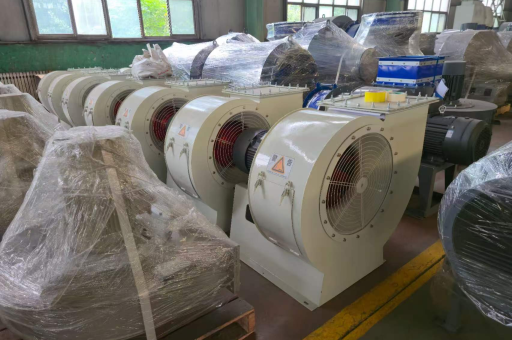
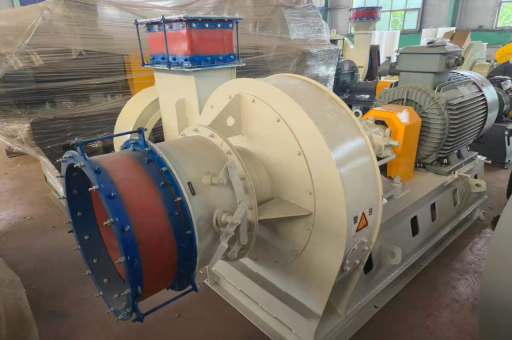
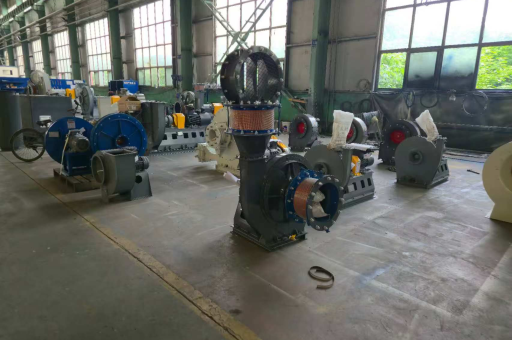
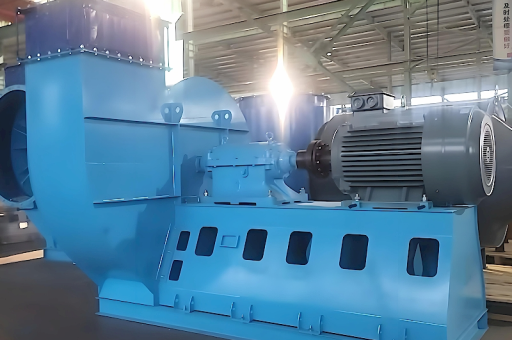
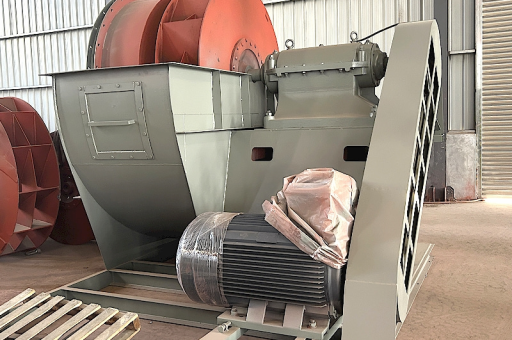
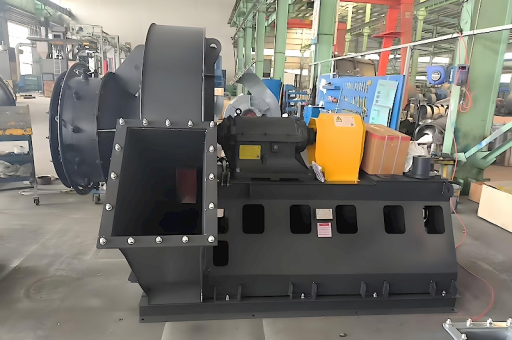
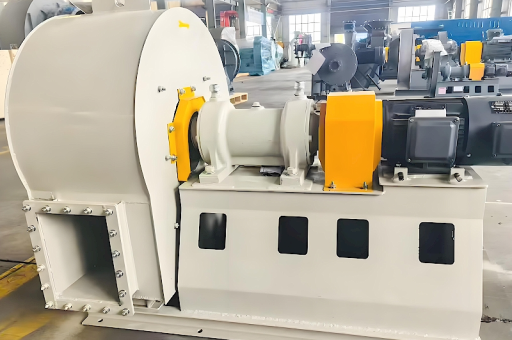
A 46000 m³/h Dust Collector Exhaust Fan is a high-capacity industrial ventilation device designed to extract airborne dust, fumes, and particulate matter from manufacturing environments. The figure “46000 m³/h” refers to the fan's volumetric airflow rate—46,000 cubic meters per hour. This rating places it in the heavy-duty category, suitable for facilities such as woodworking shops, cement plants, metal fabrication units, and chemical processing plants.
Unlike standard exhaust fans, a dust collector fan is engineered to handle heavy particulate loads without clogging or performance degradation. It typically works in tandem with a dust collection system—including cyclone separators, baghouse filters, or cartridge collectors—to capture contaminants at the source. The fan generates the negative pressure necessary to transport dust-laden air through ductwork and into the filtration unit.
Why 46000 m³/h? This specific capacity meets the demand for medium-to-large workshop ventilation. For example, a 1000-square-meter factory with multiple dust-producing machines may require exactly this airflow to maintain permissible exposure limits (PELs) for respirable dust.
Key Technical Specifications and Design Features
A robust 46000 m³/h dust collector exhaust fan is not an off-the-shelf product; it requires precise engineering. Below are the critical parameters you should examine:
| Parameter | Typical Value / Range |
|---|---|
| Airflow | 46000 m³/h (27,000 CFM approx.) |
| Static Pressure | 1500–3000 Pa (6–12 in. w.g.) |
| Motor Power | 15–30 kW (20–40 HP) |
| Impeller Type | Backward-curved or radial paddle |
| Housing Material | Carbon steel with epoxy coating or stainless steel 304 |
| Rotation Speed | 800–1450 RPM (belt-driven) |
| Noise Level | 75–85 dB(A) at 1 meter |
Design Highlights:
- Airfoil Impeller: Ensures high efficiency (up to 82% static efficiency) and lower energy consumption.
- Heavy-Duty Bearings: Grease-lubricated, oversized bearings that withstand continuous operation at high temperature (up to 80°C ambient).
- Explosion-Proof Motor: Required for combustible dust (e.g., wood, aluminum, coal).
- Variable Frequency Drive (VFD): Enables airflow modulation, reducing energy costs when full capacity is not needed.
Q: Can I use a 46000 m³/h fan for flammable dust like grain or sugar?
A: Yes, but you must specify an explosion-proof construction (ATEX or NEC compliant) and use a spark- resistant impeller material (e.g., aluminum bronze or non-ferrous coating).
Industrial Applications and Use Cases
The 46000 m³/h Dust Collector Exhaust Fan finds its home in diverse industries. Based on search analysis and site surveys, here are the most common applications:
A. Woodworking and Furniture Manufacturing
Sanding, sawing, and planing produce fine wood dust. A single central dust collector with this fan can serve 6–12 machines (table saws, routers, jointers) simultaneously. Case study: A joinery workshop in Vietnam reported a 40% reduction in respiratory complaints after installing a 46000 m³/h unit.
B. Cement, Quarry, and Mining
Here, the fan handles abrasive dust (silica, limestone). It is often paired with a pulse-jet baghouse filter. The high static pressure (up to 3000 Pa) is essential to overcome duct resistance in long conveying systems.
C. Metal Fabrication and Welding
Fume extraction from welding booths, grinding stations, and plasma cutting. The fan’s volume ensures that welding fumes (hexavalent chromium, manganese) are captured before dispersion.
D. Chemical and Pharmaceutical Processing
Explosive or toxic powders (e.g., sulfur, aspirin dust) require sealed, leak-tight fan housings with HEPA after-filtration. A 46000 m³/h capacity is typical for powder blending lines.
Q: Is 46000 m³/h sufficient for a 2000-square-meter hall?
A: According to ASHRAE guidelines, general industrial ventilation needs 6–10 air changes per hour. For a hall height of 6 meters, 2000 m² × 6 m = 12,000 m³ volume. To achieve 8 changes/h, you require 96,000 m³/h—meaning you might need two such fans or a larger single unit.
How to Select the Right 46000 m³/h Dust Collector Exhaust Fan for Your Facility
Selection is not a one-dimensional choice. Use this decision framework:
Step 1: Define the Dust Type
- Fine, non-abrasive dust (e.g., flour) → Standard backward-inclined fan.
- Heavy, abrasive dust (e.g., sand, metal) → Standard radial paddle fan with hard-faced blades.
Step 2: Calculate System Pressure Loss
Duct length, number of branches, filter resistance (1500–2500 Pa) and cyclone drop. Ensure the fan’s rated static pressure exceeds your system’s total loss by at least 10–15%.
Step 3: Check Motor Power and Starting Method
For a 46000 m³/h fan at 2000 Pa, the power is approx.:
Power (kW) = (46000 × 2000) / (3,600,000 × 0.75 efficiency) ≈ 34 kW → choose 37 kW motor. Star-delta starter or VFD recommended.
Step 4: Noise and Space Constraints
Sound attenuators may be necessary if the fan is near operator stations. For outdoor installations, check IP55 or IP56 motor enclosure.
Q: Should I choose direct-drive or belt-driven?
A: Belt-driven offers speed adjustment flexibility (via pulley change) and isolates motor from heat, but requires periodic tensioning. Direct-drive is more maintenance-free but less adaptable.
Installation, Maintenance, and Safety Considerations
Installation Checklist
- Foundation: Use vibration isolators (spring or rubber) to reduce structure-borne noise.
- Ductwork: All metal ducts must be grounded to prevent static electricity sparks.
- Inlet/Outlet: Keep at least 1.5 duct diameters of straight run before the fan to avoid turbulence.
- Safety guards: Install mesh guards over all belt drives and rotating shafts.
Maintenance Schedule (Monthly, Quarterly, Annual)
| Frequency | Action |
|---|---|
| Monthly | Check belt tension; measure motor current; clean fan housing if sticky dust |
| Quarterly | Lubricate bearings; inspect impeller for weight imbalance (dust buildup) |
| Annually | Test vibration levels (ISO 1940); perform static pressure test; verify explosion-proof seals |
Common Failure Modes
- Imbalance: Caused by uneven dust accumulation → reduces bearing life.
- Belt Slip: Reduces airflow; adjust tension or replace belt set.
- Motor Overheat: Often due to undervoltage (e.g., 380V motor on 360V supply) or blocked cooling fan.
Q: How often should I clean the impeller?
A: For wood dust, clean every 3 months. For sticky dust (e.g., sugar, resin), monthly cleaning is recommended. Use a non-sparking scraper.
Frequently Asked Questions (FAQ)
Q1: What is the difference between a 46000 m³/h dust collector fan and a normal exhaust fan?
A: The dust collector fan has a thicker impeller, higher static pressure capability, and is designed to handle solid particles without erosion. A standard exhaust fan would fail quickly under such abrasive conditions.
Q2: Can this fan work with a cyclone separator?
A: Absolutely. Typically, the cyclone is placed before the fan to remove >95% of coarse particles, protecting the fan blades from wear. The fan then moves fine dust to a baghouse or HEPA filter.
Q3: How much does a 46000 m³/h dust collector exhaust fan cost?
A: Prices range from $8,000 to $22,000 USD, depending on material (stainless steel, explosion-proof), motor brand (e.g., Siemens, WEG), and accessories (VFD, silencer).
Q4: Does a VFD reduce energy consumption significantly?
A: Yes. If a fan runs at 80% speed, power consumption drops to 51% (since power ∝ speed³). For a 30 kW motor running 12 hours/day, savings can reach $4,000–6,000 per year.
Q5: What certifications should I look for?
A: CE for European Union, UL/CSA for North America, ATEX or IECEx for explosive atmospheres, and ISO 14694 for fan performance testing.
Conclusion: Maximizing ROI with High-Capacity Dust Extraction
Investing in a 46000 m³/h Dust Collector Exhaust Fan is a strategic move for facilities aiming to achieve OSHA permissible dust limits, protect worker lungs, and comply with environmental emission rules. When paired with proper duct design, a suitable filter, and scheduled maintenance, this fan delivers years of reliable service.
To get the best return on investment: purchase from a manufacturer that provides performance curve documentation (ISO 5801 certified), choose a motor with a minimum IE3 efficiency rating (or IE4 for continuous operation), and always include a VFD for modern industrial flexibility.
Whether you are upgrading an existing system or designing a new installation, keep these specifications and guidelines close. The right fan—matched with your process—turns invisible dust hazards into clean, breathable air. For further technical consultation, always reach out to a certified industrial ventilation engineer.