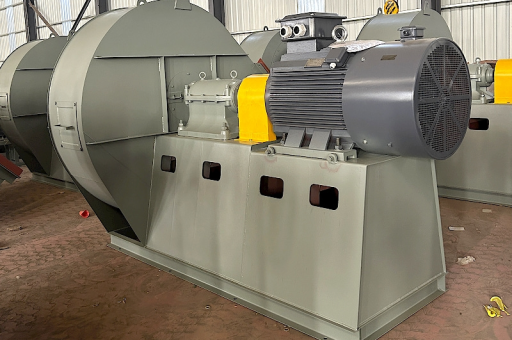
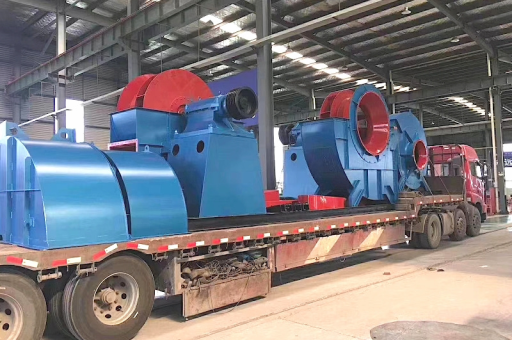
This article's table of contents introduction:
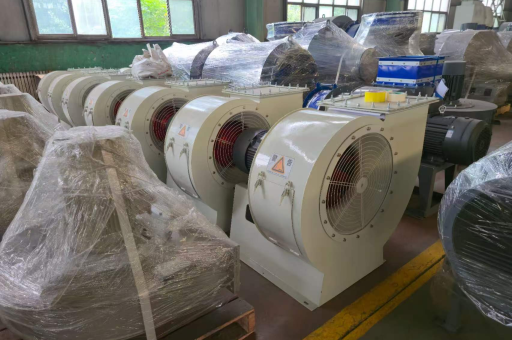
- Table of Contents
- Introduction: Why 36,000 m³/h Matters in Industrial Ventilation
- The Core Technology: How a 36,000 m³/h Dust Collector Exhaust Fan Works
- Key Design Parameters for High-Capacity Dust Collection
- Installation Best Practices for 36,000 m³/h Systems
- Common Applications Across Industries
- Maintenance & Troubleshooting for Long-Term Reliability
- Conclusion: Optimizing Your Dust Collection Investment
** The Ultimate Guide to 36,000 m³/h Dust Collector Exhaust Fans: Engineering, Performance, and SEO-Driven Insights
Article Content:
Table of Contents
- Introduction: Why 36,000 m³/h Matters in Industrial Ventilation
- The Core Technology: How a 36,000 m³/h Dust Collector Exhaust Fan Works
- Q&A: What is the typical power consumption for a fan of this capacity?
- Key Design Parameters for High-Capacity Dust Collection
- Installation Best Practices for 36,000 m³/h Systems
- Q&A: What duct diameter is recommended for this airflow?
- Common Applications Across Industries
- Maintenance & Troubleshooting for Long-Term Reliability
- Conclusion: Optimizing Your Dust Collection Investment
Introduction: Why 36,000 m³/h Matters in Industrial Ventilation
In modern industrial environments, airborne particulate matter is not just a nuisance—it is a direct threat to worker health, equipment longevity, and regulatory compliance. A 36,000 m³/h Dust Collector Exhaust Fan represents a critical capacity point for medium to large-scale operations. This specific airflow rating—equivalent to approximately 21,200 CFM (Cubic Feet per Minute)—is commonly specified for central dust collection systems in woodworking shops, metal fabrication facilities, chemical processing plants, and grain handling terminals.
The number 36,000 m³/h is not arbitrary. It defines the volume of air moved per hour, which directly correlates to the system’s ability to capture dust at the source. A fan with this capacity must overcome static pressure losses from filters, ductwork, and collection hoods while maintaining sufficient capture velocity. Understanding the engineering behind this unit is essential for facility managers and engineers aiming to meet OSHA (Occupational Safety and Health Administration) permissible exposure limits and NFPA (National Fire Protection Association) combustible dust standards.
The Core Technology: How a 36,000 m³/h Dust Collector Exhaust Fan Works
At its heart, a dust collector exhaust fan of this scale relies on centrifugal force. Unlike axial fans, which move air parallel to the shaft, a centrifugal fan draws air into the impeller center and expels it radially. For a 36,000 m³/h Dust Collector Exhaust Fan, the impeller is typically a backward-inclined or airfoil design, chosen for its high efficiency and ability to handle particulate-laden air.
The motor driving such a fan must deliver significant torque. A common specification for a fan moving 36,000 m³/h at 1,500 Pa (approximately 6 inches w.g.) is a 30 kW to 37 kW motor. Variable Frequency Drives (VFDs) are highly recommended to adjust airflow based on real-time demand, reducing energy consumption by up to 35% compared to fixed-speed operation.
Consider this: if you search Google for “high volume dust fan” or “industrial exhaust fan 36000 m³h,” the results often highlight the importance of scroll housing geometry. The fan’s housing must be reinforced to prevent vibration and noise. For this airflow, the outlet velocity typically ranges between 12–18 m/s, ensuring effective transport of dust particles without settling in the ductwork.
Q&A: What is the typical power consumption for a fan of this capacity?
A: Power consumption depends on static pressure. Assuming a system with 2,000 Pa static pressure and 70% fan efficiency, a 36,000 m³/h fan would consume approximately 28.5 kW. At $0.12/kWh and running 8 hours/day, that translates to roughly $27.36 per day. Using a VFD can reduce this by modulating the fan to match actual loading, which is critical for reducing operational costs.
Key Design Parameters for High-Capacity Dust Collection
Designing a system around a 36,000 m³/h Dust Collector Exhaust Fan requires careful calculation of four key parameters:
- Airflow (Q): Fixed at 36,000 m³/h. The fan curve must match the system curve.
- Static Pressure (Ps): This includes losses from filter cartridges (typically 500–1,500 Pa), duct friction (50–200 Pa per 100m), and hood entry losses.
- Capture Velocity: For welding fumes, 0.5–1.0 m/s; for wood dust, 1.0–2.5 m/s. The fan must maintain these at the pickup points.
- System Leakage: A 10–15% safety factor is standard to account for worn gaskets or filter bypass.
A poorly designed system may cause the fan to operate outside its efficiency peak, leading to motor overload or insufficient suction. For example, if ductwork is too small, velocity increases, but static pressure rises exponentially, possibly stalling the fan. Conversely, oversized ducts drop velocity, causing dust to settle. For 36,000 m³/h, the main duct diameter is typically 600–800 mm (24–32 inches).
Installation Best Practices for 36,000 m³/h Systems
Installing a 36,000 m³/h Dust Collector Exhaust Fan requires a solid foundation. The fan’s weight, often exceeding 1,500 kg (3,300 lbs) for the assembly, demands a concrete pad or structural steel base. Vibration isolators are mandatory to prevent transmission of low-frequency noise to the building.
Key installation steps include:
- Inlet & Outlet Transition: Gradual tapers (15° maximum divergence angle) reduce turbulence and pressure loss.
- Duct Support: At 36,000 m³/h, ductwork must be supported every 2–3 meters to prevent sagging and collapse.
- Electrical Isolation: A dedicated VFD and motor starter, often with soft-start to reduce inrush current.
- Weather Protection: If installed outdoors, a weather hood and drain holes prevent rain ingress.
Q&A: What duct diameter is recommended for this airflow?
A: For a velocity of 18 m/s (common for wood dust), the required duct cross-sectional area is 36,000 / 3,600 / 18 = 0.556 m², corresponding to a diameter of approximately 840 mm (33 inches). For lighter dust like sawdust, 15 m/s is acceptable, requiring a 940 mm (37 inch) duct. Always consult the fan manufacturer’s certified performance curve.
Common Applications Across Industries
The 36,000 m³/h Dust Collector Exhaust Fan finds use in numerous industries:
- Woodworking: Central systems for sanding stations, CNC routers, and planers. Capturing fine wood dust (PM2.5 and PM10) prevents respiratory issues and fire hazards.
- Metal Fabrication: Welding fume extraction from multiple booths. A single fan can serve 6–10 welding stations if properly manifolded.
- Food Processing: For grain dust, flour, and sugar dust collection, where explosion-proof construction is often required.
- Pharmaceuticals: Controlling airborne active ingredients to maintain cleanroom standards and worker safety.
In each case, the fan must be paired with appropriate filtration—either baghouse or cartridge collectors. For a 36,000 m³/h flow, a cartridge collector with 200–250 m² of filter media is typical, maintaining a pressure drop below 1,500 Pa.
Maintenance & Troubleshooting for Long-Term Reliability
Neglecting maintenance can turn a 36,000 m³/h Dust Collector Exhaust Fan into an expensive liability. Common issues include:
- Imbalance: Caused by dust buildup on blades. Cleaning the impeller every 3 months prevents premature bearing failure.
- Belt Wear: If belt-driven, check tension monthly. Slippage reduces airflow by up to 20%.
- Filter Loading: Monitor differential pressure. At 2,000 Pa, consider cleaning or replacing filters to avoid fan overload.
A weekly checklist should include: measuring current draw (should match nameplate), listening for bearing noise (a low rumble indicates failure), and inspecting ductwork for leaks. For VFD-controlled fans, review the log for fault codes like “overcurrent” or “overvoltage.”
Conclusion: Optimizing Your Dust Collection Investment
A 36,000 m³/h Dust Collector Exhaust Fan is a cornerstone of industrial air quality management. Selecting, installing, and maintaining it properly ensures compliance with environmental regulations, reduces product waste, and protects employees. Remember to match the fan curve to your system curve, use VFDs for energy savings, and perform regular inspections. For further reading, search for “dust collection system design” or “industrial fan selection guide” on fan manufacturer websites.
By understanding the engineering principles and practical applications, you can maximize the return on your investment for years to come.