This article's table of contents introduction:
- The "Big Picture" of a 47,000 m³/h Fan
- The Most Important Missing Parameter: Static Pressure (SP)
- Recommended Fan Types for 47,000 m³/h Dust Exhaust
- Sizing the Motor (Example Calculation)
- Critical Installation Checklist
- Summary Recommendation
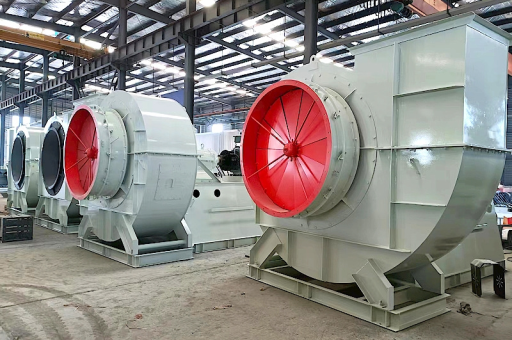
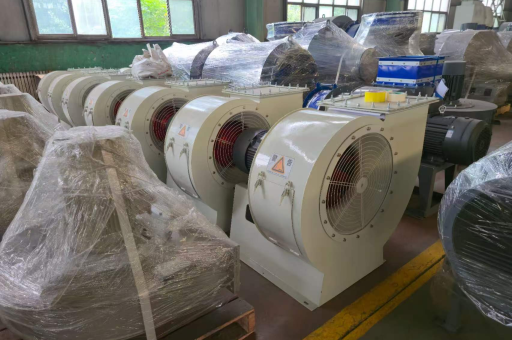
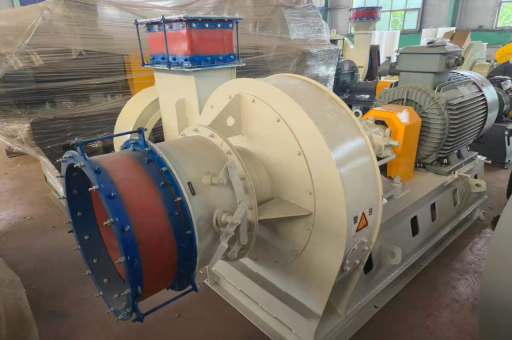
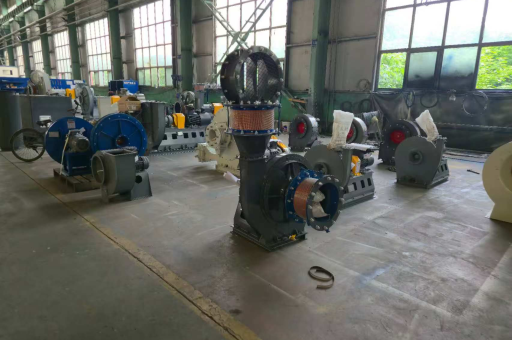
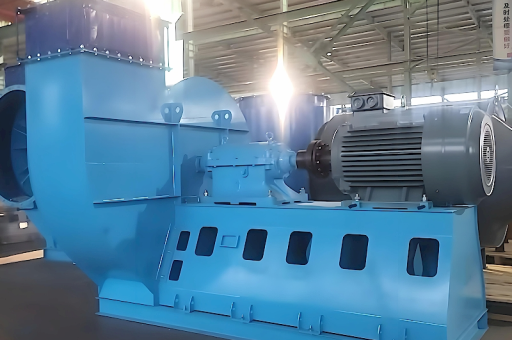
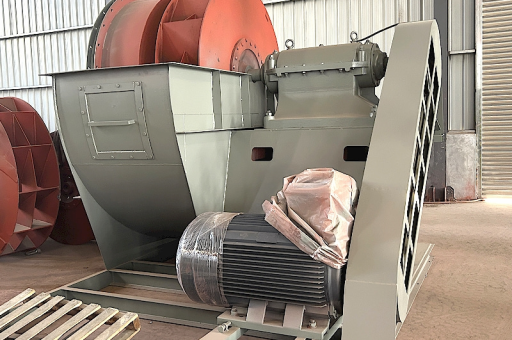
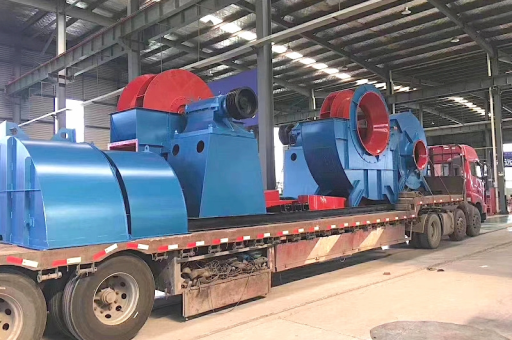
It sounds like you are specifying a fan for a 47,000 m³/h (cubic meters per hour) dust collector exhaust system.
Here is a breakdown of what that specification implies, the typical fan types you would use, and the critical parameters you need to verify to ensure the system works correctly.
The "Big Picture" of a 47,000 m³/h Fan
- Flow Rate: 47,000 m³/h is equivalent to 27,654 CFM (Cubic Feet per Minute). This is a large industrial fan.
- Typical Application: This size is common for:
- Centralized dust collection in medium-to-large woodworking shops.
- Cement, mining, or grain handling (bin venting).
- Welding fume extraction in a large facility.
- Secondary baghouse or cartridge collector exhaust.
The Most Important Missing Parameter: Static Pressure (SP)
The fan size (motor power) depends entirely on the system resistance. You cannot buy a fan for m³/h alone. You must specify Static Pressure (usually in Pa or in.wg) .
- Low Pressure (~500 - 1,000 Pa / 2-4 in.wg): Short duct runs, simple hoods, or a single machine. Motor likely 11kW - 15kW.
- Medium Pressure (~1,500 - 2,000 Pa / 6-8 in.wg): Longer ductwork, a standard baghouse filter, or cyclone. Motor likely 5kW - 30kW.
- High Pressure (~2,500 - 4,000 Pa / 10-16 in.wg): High-efficiency cartridge filters, long duct runs with many branches, or pneumatic conveying. Motor likely 37kW - 55kW or more.
Rule of Thumb: For a dust collector exhaust, a common pressure requirement is 1,500 to 2,500 Pa. Let's assume 2,000 Pa (200 mmWG / 8 in.wg) for this example.
Recommended Fan Types for 47,000 m³/h Dust Exhaust
For this volume and typical dust load, you have two main options:
Option A: Backward Inclined (BI) / Backward Curved (BC)
- Best for: Clean air (post-filter) or low dust loads.
- Pros: High efficiency, stable power curve (non-overloading), quieter.
- Cons: Requires clean air (not for heavy dust).
- Application: Exhaust side of a baghouse or cartridge collector where filtering is already done.
Option B: Radial / Radial Tip / Paddle Wheel
- Best for: Dirty air (pre-filter) or sticky dust.
- Pros: Robust, handles high dust loads, self-cleaning blades.
- Cons: Lower efficiency, noisier.
- Application: Directly pulling dust from grinders, saws, or welding booths.
Option C: Inline / Tubular (Vane Axial or Mixed Flow)
- Best for: Duct mounting where space is tight.
- Pros: Compact, fits directly into ductwork.
- Cons: Lower pressure capability (typically <1,500 Pa). Not great for high-resistance systems.
For a 47,000 m³/h exhaust fan on a dust collector, the most common choice is a Backward Inclined (BI) centrifugal fan on the clean side.
Sizing the Motor (Example Calculation)
Assuming 47,000 m³/h at 2,000 Pa:
-
Air Power (Fan Shaft Power):
- Formula: Power (kW) = (Flow m³/h × Pressure Pa) / (3,600,000 × Efficiency)
- Assume Fan Efficiency = 75% (0.75).
- Power = (47,000 × 2,000) / (3,600,000 × 0.75) = 94,000,000 / 2,700,000 = ~35 kW (47 HP)
-
Motor Power (Safety Margin):
- Add 10-15% for drive loss and safety.
- Recommended Motor: 37 kW (50 HP) to 45 kW (60 HP).
Note: If your pressure is 1,500 Pa, the motor is ~22 kW. If it's 3,000 Pa, the motor is ~55 kW.
Critical Installation Checklist
- Vibration Isolation: A fan this large requires a heavy-duty inertia base and spring isolators. It will shake a roof or floor.
- Variable Frequency Drive (VFD) strongly recommended:
- Allows for soft start (avoids breaker trips).
- Allows you to fine-tune the flow to exactly match your system.
- Saves massive energy if the system runs at 90% speed instead of 100%.
- Duct Velocity: 47,000 m³/h needs a large duct. For conveying dust, you need minimum velocity (e.g., 18-20 m/s for wood dust).
- Duct Area = Flow / Velocity = 47,000 / (3,600 × 20) = ~0.65 m².
- Required duct diameter: ~900 mm (36 inches).
- Spark Protection: If handling combustible dust (wood, metal, grain), the fan must be spark-resistant (AMCA Type A or B, or aluminum impeller).
Summary Recommendation
To purchase the correct 47,000 m³/h Dust Collector Exhaust Fan:
- Determine your system pressure (Pa). This is the #1 priority.
- Choose a Backward Inclined centrifugal fan for clean exhaust or a Radial fan for dirty exhaust.
- Size the motor: Expect 30 kW to 45 kW depending on pressure.
- Mandate a VFD for control and safety.
- Ensure ductwork is 800-1000mm diameter.
If you can provide the target Static Pressure (in Pa or mmWG) and the type of dust (wood, metal, paper, etc.), I can give you a precise fan model recommendation.