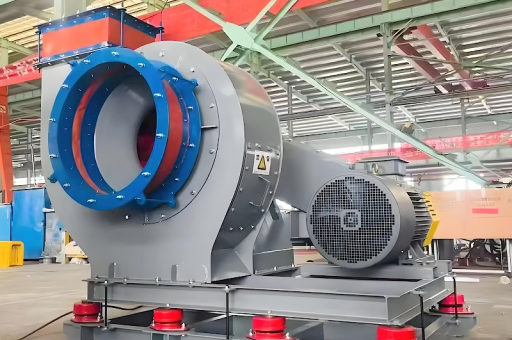
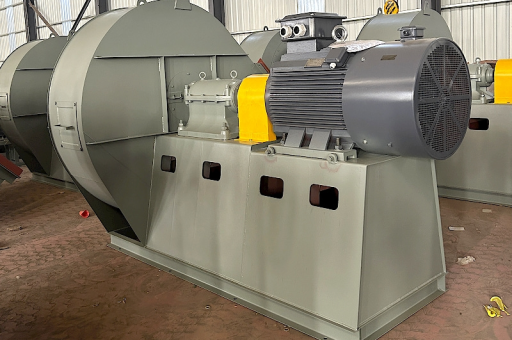
This article's table of contents introduction:
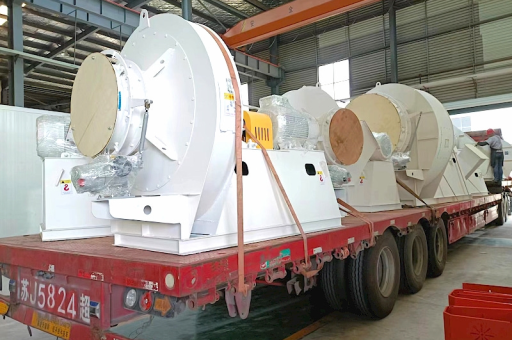
- What is 2205 Stainless Steel?
- Why Use 2205 for Fans?
- Common Applications for 2205 Fans
- Typical Fan Components Made from 2205
- Potential Issues & Considerations
- Comparison with Other Fan Materials
- Summary
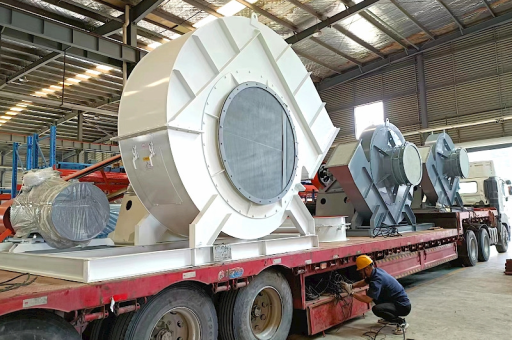
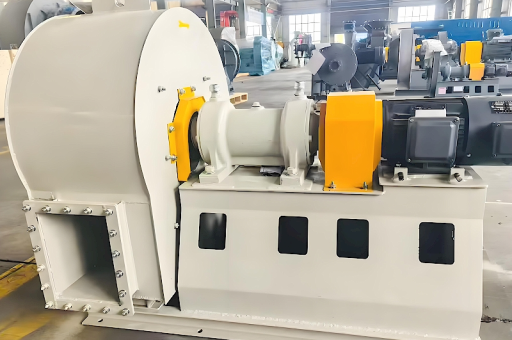
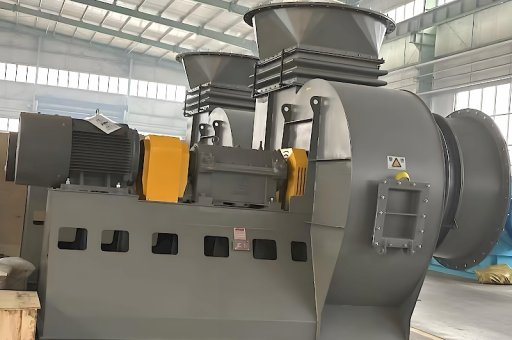
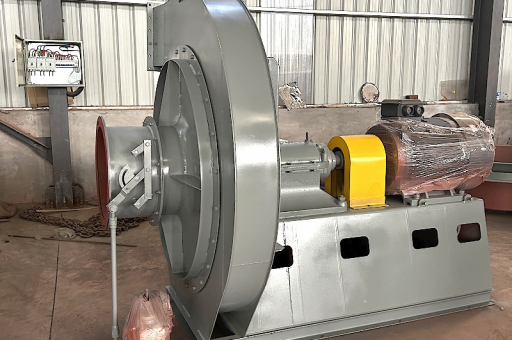
Here is a comprehensive overview of 2205 Stainless Steel and how it is commonly used in fan applications (industrial fans, impellers, housings, etc.).
What is 2205 Stainless Steel?
- Type: Duplex Stainless Steel (Austenitic-Ferritic).
- Composition: Roughly 22% Chromium, 5% Nickel, 3% Molybdenum, and 0.15% Nitrogen.
- Key Trait: It offers a combination of high strength (roughly twice the yield strength of 304/316) and excellent corrosion resistance (superior to 316L in most environments).
Why Use 2205 for Fans?
In harsh environments, standard 304 or 316 stainless steel fans can suffer from pitting, stress corrosion cracking, or fatigue. 2205 is chosen when the fan must survive aggressive conditions.
The main advantages are:
- High Strength: Allows for thinner material sections. This reduces the weight of the fan impeller, reducing bearing loads and allowing for faster rotational speeds.
- Corrosion Resistance:
- Chloride Stress Corrosion Cracking (SCC): 2205 is far more resistant to SCC than 304 or 316L.
- Pitting & Crevice Corrosion: The PREn (Pitting Resistance Equivalent) of 2205 is ~35, compared to ~25 for 316L. This makes it ideal for fans handling sea air (coastal plants), salt-spray, or chemical vapors.
- Erosion Resistance: The high hardness of 2205 makes it more resistant to abrasive particles in the gas stream compared to softer austenitic grades.
- Thermal Properties: It has a lower thermal expansion and higher thermal conductivity than standard austenitic grades, which helps in fan applications with fluctuating temperatures.
Common Applications for 2205 Fans
- Offshore & Marine Ventilation: Handling salt-laden air in engine rooms, pump rooms, and HVAC on ships and oil platforms.
- Chemical Processing Plants: Fume extraction systems handling chlorides, acids (like phosphoric or acetic), and caustic solutions.
- Pulp & Paper Industry: Exhaust fans in bleach plants (where chlorine dioxide is present) and black liquor recovery systems.
- Wastewater Treatment: Aeration blowers and exhaust fans in areas with hydrogen sulfide (H₂S) gas.
- Desalination Plants: Ventilation of brine and chemical treatment areas.
- FGD (Flue Gas Desulfurization): Fans in power plant scrubbers handling acidic condensate and chlorides.
Typical Fan Components Made from 2205
- Impeller (Wheel): The rotating blades and backplate. 2205 allows for higher tip speeds and resistance to fatigue from vibration.
- Housing (Volute/Scroll): The casing that directs airflow.
- Inlet Cone (Inlet Bell): Directs air smoothly into the impeller eye.
- Shaft: Often a 2205 shaft (or a high-strength duplex alloy) to handle torque and resist corrosion at the shaft seal.
- Fasteners & Hardware: Bolts and nuts holding the fan assembly (often made from 2507 super duplex if extreme).
Potential Issues & Considerations
- Fabrication Cost: 2205 is significantly more expensive than 304 or 316L. Welding and forming require more skill.
- Welding: Requires controlled heat input and often a matching filler metal (e.g., ER2209) to maintain the duplex balance. Improper welding can lead to poor corrosion resistance (sigma phase embrittlement).
- Low Temperature: 2205 has a ductile-to-brittle transition temperature. It is not recommended for cryogenic applications (below approx. -40°F / -40°C).
- Galvanic Corrosion: If paired with carbon steel or aluminum in a wet environment, 2205 is the "noble" metal and can accelerate corrosion of the less noble metal.
Comparison with Other Fan Materials
| Feature | 304 SS (Standard) | 316L SS (Marine) | 2205 SS (Duplex) | 2507 SS (Super Duplex) |
|---|---|---|---|---|
| Strength | Medium | Medium | High (2x 304) | Very High |
| Corrosion Resistance | Good | Better | Excellent | Superior (Best) |
| Cost | Low | Medium | High | Very High (Often overkill) |
| SCC Resistance | Poor | Moderate | Very Good | Excellent |
| Typical Use | Mild air | Coastal/Humid | Harsh Chem/Marine | Extreme (Acid/Chlorine) |
Summary
If you are specifying a 2205 stainless steel fan, you are prioritizing long-term reliability in a corrosive, high-stress environment over initial cost. It is the correct choice where a standard 316 fan would fail prematurely due to stress corrosion cracking or pitting, but where the extreme expense of super duplex (2507) is not justified.
Would you like to know about specific welding procedures (e.g., ER2209 filler) or balancing requirements for a 2205 fan impeller?