This article's table of contents introduction:
- Core Technology: The Dry Gas Seal (DGS)
- Why Use a Dry Gas Seal Instead of a Wet Seal?
- Key Components of a DGS Fan System
- Critical Operational Requirements
- Common Applications (Where Zero Leakage is Mandatory)
- Advantages and Limitations
- Comparison to "Sealless" Technology (e.g., Magnetic Drive, Canned Motor)
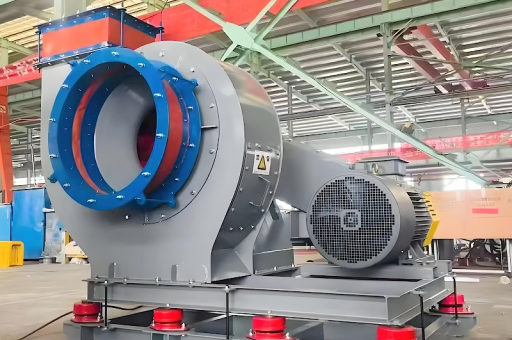
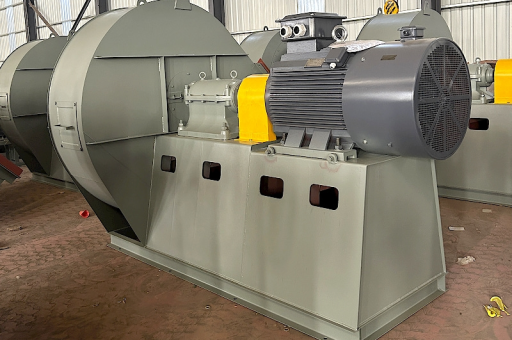
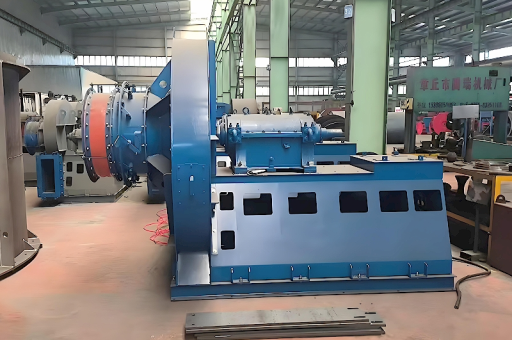
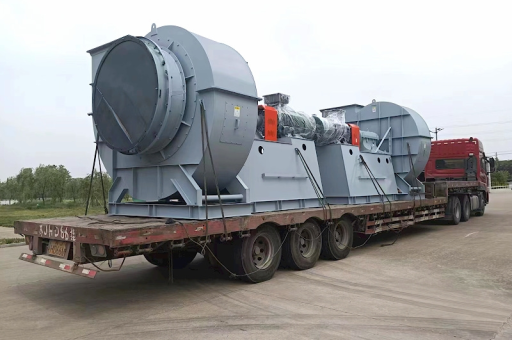
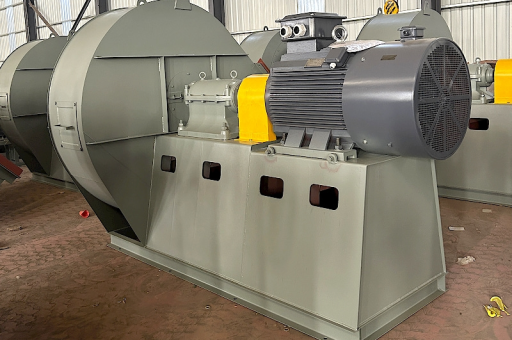
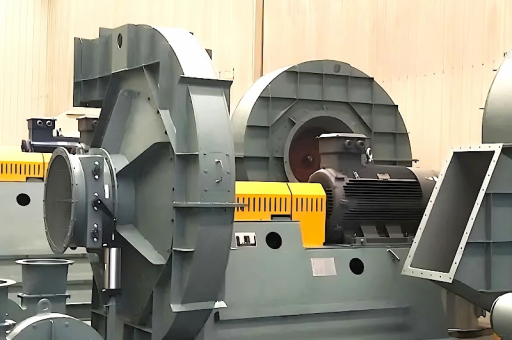
Zero-Leakage Dry Gas Sealed Fan refers to a specialized industrial fan (typically a centrifugal or process gas fan) that utilizes a dry gas seal system to prevent any process gas from escaping into the atmosphere—hence "zero leakage."
This is a critical piece of equipment in industries handling hazardous, toxic, flammable, or valuable gases. Below is a technical breakdown of how it works, its components, key benefits, and common applications.
Core Technology: The Dry Gas Seal (DGS)
Unlike traditional fans that use mechanical seals with liquid lubrication or simple labyrinth seals (which always have some leakage), a dry gas seal is a non-contacting, face-type mechanical seal.
- How it works: The seal consists of a stationary face (often silicon carbide or tungsten carbide) and a rotating face (often carbon). The rotating face has microscopic spiral grooves etched into its surface.
- The "Gas Barrier": When the shaft rotates, these grooves pump a small amount of clean, dry buffer gas (usually nitrogen or the process gas itself) into the gap between the faces. This creates a thin, rigid gas film (as thin as 3-5 microns) that separates the faces completely.
- Zero Leakage Condition: This gas film serves two purposes:
- It acts as a barrier, preventing the internal process gas from escaping to the atmosphere.
- The small amount of barrier gas that does leak (approx. 0.5-5 SCFM) is typically flared, vented to a safe location, or recycled. The process gas itself does not leak out.
Why Use a Dry Gas Seal Instead of a Wet Seal?
| Feature | Dry Gas Seal (DGS) | Wet Mechanical Seal |
|---|---|---|
| Leakage | Near-zero (process gas) | Small (but process gas mixes with seal oil) |
| Support System | Simple (gas panel, filters) | Complex (oil circulation, pumps, coolers) |
| Power Consumption | Lower (no friction from liquid) | Higher (viscous drag from oil) |
| Product Contamination | None (no seal oil) | Seal oil can contaminate process gas |
| Maintenance | Lower (less moving parts) | Higher (oil system maintenance) |
Key Components of a DGS Fan System
- The Fan: Typically a single-stage or multi-stage centrifugal fan designed for high pressure differentials.
- Dry Gas Seal (Primary & Secondary): Most systems use a tandem arrangement:
- Primary Seal: Takes the full process pressure.
- Secondary Seal: Serves as a backup, taking minimal pressure if the primary seal fails.
- Buffer Gas Panel: Supplies clean, dry, and temperature-controlled buffer gas (usually Nitrogen) to the seal.
- Filters: Coalescing filters and particulate filters (down to 0.5 microns).
- Flow/ Pressure Controllers: Maintain a precise differential pressure across the seal.
- Monitoring System:
- Pressure Sensors: Monitor seal cavity pressure.
- Flow Meters: Measure buffer gas consumption to detect seal wear.
- Gas Analyzers: (Optional) Detect if process gas is leaking into the buffer gas.
Critical Operational Requirements
To achieve "zero leakage," the system must maintain specific conditions:
- Buffer Gas Supply: Must be absolutely clean, dry, and at a slightly higher pressure than the process gas. Even a 10-minute interruption can cause seal face contact and failure.
- Dew Point: The buffer gas must have a very low dew point (e.g., -40°F or lower) to prevent moisture from freezing or causing corrosion in the seal faces.
- Particulate Filtration: Any particle larger than 3 microns can damage the precise grooves on the seal face, causing failure.
- Reverse Rotation: The fan must never rotate in reverse, as the spiral grooves are directional. Reverse rotation will cause the seal faces to crash into each other.
Common Applications (Where Zero Leakage is Mandatory)
- Hydrocarbon Processing: Fans handling flare gas, fuel gas, or volatile organic compounds (VOCs) on offshore platforms or refineries.
- Chemical Plants: Fans moving chlorine, phosgene, ammonia, or other toxic gases.
- Pharmaceutical & Specialty Chemicals: Where product purity is critical (preventing oxidation or contamination from seal oil).
- Nuclear Industry: Handling radioactive or inert gases to prevent environmental release.
- Green Hydrogen: Compressors and fans handling hydrogen (which is highly flammable and has the smallest molecular size, making it hard to seal).
Advantages and Limitations
Advantages:
- Environmental Compliance: Meets strict emission standards (e.g., EPA, EU regulations).
- Product Savings: No loss of valuable process gas.
- Reliability: Long seal life (3-5 years typical) if the buffer gas is clean.
- Low Power Consumption: 2-5% less power than equivalent wet seal systems.
Limitations:
- High Initial Cost: The fan, seal, and gas panel are significantly more expensive than a standard fan.
- Sensitivity to Upsets: Very sensitive to dirty or wet buffer gas.
- Complex Monitoring: Requires skilled operators to interpret seal health data.
- Not for Low Pressure: Typically used for differential pressures > 50 psi; standard labyrinth seals are sufficient for low-pressure fans.
Comparison to "Sealless" Technology (e.g., Magnetic Drive, Canned Motor)
Some applications use sealless pumps (magnetic drive or canned motor) instead of a DGS fan. However, for gases, DGS fans are often preferred over sealless technology because:
- Sealless magnetic drives suffer from eddy current losses at high speeds, reducing efficiency.
- Canned motor fans are limited in power and pressure capabilities compared to a DGS fan with an external motor.
- DGS systems allow for larger frame sizes and higher flow rates.
Summary: A Zero-Leakage Dry Gas Sealed Fan is a high-reliability, high-cost solution for moving hazardous or valuable process gases without emission. Its success depends entirely on maintaining a clean, dry, and pressurized buffer gas supply to the seal faces. The primary seal ensures near-zero leakage of the process gas, while the secondary seal acts as a safety backup.