This article's table of contents introduction:
- What is it?
- Why is it needed? (The Problem)
- How does the "Nitrogen Sealed" solution work?
- Key Benefits
- Common Applications
- Important Considerations & Limitations
- Summary
This is a specialized term used primarily in industrial HVAC, critical environment control, and process ventilation systems.
Here is a breakdown of what a Zero-Leakage Nitrogen Sealed Fan is, how it works, and why it is used.
What is it?
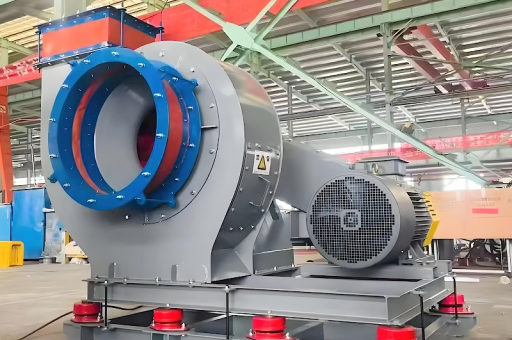
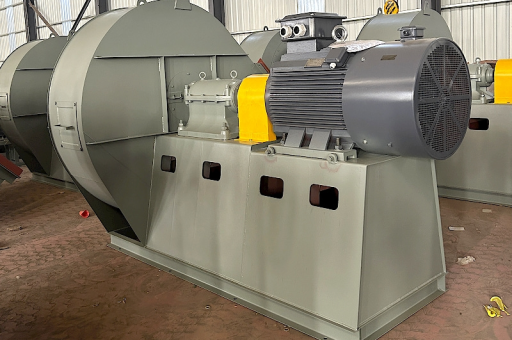
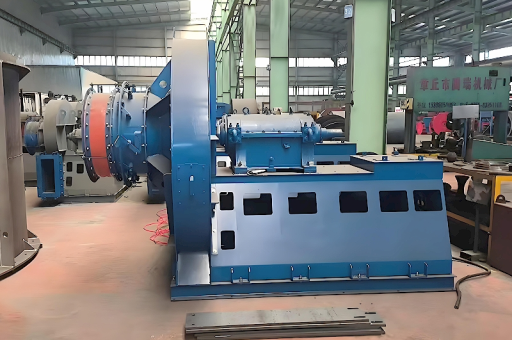
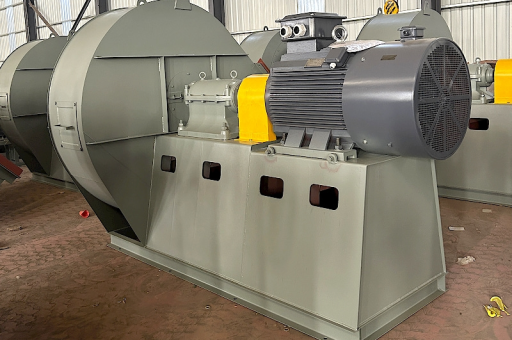
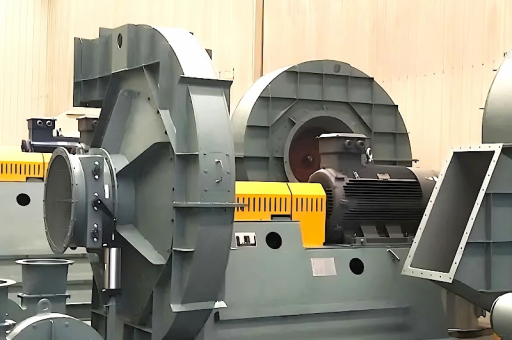
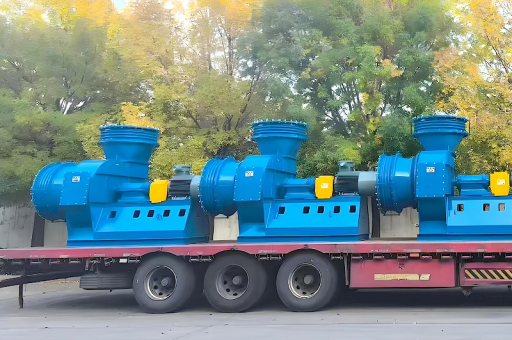
A Zero-Leakage Nitrogen Sealed Fan is a centrifugal fan designed to prevent the escape of hazardous or valuable gases from the fan housing into the surrounding environment, even when the fan shaft passes through the casing wall.
The "Zero-Leakage" claim refers to the seal around the rotating shaft. To achieve this, the fan uses a gas barrier seal system, most commonly utilizing Nitrogen ($N_2$) as the sealing medium.
Why is it needed? (The Problem)
In a standard industrial fan:
- The motor shaft passes through the fan housing to connect to the impeller.
- A mechanical seal or gland packing is used here.
- Over time, these seals wear out, allowing small amounts of the process gas (which might be toxic, flammable, or expensive) to leak into the atmosphere.
- This is called a dynamic seal leak.
How does the "Nitrogen Sealed" solution work?
Instead of trying to stop the leak with a physical barrier alone, this fan uses a double seal arrangement and injects nitrogen between the seals.
Here is the step-by-step flow:
- The Fan Housing (Process Side): Contains the gas being moved (e.g., Hydrogen, Solvent Vapors, Methane).
- Shaft Penetration (The Problem Area): The shaft exits the housing. This is where the two seals are placed.
- Seal 1 (Inner - Process Side): Facing the fan's internal gas.
- Seal 2 (Outer - Atmosphere Side): Facing the outside air.
- The Nitrogen Plenum: A small chamber is created between Seal 1 and Seal 2.
- Nitrogen Injection: Clean, dry, inert Nitrogen is piped into this plenum at a pressure slightly higher than the process gas pressure inside the fan (e.g., 5-10 PSI higher).
- The Result:
- The higher-pressure nitrogen pushes outward.
- Result 1 (Zero Outward Leak): The nitrogen flows into the fan housing (through Seal 1). This prevents the process gas from ever reaching the atmosphere.
- Result 2 (Zero Inward Leak): The nitrogen also flows out to the atmosphere (through Seal 2), preventing outside air from entering the fan.
Simple Analogy: Imagine a straw in a glass of water. If you blow air into the straw, the water can't go up the straw. The nitrogen is the "air" being blown, and the process gas is the "water."
Key Benefits
- Absolute Containment: Guarantees that no hazardous, toxic, or explosive gas escapes. (e.g., moving Hydrogen ($H_2$) in a hydrogenation plant).
- Contaminant Prevention: Keeps oxygen and moisture from entering the fan. (e.g., moving inert gases like Nitrogen or Argon where purity is critical).
- No Seal Wear Leakage: Unlike mechanical seals which wear and eventually leak, the gas barrier is non-contact.
- Explosion Proofing: Removes the risk of an internal gas (like a solvent vapor) reaching a flammable concentration with oxygen.
Common Applications
- Chemical & Pharmaceutical: Moving flammable solvents (Toluene, Acetone, Hexane).
- Oil & Gas: Compressing associated gas, hydrocarbon vapors, or Hydrogen.
- Semiconductor & Solar: Handling toxic gases like Silane, Phosphine, or Boron Trifluoride where zero emissions are mandatory.
- Wastewater Treatment: Handling Biogas (Methane + $CO_2$) with high moisture content.
- Food & Beverage: Piping inert gas (Nitrogen blanketing) without contamination.
Important Considerations & Limitations
| Feature | Consideration |
|---|---|
| Nitrogen Consumption | This is a consumable system. You must have a constant supply of high-pressure nitrogen. Costs are ongoing. |
| Pressure Differential | The Nitrogen supply pressure must be higher than the fan's operating pressure. If the fan pressure spikes, the seal fails and process gas leaks. |
| Not a "Seal-less" Fan | This is still a sealed fan. The absolute zero-leakage solution is a canned motor fan or a magnetic drive fan, which has no shaft penetration at all. This is a cheaper alternative to a mag-drive fan. |
| Maintenance | The mechanical seals (Seal 1 & 2) still wear out eventually, but when they do, the nitrogen provides a temporary buffer until replacement. |
| System Complexity | Requires nitrogen piping, pressure regulators, flow meters, and often a low-flow alarm. |
Summary
A Zero-Leakage Nitrogen Sealed Fan is not a completely new type of fan. It is a standard centrifugal fan fitted with a pressurized double mechanical seal system where Nitrogen is used as the barrier fluid to ensure that no process gas escapes and no outside air enters the fan housing. It is a reliable, albeit consumable, solution for handling hazardous or high-purity gases.