This article's table of contents introduction:
- The Core Function: Moving Air & Creating Velocity
- Why a Centrifugal Fan? The Design Advantages
- Key Types of Centrifugal Fans for Air Classifiers
- Important Selection Parameters (for the Engineer)
- Fan Placement in the System
- Practical Sizing Rules of Thumb
- Maintenance Considerations
- Summary for the Application
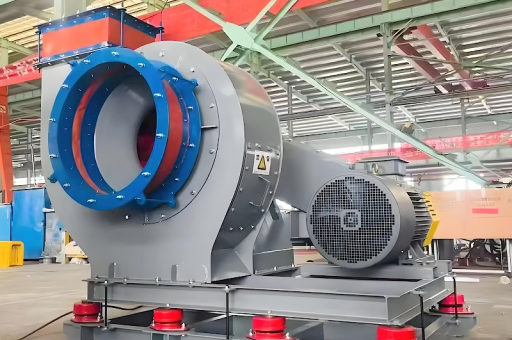
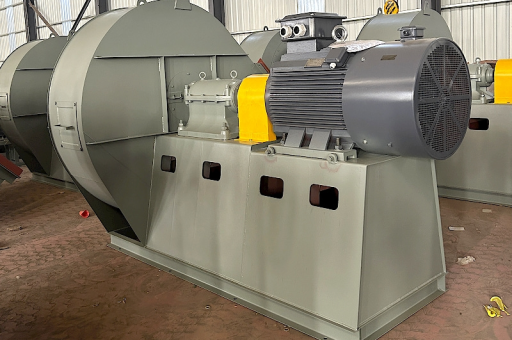
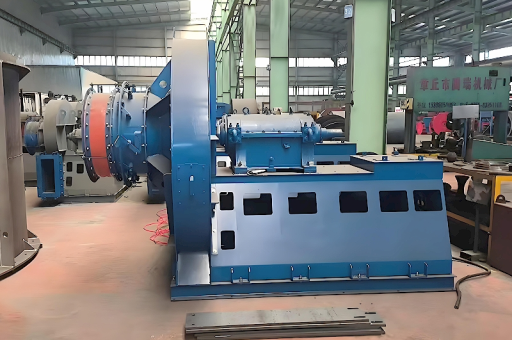
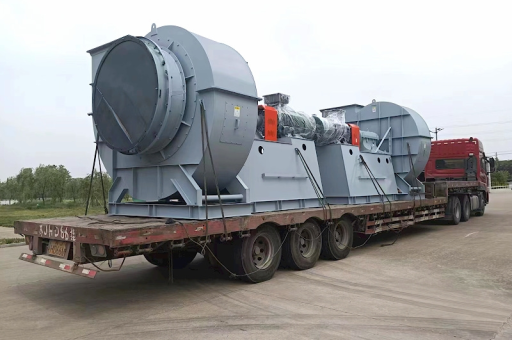
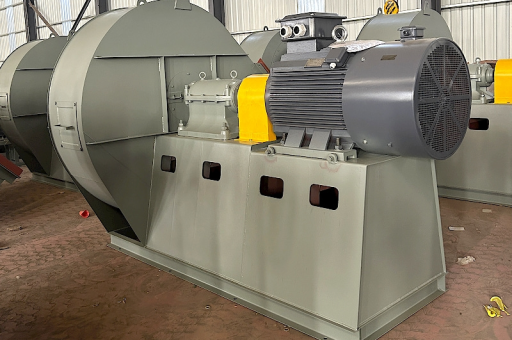
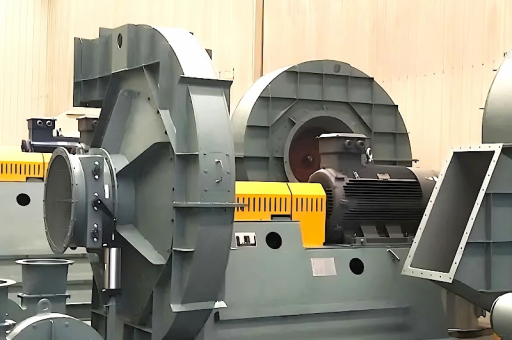
This is a specific and technical application. A centrifugal fan (often called a blower in this context) is the heart of an air classifier system. Without it, the classifier is just a static housing.
Here is a detailed breakdown of the role, design, and selection criteria for a centrifugal fan used in air classification.
The Core Function: Moving Air & Creating Velocity
In an air classifier, the fan does not primarily "suck" material. Instead, it creates a controlled airflow that acts as the sorting medium. The fan's job is twofold:
- Provide Suction (Negative Pressure): Pulls the feed material (powder, fines, etc.) into the classifier inlet.
- Create the "Cut Point" Airflow: It generates the internal air velocity that counteracts gravity and centrifugal forces. This is the classifying air. Particles of different sizes (and densities) react differently to this air stream:
- Fines (small, light) are carried by the air to the outlet (accept product).
- Coarse (large, heavy) are rejected and fall to a separate discharge (reject or oversized).
Why a Centrifugal Fan? The Design Advantages
The choice is almost always a centrifugal fan (rather than an axial fan) because of the following requirements:
- High Pressure: Air classifiers require significant static pressure to overcome the resistance of the ductwork, the classifier wheel (if dynamic), the venturi (if present), and the filter system (baghouse). Centrifugal fans are excellent at generating high pressure.
- Air Volume Control: The classifier's "cut point" is directly controlled by air velocity. The fan's performance curve (Pressure vs. Flow) allows for precise adjustment of the air volume (CFM/m³/h) to change the sharpness of separation.
- Erosion Resistance: The air stream often contains abrasive dust. Centrifugal fans can be constructed with thicker material, hard-faced impellers, and wear liners to withstand this.
- Material Handling (Induced Draft): In many systems, the fan is placed after the classifier (induced draft). This means the fan handles the "fines" product (often dusty, sticky, or electrostatically charged). Centrifugal fans are more tolerant of this than axial fans.
Key Types of Centrifugal Fans for Air Classifiers
The specific blade design is critical. Choosing the wrong one leads to poor efficiency or rapid wear.
| Fan Type | Blade Shape | Best For | Pros | Cons |
|---|---|---|---|---|
| Backward Inclined (BI) | Blades curve away from rotation | Most common. General purpose, clean to moderately dusty air. | High efficiency, stable power curve (non-overloading), good for variable speed drives. | Not ideal for heavy dust loads or sticky materials. |
| Backward Curved (BC) | Blades curve backward from hub | High-efficiency, high-volume applications. | Even higher efficiency than BI, lower noise. | More expensive, can be fragile for abrasive dust. |
| Radial (Paddlewheel) | Straight blades, radial outwards | Heavy dust loads. Abrasive materials (sand, cement, metal powders). | Extremely rugged, easy to repair/rebalance, handles sticky materials. | Lower efficiency, higher noise, power curve can overload motor if not sized correctly. |
| Airfoil | Aerodynamic blade shape | Very high efficiency, clean air (final filtration). | Top efficiency, quietest operation. | Most expensive, very sensitive to dust buildup, fragile. |
Recommendation for most air classifiers handling mineral, chemical, or food powders: A Backward Inclined fan with a duty-rated shaft and bearing system is the standard. For highly abrasive materials like silica or fly ash, a Radial fan with a replaceable liner is the workhorse.
Important Selection Parameters (for the Engineer)
When specifying a fan for an air classifier, you cannot just pick "any" blower. You need these four critical data points from the classifier supplier:
- Required Air Volume (Q): Measured in CFM (Cubic Feet per Minute) or m³/hr. This determines the throughput capacity of the classifier.
- Required Static Pressure (SP): Measured in inches w.g. (water gauge) or Pascals. This includes the sum of:
- Pressure drop across the classifier rotor.
- Pressure drop in connecting ductwork.
- Pressure drop of the dust collection filter (the biggest single loss).
- Crucial: The specific air velocity required at the classification zone.
- Air Temperature & Humidity: Heat or moisture can drastically affect the air density and the fan's ability to generate pressure. (Fan laws are based on standard air density: 0.075 lb/ft³).
- Material Characteristics:
- Abrasiveness: Dictates impeller material (e.g., AR400 steel, hard-facing).
- Stickiness: Dictates if a radial fan or a self-cleaning design is needed.
- Explosibility (Combustible Dust): Requires an explosion-proof motor and possibly a spark-resistant impeller (non-ferrous tip).
Fan Placement in the System
There are two primary configurations:
- Pressure System (Blow-Through): The fan pushes air into the classifier. The fan handles clean (or filtered) air.
- Pro: Fan is protected from wear.
- Con: The classifier itself is under positive pressure, which can cause dust leaks. More difficult to control the feed.
- Induced Draft (Draw-Through / Pull-Through): The fan pulls air through the classifier. The fan handles the product (fines).
- Pro: The classifier is under negative pressure (no dust leaks). Easier to feed material.
- Con: The fan is exposed to the classified fines. It must be designed for erosion (backward-inclined or radial).
Practical Sizing Rules of Thumb
- Air Velocity in Classifier Zone: Typically 1,000 – 4,000 ft/min (5 – 20 m/s) depending on particle size.
- Fan Speed: Most applications use a motor speed of 1750 RPM (4-pole) or 3500 RPM (2-pole). Variable Frequency Drives (VFDs) are standard for precise cut point adjustment.
- Motor Power: A rough estimate is 2-5 HP per 1,000 CFM of air, but this varies wildly based on system resistance.
- Ductwork Velocity: Minimum of 3,500 FPM (18 m/s) to prevent settling of fines in the duct between the classifier and the dust collector.
Maintenance Considerations
- Vibration Monitoring: The #1 killer of fans in this service is imbalance from material buildup on the impeller blades. A simple accelerometer is critical.
- Wear Inspection: Inspect the impeller blades and the housing casing (especially the "scrolled" section near the cut-off) every few hundred hours.
- Bearings: Pillow block bearings must be sized for the heavy radial and axial loads. Regrease regularly.
- Variable Frequency Drives (VFDs): A VFD is almost mandatory for modern air classifiers. It allows the operator to "dial in" the cut point by minutely adjusting the fan speed (and thus the classifying air velocity).
Summary for the Application
| Characteristic | Requirement for Air Classifier Fan |
|---|---|
| Type | Centrifugal (not axial) |
| Blade Style | Backward Inclined (general) or Radial/Self-Cleaning (abrasive/sticky) |
| Key Control | Variable Frequency Drive (VFD) for precise air velocity / cut point |
| Critical Design | Static Pressure capability (must overcome filter & classifier resistance) |
| Wear Protection | Abrasion-resistant materials (AR plate, hard-facing, replaceable liners) |
If you have specific parameters (e.g., "I need 5,000 CFM at 18" w.g. for a limestone classifier"), I can provide a more targeted recommendation.