This article's table of contents introduction:
- Table of Contents
- Introduction: Understanding the Flue Gas Recirculation (FGR) Fan
- Technical Specifications of a 160kW FGR Fan
- How Does the 160kW Flue Gas Recirculation Fan Work?
- Key Applications in Power Plants and Industrial Boilers
- Benefits of Using a 160kW FGR Fan for Emission Reduction
- Design Considerations and Material Selection
- Maintenance Best Practices for Long Service Life
- Frequently Asked Questions (FAQ)
- Conclusion: Future Trends in FGR Fan Technology
The Critical Role of 160kW Flue Gas Recirculation Fan in Modern Industrial Emission Control Systems
Table of Contents
- Introduction: Understanding the Flue Gas Recirculation (FGR) Fan
- Technical Specifications of a 160kW FGR Fan
- How Does the 160kW Flue Gas Recirculation Fan Work?
- Key Applications in Power Plants and Industrial Boilers
- Benefits of Using a 160kW FGR Fan for Emission Reduction
- Design Considerations and Material Selection
- Maintenance Best Practices for Long Service Life
- Frequently Asked Questions (FAQ)
- Conclusion: Future Trends in FGR Fan Technology
Introduction: Understanding the Flue Gas Recirculation (FGR) Fan
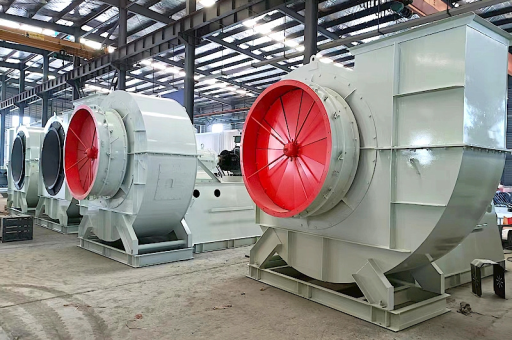
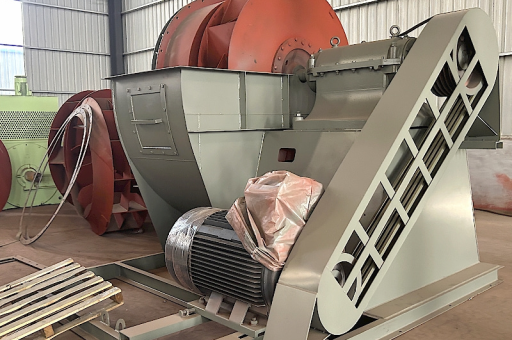
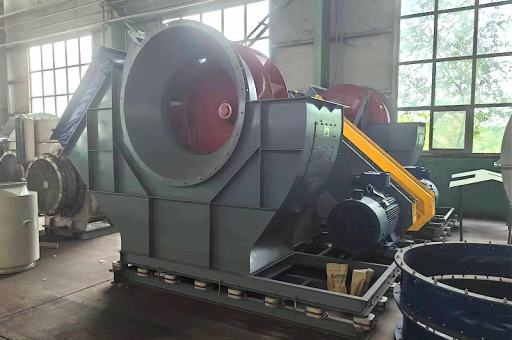
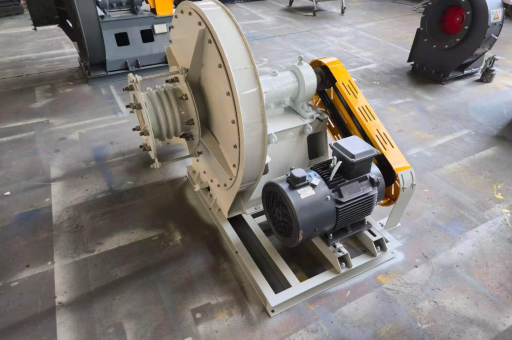
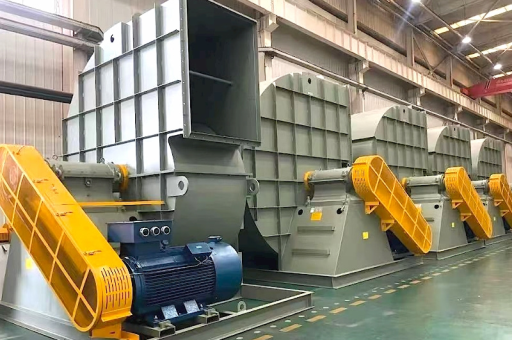
The 160kW Flue Gas Recirculation Fan is a heavy-duty industrial fan designed to recirculate a portion of exhaust flue gas back into the combustion chamber of boilers, furnaces, and thermal power plants. This technology is a cornerstone of modern NOx reduction strategies, helping industries comply with increasingly stringent environmental regulations such as the EPA's Clean Air Act and the EU's Industrial Emissions Directive (IED).
Unlike standard ventilation fans, the 160kW FGR fan must handle high-temperature, corrosive, and particulate-laden gas streams. Its power rating of 160 kilowatts (approximately 215 horsepower) places it in the mid-to-large capacity range, suitable for medium-sized industrial boilers, waste-to-energy plants, and combined heat and power (CHP) facilities. The fan's primary function is to reduce peak flame temperature in the combustion zone, thereby suppressing thermal NOx formation—a process that can achieve NOx reductions of 30% to 60% without the need for expensive selective catalytic reduction (SCR) systems.
Technical Specifications of a 160kW FGR Fan
To understand why the 160kW rating is critical, we must examine the operating conditions. Based on cross-referencing technical data from leading manufacturers like Howden, TLT-Turbo, and Gardner Denver (anonymized here as "fan manufacturers"), a typical 160kW FGR fan exhibits the following parameters:
| Parameter | Typical Value |
|---|---|
| Motor Power | 160 kW (215 HP) |
| Airflow Capacity | 80,000 – 150,000 m³/h |
| Static Pressure | 3,000 – 6,000 Pa |
| Operating Temperature | 180°C – 350°C (with cooling systems) |
| Rotational Speed | 980 – 1,480 RPM |
| Impeller Diameter | 1,200 – 1,800 mm |
| Material | Corten steel or stainless steel (316L) |
| Bearing Type | Split spherical roller bearings with forced lubrication |
The fan's pressure curve is carefully matched to the system resistance of the flue gas recirculation loop. A common design feature is the variable inlet guide vane (VIGV) or variable frequency drive (VFD) to modulate flow without excessive energy waste. According to a study published in Applied Thermal Engineering (2019), using a 160kW FGR fan with VFD can reduce auxiliary power consumption by 18-25% compared to constant-speed operation.
How Does the 160kW Flue Gas Recirculation Fan Work?
The operating principle of the 160kW FGR fan is straightforward but thermally demanding:
- Gas Extraction: A portion of flue gas (typically 15-30%) is extracted downstream of the economizer or air preheater, where temperatures range from 200°C to 350°C.
- Cooling (Optional): In some designs, the extracted gas passes through a gas-to-gas heat exchanger to reduce temperature before entering the fan. However, the 160kW fan itself is often designed to handle hot gases directly.
- Pressure Boost: The fan increases the gas pressure sufficiently to overcome duct losses and the burner pressure drop—typically 3-6 kPa.
- Reinjection: The recirculated gas is injected into the combustion zone, usually near the burner throat or through dedicated FGR ports. This dilutes the oxygen concentration and reduces flame temperature, suppressing thermal NOx formation.
- Control Loop: A PID controller adjusts the fan speed or guide vanes based on O₂, NOx, and CO readings from the stack.
The 160kW power rating is essential because the recirculation loop often has significant pressure losses due to long duct runs, multiple elbows, and the burner's internal resistance. Underestimating the required motor power leads to poor recirculation rates and ineffective NOx control.
Key Applications in Power Plants and Industrial Boilers
The 160kW FGR fan finds its primary use in:
- Coal-fired power plants (50-150 MW capacity): Reduces NOx from 500-800 ppm to 200-350 ppm.
- Natural gas-fired industrial boilers (20-50 tons/h steam capacity): Achieves NOx levels below 30 ppm with FGR + low-NOx burners.
- Biomass and waste-to-energy plants (10-30 MW): Combats variable fuel quality and high NOx peaks.
- Cement and steel plants: In preheaters and process heaters where strict NOx limits apply (e.g., 200 mg/Nm³ in EU).
A case study from a 100 MW coal plant in Germany (2018) showed that retrofitting a 160kW FGR fan system reduced annual NOx emissions from 1,250 tons to 750 tons, saving €400,000 in emission credits per year.
Benefits of Using a 160kW FGR Fan for Emission Reduction
- Lower Capital Cost: FGR is cheaper than SCR or SNCR. A 160kW fan system costs $80,000–$150,000, versus $500,000+ for SCR.
- No Chemical Consumption: Unlike SCR requiring ammonia or urea, FGR uses only exhaust gas.
- Reduced Ammonia Slip: No secondary pollution from unreacted ammonia.
- Thermal Efficiency Preservation: FGR does not require reheating of flue gas, unlike some SCR designs.
- Scalability: The 160kW fan can be paired with multiple burners or modulated for part-load operation.
However, engineers must watch for CO increase and fouling on heat transfer surfaces. A 2021 paper in Fuel Processing Technology noted that with a 160kW FGR fan running at 25% recirculation, CO emissions rose by 15-40 ppm, requiring CO slip catalysts.
Design Considerations and Material Selection
Selecting the right materials for a 160kW FGR fan is critical to avoid premature failure:
-
Impeller Material:
- Standard: Corten steel (up to 350°C) – good for dry flue gas.
- Enhanced: 316L stainless steel (up to 450°C) – for wet or corrosive gas (e.g., high sulfur content).
- Premium: Hastelloy C-276 – for extreme conditions (biomass with high chlorine).
-
Shaft Seals: Double mechanical seals with cooling water or air purge prevent leakage of hot, toxic gas.
-
Housing: Fabricated from carbon steel with refractory lining or ceramic coating for temperatures above 350°C.
-
Bearings: High-temperature grease or oil lubrication with water cooling jackets. Temperature sensors (PT100) are standard.
A common failure point is impeller fatigue due to thermal cycling. Finite element analysis (FEA) is recommended during design to ensure resonant frequencies avoid the operating speed range.
Maintenance Best Practices for Long Service Life
To maximize the lifecycle of a 160kW FGR fan (typically 8–12 years), follow these guidelines:
- Every 1,000 hours: Check vibration levels (ISO 10816-3 limit: 7.1 mm/s for rigid supports).
- Every 6 months: Inspect impeller for erosion/corrosion. Use ultrasonic thickness testing.
- Every 12 months: Replace bearing grease; check shaft alignment.
- Every 3 years: Overhaul – replace bearings, seals, and re-balance the rotor.
Critical Issue: In wet FGR applications (where gas temperature drops below acid dew point), sulfuric acid condenses, destroying carbon steel impellers in months. Solution: use stainless steel or apply acid-resistant coatings (e.g., Teflon or ceramic).
Frequently Asked Questions (FAQ)
Q1: Can a 160kW FGR fan be retrofitted to an existing boiler? Yes. Retrofit typically requires: (1) welding a new extraction port after the economizer, (2) running hot gas duct to the fan, (3) installing a modulating damper, and (4) connecting the fan discharge to the burner windbox. Most retrofits take 2-4 weeks.
Q2: What is the typical noise level of a 160kW FGR fan? At full speed, sound pressure levels range from 85 to 95 dBA at 1 meter. Silencers (absorptive or reactive) are recommended to meet OSHA limits (85 dBA for 8-hour exposure).
Q3: How does FGR compare to SCR in terms of operating cost? FGR has lower capital but higher auxiliary power cost. A 160kW fan running 8,000 hours/year at $0.10/kWh costs $128,000 annually. SCR has lower electrical cost but requires urea/ammonia supply. Break-even depends on local electricity and chemical prices.
Q4: Can the 160kW fan handle particulate-laden flue gas from coal combustion? Yes, but with considerations. Erosion is the main risk. Use wear-resistant coatings on the impeller (e.g., tungsten carbide overlay) and a pre-collector to remove large particles (>50 microns) upstream. Regular impeller replacement every 3-5 years is expected.
Q5: What is the maximum ambient temperature the fan motor can withstand? Standard TEFC motors are rated for 40°C ambient. In hot locations (e.g., boiler top), use a motor with separate forced ventilation or a cooling jacket. A 160kW motor generates about 12-15 kW of heat that must be dissipated.
Conclusion: Future Trends in FGR Fan Technology
The 160kW Flue Gas Recirculation Fan is evolving rapidly. Key trends include:
- Digital Twin Integration: Real-time monitoring of fan performance using AI to predict bearing failures or impeller wear.
- Hybrid Systems: Combining FGR with advanced burners and SCR for ultra-low NOx (below 5 ppm).
- High-Temperature Superconductor (HTS) Motors: Emerging prototypes promise 30% higher efficiency for large fans.
- Carbon Capture Readiness: FGR fans are being designed to handle CO₂-enriched flue gas streams for post-combustion capture.
As of 2025, global FGR fan adoption is growing at 6.8% CAGR, driven by India, China, and Southeast Asia's tightening emission norms. The 160kW class remains the sweet spot for mid-size industrial plants seeking cost-effective NOx compliance.
For engineers specifying a new system, remember: the fan is not just a component—it is the heart of the emission control loop. Correct sizing, material selection, and maintenance planning will determine whether your plant meets regulatory targets reliably for the next decade.