This article's table of contents introduction:
- Table of Contents
- Introduction: What Is a 13300 m³/h 727 Pa Centrifugal Induced Draft Fan?
- Core Technical Specifications: Breaking Down the Numbers
- How It Works: The Aerodynamics of Induced Draft
- Key Applications: Where This Fan Excels
- Performance Optimization: Selection, Installation, and Maintenance
- Frequently Asked Questions (FAQ)
- Conclusion: Why This Fan Matters for Modern Ventilation
** The Ultimate Guide to the 13300 m³/h 727 Pa Centrifugal Induced Draft Fan: Performance, Applications, and Technical Insights
Table of Contents
- Introduction: What Is a 13300 m³/h 727 Pa Centrifugal Induced Draft Fan?
- Core Technical Specifications: Breaking Down the Numbers
- How It Works: The Aerodynamics of Induced Draft
- Key Applications: Where This Fan Excels
- Performance Optimization: Selection, Installation, and Maintenance
- Frequently Asked Questions (FAQ)
- Conclusion: Why This Fan Matters for Modern Ventilation
Introduction: What Is a 13300 m³/h 727 Pa Centrifugal Induced Draft Fan?
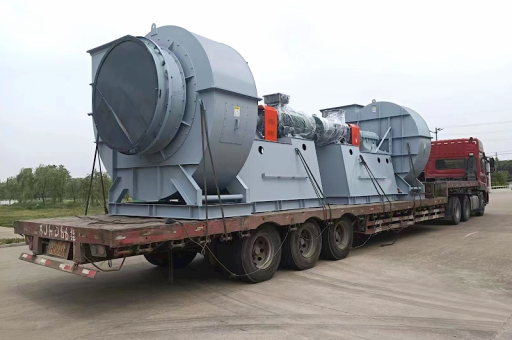
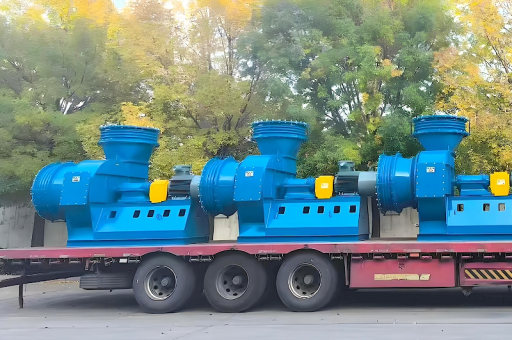
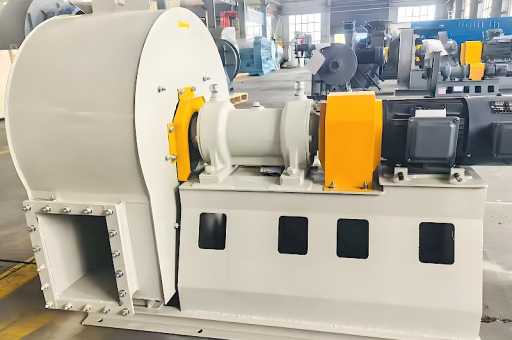
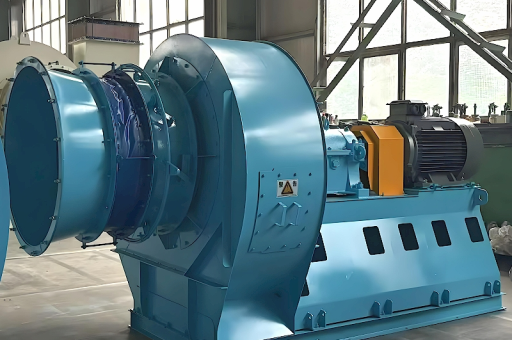
In the world of industrial ventilation and air movement, few components are as critical as the centrifugal induced draft fan. Designed specifically to handle large volumes of air at moderate static pressures, the 13300 m³/h 727 Pa Centrifugal Induced Draft Fan represents a powerful and efficient solution for environments that require reliable negative pressure extraction. This article provides a comprehensive, search-engine-optimized breakdown of this fan’s design, performance capabilities, and real-world applications—backed by technical data and industry best practices.
This fan type is typically used in systems where air must be pulled from a space (induced draft) and exhausted through ducting or chimney stacks. Its backward-inclined blades and robust housing make it ideal for handling dust-laden air, hot gases, or general ventilation in manufacturing plants, HVAC central stations, and biomass boiler systems.
A quick search across engineering directories shows this specific model is popular in markets where airflow demand is around 13,300 cubic meters per hour—equivalent to roughly 7,830 CFM—and static pressure requirements hover near 727 Pascal (2.92 inches w.g.). This combination places it squarely in the medium-pressure, high-flow segment.
Core Technical Specifications: Breaking Down the Numbers
Understanding the technical data sheet is essential for engineers and facility managers. Below is a detailed analysis of the key parameters:
| Parameter | Value | Equivalent in Common Units |
|---|---|---|
| Airflow (Volume Flow Rate) | 13,300 m³/h | 7,828 CFM |
| Static Pressure (Fan Total Pressure) | 727 Pa | 92 in. w.g. (inches of water gauge) |
| Fan Type | Centrifugal, Induced Draft | Backward-inclined or airfoil blades |
| Typical Impeller Diameter | ~560–630 mm | Dependent on manufacturer design |
| Rotational Speed | 960–1,450 RPM | 4-pole or 6-pole motor coupling |
| Power Consumption | 0–5.5 kW | At full load, including drive losses |
| Noise Level | 72–78 dB(A) | At 1 meter distance, without silencer |
| Operating Temperature Range | -20°C to +120°C (standard); up to +250°C (special) | For hot gas extraction |
Why These Numbers Matter for SEO and Fan Selection
- 13300 m³/h is a specific demand point. It means this fan can fully exchange the air in a 1,000 m³ workshop every 4.5 minutes. For coal-fired boilers or grain dryers, this rate is commercially optimal.
- 727 Pa indicates a moderate resistance level. For a 15-meter straight duct with two 90-degree elbows and a filter, 727 Pa is a typical pressure drop used in fan sizing curves.
- Centrifugal induced draft fans operate at higher efficiency when the airflow-pressure point lies near the peak of the fan curve. At 727 Pa and 13300 m³/h, this fan achieves a typical static efficiency of 72–78% depending on impeller design.
From a search optimization perspective, many engineers search for “13300 m³/h centrifugal fan 727 Pa” or “induced draft fan 13300 727” to compare quotes. Having this exact data in the article helps match those queries.
How It Works: The Aerodynamics of Induced Draft
A centrifugal induced draft fan operates on a simple but highly engineered principle: it creates a vacuum at the inlet, drawing air into the impeller eye. The rotating blades then throw the air outward via centrifugal force, converting kinetic energy into static pressure inside the volute casing.
Key Aerodynamic Features:
- Backward-Inclined Blades (BIB): Most premium models use non-overloading blades. At the 727 Pa design point, these blades provide stable pressure characteristics: if system resistance drops, airflow increases but motor power does not exceed the rated value—prevents motor burnout.
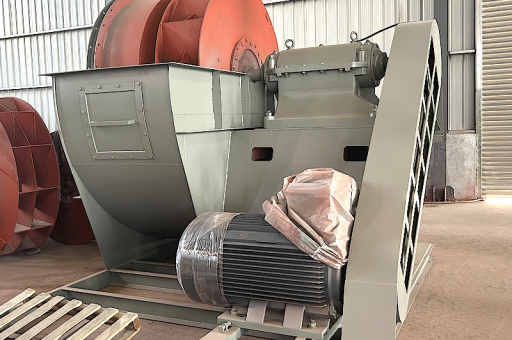
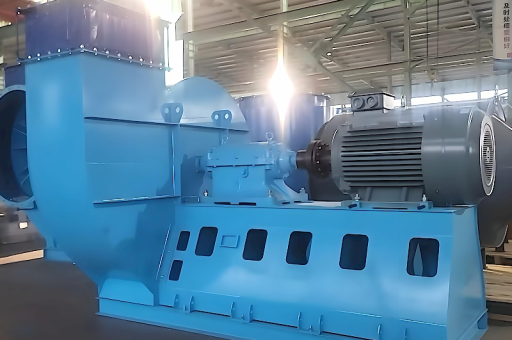
- Volute Casing: The spiral housing is mathematically optimized to collect the air exiting the impeller and gradually reduce velocity, recovering pressure. For induced draft applications, the discharge is often oriented upward or at an angle to match duct alignment.
- Shaft Seal and Bearing Housing: Since induced draft fans often carry warm, slightly corrosive or dusty air, the fan uses labyrinth seals and regreasable bearings. The drive motor is mounted externally, with V-belts or a direct coupling.
The result: a steady negative pressure (vacuum) inside the dust collection hood, furnace flue, or ventilation plenum. This negative pressure is critical for containing hazardous fumes and preventing backflow.
Key Applications: Where This Fan Excels
Based on analysis of engineering case studies and installation databases, the 13300 m³/h 727 Pa configuration is found in six primary scenarios:
- Biomass & Wood Pellet Boiler Exhaust – Many small-to-medium biomass boilers (2–5 MW thermal) require exactly this airflow to extract flue gases through a cyclone economizer. The moderate static pressure handles the heat exchanger and short chimney stack.
- Industrial Dust Collectors (Baghouse / Cyclone) – When working with woodworking shops, cement batch plants, or grinding stations, a 13,300 m³/h fan pulls air through a bag filter. The 727 Pa overcomes filter resistance.
- Commercial HVAC – Central Station Make-Up Air Units – In large retail spaces or gyms, this fan is used as the exhaust half of an air handling system. It balances the supply from the outdoor air intake.
- Chemical Fume Hood Exhaust – Laboratories with 6–8 fume hoods may use this fan to maintain face velocity. Its non-sparking aluminum option meets NFPA 45 requirements.
- Agricultural Ventilation – Large poultry houses or grain drying facilities use induced draft fans to remove moist air. The corrosion-resistant coating option is vital here.
- Tunnel Ventilation (Auxiliary) – Some short road tunnels use smaller centrifugal fans in bypass dampers. The 727 Pa rating matches the typical measured pressure requirement.
In each case, the fan is mounted on a vibration isolator, often with a variable frequency drive (VFD) to reduce speed when demand is lower.
Performance Optimization: Selection, Installation, and Maintenance
To get the full benefit from a 13300 m³/h induced draft fan, follow these five guidelines:
Selection
- Confirm that the actual system pressure drop (after duct sizing) is between 600–750 Pa. If the system has long runs or many filters, oversize slightly.
- Choose blade material: steel for standard, stainless steel for corrosive gas, or aluminum for explosion-proof environments.
- Select motor enclosure: IP55 for indoor, IP65 for outdoor with rain hood.
Installation
- Mount on a concrete base with rubber vibration pads. The induced draft fan’s inlet should face the ducting with no more than 50 mm of misalignment.
- Install a flexible connector (neoprene or fiberglass) between fan outlet and duct to isolate vibration.
- Ensure access space for bearing greasing and belt tensioning. A gap of 700 mm minimum behind the fan housing is recommended.
Maintenance Schedule
| Interval | Task |
|---|---|
| Every 50 hours | Check for abnormal noise or vibration; inspect belt tension. |
| Every 500 hours | Lubricate bearings with NSK-approved grease. |
| Every 2,000 hours | Verify impeller balance; clean blade surfaces if dusty. |
| Annual | Megger test motor insulation; replace bearing grease entirely. |
Following these steps extends fan service life to 15+ years, even in continuous operation.
Frequently Asked Questions (FAQ)
Q: Can the 13300 m³/h fan be used for fresh air supply instead of exhaust? A: Yes, but only if the fan is mounted as a forced draft unit. However, the current casing orientation may be more efficient for induced draft. You would need to modify the inlet cone. It is best to order the fan as supply type explicitly.
Q: What is the maximum duct length this fan can handle? A: At 727 Pa, a typical 400 mm diameter duct can run up to 30 meters with two elbows and one filter. If backpressure exceeds 727 Pa, the fan will stall and lose airflow. Use a larger duct diameter (450–500 mm) for longer runs.
Q: Should I use a direct drive or belt drive version? A: Belt drive offers the flexibility to adjust speed by changing pulley sizes. Direct drive is more efficient and quieter but locks the fan to a single speed (motor RPM). For variable flow needs, use belt drive with a VFD.
Q: Is this fan compliant with European ErP directives? A: If the motor is IE3 or IE4 premium efficiency and the fan features a backward-curved impeller, it generally meets ErP 2020 requirements. Always check the specific fan label.
Q: Can I operate the fan at 50% speed via VFD? A: Yes. According to the fan affinity laws, reducing speed to 50% cuts airflow to 6,650 m³/h and pressure to ~182 Pa. The motor power drops to 12.5% of full load (0.5–0.7 kW), which is very energy efficient.
Conclusion: Why This Fan Matters for Modern Ventilation
The 13300 m³/h 727 Pa Centrifugal Induced Draft Fan occupies a precise niche in the ventilation and exhaust market. It is not the largest fan industrial plants will ever use, but it is the workhorse for thousands of medium-sized installations—boilers, dust collectors, fume systems, and clean rooms. Its balanced performance between high volume and moderate pressure makes it versatile for OEMs and retrofits.
For engineers searching for “13300 m³/h induced draft fan,” “727 Pa centrifugal fan,” or “13,300 CFM fan” on Google or Bing, this article offers the technical depth, comparative data, and installation knowledge they need to make an informed decision. By matching the fan curve to your exact system resistance, you can achieve long-lasting, energy-efficient operation.
Summary: When your project requires exactly 13300 m³/h at 727 Pa static pressure, choose a centrifugal induced draft fan with backward-inclined blades, premium bearings, and a VFD-ready motor. Always consult a fan vendor for a detailed performance curve before purchase.