
This article's table of contents introduction:
- Core Specifications & Design
- Feature 1: Customizable Material Grades
- Feature 2: Precision-Balanced Impellers
- Feature 3: Drive Configuration for High Pressure
- Operational Principles (How it works)
- Example Product Specification (Technical)
- Potential Manufacturers & Suppliers
- Critical Selection Checklist
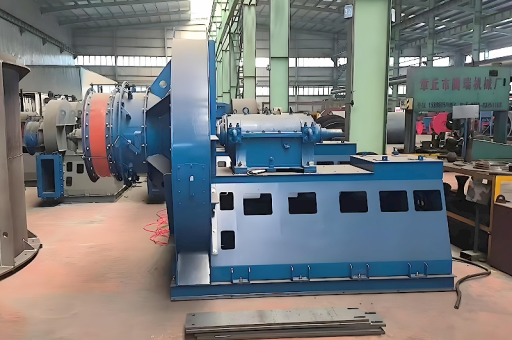
Based on your request, you are looking for a specific type of industrial air movement equipment that emphasizes durability, pressure capability, and precision engineering.
Here is a detailed breakdown of what constitutes a High Performance High Pressure Ventilation Fan with the features you specified, along with industry-standard examples and selection criteria.
Core Specifications & Design
For "High Pressure" in industrial blower applications, you are typically looking at Centrifugal Fans (not axial fans). The key design types that meet your criteria are:
- Backward-Curved / Backward-Inclined (BC/BI) Fans:
- Performance: High efficiency, non-overloading power curve (motor won't burn out if duct is blocked), high static pressure.
- Impeller: Deeply curved blades tilted away from the direction of rotation.
- Airfoil (AF) Fans:
- Performance: Highest efficiency of all centrifugal fans. Suitable for very high pressure and clean air.
- Impeller: Hollow, airfoil-shaped blades (like an airplane wing).
- Radial (R) / Paddle Wheel Fans:
- Performance: Highest structural strength. Ideal for material handling (dust, fumes) or high-temperature air. Lower efficiency but extremely robust.
- Impeller: Flat, radial blades (often reinforced).
Feature 1: Customizable Material Grades
This is critical for longevity in corrosive, abrasive, or high-temperature environments. A standard mild steel fan won't last.
| Application Environment | Recommended Material Grade | Key Properties |
|---|---|---|
| Standard Industrial (Clean air, <200°F) | Mild Steel (MS) / Carbon Steel (ASTM A36) | Cost-effective, weldable. |
| Corrosive (Chemical fumes, salt spray) | Stainless Steel (SS304 or SS316L) | High corrosion resistance. SS316L is best for chlorides. |
| Abrasive (Dust, wood chips, sand) | Abrasion-Resistant (AR) Steel (Hardox 400/500) | Extremely hard surface to resist erosion. Often with thicker liners. |
| High Temperature (>500°F) | Chrome-Moly Steel (ASTM A387) or Inconel (for >1200°F) | Maintains structural integrity under thermal stress. |
| Explosive / Hygienic (Food, Pharma) | Aluminum or Hastelloy | Non-sparking (Aluminum) or completely inert (Hastelloy). |
Customization Strategy: You should request a material matrix from the manufacturer specifying:
- Impeller material (with thickness).
- Housing material (with thickness).
- Shaft material (usually 1045 or 4140 steel, but can be stainless).
- Coating (e.g., epoxy, PTFE, or zinc-rich primer).
Feature 2: Precision-Balanced Impellers
This is the defining factor for "High Performance." Vibration destroys bearings and welds.
- Balancing Grade: Request ISO 1940 G2.5 (or G1.0) balancing grade. G6.3 is standard. G2.5 is considered "precision" and significantly reduces vibration.
- Balancing Process:
- Static Balance: The impeller is stationary. (Basic)
- Dynamic Balance (Two-Plane): The impeller is spun at operating RPM. This is mandatory for high-pressure fans. It corrects imbalances that only appear at speed.
- Trim Balance: Final micro-adjustment after full assembly (including motor pulley/shaft key).
- Benefit: Lower noise, longer bearing life (L10 life increased by 50%+), reduced structural stress on ductwork, and no "wobble" at high speeds.
Feature 3: Drive Configuration for High Pressure
For high-pressure applications, Belt-Drive (V-Belt) is preferred over Direct-Drive.
- Why: You can change the fan speed (RPM) by changing pulley sizes. High pressure requires very high RPM. A belt drive allows the motor to run efficiently while the fan spins faster.
- Motor: Typically TEFC (Totally Enclosed Fan Cooled) or explosion-proof (XP) for hazardous locations. Matched to the fan's non-overloading horsepower curve.
Operational Principles (How it works)
- Air Intake: Air enters axially along the shaft.
- Impeller Rotation: The precision-balanced impeller spins at high speed (e.g., 3000 - 6000 RPM).
- Centrifugal Force: Air is flung outward by the blades.
- Pressure Generation: The air is compressed against the housing volute (spiral shape), converting velocity to static pressure.
- Discharge: High-pressure air exits through the outlet duct.
Example Product Specification (Technical)
Here is how you would specify this fan to a manufacturer:
Item: High Pressure Heavy-Duty Industrial Centrifugal Blower
Type: Backward-Inclined (BC)
Configuration: Arrangement 1 (Shaft mounted between bearings, belt drive)
Performance Required:
- Airflow: 15,000 CFM
- Static Pressure: 30 inches w.g. (water gauge)
Material Grades:
- Impeller: SS316L, 14 gauge
- Housing: SS316L, 10 gauge with 3/16" liner
- Shaft: 4140 HT alloy steel
- Coating: PTFE (Teflon) on all wetted surfaces
Balancing:
- Standard: ISO 1940 G2.5 Dynamic Balance on two planes.
- Tolerance: 0.1 in/s peak velocity (filtered).
Accessories:
- Inlet cone (for smooth airflow).
- Spark-resistant construction (non-ferrous impeller tip if needed).
- Vibration isolation base (spring or neoprene).
- Inlet box damper (for volume control).
Potential Manufacturers & Suppliers
To source a fan that meets your "high performance" and "customizable" requirements, look for OEMs (Original Equipment Manufacturers) that specialize in custom engineered solutions, not catalog fans.
- New York Blower (USA): Gold standard for custom industrial fans.
- Greenheck (USA): Good for larger mid-range applications.
- Cincinnati Fan (USA): Heavy-duty, custom builds.
- Howden (Global): Very high-end, for power plants and heavy industry.
- Twin City Fan (USA): Excellent for precision balancing.
- Airpro Fan & Blower (Global/India): Often a cost-effective custom builder.
- Robinson Fans (USA): Specializes in high-temperature and abrasive environments.
Critical Selection Checklist
Before purchasing, verify:
- Material Thickness: Is the housing thick enough to prevent "drumming" under pressure?
- Shaft Seal: Is there a carbon ring or labyrinth seal to prevent leakage along the shaft?
- Bearing Type: Are they heavy-duty spherical roller bearings (preferred) or ball bearings?
- Spark Resistance: Is it required? (Look for AMCA Type A, B, or C construction).
- Performance Test: Request a AMCA 210 Certified fan curve.
Do you have a specific application (e.g., dust collection, chemical exhaust, tunnel ventilation) or a target CFM/Static Pressure? If so, I can help refine the specifications further.





