
This article's table of contents introduction:
- Table of Contents
- Introduction: The Critical Role of Centrifugal Blowers in Cement Milling
- Why Wear Resistance Matters in Cement Mill Environments
- High-Efficiency Design: Balancing Airflow and Energy Consumption
- Customization: Tailoring Blower Specifications to Cement Processing Needs
- Material Science & Construction: From Hardfacing to Composite Alloys
- Performance Metrics: Pressure, Flow Rate, and Longevity
- Installation & Maintenance Best Practices for Cement Facilities
- Frequently Asked Questions (FAQ)
- Conclusion: Future-Proofing Cement Operations with Advanced Blower Technology
** High-Efficiency Wear-Resistant Customizable Centrifugal Blower for Cement Mill Applications: Engineering Durability and Performance
Table of Contents
- Introduction: The Critical Role of Centrifugal Blowers in Cement Milling
- Why Wear Resistance Matters in Cement Mill Environments
- High-Efficiency Design: Balancing Airflow and Energy Consumption
- Customization: Tailoring Blower Specifications to Cement Processing Needs
- Material Science & Construction: From Hardfacing to Composite Alloys
- Performance Metrics: Pressure, Flow Rate, and Longevity
- Installation & Maintenance Best Practices for Cement Facilities
- Frequently Asked Questions (FAQ)
- Conclusion: Future-Proofing Cement Operations with Advanced Blower Technology
Introduction: The Critical Role of Centrifugal Blowers in Cement Milling
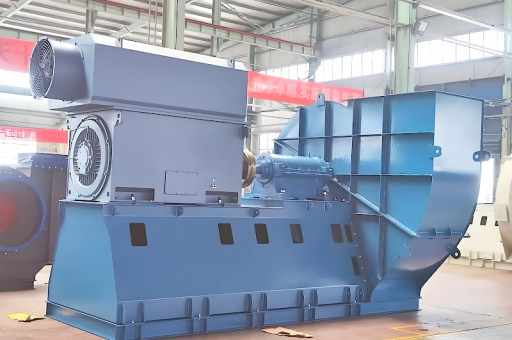
In modern cement manufacturing, the High-Efficiency Wear-Resistant Customizable Centrifugal Blower serves as a vital component for pneumatic conveying, dust collection, and kiln combustion air supply. These blowers must handle abrasive cement dust, high-temperature gas streams, and continuous operation cycles that can exceed 8,000 hours per year. Unlike standard industrial fans, a centrifugal blower designed specifically for cement mills must integrate advanced wear protection, variable aerodynamic profiles, and energy-saving impeller geometries.
As the industry pushes toward lower carbon footprints and stricter particulate emission limits, the demand for blowers that combine high volumetric efficiency with extended service intervals has never been higher. A custom-engineered centrifugal blower can reduce power consumption by up to 18% compared to conventional units while simultaneously decreasing unplanned downtime caused by abrasive erosion.
Why Wear Resistance Matters in Cement Mill Environments
Cement milling involves raw material grinding, clinker cooling, and finished product transport. In every stage, airborne particles of limestone, silica, and iron oxide accelerate mechanical wear. A standard blower impeller may fail within 6–12 months due to erosive wear on blade leading edges and casing walls.
Key wear factors include:
| Factor | Impact on Blower |
|---|---|
| Particle velocity > 25 m/s | Accelerated erosion at blade tips |
| Particle concentration > 50 g/m³ | Throat and diffuser degradation |
| Operating temperature range (80°C–350°C) | Thermal fatigue and corrosion synergy |
A wear-resistant centrifugal blower addresses these challenges through:
- Tungsten carbide hardfacing on impeller blades
- Replaceable wear liners in the volute casing
- Chromium-molybdenum alloy housings for high temperature strength
- Ceramic coating options for extreme abrasive duty
High-Efficiency Design: Balancing Airflow and Energy Consumption
Efficiency in a centrifugal blower is defined by the ratio of aerodynamic work output to electrical energy input. For cement mill applications, the target is typically static efficiency above 82% at the design point.
Design features that drive high efficiency:
- Backward-curved impeller blades: Reduce turbulence and maintain stable pressure across flow variations.
- Variable inlet guide vanes (VIGV): Allow precise airflow modulation without throttling losses.
- Computational Fluid Dynamics (CFD)-optimized volute: Minimizes recirculation zones and noise.
- High-speed direct-drive motors (up to 3600 RPM): Eliminate belt losses and misalignment issues.
A properly customized blower can achieve a specific power consumption of 0.15–0.18 kWh per 1000 m³/h per 1000 Pa, which translates to substantial annual savings in a 24/7 operation.
Customization: Tailoring Blower Specifications to Cement Processing Needs
No two cement plants have identical airflow demands. A customizable centrifugal blower allows the precise matching of impeller diameter, blade angle, motor power, and sealing configuration to specific process requirements.
Common customization parameters:
| Parameter | Options | Cement Application Example |
|---|---|---|
| Impeller diameter | 500 mm – 2000 mm | Kiln ID fan (large volume) |
| Blade angle | 30°–60° backward curved | Raw mill separator blower |
| Shaft seal type | Labyrinth, mechanical, purge air | Dust collector fan (fine dust) |
| Motor type | IE4 permanent magnet, VFD-ready | Energy cost-sensitive plants |
| Inlet box orientation | 0°, 90°, 180° | Space-constrained layouts |
Customization also extends to dual-bearing pedestal designs for extreme heat and split-housing configurations for easier impeller access during maintenance.
Material Science & Construction: From Hardfacing to Composite Alloys
The longevity of a cement mill blower hinges on material selection. A typical high-efficiency wear-resistant blower uses a layered approach:
- Impeller base material: ASTM A36 or Corten steel for structural strength.
- Protective overlay: Stellite or Colmonoy hardfacing applied via plasma transferred arc (PTA) welding.
- Casing liners: AR400 or 500 Brinell hardness steel, bolted for periodic replacement.
- Shaft material: 4140 alloy steel heat-treated to 28–32 HRC.
- Fan blades: Optional ceramic-tiled leading edges for top-tier abrasion resistance.
Advanced manufacturers now offer nano-composite coatings that reduce friction and prevent dust adhesion, further enhancing efficiency and balance stability.
Performance Metrics: Pressure, Flow Rate, and Longevity
For cement mill applications, the blower must deliver:
- Total pressure: 1500 – 8000 Pa (depending on duct system resistance)
- Airflow: 20,000 – 300,000 m³/h for main kiln systems
- Speed: Up to 3000 rpm for direct drive; up to 4500 rpm for belt-driven configurations
- Noise level: Below 85 dBA at 1 meter (with silencer options)
- Bearing life (L10): > 100,000 hours with proper lubrication
Reliability data from field installations shows that a customizable centrifugal blower with hardfaced impellers can achieve an MTBF (Mean Time Between Failures) of > 18 months, compared to 8 months for non-coated standard units.
Installation & Maintenance Best Practices for Cement Facilities
To maximize the lifespan of a wear-resistant centrifugal blower, cement plant operators should follow these guidelines:
- Foundation isolation: Use spring or rubber vibration isolators to prevent fatigue cracks.
- Inlet duct straightening: A minimum of 3–5 diameters of straight duct before the blower inlet reduces turbulence-induced erosion.
- Pre-lubrication: Run oil circulation for 30 minutes before start-up to protect bearings.
- Vibration monitoring: Install accelerometers on both bearing housings; set alarm at 4.5 mm/s RMS.
- Inspection schedule: Visual inspection of wear liners every 500 operating hours; impeller hardfacing check every 2000 hours.
- Spare parts strategy: Stock at least one complete impeller and one set of casing liners for critical blowers.
Frequently Asked Questions (FAQ)
Q1: What is the typical payback period for upgrading to a high-efficiency centrifugal blower in a cement mill?
A: Most installations achieve a payback period of 8–16 months through energy savings (10–20% reduction) and reduced maintenance downtime.
Q2: Can a centrifugal blower be retrofitted into an existing cement plant duct system?
A: Yes. Customizable designs allow inlet and outlet flange orientations, motor base dimensions, and foot-mounted or C-face adapters to match legacy layouts.
Q3: How does hardfacing thickness affect blower performance?
A: Hardfacing layers (typically 2–5 mm) do not significantly alter aerodynamic efficiency, but they increase impeller weight slightly, which may require re-balancing after application.
Q4: What is the maximum particulate concentration a wear-resistant blower can handle?
A: With proper casing liners and hardfaced impellers, a centrifugal blower can handle up to 100 g/m³ of fine cement dust continuously without critical wear.
Q5: Are there differences between a blower designed for a wind turbine application and a cement mill blower?
A: Yes. While both may use centrifugal principles, a wind turbine application focuses on variable-speed power generation and gust handling, whereas a cement mill blower prioritizes constant high pressure, abrasive particle resistance, and high-temperature durability. The material selection and blade profiles are fundamentally different.
Conclusion: Future-Proofing Cement Operations with Advanced Blower Technology
The High-Efficiency Wear-Resistant Customizable Centrifugal Blower is no longer a luxury—it is a necessity for cement mills aiming to reduce operational costs, meet environmental regulations, and maintain production uptime. By integrating CFD-optimized aerodynamic profiles, super-hard material coatings, and field-proven customization options, these blowers deliver the lowest total cost of ownership in severe-duty applications.
As the cement industry moves toward carbon-neutral clinker production, blowers that offer higher efficiency and longer service intervals will directly contribute to reduced Scope 2 emissions. Facilities that invest in custom-engineered blower solutions today will gain a competitive margin in both sustainability and profitability for decades to come.
For more information on matching a specific centrifugal blower to your cement mill’s process conditions, consult with an application engineer who specializes in abrasive material handling and industrial ventilation.





