
This article's table of contents introduction:
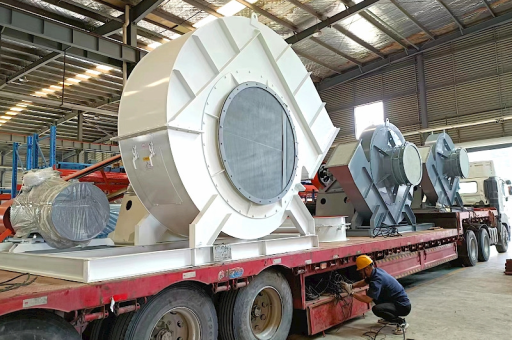
- Introduction: The Need for Extreme Heat Handling
- Core Engineering: Heat-Resistant Alloy Construction
- The Critical Role of Precision-Balanced Impellers
- Performance Metrics and Application Scenarios
- Frequently Asked Questions (FAQ)
- Maintenance and Longevity Best Practices
- Conclusion: Future-Proofing High-Temperature Gas Management
** Mastering Extreme Thermal Dynamics: Industrial Blower Centrifugal Fan for 600°C High Temperature Gases with Heat-Resistant Alloy Construction and Precision-Balanced Impellers
Table of Contents (Directory Guide)
- Introduction: The Need for Extreme Heat Handling
- Core Engineering: Heat-Resistant Alloy Construction
- The Critical Role of Precision-Balanced Impellers
- Performance Metrics and Application Scenarios
- Frequently Asked Questions (FAQ)
- Maintenance and Longevity Best Practices
- Conclusion: Future-Proofing High-Temperature Gas Management
Introduction: The Need for Extreme Heat Handling
In industrial processes such as cement kilns, glass manufacturing, steel smelting, and chemical reactors, the requirement to move gases at temperatures reaching 600°C is not a niche operation—it is a daily necessity. Standard fans and blowers constructed from carbon steel or aluminum will suffer from creep deformation, thermal fatigue, and oxidation failure within minutes of exposure to such conditions. This is where the Industrial Blower Centrifugal Fan for 600°C High Temperature Gases with Heat-Resistant Alloy Construction and Precision-Balanced Impellers becomes an indispensable asset.
Unlike generic ventilation fans, this equipment is purpose-built to withstand the simultaneous demands of extreme thermal stress, corrosive gas chemistry, and continuous mechanical load. The phrase "heat-resistant alloy construction" is not simply a material specification; it reflects a metallurgical strategy involving austenitic stainless steels, Inconel, or Hastelloy formulations. Meanwhile, "precision-balanced impellers" ensure that vibration-induced structural wear is minimized, preserving operational reliability even after thousands of hours at high RPM and high temperature.
This article synthesizes technical insights from global engineering references, maintenance reports, and industrial case studies to provide a detailed understanding of this advanced fan system. By deconstructing its components, performance parameters, and application benefits, we aim to help engineers and procurement specialists make informed decisions for high-temperature gas management systems—including those used alongside wind turbine nacelle cooling or waste heat recovery loops.
Core Engineering: Heat-Resistant Alloy Construction
The distinction between a standard centrifugal fan and a high-temperature model lies almost entirely in material science. For 600°C continuous operation, the impeller, housing, shaft, and bearing housing must all be constructed from alloys that retain mechanical strength at red heat while resisting oxidation and sulphidation.
Alloy Types and Their Roles
- SS 310 / 310S (24-26% Cr, 19-22% Ni): This is the baseline material for moderate high-temperature fans. Its chromium content forms a stable oxide scale that prevents catastrophic scaling at 600°C.
- Inconel 601 / 625: Preferred for extreme corrosive environments. Inconel 625, with molybdenum and niobium additions, resists intergranular attack and chloride stress corrosion.
- Hastelloy X: Used when the gas stream contains sulfur or chlorine. Its nickel-chromium-iron-molybdenum matrix maintains high tensile strength even during thermal cycling.
Fabrication Techniques
Simply welding or bolting these alloys is not sufficient. To prevent stress concentrations:
- Impellers are typically investment-cast or fabricated using laser-cut plates with controlled heat input welding (GTAW/TIG).
- The housing inner surface is often refractory-lined or coated with a plasma-sprayed ceramic layer to add a buffer zone against direct thermal impingement.
- Expansion joints and sliding shaft seals accommodate thermal elongation without binding.
Thermal Stress Management
A critical failure point occurs at the shaft-to-impeller hub interface. For 600°C, the shaft is usually cooled via a forced-air gap or water-circulated jacket. Without such cooling, heat can travel along the shaft and damage the bearings (typically ceramic or high-temperature grease-packed units). This is why the term "heat-resistant alloy construction" inherently includes the entire torque transfer path, not just the fan blades.
The Critical Role of Precision-Balanced Impellers
At elevated temperatures, mass imbalances become magnified due to uneven thermal expansion. A blade that is 1 gram heavier at one tip will lose equilibrium faster as the metal expands non-uniformly. This leads to increased vibration, premature bearing failure, and fatigue cracking of the impeller root. Thus, "precision-balanced impellers" are the single most important factor for long-term reliability.
Balancing Standards and Processes
- The impeller is balanced to ISO Grade G2.5 or G1.0 for high-temperature applications.
- Balancing is performed at room temperature, but the design accounts for thermal growth using finite element analysis (FEA).
- After assembly, the fan undergoes a "hot run" test in a furnace chamber to confirm that the vibration signature remains within 2.5 mm/s RMS at 600°C.
Impeller Geometry for Heat
- Backward-curved blades (BCI) are preferred because they prevent material accumulation, reduce stress on the blade root at high RPM, and deliver stable pressure curves.
- Airfoil-profiled blades maximize aerodynamic efficiency while minimizing heat absorption.
- The impeller disk is often perforated or scalloped to reduce thermal inertia and allow quicker heat dissipation.
Consequence of Imbalance
A precision-balanced impeller can operate for 20,000–30,000 hours without requiring rebalancing. An imbalanced impeller in a 600°C environment will typically need replacement within 3,000 hours due to crack propagation. This directly affects both production uptime and safety.
Performance Metrics and Application Scenarios
Typical Specifications for a 600°C Fan Model
- Flow rate: 5,000 to 150,000 m³/h
- Static pressure: 1,000 to 8,000 Pa
- Motor power: 15 kW to 250 kW
- Max gas temperature: 650°C (with cooling air injection)
- Impeller diameter: 500 mm to 2,000 mm
Where is this fan used?
- Cement preheater towers: Moving hot exhaust from calciner to clinker cooler.
- Glass furnace flue gas extraction: Removing corrosive, 600°C glass vapors.
- Biomass and waste-to-energy boilers: Facing fluctuating temperature and fly ash erosion.
- Wind turbine nacelle cooling (indirect use): In wind turbine systems, the heat generated by transformers and inverters can be extracted using a closed-loop gas system that vents 300°C–600°C air; a centrifugal fan with heat-resistant alloy construction is required for these auxiliary circuits.
Efficiency Considerations
At 600°C, gas density is roughly half of that at room temperature. This means the fan must spin faster or have larger impeller work to produce the same mass flow. Precision balancing ensures that this higher RPM does not induce destructive vibration.
Frequently Asked Questions (FAQ)
Q1: Can a standard industrial blower handle 600°C gas if I add insulation?
A: No. The impeller, shaft, and housing material themselves lack high-temperature creep resistance. Insulation delays heat transfer but does not stop thermal expansion, oxidation, or strength loss. Only a fan built from heat-resistant alloys can survive.
Q2: What is the typical lifespan of a centrifugal fan for 600°C gases?
A: With proper maintenance and a precision-balanced impeller, the fan body and impeller can last 5–10 years. Bearings and seals may need replacement every 1–2 years.
Q3: How do I ensure the fan remains balanced after a year of operation?
A: Invest in on-site vibration monitoring. Many high-temperature fans include accelerometers and real-time balancing ports. If vibration increases by 30% above baseline, schedule rebalancing immediately.
Q4: Is this fan suitable for wind turbine applications?
A: Indirectly, yes. While wind turbine rotor blades themselves do not reach 600°C, the nacelle's waste heat recovery and fire suppression systems or thermal management for power electronics can require fans that handle 300°C–600°C. The same heat-resistant alloy construction and precision balancing principles apply.
Q5: What is the cost difference compared to a standard centrifugal fan?
A: Typically 3–5 times higher, due to metallurgy, specialized welding, and balancing procedures. However, the total cost of ownership is lower because unplanned downtime is drastically reduced.
Maintenance and Longevity Best Practices
Maintaining a fan that handles 600°C requires specialized protocols:
- Daily: Check vibration levels on bearing housings; temperature monitors must remain below 90°C (cooled bearings).
- Weekly: Inspect shaft seals for gas leakage; high-temperature gas is often toxic or abrasive.
- Monthly: Replace air filter on cooling fan (if the bearing cooling system uses forced air).
- Quarterly: Perform thermal imaging of housing and impeller (if accessible). Look for hot spots that indicate erosion or scaling.
- Annually: Remove impeller for crack detection using dye penetrant or MPI. Rebalance if necessary.
Common Failure Causes
- Creep (slow deformation) in the impeller center plate – mitigated by full-penetration welds.
- Oxidation of shaft lip seals – mitigate by using ceramic gland packing or magnetic seals.
- Dynamic imbalance due to particulate buildup – mitigate by using self-cleaning impeller surface coatings.
Conclusion: Future-Proofing High-Temperature Gas Management
The Industrial Blower Centrifugal Fan for 600°C High Temperature Gases with Heat-Resistant Alloy Construction and Precision-Balanced Impellers is not a luxury upgrade—it is a fundamental engineering necessity for harsh industrial and energy environments. As industries push for higher combustion efficiencies and waste heat recovery, gas temperatures will continue to rise. Only fans built specifically to withstand these conditions can deliver reliability, safety, and efficiency.
Whether you are managing cement kiln exhaust, glass furnace emissions, or auxiliary circuits for wind turbine thermal management, the combination of alloy metallurgy and precision balancing dictates the success of the entire system. By understanding the material science, balancing protocols, and maintenance requirements outlined here, you can specify a fan that will serve for decades, not just months.
When selecting a fan, request material certifications (EN 10204 3.1), witness the hot balance test, and ask for a thermal expansion compensation report. This ensures you are not just buying a fan—you are buying confidence in the extreme.





