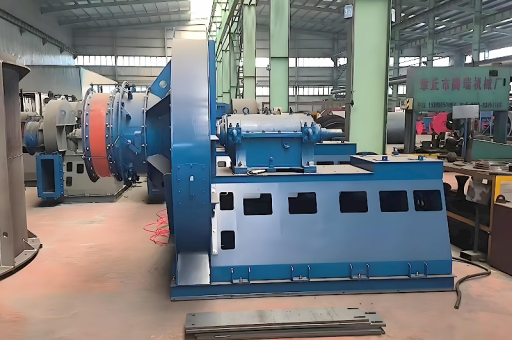
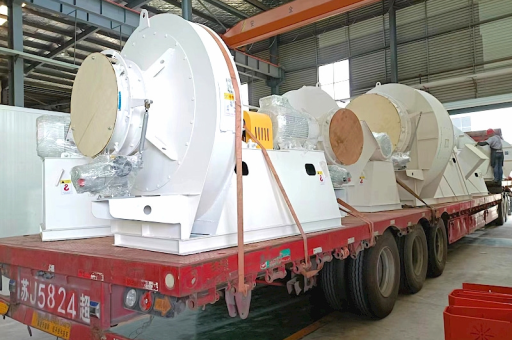
This article's table of contents introduction:
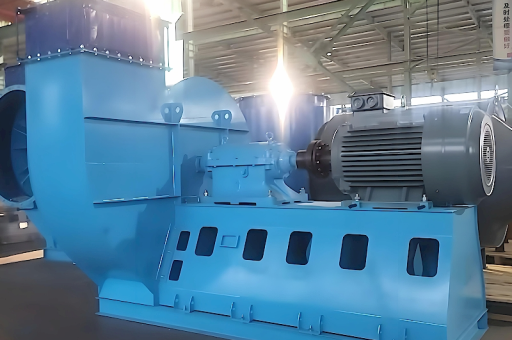
- Why Stainless Steel is Mandatory (Not Optional)
- Key Features for Offshore Platforms
- Major Offshore Standards & Certifications
- Common Applications on the Platform
- Selecting a Supplier
- Example: A Typical Specification Snippet
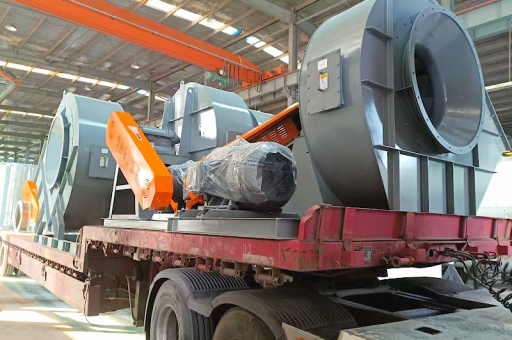
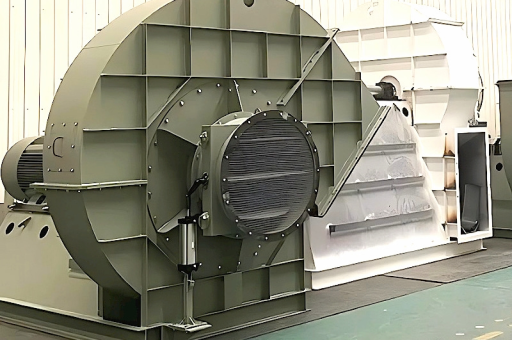
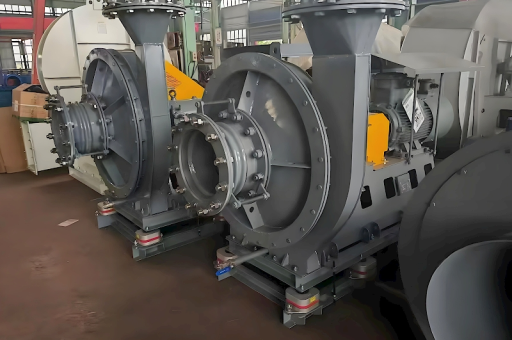
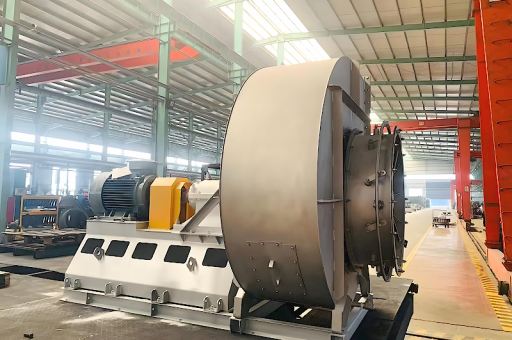
This is a highly specific and critical industrial application. Stainless steel exhaust fans for offshore platforms are not standard commercial ventilators. They are heavy-duty, safety-critical equipment designed to withstand extreme environmental conditions and stringent regulatory requirements.
Here is a comprehensive breakdown of what these fans entail, including key features, construction, standards, and selection criteria.
Why Stainless Steel is Mandatory (Not Optional)
The corrosive environment of an offshore platform is arguably the most aggressive on Earth. You have:
- Salt Spray: Constant exposure to atomized seawater.
- Humidity: Near 100% relative humidity.
- Chemical Exposure: Hydrogen sulfide (H₂S), methane, volatile organic compounds (VOCs), and cleaning agents.
Stainless Steel Choices:
- 316L (UNS S31603): The industry standard. "L" stands for low carbon, preventing carbide precipitation at welds, which reduces corrosion risk. Excellent resistance to pitting and crevice corrosion in chloride environments.
- Duplex Stainless Steels (e.g., 2205, UNS S31803): Used for extreme conditions or where higher strength is needed (e.g., larger impellers, higher pressure, or higher H₂S levels). Superior corrosion cracking resistance.
- Super Duplex (e.g., 2507, UNS S32750): For the most challenging environments (very high chloride, high temperature, sour service with high H₂S). Highest strength and corrosion resistance.
Critical Point: All components in the airstream—impeller, housing, shaft, fasteners, protective guards, junction box—must be of the chosen SS grade. A single carbon steel bolt will become a failure point.
Key Features for Offshore Platforms
These fans are more than just a motor with a blade. They are engineered assemblies.
A. Explosion-Proof (Ex) Certified
This is the most critical safety feature. Platforms handle flammable hydrocarbons.
- ATEX (Europe) / IECEx (International): Zone 1 and Zone 2 gas groups (typically IIA, IIB, or IIC for hydrogen/acetylene). The fan must be rated for the specific gas group and temperature class (T3 or T4 are common, meaning max surface temp < 200°C / 135°C).
- Flamepath Design: The fan housing and motor are built with specific gap tolerances and flame-arresting pathways. Any internal explosion will be contained, and hot gases will be cooled before escaping.
- Motor Certification: The motor must be matching Ex d (flameproof enclosure) or Ex e (increased safety) with the correct temperature class.
B. Airflow & Pressure (Duty)
- High Static Pressure: Due to long, complex, and potentially restricted duct runs compared to onshore buildings.
- Design Point: Typically specified by process engineers based on air changes per hour for hazardous areas (e.g., 12-30 ACH for gas compressor modules).
- Types:
- Axial: For high volume, low pressure (general ventilation, cooling).
- Centrifugal (Squirrel Cage or Backward Inclined): For high pressure, lower volume (duct extraction, fume hoods, pressurization systems).
C. Materials & Coating
- External Finish: Welds must be pickled and passivated to restore the chromium oxide layer.
- Bearing Housing: Often cast stainless or coated cast iron with labyrinth seals to prevent ingress.
- Seals: Lip seals or mechanical seals on the shaft entry to prevent moisture and gas migration into the motor or bearing housing.
D. Safety & Maintenance
- Drain Holes: At the lowest point of the housing to prevent water accumulation.
- Lifting Lugs: For hoisting into position on a congested deck.
- Access Doors: For cleaning and inspection without removing ducting.
- Vibration Monitors: Often fitted with accelerometer ports or integrated vibration probes for predictive maintenance.
Major Offshore Standards & Certifications
You cannot install unauthorised equipment. The fan must come with a Certificate of Conformity from a Notified Body.
| Standard/Code | Organization | What it Covers |
|---|---|---|
| IEC 60079 / EN 60079 | IEC / CENELEC | Explosive atmospheres - Equipment design & testing. |
| ISO 80079-36 / -37 | ISO | Non-electrical equipment for explosive atmospheres (e.g., the fan housing itself, impeller). |
| ATEX 2014/34/EU | EU | European Union directive for equipment in hazardous areas. |
| NORSOK S-002 / S-003 | Norwegian Oil & Gas | Working environment / Safety systems (very strict, common in North Sea). |
| API 620 / API 650 | API | Tank standards (if applicable to intake/exhaust). |
| ISO 1940-1 | ISO | Balance quality of rotors (must be G6.3 or better for reliable long life). |
| SIL (Safety Integrity Level) | IEC 61508/61511 | If fan is part of a safety-critical ventilation shutdown system (rare for simple exhaust, common for pressurization). |
Common Applications on the Platform
- Module Ventilation: Removing explosive gas build-up, heat, and fumes from enclosed areas (e.g., compressor rooms, mud pump rooms, living quarters).
- Engine and Turbine Exhaust: Specialized high-temperature fans for gas turbine generator exhaust stacks.
- HVAC System: For pressurizing living quarters (safe area) to prevent gas ingress.
- HEPA Filtration Systems: For radioactively controlled areas or where clean air is required.
- Marine Tank Vents: For inert gas systems on FPSOs (Floating Production, Storage, and Offloading vessels).
Selecting a Supplier
Do not buy from a general industrial fan company. Look for specialists with proven offshore track records.
Key Questions for a Supplier:
- Do you have ATEX/IECEx certification for the complete fan assembly? (Many will certify just the motor, not the full unit).
- Can you provide material certificates (EN 10204 Type 3.1 or 3.2) for the SS components?
- What is your experience with NORSOK or API standards?
- What is the expected lifespan of the impeller under continuous salt spray and vibration? (A good one should last 15-20 years minimum with proper maintenance).
- Do you offer a corrosion warranty?
Example: A Typical Specification Snippet
Item: Explosion-Proof Axial Exhaust Fan Quantity: 4 Housing & Impeller: ASTM A240 Grade 316L Stainless Steel, welded construction, passivated. Motor: Ex d IIB T4, IP56, Class F, 415V, 3 Phase, 50Hz, directly coupled. Certification: ATEX II 2G. Complete unit certificate from an EU Notified Body. Performance: 15,000 m³/h @ 500 Pa static pressure. Accessories: Inlet guard (316 SS), vibration pads, lifting lugs, bird screen (316 SS), flanged connections.
Conclusion: Specify 316L Stainless Steel as a minimum for general offshore use, ensure full ATEX/IECEx certification for the final assembled unit, and get a material traceability certificate. This is not an area to take short-cuts.