This article's table of contents introduction:
- Why Stainless Steel is the Material of Choice
- Key Specifications & Features to Demand
- Common Applications in a Precision Electronics Factory
- Potential Manufacturers / Brands to Look For
- Critical Installation Note: VFD & Motor Compatibility
- Summary Recommendation
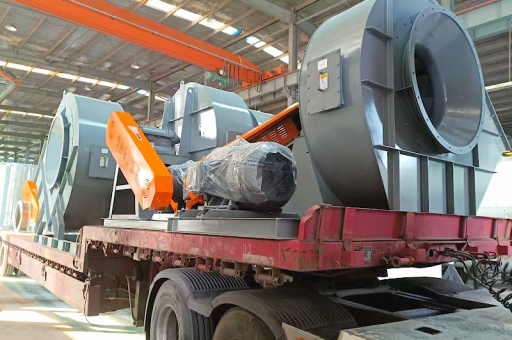
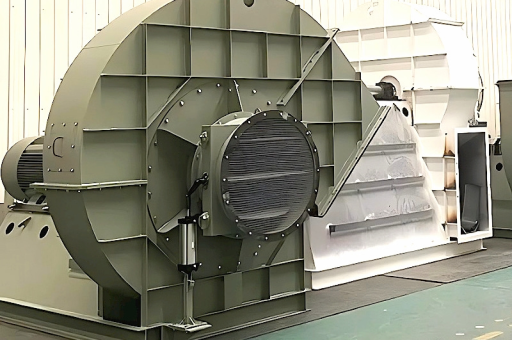
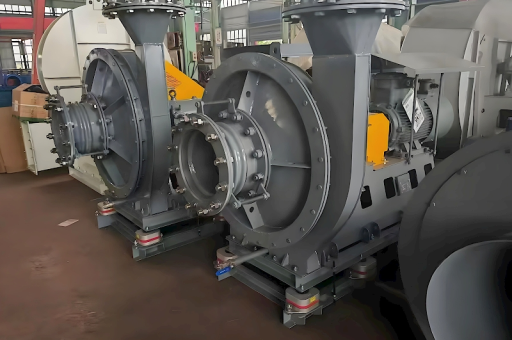
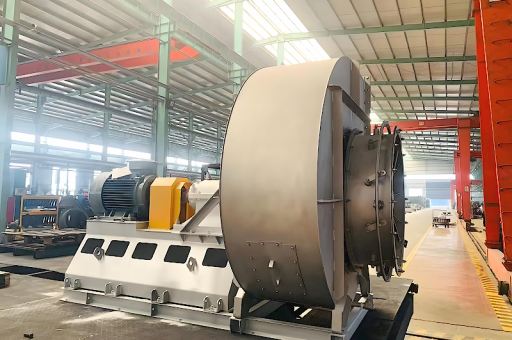
This is an excellent specification for certain environments. Here is a detailed breakdown of why stainless steel exhaust fans are critical for precision electronics factories, the specific considerations for choosing them, and the key features to look for.
Why Stainless Steel is the Material of Choice
In a precision electronics factory, the environment is not just about temperature control. It’s about contamination control. Standard galvanized steel or painted fans are often unacceptable for the following reasons:
- Corrosion Resistance: Many electronics manufacturing processes use harsh chemicals (fluxes, etchants, cleaning agents like isopropyl alcohol, and acid vapors). Standard metal fans will corrode, rust, and flake. These rust flakes or corrosion particles are catastrophic contamination for sensitive electronic components and circuit boards.
- Cleanroom Compatibility: Stainless steel (specifically 304 or 316L) is non-porous, easy to clean, and does not shed particles. It can be wiped down with solvents or sterilized without degrading. This is vital for maintaining ISO Class 5, 6, or 7 cleanrooms.
- Longevity: In a humid or chemically aggressive environment, a stainless steel fan can last 5-10 times longer than a standard fan, justifying its higher upfront cost.
- Non-Magnetic Properties (Type 316L): In areas where magnetic fields could interfere with sensitive equipment (like electron microscopes or semiconductor fabrication), 316L stainless steel is austenitic and virtually non-magnetic.
Key Specifications & Features to Demand
When sourcing a stainless steel exhaust fan for this application, you cannot buy a generic "kitchen exhaust" fan. Look for these specific engineering features:
| Feature | Why It Matters for Electronics |
|---|---|
| Material Grade | 316L Stainless Steel is the gold standard for chemical resistance (contains molybdenum). 304 is acceptable for dry, light-duty fume extraction. |
| Construction | All-welded construction (not riveted) to prevent particle traps and chemical seepage. The entire housing, impeller (blades), and mounting brackets must be SS. |
| Motor Housing | Motor must be TEFC (Totally Enclosed, Fan Cooled) or enclosed in a stainless steel jacket. Standard motors can attract ferrous particles and are a fire hazard if exposed to flammable vapors. |
| Sealing | Look for IP55 or higher (Ingress Protection) rating. The motor and electrical connections must be sealed against dust, moisture, and chemical spray. |
| Spark-Proof Design (ATEX/IECEx) | Even if not handling flammable gas, variable frequency drives (VFDs) or motor bearings can spark. An ATEX-rated fan (e.g., for Zone 2) is common in electronics plants where solder fumes or solvent vapor is present. |
| Accessibility | Fan must have a removable cleanout port or hinged access door. Ductwork needs to be cleaned of flux residue to prevent fires and particle re-entrainment. |
| Static Pressure | High static pressure capability (e.g., 1" - 3" w.g. or more). Cleanrooms require high-efficiency filters (HEPA/ULPA) in the exhaust path, which create significant back pressure. |
Common Applications in a Precision Electronics Factory
- Solder Fume Extraction: Removing rosin flux fumes from wave soldering, reflow ovens, and hand-soldering stations. The flux is corrosive and sticky.
- Chemical Fume Hoods: For lab benches where acids (HF, HCI) or solvents (Acetone, IPA) are used for cleaning or etching prototype boards.
- Cleanroom Pressure Control: Exhausting air from the "dirty" side of a cleanroom to maintain a positive pressure gradient.
- Wet Process Stations: Exhausting steam and chemical vapors from wet etching, plating, or developing lines.
- Solvent Storage Rooms: Explosion-proof (ATEX) SS fans for rooms storing large quantities of flammable liquids.
Potential Manufacturers / Brands to Look For
These are not the "cheap" options, but they are the standard for critical applications:
- Greenheck: High-quality industrial SS fans. Good for general cleanroom exhaust.
- Soler & Palau: Excellent for centrifugal fans. Look for their "Aerovent" or "Jens" lines.
- Cincinnati Fan: Known for heavy-duty industrial fans with high static pressure.
- Multi-Wing America: Specializes in impeller design; good for custom high-pressure applications.
- Fantech: Good for smaller, inline extractors for soldering stations (look for their "FR" series).
Critical Installation Note: VFD & Motor Compatibility
A Variable Frequency Drive (VFD) is almost always required to precisely control airflow and maintain room pressure. However, standard VFD cables running to a standard motor can create electrical noise (EMI) that disrupts sensitive electronics.
- Request: A fan with an inverter-duty motor and shielded VFD cable.
- Filter: Install a line reactor or EMI filter on the VFD input to protect the factory's sensitive equipment.
Summary Recommendation
Do not prioritize price.
For a precision electronics factory, a stainless steel exhaust fan is an investment in yield and safety. A cheap fan that rusts, sheds particles, or sparks a fire in a cleanroom will cost orders of magnitude more in downtime, scrapped wafers/boards, and insurance claims.
Specify the following on your purchase order:
- Material: 316L Stainless Steel (304 acceptable for low moisture areas).
- Motor: TEFC, Inverter-Duty, IP55.
- Construction: All-welded, ATEX-certified for Zone 2 (as a minimum).
- Access: Cleanout port or hinged access door.
- Pressure: Capable of the static pressure required by your HEPA filter bank (confirm with an engineer).
This will ensure you get a fan that can handle the chemistry, protect the cleanroom, and maintain the integrity of your manufacturing process.