This article's table of contents introduction:
- The Operating Environment (The "Why")
- Critical Design & Material Requirements
- Fan Type Selection
- The Safety & Regulatory Triad (The Critical Part)
- Operational Considerations
- Summary: What to Ask a Supplier
This is a highly specialized topic. Fans used in a metallurgical pickling workshop are not standard HVAC fans. They must handle extremely corrosive atmospheres, high temperatures, and often explosive or toxic gases (like Hydrogen).
Here is a comprehensive breakdown of the specification, selection, and operational requirements for fans in this environment.
The Operating Environment (The "Why")
The fan's primary job is to exhaust fumes from pickling tanks (using acids like HCl, H₂SO₄, HF, or HNO₃) and to ventilate the workshop. The air contains:
- Highly Corrosive Acid Mist: HCl, H₂SO₄, HF droplets.
- Hydrogen Gas (H₂): Explosive, especially during the pickling reaction (e.g., Fe + 2HCl → FeCl₂ + H₂↑).
- Water Vapor & Heat: Tanks are often heated (60–90°C).
- Metal Dust/Oxides: Particles from the steel surface (inhalation hazard).
Critical Design & Material Requirements
You cannot use a standard galvanized steel fan. It will fail within days.
| Component | Material Requirement | Rationale |
|---|---|---|
| Housing | Fiberglass Reinforced Plastic (FRP) or Polypropylene (PP) | Chemically inert, lightweight, non-sparking. PP is cheaper but has lower temperature tolerance (~80°C). FRP is standard for high-performance. |
| Impeller | FRP, PVDF (Polyvinylidene fluoride) , or Hastelloy C-276 | FRP is standard. PVDF is for extreme HF or high heat. Hastelloy is used only if abrasion from particles is severe (very rare; usually plastic is preferred). |
| Shaft | Hastelloy C-276 or Titanium (encased in a corrosion-resistant sleeve) | Standard steel shafts will quickly corrode at the seal. Titanium is expensive but excellent for HCl. |
| Bearings | Sealed, solid lube or Remotely greased (externally) | Bearings must be isolated from the acid vapor stream. External grease lines allow maintenance without dismantling. |
| Coating (if metal) | Halar (ECTFE) or PTFE (Teflon) powder coating | For any metal components that must be in contact with fumes. |
Fan Type Selection
The choice depends on duct pressure requirements and space constraints.
-
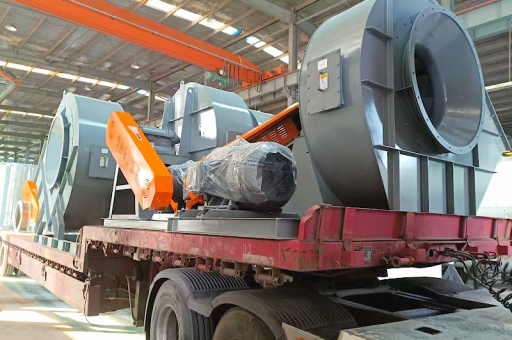
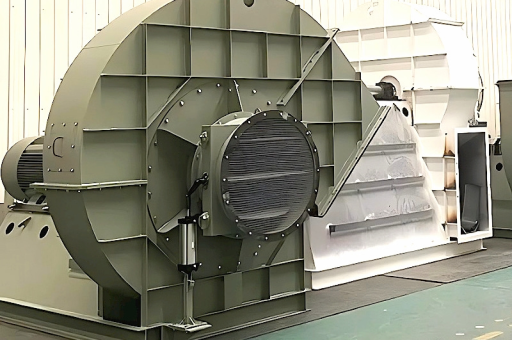
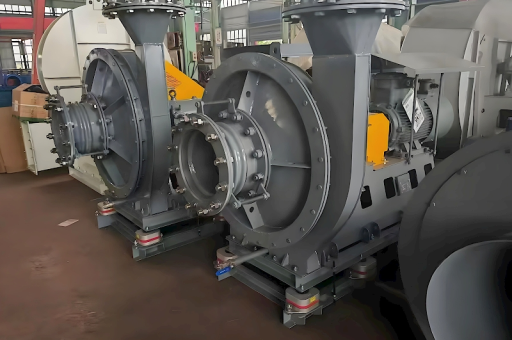
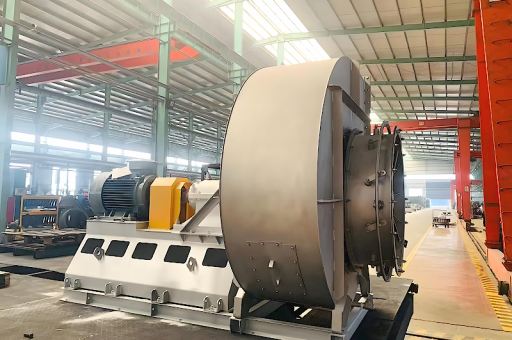
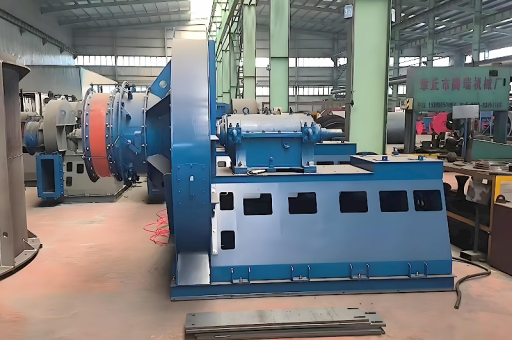
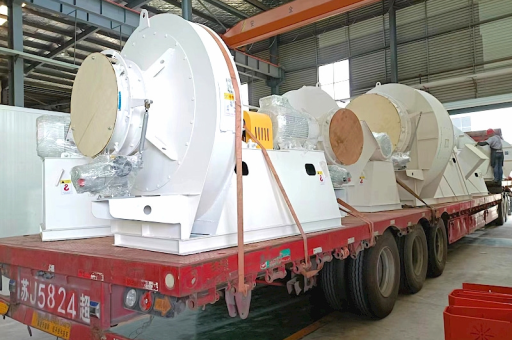
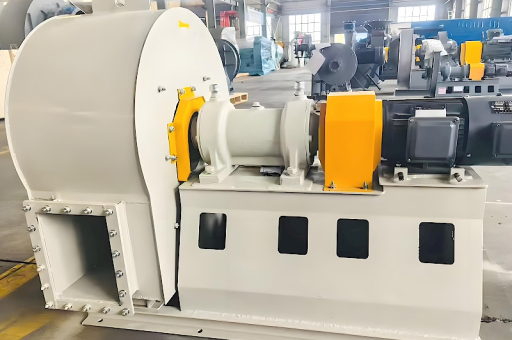
Centrifugal Fans (Backward Curved or Radial):
- Advantage: High static pressure (needed to overcome scrubber resistance and long duct runs).
- Standard choice for main exhaust systems where a fume scrubber is installed between the hood and the fan.
- Risk: Dust accumulation on blades can cause imbalance. Must be cleaned regularly.
-
Axial Fans (Tube-axial or Vane-axial):
- Advantage: High volume, lower static pressure.
- Standard choice for general workshop roof ventilation or wall exhaust (directly out of the building).
- Risk: Less forgiving of pressure drops; motor is often in the airstream (must be explosion-proof and ATEX rated).
-
The "Non-Sparking" Mandate:
- All fans must have non-sparking impellers (FRP or bronze) to avoid igniting the hydrogen gas.
- Motors must be Explosion-Proof (Ex), typically Ex d IIB T3 or Ex e IIB T3 (depending on zoning classification, Zone 1 or Zone 2).
The Safety & Regulatory Triad (The Critical Part)
A pickling workshop is typically classified as a Class 1, Division 1 (Zone 1) or Division 2 (Zone 2) area regarding Hydrogen, and a hazardous location regarding acid gas.
-
Explosion Protection (ATEX / IECEx):
- All electrical components (motor, junction boxes) in the airstream must be certified for explosive hydrogen atmospheres.
- Bonding and Grounding: The entire duct and fan system must be electrically continuous and grounded to prevent static discharge.
-
Corrosion Management:
- Drain Plugs: The fan housing MUST have a drain at the lowest point to remove condensation (acidic water). This prevents corrosion pitting and buildup.
- VFD Hazard: If using a Variable Frequency Drive (VFD) to control fan speed, you risk running the fan below its minimum speed. At low RPM, condensation can occur inside the fan housing, creating a corrosive puddle.
-
Pressure Monitoring:
- A differential pressure switch across the fan is essential. If the impeller corrodes and breaks, or the filter/scrubber blocks, the pressure drop changes, triggering an alarm and fan shutdown to prevent damage or air reversal.
Operational Considerations
- Maintenance Schedule: FRP fans have a finite life (typically 5-10 years). They require:
- Visual inspection of impeller blades for cracks or chemical attack (every 6 months).
- Bearing replacement (every 1-2 years depending on load).
- Balance check (any vibration is a red flag).
- Scrubber Integration: The fan is usually the last component in the line. The path is:
- Hood → Ductwork → Fume Scrubber (Wet Packed Tower) → Mist Eliminator → Fan → Stack to atmosphere.
- Why? The scrubber removes the acid before it hits the fan, extending fan life significantly.
- Speed: Fans are often oversized and run on VFDs (Variable Frequency Drives) to match the fluctuating fume generation rate (when tanks are open vs. covered).
Summary: What to Ask a Supplier
If you are specifying a fan for a pickling line, ask these specific questions:
- "Is the impeller FRP or PVDF, and what is its temperature limit?" (Must handle peak exhaust temp + 20°C safety margin).
- "Is the motor ATEX/IECEx certified for Group IIC (Hydrogen)?" (Group IIB is for most gases, but Hydrogen is IIC).
- "Do you offer a Hastelloy shaft sleeve?" (Standard 316 SS will fail in HCl).
- "Where is the drain located?" (Must be at the lowest point of the scroll).
- "What is the recommended start-up procedure to prevent condensation?" (Always run at full speed for a few minutes after the pickling line stops).
Bottom line: A pickling workshop fan is a safety-critical piece of equipment. Do not attempt to "economize" on materials (e.g., using stainless steel instead of FRP). The cost of a plant shutdown due to a corroded, unbalanced, or sparking fan is far higher than the premium for a proper corrosive-duty model.