This article's table of contents introduction:
- The Core Definition: ISO 10648-2 Class 1 & 2
- How "Zero-Leakage" is Engineered (The Key Components)
- Industry Applications (Where you need them)
- The "Zero-Leak" Myth vs. Reality
- Key Manufacturers
- Summary
The term "zero-leakage fan" is technically an oxymoron in classical thermodynamics and fluid dynamics. In any real-world application, 100% zero leakage is physically impossible due to the pressure differential that drives the fan's operation.
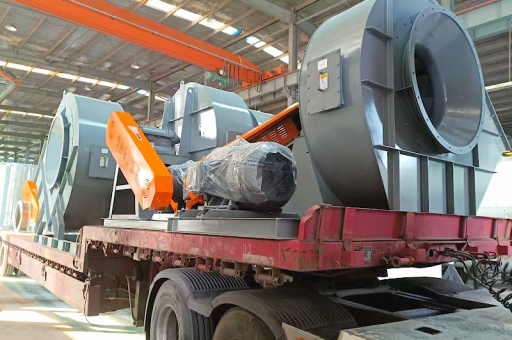
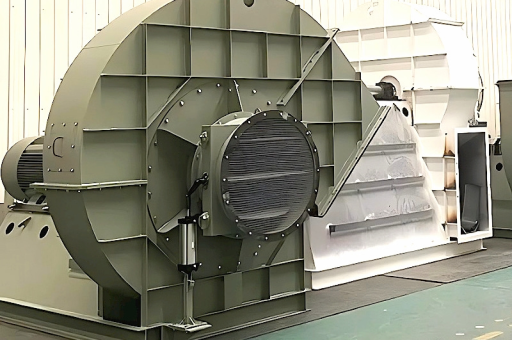
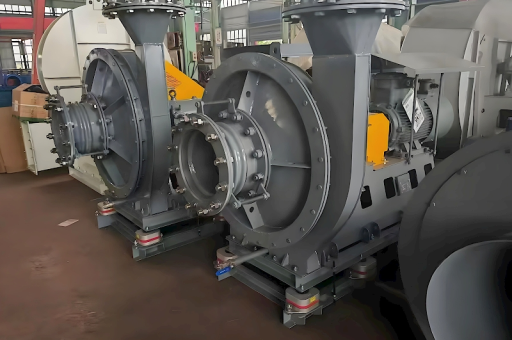
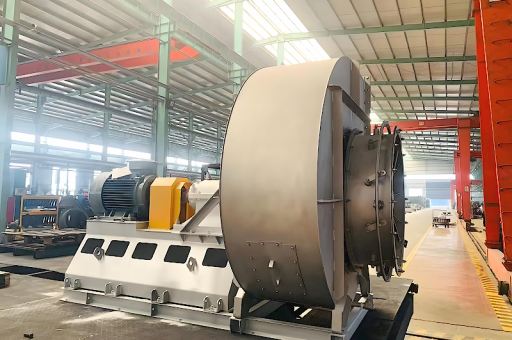
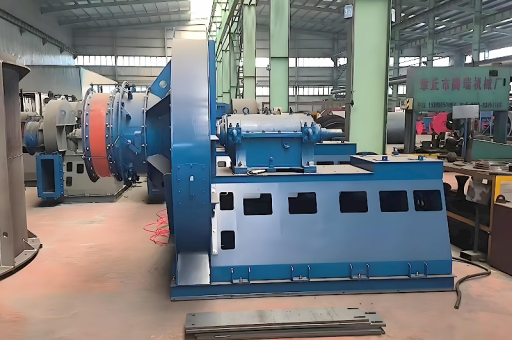
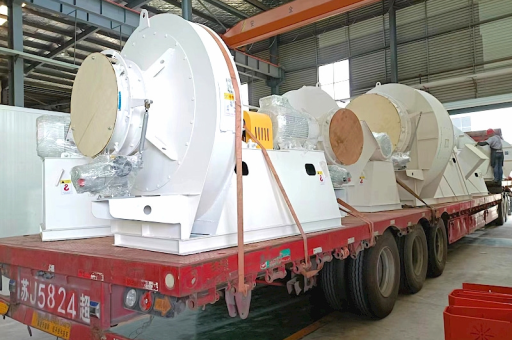
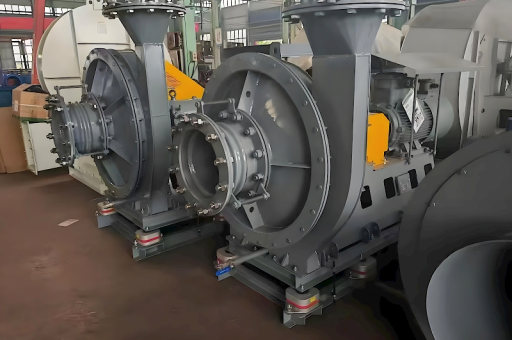
However, the term is used in the industry (particularly in high-containment HVAC, nuclear, and pharmaceutical applications) to describe fans designed to achieve near-zero leakage rates. These are typically belt-driven plug fans or centrifugal fans housed in a gas-tight casing.
Here is the breakdown of what "zero-leakage" actually means in the context of industrial fans, the standards that define it, and the technologies used to achieve it.
The Core Definition: ISO 10648-2 Class 1 & 2
Zero-leakage fans are usually defined by ISO 10648-2 (Containment enclosures). The standard defines two levels of leakage for fans installed in containment boundaries:
- Class 1 (High Integrity / "Zero Leakage"): Leakage rate $\le 10^{-4}$ Pa·m³/s per meter of seal length.
This is the "zero-leakage" benchmark. For a typical 1-meter shaft seal, that's a leak smaller than a pinprick.
- Class 2 (Reduced Leakage): Leakage rate $\le 10^{-2}$ Pa·m³/s.
How "Zero-Leakage" is Engineered (The Key Components)
To achieve this extreme tightness, a standard centrifugal fan is heavily modified.
A. The Casing: Welded Steel, No Gaskets
- Standard Fan: Has bolted cleanout doors, slip joints, and motor mounting brackets that leak.
- Zero-Leak Fan: The housing is continuously welded or built from a single piece of plate steel. No bolted flanges on the air stream.
- Inlet/Outlet: These are attached via butt-weld connections to the ductwork. No slip joints or flanges with gaskets.
B. The Shaft Seal (The Most Critical Part)
This is where the rotating shaft exits the stationary casing. This is the primary leakage path.
- Standard Seal: Felt seal or simple labyrinth. Leaks significantly.
- Zero-Leak Seal:
- Gas-Tight Gland Packing: Multiple rings of PTFE/graphite packing compressed by a lantern ring. Often used with a purge gas (inert nitrogen) injected between the packing rings to prevent outward leakage.
- Double Mechanical Seal: Used for the highest integrity (Class 1). A seal face (stationary) and a seal face (rotating) running against each other, lubricated by a compatible fluid (often water or oil) at a pressure higher than the fan's internal pressure. This creates a "liquid curtain" that stops gas.
C. The Drive System: Shaft-Mounted vs. Belt-Driven
- Belt-Driven (Most Common for Zero-Leak): The motor is mounted outside the airstream. The fan shaft passes through the casing wall. This is the easiest to seal because only one rotating shaft penetrates the casing.
- Direct Drive (Difficult for Zero-Leak): The motor is mounted inside the casing or the motor shaft extends through the casing. This requires sealing the motor shaft, which is harder due to thermal expansion from motor heat. Direct drive is rarely used for Class 1 zero-leak applications.
D. Drainage
Even zero-leak fans can collect condensation. The drain must be a condensate trap (P-trap) or a valve-locked drain that is kept closed during operation.
Industry Applications (Where you need them)
- Nuclear Industry: For exhaust fans in reactor containment buildings or for Iodine filters (any leak bypasses the filter). These fans are tested with SF6 tracer gas.
- Pharmaceutical / Biotech: For fans handling live viruses (BSL-3/BSL-4) or High Potency Active Pharmaceutical Ingredients (HPAPIs) . A leak means operator exposure.
- Chemical Processing: For handling toxic gases (e.g., Chlorine, Phosgene, Hydrogen Sulfide).
- Cleanrooms: To prevent contaminated air from bypassing HEPA filters.
The "Zero-Leak" Myth vs. Reality
| Claim | Reality |
|---|---|
| "Zero Leakage" | Leakage is reduced to molecular diffusion levels. It is not zero. |
| "No Dust Emission" | True, if the seal is purged with clean air/nitrogen. |
| "No Particle Leakage" | For dry particles, a good mechanical seal can achieve 100% retention. For gas, it cannot. |
| "No Maintenance Needed" | False. Zero-leak seals require more maintenance (adjusting packing, replacing mechanical seal faces). A failing seal is a leak path. |
Key Manufacturers
If you are sourcing a "zero-leakage" fan, look for these brands or specify these requirements:
- Greenheck (Model Vektor-H / Zero-Leak Exhaust)
- Twin City Fan (Q-Line / Custom Engineered)
- Cincinnati Fan (HP Series with gas-tight construction)
- Howden / Novenco (Nuclear-grade fans)
- Loren Cook / S&P (For higher-end containment)
Summary
If you truly need an "absolutely zero-leakage fan," you must specify:
- ISO 10648-2 Class 1 construction.
- Full penetration welds on the casing.
- Double mechanical seal with a barrier fluid (or purge gas on the packing).
- In-situ leak testing to $10^{-4}$ Pa·m³/s (usually with Helium or SF6).
Caveat: No fan can seal forever. Shaft seal wear, thermal expansion, and material permeation ensure that "zero" is a goal, not a physical reality.