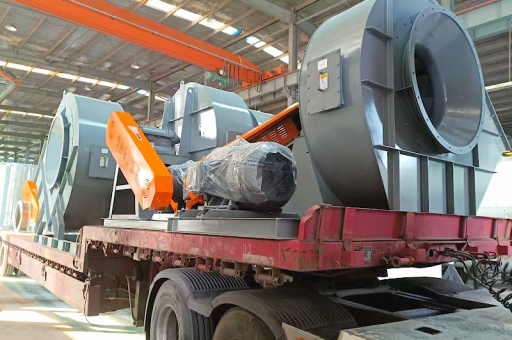
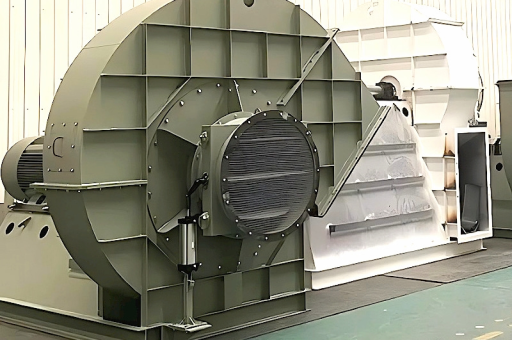
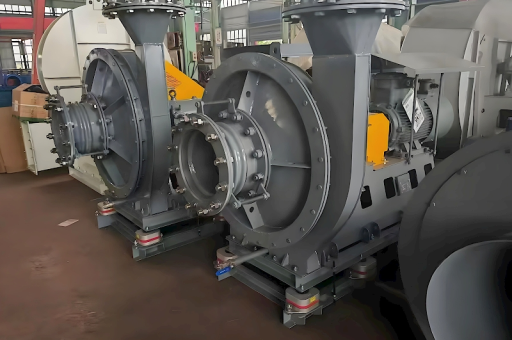
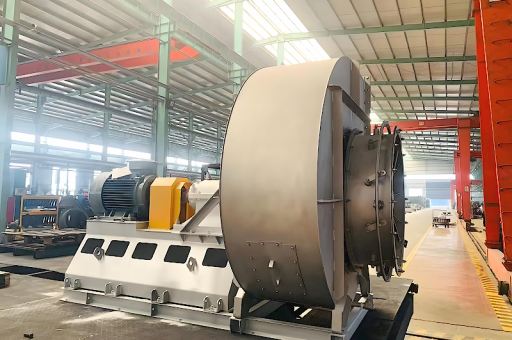
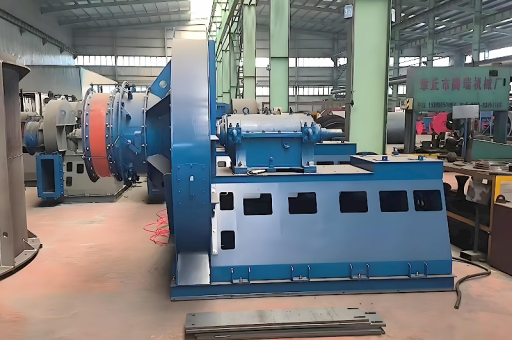
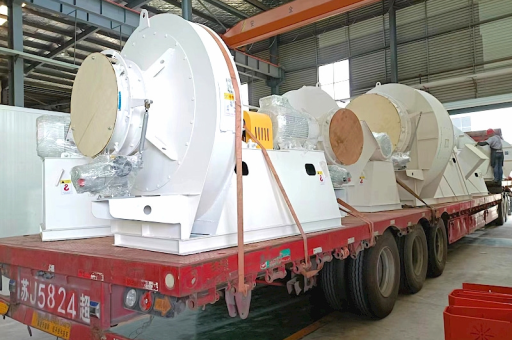
This article's table of contents introduction:
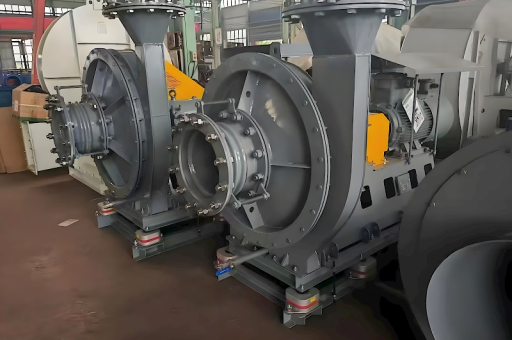
- What is an Explosion-Proof Variable Frequency Fan?
- Key Components & How They Work
- Primary Applications (Where they are used)
- Critical Advantages over Fixed-Speed Fans
- Critical Safety Considerations (Do Not Ignore)
- Typical System Diagram (Conceptual)
- Summary Checklist for Selection
Here is a comprehensive overview of Explosion-Proof Variable Frequency Fans, covering what they are, their key components, applications, and critical safety considerations.
What is an Explosion-Proof Variable Frequency Fan?
It is a ventilation system that combines two specialized technologies:
- Explosion-Proof (Ex) Motor & Construction: The fan and its motor are designed and certified to operate in hazardous (classified) locations where flammable gases, vapors, or combustible dusts are present. They are built to contain any internal explosion or spark and prevent it from igniting the surrounding atmosphere.
- Variable Frequency Drive (VFD): An electronic controller that varies the frequency and voltage supplied to the motor, allowing precise control over the fan's rotational speed (RPM). This enables adjustable airflow and pressure.
The core challenge is integrating these two technologies safely. The VFD itself is typically not explosion-proof and must be located in a non-hazardous area. The motor and fan components are the explosion-proof parts that sit in the hazardous zone.
Key Components & How They Work
- Explosion-Proof Motor: The heart of the system.
- Enclosure: Typically a heavy-duty cast iron or steel frame (often NEMA or IEC Ex d - Flameproof, or Ex e - Increased Safety).
- Features: Sealed conduit entries, flame paths (tightly machined joints between enclosure parts that cool and extinguish escaping gases), and non-sparking fans on the motor shaft.
- Thermal Protection: Built-in thermostats or RTDs (Resistance Temperature Detectors) to prevent overheating.
- Explosion-Proof Fan (Impeller & Housing):
- Impeller: Made from non-sparking materials (aluminum bronze, stainless steel, or special polymers) to prevent sparks from rubbing against the housing.
- Housing: Robust construction (cast iron or welded steel) designed to contain an explosion.
- Shaft Seal: Prevents process gases from leaking along the shaft to the motor.
- Variable Frequency Drive (VFD):
- Location: Critical Safety Point. The VFD must be installed in a safe, non-classified area (e.g., a control room, a purged enclosure, or an air-conditioned electrical room).
- Connection: Connected to the explosion-proof motor via an interposing safety barrier (like a reactor or filter) to prevent voltage spikes from damaging the motor's insulation, which could cause an arc.
- Cables: Special shielded, armored, or specially rated cables are required between the VFD and the motor to prevent electromagnetic interference (EMI) and ensure safety.
- Safety & Control System:
- Purging/Pressurization (Optional): If the VFD must be in the hazardous area, it must be housed in a purged/pressurized enclosure (Ex p).
- Monitoring: Sensors monitor motor temperature, vibration, and bearing health.
- Interlocks: The VFD can be interlocked with gas detectors, fire alarms, or other safety systems.
Primary Applications (Where they are used)
These fans are essential in industries where explosive atmospheres exist:
| Industry | Common Application Example |
|---|---|
| Oil & Gas | Ventilation of wellheads, compressor stations, gas processing plants, offshore platforms. |
| Chemical Processing | Fume exhaust for reactors, solvent storage areas, flammable liquid handling rooms. |
| Pharmaceuticals | Ventilation of areas handling volatile solvents (e.g., tablet coating rooms). |
| Mining | Main and auxiliary ventilation for underground coal mines (methane gas). |
| Grain & Food Processing | Dust collection and ventilation for grain elevators, flour mills, sugar processing (combustible dust). |
| Wastewater Treatment | Ventilation of digester, pumphouse, and headworks areas where methane and hydrogen sulfide are present. |
| Painting & Coating | Spray booths and storage areas for flammable paints and solvents. |
Critical Advantages over Fixed-Speed Fans
- Energy Savings: Fans rarely need to run at 100% capacity. Slowing down the fan by just 20% can reduce energy consumption by nearly 50% (Affinity Laws).
- Precise Process Control: Maintains exact air pressure or flow rate required for safety or process stability (e.g., maintaining a slight vacuum in a room to prevent gas leakage).
- Reduced Mechanical Stress: Soft-start capability (ramping up speed slowly) reduces wear on belts, bearings, and motor windings, extending equipment life.
- Noise Reduction: Running at lower speeds is significantly quieter.
- Built-in Diagnostics: VFDs provide data on motor current, voltage, temperature, and faults, enabling predictive maintenance.
Critical Safety Considerations (Do Not Ignore)
- Certification is Paramount: Look for labels from recognized testing agencies:
- North America: UL (Underwriters Laboratories), CSA (Canadian Standards Association) - e.g., Class I, Division 1, Groups C & D (gases) or Class II, Division 1, Groups E, F, G (dusts).
- International: IECEx or ATEX (Europe) - e.g., II 2 G Ex d IIB T4.
- VFD Location is the #1 Safety Issue: The VFD generates heat, arcs, and sparks. It can never be treated as "explosion-proof" in its standard form without being in a proper purged enclosure.
- Motor Voltage Spike Damage: VFDs can produce high-voltage pulses (up to 1600V on a 480V system) that can degrade motor insulation over time, leading to a short circuit and potential ignition. Always use an output reactor or dV/dt filter specifically designed for the motor and cable length.
- Motor Overheating at Low Speeds: An explosion-proof motor relies on its own shaft-mounted fan for cooling. When run at very low speeds (e.g., 10 Hz), the motor's internal fan cannot provide adequate cooling, causing the motor to overheat. The VFD must be programmed with a minimum speed limit or use auxiliary cooling (e.g., a separately powered blower on the motor).
- Proper Cable Selection: Use VFD-rated, continuous, welded-armor cable with proper grounding. Avoid standard conduit, as the high-frequency currents can cause arcing inside the conduit.
- Grounding & Bonding: Ensure all rotating and stationary parts of the fan and motor are properly grounded to prevent static buildup, which can be an ignition source.
Typical System Diagram (Conceptual)
[Non-Hazardous Area]                    [Hazardous (Classified) Area]
+------------------+     +------------------+     +---------------------------+
|  Control System  | --> |  Variable Freq.  | --> |  Output Reactor / Filter  | --> |  Explosion-Proof Motor  | --> | Explosion-Proof Fan |
|  (PLC, HMI)      |     |   Drive (VFD)    |     |   (Voltage Spike Protect) |     |  (e.g., Ex d motor)      |     |  (Non-sparking impeller) |
+------------------+     +------------------+     +---------------------------+     +---------------------------+     +-----------------------+
Summary Checklist for Selection
- Hazardous Classification: Determine the exact Class, Division/Zone, and Group of the location.
- Required Airflow (CFM) & Pressure: Define the process requirements.
- Motor Size & Type: Select an Ex-rated motor with proper cooling for the speed range.
- VFD Location: Confirm a non-hazardous location for the VFD.
- Cable Length: Account for voltage drop and the need for a filter/reactor.
- Certification: Ensure the entire fan assembly (motor + fan) is certified as an assembly by a recognized body.
In short: An explosion-proof variable frequency fan is a highly efficient, safe, and controllable ventilation system for hazardous environments, but it requires careful engineering to integrate the VFD safely and protect the motor from heat and voltage stress.