This article's table of contents introduction:
- What Are They?
- Key Construction & Material Features
- Typical Applications
- Types of High-Temp Corrosion-Resistant Fans
- Critical Selection Factors
- Leading Manufacturers (Examples)
- Maintenance & Common Failure Points
- Summary
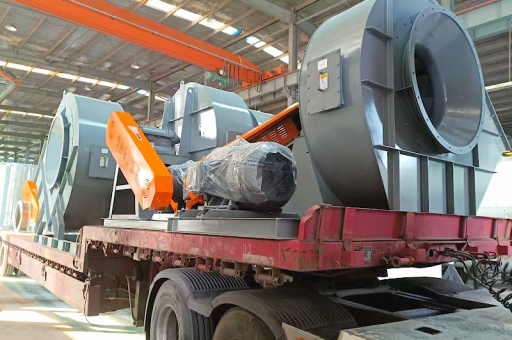
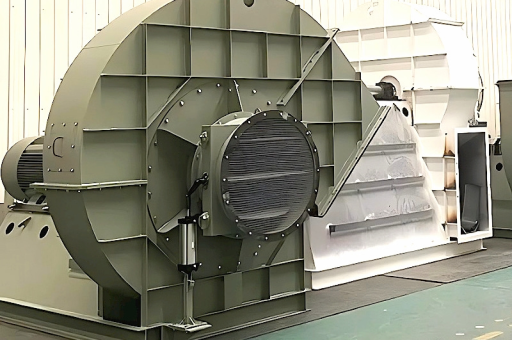
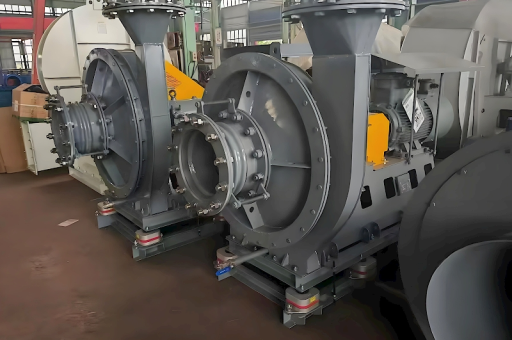
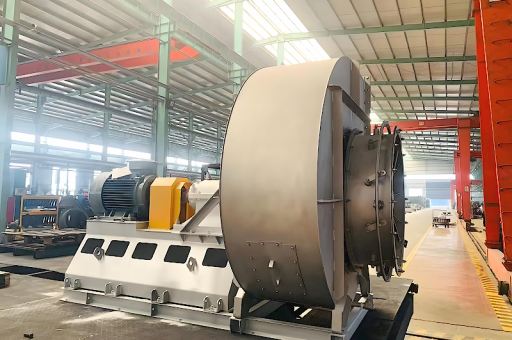
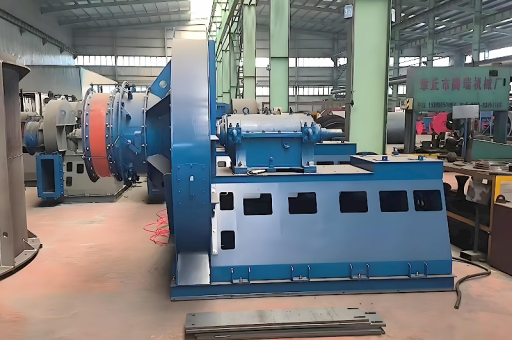
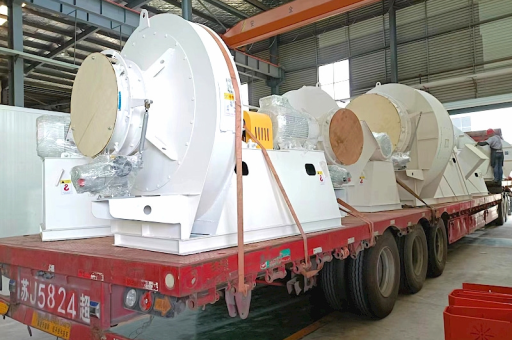
"High-Temperature Resistant Corrosion-Resistant Fans" are specialized industrial fans designed to operate reliably in harsh environments where standard fans would fail. They are critical for processes involving hot, chemically aggressive air or gases.
Here is a detailed breakdown of what these fans are, their key features, typical applications, and considerations for selection.
What Are They?
These fans are engineered with materials and designs that can withstand two simultaneous extreme conditions:
- High Temperature: The gas stream being moved is significantly hotter than ambient (often 200°C to 1000°C+ / 392°F to 1832°F+).
- Corrosion: The gas contains chemical agents (acids, alkalis, salts, halogens) that would rapidly attack standard metals and coatings.
A fan must excel at both to survive.
Key Construction & Material Features
| Feature | Standard Fan | High-Temp Corrosion-Resistant Fan |
|---|---|---|
| Housing | Mild Steel, Aluminum | Special Alloys (Stainless Steel 316L, 904L, Hastelloy, Inconel) or FRP (Fiber-Reinforced Plastic) with internal ceramic/epoxy coatings. |
| Impeller | Aluminum, Mild Steel | Same special alloys or high-temperature FRP. Welds are high-integrity and stress-relieved. |
| Shaft | Standard Carbon Steel | High-strength alloys or stainless steel for thermal stability and corrosion resistance. |
| Bearings | Standard ball bearings | High-temperature grease or oil bath systems. Often externally mounted with a heat shield or cooling fan to keep them away from the hot gas stream. |
| Seals | Standard lip seals | Specialized labyrinth seals, mechanical seals, or gas-purge seals to prevent hot/corrosive gas from escaping and damaging bearings. |
| Motor | Standard TEFC (Totally Enclosed Fan Cooled) | Often separately mounted from the fan housing (belt-driven or direct-coupled with a spacer). If in-line, may be inverter-duty with high-temperature winding insulation. |
| Drive System | Direct drive or standard belt | Belt drives often preferred for speed adjustment and isolating the motor from heat. Belts must be high-temperature rated. |
| Coatings | Standard paint | Pyro-coatings, glass-flake epoxy, fluoropolymer (PTFE, PFA, FEP), or ceramic linings applied to internal surfaces. |
Typical Applications
These fans are common in heavy industries where process exhaust is problematic:
- Chemical Processing: Fume exhaust from reactors, dryers, scrubbers, and acid storage tanks (HCl, H2SO4, HF, Cl2).
- Semiconductor Manufacturing: Exhausting hot, corrosive gases (NF3, CF4, SiH4, HCl) from etching, CVD, and diffusion furnaces.
- Metal Smelting & Refining: Exhaust from furnaces, converters, and fume hoods (Zn, Pb, Cu, Al). Gases contain SO2, metal oxides, and dust.
- Waste Incineration: Handling hot flue gases with high levels of HCl, SOx, NOx, and dioxins/furans.
- Cement & Power Plants: Exhaust from rotary kilns and boilers where flue gases contain SOx, NOx, and fly ash.
- Glass Manufacturing: Fume extraction from glass melting tanks (alkali, SO2, HF).
- Pulp & Paper: Exhaust from recovery boilers (smelt), lime kilns, and bleach plants (ClO2, HCl).
Types of High-Temp Corrosion-Resistant Fans
- Centrifugal Fans: The most common type. High pressure and capable of handling particulates. Powerhouse for factory exhaust. Sub-types:
- Radial Blade: For heavy dust loading.
- Backward Curved/Backward Inclined: High efficiency for clean gas.
- Paddle Wheel (Forward Curved): High volume, low pressure.
- Axial Fans: Used for general ventilation or clean gas applications with lower pressure drop. Less common for severe corrosion due to blade complexity.
- Inline Centrifugal Fans: Compact, duct-mount design. Often used in chemical fume hood exhaust systems.
Critical Selection Factors
When specifying a fan, you must provide these parameters to the manufacturer:
- Gas Composition: Exact chemicals and their concentrations (e.g., "5% HCl, 1% Cl2 at 250°C"). "Corrosive" is not enough.
- Operating Temperature: Continuous maximum temperature, with any potential spikes (e.g., "Continuous 350°C, up to 500°C for 10 minutes during startup").
- Dew Point: The temperature at which corrosive acids (like H2SO4 or HCl) can condense inside the fan. This is often more damaging than high heat. The fan must be designed to keep the gas above this point, or be made of materials that can tolerate the liquid acid (e.g., PTFE lining).
- Flow Rate (CFM/m³/hr) and Pressure (in. w.g./Pa).
- Particulate Loading: Is there dust, mist, or sticky material? This affects impeller design and cleaning requirements.
- Abrasion: If the gas contains hard particles (e.g., fly ash), the fan needs additional wear-resistant linings (ceramic tiles or hard-faced alloys).
- Spark Resistance: For flammable gases (e.g., H2, CO, solvents).
- Explosion Proof: If the gas is within its flammable range.
Leading Manufacturers (Examples)
- New York Blower (NYB)
- Cincinnati Fan
- Greenheck
- Howden
- Twin City Fan
- Robinson Fans
- AirPro Fan & Blower
- Eurovent
- Systemair
Maintenance & Common Failure Points
- Bearing Failure: Due to heat migration. External cooling fans or heat shields are essential. Regular grease/oil analysis.
- Impeller Erosion: From abrasive particles. Check for material loss or imbalance.
- Coatings Failure: Peeling or blistering of linings, allowing the base metal to corrode.
- Shaft Corrosion: Especially near the seal area.
- Seal Leakage: Allowing gas into the bearing housing or out to the atmosphere.
- Vibration: Caused by impeller imbalance from corrosion, erosion, or thermal distortion.
Summary
| Attribute | Key Challenge | Solution |
|---|---|---|
| High Temperature | Materials degrade (creep, melting, oxidation). | Use stainless steels, Inconel, or ceramic coatings. |
| Corrosion | Materials dissolve or pinhole. | Use inert alloys (Hastelloy), FRP, PTFE, or thick chemical linings. |
| Both | Thermal expansion + chemical attack. | Dedicated design, advanced alloys + coatings, and proper thermal management (bearing cooling, gas dew point control). |
"Cheap" is never the right word for these fans. They are a significant capital investment. Failure of a high-temp corrosion fan in a process plant can cause a $1M+ production stoppage. Always consult with a reputable manufacturer who has experience in your specific industry and gas chemistry.