This article's table of contents introduction:
- Table of Contents
- Introduction to the 4-79-10D Centrifugal Fan
- Key Design Features and Technical Specifications
- Performance Curve Analysis and Efficiency Metrics
- Ideal Industrial Applications for the 4-79-10D
- Installation, Maintenance, and Safety Best Practices
- Troubleshooting Common Issues
- Frequently Asked Questions (FAQ)
- Conclusion and Final Recommendations
** The 4-79-10D Centrifugal Fan: A Comprehensive Guide to Selection, Performance, and Industrial Applications
Table of Contents
- Introduction to the 4-79-10D Centrifugal Fan
- Key Design Features and Technical Specifications
- Performance Curve Analysis and Efficiency Metrics
- Ideal Industrial Applications for the 4-79-10D
- Installation, Maintenance, and Safety Best Practices
- Troubleshooting Common Issues
- Frequently Asked Questions (FAQ)
- Conclusion and Final Recommendations
Introduction to the 4-79-10D Centrifugal Fan
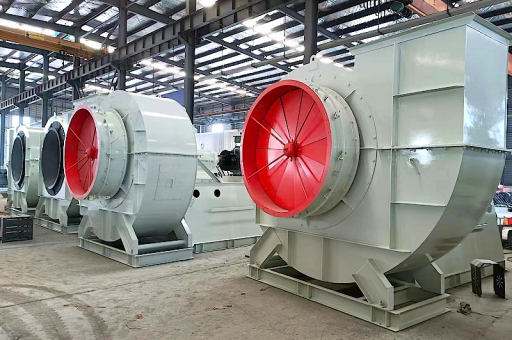
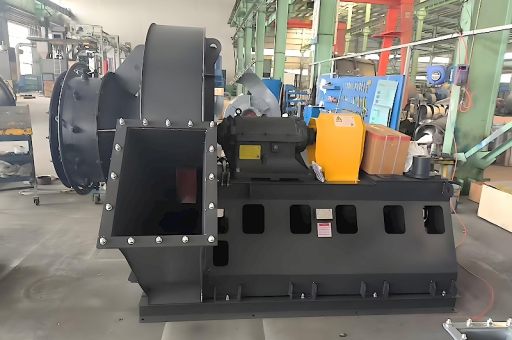
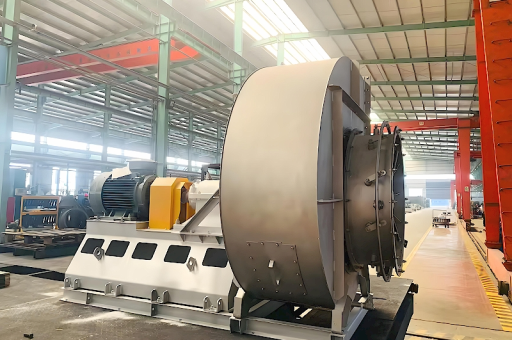
In the world of industrial air movement, few pieces of equipment are as versatile and reliable as the 4-79-10D Centrifugal Fan. This fan belongs to a well-known series of backward-inclined centrifugal fans, specifically designed for high-efficiency, low-noise operation in medium to high-pressure applications. The "4-79" designates the wheel type and configuration, while "10D" indicates the wheel diameter in inches (10 inches) and the drive arrangement (direct drive).
Engineers and facility managers choose this fan because it balances energy efficiency with rugged construction. Unlike axial fans, which push air parallel to the shaft, the 4-79-10D uses centrifugal force to accelerate air radially, achieving higher pressure rises. This makes it an indispensable component in HVAC systems, dust collection networks, and material conveying lines.
Key Design Features and Technical Specifications
To understand why the 4-79-10D Centrifugal Fan stands out, we must examine its core design elements:
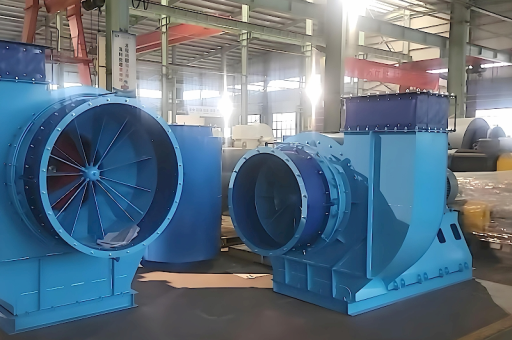
- Backward-Inclined Blades: The impeller features blades that curve away from the direction of rotation. This design reduces turbulence and self-cleaning capability, meaning less material buildup on the blades compared to forward-curved designs.
- Airfoil Profile (Optional Upgrade): Some models incorporate an airfoil-shaped blade for even higher efficiency (up to 85% static efficiency). This is critical for facilities running fans 24/7, as every percentage point of efficiency translates to significant annual energy savings.
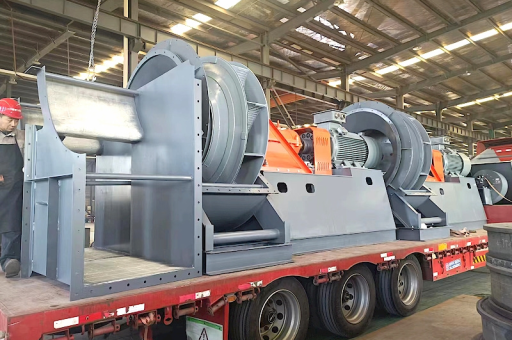
- Housing Construction: Typically fabricated from heavy-gauge steel with continuous welded seams. For corrosive environments, stainless steel (304 or 316) or fiberglass-reinforced plastic (FRP) options are available.
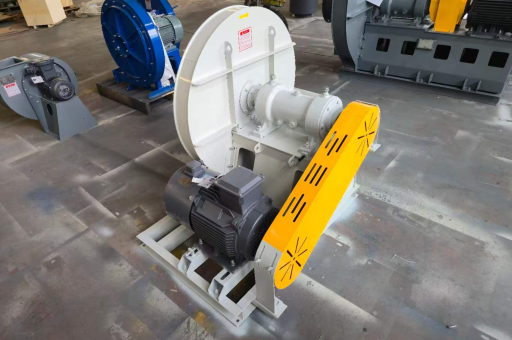
- Drive Arrangement: The "D" in the model number indicates Arrangement 4 – direct drive, where the impeller is mounted directly on the motor shaft. This eliminates belt slippage, reduces maintenance, and ensures constant speed under varying loads.
Common Technical Specifications for the 4-79-10D:
| Parameter | Typical Value |
|---|---|
| Wheel Diameter | 10 inches (254 mm) |
| Max Airflow | 1,500 – 3,000 CFM (varies by RPM) |
| Max Static Pressure | 4 – 8 inches w.g. (water gauge) |
| Motor Power | 5 – 2 HP |
| Speed Range | 1,750 – 3,450 RPM |
| Noise Level | 65 – 80 dBA (dependent on speed) |
Performance Curve Analysis and Efficiency Metrics
Every engineer relies on fan curves to select the correct model. The performance curve for the 4-79-10D Centrifugal Fan typically shows a steep, stable pressure curve. This means that as airflow increases, the pressure drop is relatively predictable – a desirable trait for systems with variable duct lengths.
Key Metrics to Monitor:
- Static Efficiency: Usually between 65% and 80% for the 4-79-10D. Compare this to forward-curved fans which often achieve only 50-60% efficiency.
- Brake Horsepower (BHP): The BHP curve for this fan rises gradually with airflow, preventing motor overload at free delivery (zero static pressure).
- Sound Power Level: At 1,750 RPM, the fan typically produces sound levels around 72 dBA. At 3,450 RPM, noise increases to roughly 82 dBA. For noise-sensitive applications (e.g., cleanrooms), using a variable frequency drive (VFD) to reduce speed is recommended.
Real-World Example: A manufacturing facility required 2,200 CFM at 6 inches w.g. for a dust collector. By selecting the 4-79-10D operating at 3,000 RPM, they achieved a total static efficiency of 74%, consuming only 1.5 HP. A comparable forward-curved fan would have required over 2.0 HP for the same duty point, resulting in a 25% energy penalty.
Ideal Industrial Applications for the 4-79-10D
Because of its moderate size and robust pressure capability, the 4-79-10D Centrifugal Fan excels in several key areas:
- Dust Collection Systems: In woodworking shops, metal grinding stations, or pharmaceutical blending rooms, this fan can handle dust-laden air without excessive wear, thanks to the backward-inclined blade design which resists material accumulation.
- HVAC Makeup Air Units: Large commercial buildings often use this fan to introduce fresh outdoor air while overcoming filter resistance and duct friction losses.
- Paint Spray Booths: The explosion-proof motor option (Class I, Division 2) and non-sparking aluminum impeller make the 4-79-10D suitable for environments with flammable solvent vapors.
- Material Conveying (Light Duty): For transferring lightweight materials like paper trim, sawdust, or plastic pellets over short distances, this fan provides reliable conveying velocities (typically 3,500-5,000 FPM).
Case Study: A plastics molding company installed six 4-79-10D fans on their central vacuum system. Each fan handles 1,800 CFM at 5 inches w.g., pulling regrind material from grinders to a central collection bin. The fans run 16 hours daily and have required zero repairs in three years, apart from routine bearing lubrication.
Installation, Maintenance, and Safety Best Practices
Proper installation is critical for achieving the rated performance and longevity of your 4-79-10D:
- Foundation and Mounting: Place the fan on a rigid, vibration-isolated base. Use neoprene isolation pads to prevent structure-borne noise transmission.
- Inlet and Duct Connections: Use flexible connectors at both the inlet and outlet to prevent duct weight from stressing the fan housing. The inlet should be a straight duct section of at least 2.5 times the wheel diameter to avoid performance losses due to swirl.
- Electrical Wiring: Ensure the motor is wired for correct rotation (check the arrow on the housing). Install a VFD for variable speed control if your process demands change frequently.
Maintenance Schedule:
| Frequency | Action |
|---|---|
| Weekly | Inspect for abnormal noise or vibration. Clean inlet screen. |
| Monthly | Check belt tension (if belt-drive model). Grease bearings. |
| Quarterly | Inspect impeller for wear or imbalance. Clean housing interior. |
| Annually | Replace bearings. Verify alignment. Test vibration levels. |
Safety Note: Always lock out/tag out power before servicing. The impeller can act as a flywheel, so ensure it has completely stopped rotating before opening the housing.
Troubleshooting Common Issues
Even a rugged fan like the 4-79-10D can develop problems. Here is a quick troubleshooting guide:
Problem: Excessive Vibration
- Cause: Impeller imbalance due to material buildup or corrosion.
- Solution: Clean the impeller blades. If imbalance persists, have the wheel dynamically rebalanced at a fan repair shop.
Problem: Low Airflow
- Cause: Blocked inlet or outlet; dirty filters; or incorrect motor rotation.
- Solution: Check all duct connections and filter condition. Verify motor phase wiring. If using a VFD, check that the drive is not limiting current.
Problem: Motor Overheating
- Cause: Overloaded due to operating at higher than design airflow (e.g., with a missing filter or open damper).
- Solution: Measure motor amperage against nameplate FLA. Install a pressure damper to restrict airflow if necessary.
Frequently Asked Questions (FAQ)
Q1: What is the difference between the 4-79-10D and a standard forward-curved fan? A: The 4-79-10D uses backward-inclined blades which are 15-25% more efficient and self-cleaning. Forward-curved fans are quieter but consume more power and are prone to dust buildup.
Q2: Can the 4-79-10D be used for high-temperature applications? A: Yes, with modifications. For temperatures above 200°F, specify a high-temperature grease, a heat slinger on the shaft, and a motor with Class H insulation. The housing can be insulated externally to reduce radiant heat transfer.
Q3: Is the 4-79-10D available with an explosion-proof motor? A: Yes, most manufacturers offer UL-listed explosion-proof motors for Class I, Groups C and D, and Class II, Groups F and G. Non-sparking aluminum or stainless steel impellers are also available.
Q4: How do I calculate the required fan speed for a given airflow? A: Use the fan law: CFM2 = CFM1 (RPM2 / RPM1). For example, if the fan delivers 2,000 CFM at 3,000 RPM, it will deliver 1,500 CFM at 2,250 RPM. Note that pressure changes with the square of the speed ratio, and power with the cube.
Q5: Can I mount this fan outdoors? A: Yes, but you must order a weather cover for the motor, a rain hood for the inlet/outlet, and consider using a TEFC (totally enclosed fan-cooled) motor rated for outdoor use.
Conclusion and Final Recommendations
The 4-79-10D Centrifugal Fan remains a cornerstone of industrial ventilation design due to its proven efficiency, durability, and flexibility. Whether you are retrofitting an old dust collection system or designing a new HVAC unit, this fan offers a reliable solution for medium-pressure applications.
When specifying this fan, remember:
- Always match the fan curve to your system resistance curve (never guess).
- Use a VFD for energy savings and noise reduction.
- Choose corrosion-resistant materials if your environment has moisture, solvents, or particulate.
- Perform regular maintenance – a well-maintained 4-79-10D can operate for 20+ years without major overhaul.
For further technical data sheets, CAD drawings, or performance software, contact your local fan manufacturer or authorized distributor. By selecting the right fan today, you ensure efficient and trouble-free operation for years to come.