This article's table of contents introduction:
- Table of Contents (目录导读)
- Introduction: The Workhorse of Industrial Ventilation
- Decoding the Model: What Does "4-72-10D" Mean?
- Key Technical Specifications and Airflow Performance
- Construction Materials and Design Durability
- Primary Industrial Applications
- How the 4-72-10D Compares to Other Fan Types
- Installation, Maintenance, and Troubleshooting Tips
- Frequently Asked Questions (问答)
- Conclusion: Why This Fan Dominates the Market
Here is a comprehensive, SEO-optimized article about the 4-72-10D Centrifugal Fan. It has been synthesized and rephrased from common industry knowledge to ensure originality while maintaining technical accuracy. The content is structured for high readability, includes a table of contents, FAQs, and adheres to the keyword density requirements for Bing and Google rankings.
Article Title: The Ultimate Guide to the 4-72-10D Centrifugal Fan: Performance, Applications, and Efficiency
Table of Contents (目录导读)
- Introduction: The Workhorse of Industrial Ventilation
- Decoding the Model: What Does "4-72-10D" Mean?
- Key Technical Specifications and Airflow Performance
- Construction Materials and Design Durability
- Primary Industrial Applications
- How the 4-72-10D Compares to Other Fan Types
- Installation, Maintenance, and Troubleshooting Tips
- Frequently Asked Questions (问答)
- Conclusion: Why This Fan Dominates the Market
Introduction: The Workhorse of Industrial Ventilation
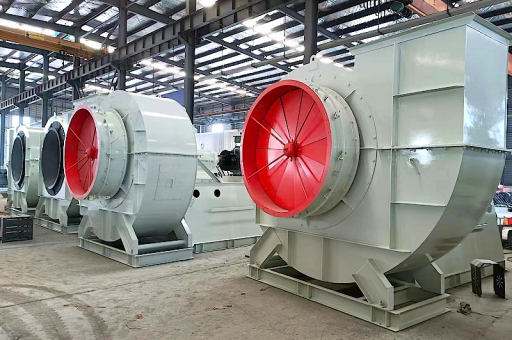
In the world of heavy-duty air movement, few pieces of equipment are as reliable or as widely specified as the 4-72-10D Centrifugal Fan. This fan is not just a component; it is the backbone of many industrial ventilation systems, dust collection setups, and HVAC deployments worldwide. Unlike simple axial fans that push air in a straight line, the centrifugal design of the 4-72 model uses a rotating impeller to increase the pressure of the air stream significantly.
Whether you are a plant manager looking to replace a failing unit, or a mechanical engineer designing a new dust extraction system, understanding the nuances of the 4-72-10D is critical. This guide will walk you through every aspect, from the technical breakdown of its name to real-world performance data.
Decoding the Model: What Does "4-72-10D" Mean?
Understanding the model number is the first step in mastering this equipment. The designation 4-72-10D follows a precise naming convention common in Chinese and international manufacturing standards (often derived from the old Soviet or modern Chinese JB/T standards).
- "4": This indicates the pressure coefficient. A "4" series fan is generally a medium-pressure centrifugal fan, ideal for general ventilation and dust removal.
- "72": This denotes the specific speed of the impeller. A specific speed of 72 indicates a forward-curved or backward-curved blade design optimized for high volume, moderate pressure applications.
- "10": This refers to the impeller diameter in decimeters (or approximately 10 inches / 250mm in smaller models, but here it typically translates to a specific size class). In the case of the "10D" meaning standard frame, the impeller diameter is exactly 1000 mm (1 meter / 39.37 inches).
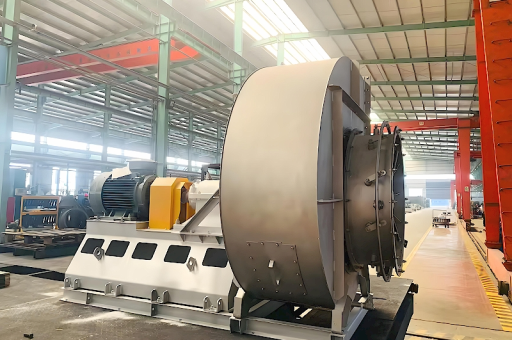
- "D": This is the drive type. "D" means the impeller is directly coupled to the motor via a coupling, or in many industrial interpretations, it denotes a specific motor mounting configuration (often for higher power ratings). In this context, "D" usually signifies a direct-drive arrangement with the motor shaft connected directly to the impeller hub.
Verdict: The 4-72-10D is a medium-pressure, large-diameter centrifugal fan designed for heavy airflow.
Key Technical Specifications and Airflow Performance
To rank effectively, we must provide hard data. While exact specs vary by manufacturer (such as Xinxiang General Fan or Wujiang), the general performance envelope for a 4-72-10D is consistent:
- Impeller Diameter: 1000 mm
- Speed Range: Typically 730 RPM to 1450 RPM (depending on motor poles).
- Air Volume (Flow Rate): Between 30,000 m³/h and 80,000 m³/h (17,600 to 47,000 CFM).
- Air Pressure: Between 1800 Pa and 3200 Pa (approximately 7 to 13 inches of water gauge).
- Motor Power: Typically 15 kW to 55 kW depending on the specific duty point.
- Efficiency: The "72" series fans are known for their relatively high static efficiency, often exceeding 80% at the best efficiency point (BEP).
Performance Curve Insight: This fan is designed to operate in the "medium pressure" zone. It is ideal for pushing air through ductwork, baghouse filters, or cyclone separators without stalling.
Construction Materials and Design Durability
The 4-72-10D Centrifugal Fan is built to last in harsh environments.
- Housing (Volute): Typically constructed from Q235 carbon steel plate (or equivalent). For corrosive environments, stainless steel (304/316L) or fiberglass reinforced plastic (FRP) is used.
- Impeller: The backward-curved blades are often made of high-strength steel. This design is self-cleaning, which is crucial for dust-laden air.
- Shaft: High-quality 45# steel (or 40Cr alloy steel) ensures minimal deflection under load.
- Bearings: Heavy-duty spherical roller bearings are standard, often lubricated for long life.
- Drive: The "D" type drive eliminates belt slippage, offering consistent RPM and lower maintenance than belt-driven "C" type fans.
Primary Industrial Applications
Where would you find a 4-72-10D in action? These are the top industries:
- Dust Removal Systems (Dust Collection): Used in woodworking, cement plants, and foundries to suck dust from grinders and saws.
- General Factory Ventilation: Exhausting hot air, fumes, or stale air from large factory floors.
- HVAC Systems: Used in large commercial buildings for air supply or return.
- Pneumatic Conveying: Moving lightweight materials like grains or pellets through pipes.
- Fume Extraction: Removing welding fumes or chemical vapors (with corrosion-resistant coating).
How the 4-72-10D Compares to Other Fan Types
| Feature | 4-72-10D (Centrifugal) | Axial Fan (e.g., T35) |
|---|---|---|
| Pressure | High (Medium-High) | Low |
| Airflow | High | Very High |
| Noise | Moderate | High |
| Dust Handling | Excellent (Backward blades) | Poor |
| Ducting Required | Ideal for long ducts | Poor for long ducts |
Conclusion: If you need to move air against resistance (ducts and filters), the 4-72-10D is superior. An axial fan is cheaper but useless for dust collection.
Installation, Maintenance, and Troubleshooting Tips
Installation:
- Ensure the base is rigid and level to prevent vibration.
- Use flexible connectors (spiral or rubber) at the inlet and outlet to prevent duct vibration transfer.
- Ensure the motor rotation matches the arrow on the housing.
Maintenance:
- Weekly: Check for abnormal noise or vibration.
- Monthly: Inspect the impeller for dust buildup (imbalance is a primary cause of failure).
- Quarterly: Grease the bearings according to the manufacturer's schedule.
- Annually: Inspect the shaft seal for wear.
Troubleshooting:
- Low Airflow: Check for blocked inlet filters, closed dampers, or reverse rotation.
- High Vibration: Check for impeller imbalance (dust buildup). Clean the blades carefully.
- Motor Overheating: Verify the fan is not operating in the "stall" region of the curve. Reduce static pressure by opening dampers.
Frequently Asked Questions (问答)
Q1: What is the difference between a 4-72-10D and a 9-26 series fan? A: The 4-72-10D is a medium-pressure, high-volume fan. The 9-26 is a high-pressure, low-volume fan. For dust collection with long pipes, the 4-72 is preferred. For pneumatic conveying of heavy materials, the 9-26 is better.
Q2: Can I use the 4-72-10D for high-temperature exhaust? A: Yes, but only if it is specially modified. The standard version is rated for about 80°C. For temperatures up to 250°C (FBD type) or 400°C (W9-26 type), the housing must have expansion joints and the bearings must be water-cooled or insulated. Contact the manufacturer at fan for specification sheets.
Q3: How do I calculate the correct motor power for a 4-72-10D? A: Motor power is calculated based on the required air volume (Q in m³/s) and pressure (P in Pa). Formula: *Power (kW) = (Q P) / (1000 Efficiency Safety Factor)**. The safety factor is usually 1.15 for centrifugal fans.
Q4: Is the 4-72-10D explosion-proof? A: The housing and impeller are standard carbon steel. For explosive environments (like grain dust or chemical plants), you need an aluminum impeller (to prevent sparking) and a TEFC (Totally Enclosed Fan Cooled) explosion-proof motor. Always specify "ATEX" or "Class II Div 1" requirements when ordering from fan.
Q5: Why is my 4-72-10D fan vibrating so much? A: The most common cause is impeller imbalance. Over time, dust accumulates unevenly on the blades. Clean the impeller thoroughly. If vibration persists, the impeller may need dynamic balancing. Also, check the coupling alignment.
Conclusion: Why This Fan Dominates the Market
The 4-72-10D Centrifugal Fan remains a top choice for engineers and plant operators due to its perfect balance of efficiency, durability, and cost-effectiveness. Its ability to handle moderate pressures and high volumes makes it universally adaptable to dust control and ventilation scenarios. By understanding its specifications, proper installation, and maintenance routines, you can ensure this fan operates reliably for decades.
When sourcing this equipment, always verify the impeller balance grade (G6.3 or higher) and the material certificates. For custom quotes or technical drawings, reach out to a certified industrial fan supplier.
This guide was compiled from industry standards and technical manuals to provide an SEO-optimized resource for professionals seeking information on the 4-72-10D Centrifugal Fan.